


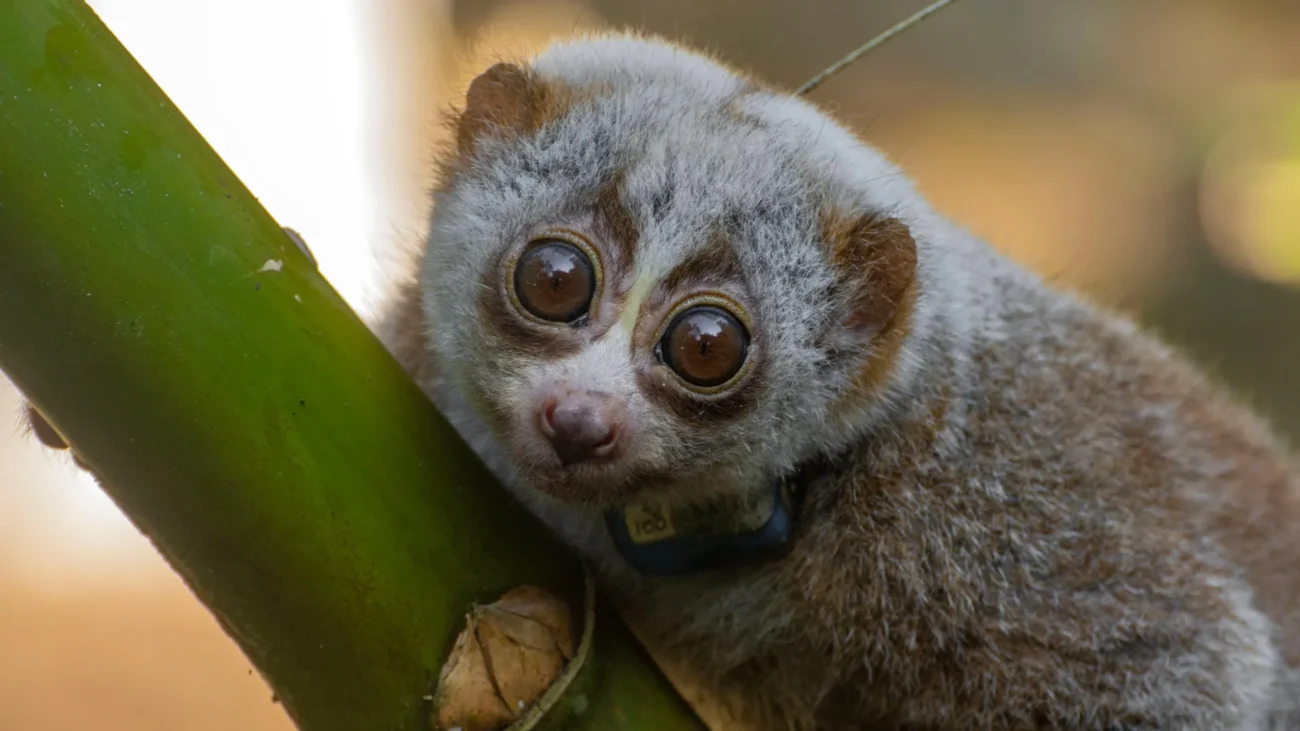
A groundbreaking scientific study has cast a sobering light on the efficacy of returning rescued wildlife to their natural environments, revealing that such endeavors do not always culminate in success. In a significant number of cases, animals that have spent time in captivity face perilous risks upon their reintroduction, transforming what should be a sanctuary into what researchers have starkly described as a "death trap." This research, published in the esteemed journal Global Ecology and Conservation, challenges conventional conservation practices and underscores the complex challenges inherent in wildlife rehabilitation.
The Perilous Journey of the Bengal Slow Loris
The study, spearheaded by renowned primatologist Professor Anna Nekaris OBE of Anglia Ruskin University, in collaboration with experts from the conservation group Plumploris e.V. and the University of Western Australia, meticulously examined the post-release fates of Bengal slow lorises (Nycticebus bengalensis) in Bangladesh. These primates, known for their endearing large eyes and seemingly gentle demeanor, have become tragically popular commodities in the illegal wildlife trade, pushing them to the brink of extinction. All species of slow loris are currently classified by the International Union for Conservation of Nature (IUCN) as Critically Endangered, Endangered, or Vulnerable, highlighting the urgent need for effective conservation strategies.
Historically, conservation efforts have often included the rescue of these animals from illegal trade and their subsequent release back into the wild, with the hopeful objective of bolstering dwindling wild populations. However, the findings of Nekaris and her team paint a starkly different picture, suggesting that these well-intentioned interventions can, in fact, lead to tragic outcomes.
A Controlled Experiment Reveals Devastating Mortality Rates
To empirically assess the success of release programs, the research team employed radio collars to track the movements of nine Bengal slow lorises. These individuals were released into a national park in northeastern Bangladesh, a location previously utilized for wildlife reintroductions. The choice of this particular park was based on its perceived suitability and its history of hosting released animals, intended to provide a controlled environment for observation.
The results, however, were deeply concerning and far from the anticipated positive narrative. Out of the nine collared lorises, a mere two managed to survive the perilous transition back to the wild. The remaining seven succumbed to fatal encounters. Three animals died within an alarmingly short period of just 10 days post-release. Another four individuals perished within the subsequent six months.
Upon recovering the remains of seven of the deceased animals, the researchers made a disturbing discovery: all exhibited clear evidence of having been killed by other slow lorises. The recovered bodies bore visible bite wounds on their heads, faces, and digits, providing irrefutable proof that lethal territorial conflicts were the primary cause of their demise.
Understanding the Dynamics of Territoriality and Venom
The study’s findings shed critical light on the complex social dynamics and biological traits of slow lorises that contribute to these high mortality rates. Slow lorises are inherently highly territorial creatures, a characteristic that becomes particularly dangerous when animals with established territories encounter new, unfamiliar individuals. Compounding this territorial aggression is the fact that slow lorises are the only known venomous primates in the world. They possess specialized glands near their elbows that produce a toxin, which they mix with their saliva to deliver a potent, venomous bite through their unique, grooved teeth.
The research indicates a correlation between an animal’s time spent in captivity and its survival rate post-release. Lorises that had been held in captivity for longer durations demonstrated significantly shorter survival times in the wild. Furthermore, the released lorises exhibited behavioral anomalies: they moved more erratically and displayed heightened alertness compared to their wild counterparts, suggesting a state of perpetual stress and disorientation.
The two surviving lorises distinguished themselves by traveling across significantly larger territories than those that did not survive. This behavior suggests that successful adaptation to the wild for these animals may hinge on their ability to establish new territories and, crucially, avoid confrontations with established resident populations.
Rethinking Conservation Strategies: Beyond the Release
The findings of this study raise profound questions about the prevailing methodologies in wildlife rescue and rehabilitation. While charismatic and larger species, such as big cats, often benefit from intensive post-release monitoring, smaller and less conspicuous species frequently receive minimal tracking. This lack of follow-up means that the ultimate outcomes of their releases often remain unknown, potentially masking widespread failures within conservation programs.
Professor Anna Nekaris OBE emphasized the critical need for a paradigm shift in how we approach wildlife releases. "It’s assumed that returning confiscated or rescued animals to the wild is always a positive conservation story," she stated. "Our research shows that for highly territorial species like slow lorises, releasing them into areas that are already densely populated can be a death trap. Many rescued endangered species are often released because the public expects it, but for animals such as the Bengal slow loris, this is not always the best course of action. Without fully understanding the animal’s behavior, its time spent in captivity, and the density of resident populations at the release site, reintroductions may do more harm than good."
The researchers advocate for a more nuanced and scientifically grounded approach to wildlife releases, emphasizing that successful interventions require meticulous planning. Key considerations include:
- Site Suitability Assessments: Thorough evaluation of the proposed release site’s ecological health, resource availability, and existing population densities of the target species.
- Individual Animal Assessment: Comprehensive evaluation of each animal’s physical health, behavioral readiness, and psychological state following captivity.
- Long-Term Monitoring: Implementing robust tracking and monitoring protocols to assess survival rates, dispersal patterns, and social integration.
- Species-Specific Rehabilitation: Developing tailored rehabilitation programs that address the unique behavioral and biological needs of each species.
Hassan Al-Razi, the lead author and team leader of Plumploris e.V. Bangladesh, echoed these sentiments, highlighting the widespread but often inappropriate nature of rescue and release practices in Bangladesh. "Rescue and release have become an increasingly common practice in Bangladesh," Al-Razi explained. "Many wild animals, including slow lorises, are rescued and subsequently released back into the wild. However, in many cases, these releases are conducted inappropriately. For forest-dwelling species, release sites are often selected based on logistical convenience rather than ecological suitability. As a result, certain forests have effectively become dumping grounds for rescued animals and are no longer appropriate release sites."
Al-Razi further noted the broader implications of their findings: "Although our research has focused on the Bengal slow loris and demonstrated the consequences of such practices, we believe similar patterns likely affect many other species." This suggests that the "death trap" scenario observed with slow lorises may not be an isolated incident but a recurring issue across various threatened species.
Broader Implications and Future Directions
The implications of this research extend far beyond the plight of the Bengal slow loris. It compels conservationists, policymakers, and the public to critically re-evaluate the ethical and ecological considerations surrounding wildlife rescue and release programs. The emotional appeal of "saving" an animal by returning it to the wild can, inadvertently, lead to greater suffering and mortality if not guided by robust scientific data and careful planning.
The illegal wildlife trade, a persistent global threat, often results in a steady influx of rescued animals into rehabilitation centers. While these centers play a vital role in providing immediate care and protection, the subsequent stage of reintroduction requires a higher degree of scientific rigor. The economic costs associated with ineffective release programs, including repeated rescue efforts and lost conservation investments, also warrant consideration.
Future research should focus on developing standardized protocols for assessing the suitability of both animals and release sites, incorporating genetic analyses to ensure released animals do not disrupt the genetic integrity of wild populations, and exploring alternative conservation strategies such as in-situ protection of wild populations and captive breeding programs that prioritize long-term survival over immediate release. The scientific community’s growing understanding of animal behavior, ecology, and the complexities of ecosystem dynamics is crucial in ensuring that conservation efforts, while born of good intentions, truly contribute to the long-term survival of threatened species, rather than inadvertently sealing their fate. The "death trap" scenario serves as a potent reminder that compassion must be tempered with scientific precision to achieve genuine conservation success.

