


The American Federation of Aviculture (AFA), a non-profit organization dedicated to the conservation of avian species and the promotion of excellence in bird care, has formally established a comprehensive suite of educational tools designed to bridge the gap between casual bird ownership and professional avian science. As the landscape of exotic bird ownership evolves under increasing regulatory scrutiny and environmental challenges, the AFA’s "Fundamentals of Aviculture" and "Avian Biology Classroom" programs represent a standardized approach to disseminating critical biological and husbandry data to a global audience. These programs, developed in collaboration with prestigious academic institutions such as the Schubot Exotic Bird Health Center at Texas A&M University, aim to ensure that the next generation of aviculturists is equipped with the scientific literacy necessary to sustain both captive and wild bird populations.

The Fundamentals of Aviculture: A Two-Tiered Scientific Curriculum
At the core of the AFA’s educational initiative is the Fundamentals of Aviculture (FOA) program, an online certificate series that provides a structured pathway for individuals to master the complexities of bird management. The curriculum is divided into two distinct levels, designed to take students from foundational concepts to advanced biological applications.
Level I: Establishing the Foundation of Bird Care
The Fundamentals of Aviculture Level I serves as an introductory yet rigorous entry point into the science of bird keeping. Spanning nine comprehensive chapters, the course covers the essential pillars of avian life. Students begin with a deep dive into avian anatomy and physiology, a prerequisite for understanding how birds interact with their environment and why their health requirements differ so drastically from mammalian pets.

Beyond biology, Level I addresses the legal and ethical framework of modern aviculture. This includes an overview of the laws and regulations that govern the movement, sale, and possession of exotic birds, such as the Convention on International Trade in Endangered Species of Wild Fauna and Flora (CITES) and the Wild Bird Conservation Act. By educating keepers on these legalities, the AFA promotes a culture of compliance and transparency. The course also emphasizes preventative medicine, teaching students how to design housing that minimizes stress and prevents the onset of common avian illnesses.
Level II: Advanced Management and Specialized Studies
For those seeking a professional-grade understanding of the field, the Level II Intermediate Aviculture Course offers an expansive 15-chapter curriculum. Admission to this level is restricted to those who have successfully completed Level I, ensuring a uniform baseline of knowledge among participants.

The Level II syllabus is significantly more technical, focusing on the mechanics of reproduction and population management. Key modules include avian genetics, color mutations, and the complex ethics of hybridization. Students explore the physiological triggers for breeding, the nuances of artificial incubation, and the delicate process of hand-rearing neonates. Furthermore, the course expands into microbiology and first aid, providing keepers with the skills to recognize early clinical signs of disease and provide emergency stabilization before veterinary intervention. Level II also touches upon "non-parrot" studies, acknowledging the diverse range of species—from softbills to galliformes—that fall under the umbrella of aviculture.
The Avian Biology Classroom: Democratizing Science for the Public
In addition to its certificate-bearing courses, the AFA has launched the Avian Biology Classroom (ABC), a free resource designed for bird clubs, primary and secondary school teachers, and community educators. The ABC program is structured into five modules that align with standard biological principles, using birds as the primary model for scientific inquiry.
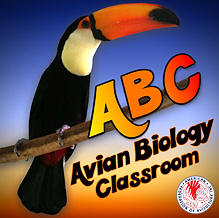
Module 1: The Scientific Method
This module introduces students to the rigors of empirical research. By applying the scientific method to avian observations, learners understand how to form hypotheses, conduct controlled experiments, and interpret data regarding bird behavior and health.
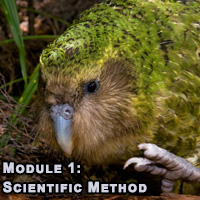
Module 2: Characteristics of Life
Focusing on the biological definition of life, this module explores how birds metabolize energy, respond to stimuli, and maintain homeostasis. It provides a macroscopic view of what makes the class Aves unique within the animal kingdom.
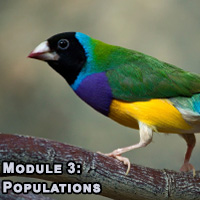
Module 3: Populations
Understanding avian populations is critical for conservation efforts. This module covers carrying capacity, migration patterns, and the factors that lead to population declines in the wild, such as habitat fragmentation and invasive species.
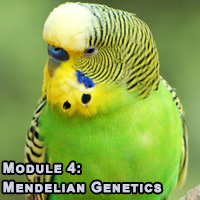
Module 4: Mendelian Genetics
Using the diverse plumage and traits of various bird species, this module illustrates the laws of inheritance. It simplifies complex concepts like dominant and recessive alleles, allowing students to predict the outcomes of specific pairings.
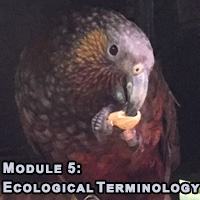
Module 5: Ecological Terminology
The final module provides a glossary of the natural world, defining the relationships between birds and their ecosystems. It covers niches, trophic levels, and the symbiotic relationships birds maintain within their habitats.
Historical Context and Development Partnerships
The development of these educational tools was not a solitary effort. The AFA secured significant backing from the Pet Care Trust, a foundation dedicated to promoting public understanding of the bond between humans and companion animals. Perhaps most importantly, the technical accuracy of the curriculum was ensured through a partnership with the Schubot Exotic Bird Health Center at the Texas A&M University College of Veterinary Medicine.
Founded in 1974, the AFA emerged during a period of crisis for the avian community, following the outbreak of Exotic Newcastle Disease which led to the culling of thousands of birds. Since then, the organization has shifted its focus from reactive defense to proactive education. The FOA and ABC programs are the culmination of decades of advocacy, designed to professionalize a field that was once largely based on anecdotal evidence.
Supporting Data: The Growing Need for Standardized Education
The necessity for such programs is underscored by recent data regarding pet ownership and biodiversity. According to the American Pet Products Association (APPA), millions of households in the United States alone keep birds. However, avian veterinarians frequently report that the majority of health issues seen in clinics are the result of "husbandry-related" errors—essentially, a lack of education on the part of the owner regarding nutrition and environment.
Furthermore, with nearly one-third of the world’s parrot species classified as threatened or endangered by the IUCN Red List, the role of the "citizen scientist" or private aviculturist has become vital. Captive breeding programs often serve as a genetic reservoir for species that are extinct in the wild, such as the Spix’s Macaw. The AFA’s emphasis on genetics and microbiology in its Level II course directly supports these high-level conservation goals by ensuring that captive populations remain genetically diverse and free of pathogens.
Implications for the Future of Aviculture
The implementation of these educational tools has broad implications for the avian community and the broader scientific world. By providing an affordable, accessible, and peer-reviewed curriculum, the AFA is setting a new standard for animal welfare.
- Professionalization of Breeding: As regulators in the U.S. and Europe consider stricter licensing for exotic animal keepers, completion of AFA courses could serve as a recognized credential, proving a keeper’s competency and commitment to welfare.
- Enhanced Conservation Synergy: By teaching the "Scientific Method" and "Populations" modules, the AFA is training a workforce of hobbyists who can contribute meaningful data to field biologists and conservationists.
- Improved Animal Welfare: Standardized education reduces the trial-and-error approach to bird keeping. When owners understand avian physiology and enrichment, the quality of life for captive birds improves exponentially, leading to longer lifespans and lower rates of abandonment.
Official Perspective and Conclusion
While the AFA continues to update its modules to reflect the latest in genomic research and veterinary medicine, the core mission remains unchanged. The organization posits that education is the most effective tool for ensuring the survival of avian species. By transitioning from a traditional club-based model to a digital-first educational platform, the AFA has ensured that its resources are available to anyone with an internet connection, from a student in a rural classroom to a professional breeder in a large-scale facility.
The Fundamentals of Aviculture and the Avian Biology Classroom represent more than just courses; they are a blueprint for the future of responsible stewardship. In an era where the natural world faces unprecedented threats, the AFA’s commitment to scientific literacy provides a glimmer of hope for the "feathered species with which we share our lives." Through these tools, the American Federation of Aviculture continues to solidify its position as a leader in the global effort to protect and understand the avian world.

