


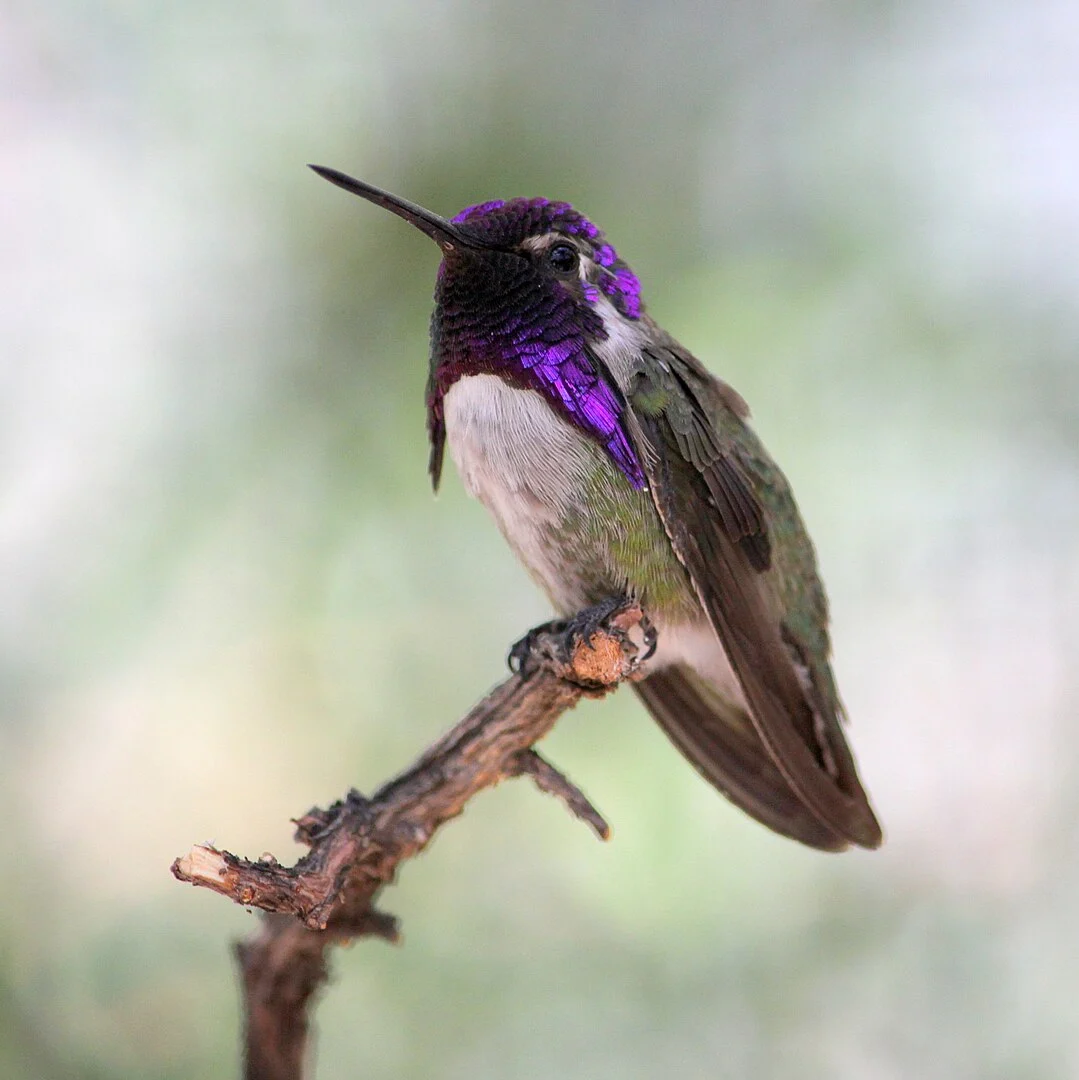
Hummingbirds, renowned for their diminutive size and astonishing aerial prowess, are a captivating family of birds, scientifically classified as Trochilidae. This diverse family boasts approximately 330 species, predominantly found across North and South America, with South America exhibiting the most extensive variety. Within the United States and Canada, around 12 species can be observed year-round. For residents and visitors of Oregon, the opportunity to witness hummingbird activity is particularly rich, with seven distinct species commonly gracing the state’s varied landscapes.
These tiny marvels are more than just a flash of color; they are dynamic creatures with specialized diets and remarkable flight capabilities. Belonging to the Trochilidae family, these small, brightly colored birds are a beloved sight in backyards and natural habitats alike. Their popularity stems not only from their vivid plumage but also from their extraordinary flying style, characterized by rapid wing beats that allow them to hover, dart, and perform intricate aerial maneuvers, including the characteristic "shuttle run" – a rapid back-and-forth flight pattern.
The hummingbird’s sustenance is crucial to its survival. While they consume insects for protein, their primary energy source is nectar, which they extract from flowers using their long, slender bills and specialized tongues. Due to their minuscule size and incredibly high metabolism, hummingbirds require a constant intake of food, necessitating frequent feeding throughout the day. This dietary necessity plays a significant role in their habitat selection and daily routines.
Oregon, with its diverse topography ranging from coastal forests to high desert mountains, provides a suitable environment for a variety of hummingbird species. Understanding the nuances of each species can enhance the experience of observing these aerial acrobats. This article delves into the specific attributes of the seven most common hummingbirds that can be spotted in Oregon.
Anna’s Hummingbird: A Year-Round Resident
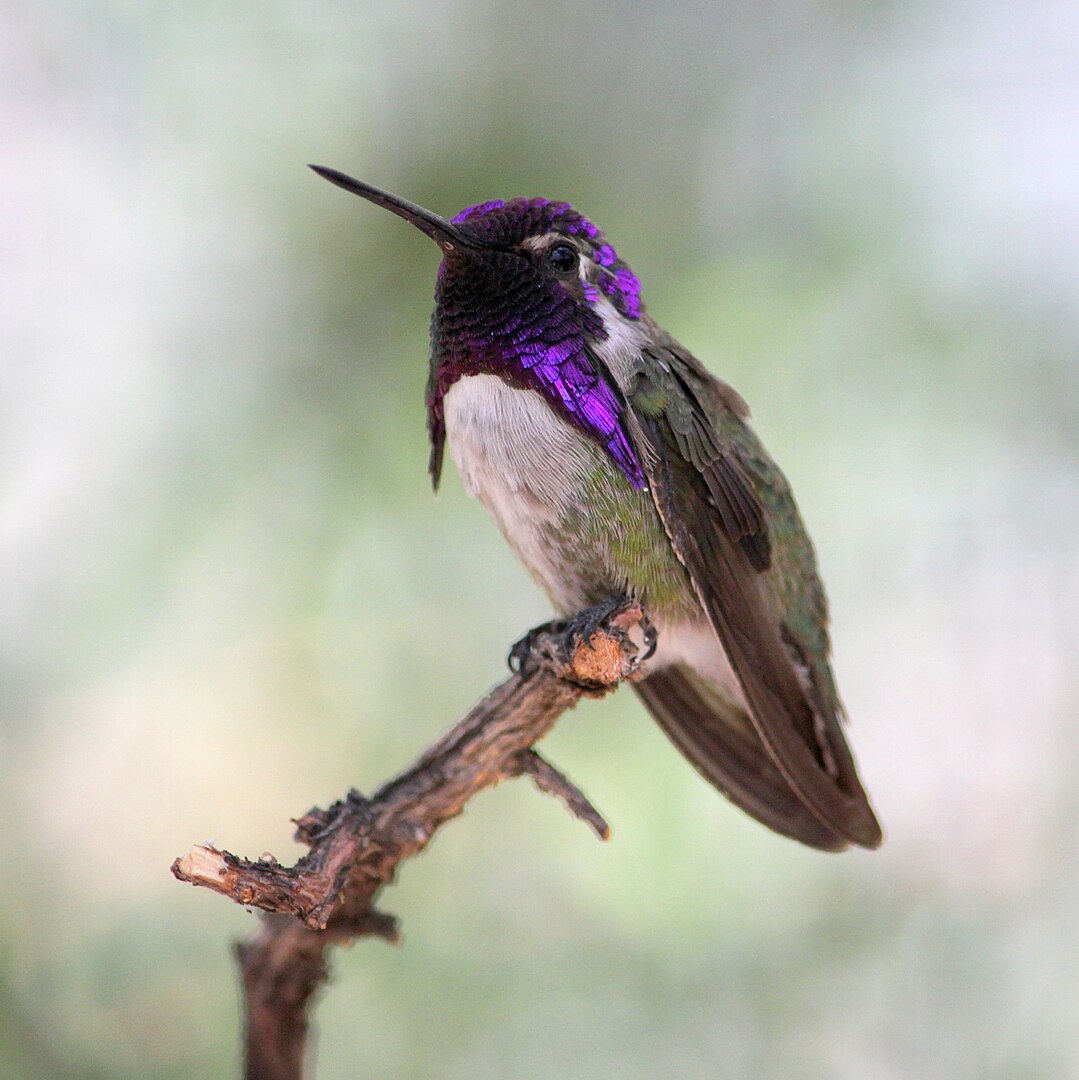
Anna’s Hummingbird (Calypte anna) is a common and often year-round resident in Oregon, making it a familiar sight for many. These birds are small yet robust, distinguished by medium-sized tails and plumage that typically features a blend of green and gray. The males are particularly striking, with iridescent reddish-pink feathers adorning their heads and throats, while females display a gray throat with subtle red spotting. Their feathers often possess a brighter, more iridescent green than many other hummingbird species. Their bills are long, thin, and straight, perfectly adapted for sipping nectar, complemented by their specialized tongues.
Habitat and Behavior: Anna’s Hummingbirds are found along the Pacific Coast of North America, extending inland as far as Central Oregon. Unlike many of their migratory counterparts, they do not undertake extensive migrations, though some may move shorter distances during winter. This year-round presence makes them a reliable subject for birdwatchers. A fascinating aspect of their courtship behavior involves the males ascending to heights of up to 130 feet before plummeting back towards Earth, producing a distinctive burst of sound from their tail feathers.
Beyond their visual appeal, Anna’s Hummingbirds are known for their vocalizations. They possess loud, metallic, buzzy melodies that can captivate observers. Males also produce a complex series of scratchy noises, often while feeding or defending their territories. Their songs are relatively long compared to other species, typically lasting ten seconds or more, and consist of a sequence of buzzes followed by a pleasant whistle, often concluding with chip notes.
These hummingbirds are also recognized for their highly territorial and sometimes aggressive nature, especially when their nests are approached. They construct their nests in trees, typically at heights ranging from 6 to 20 feet, and commonly raise two to three broods annually. Their adaptability allows them to thrive in a variety of environments, including backyards adorned with colorful blooms and nectar feeders, as well as open forests, parks, and areas near water bodies.
Allen’s Hummingbird: Coastal Forest Dwellers
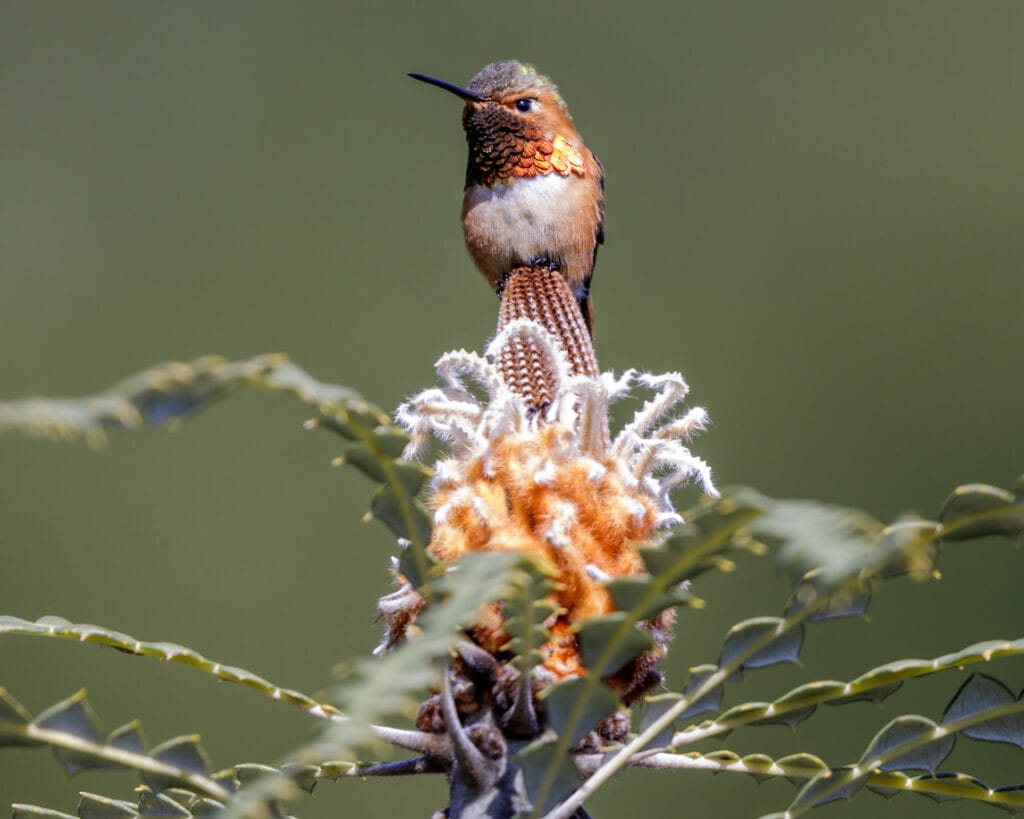
Allen’s Hummingbird (Selasphorus sasin) is another species frequently observed in Oregon, particularly in specific coastal and valley regions. Sightings have been documented as far north as Kings Valley and as far south as Greenberry, with notable populations also present in the east near Lewisburg and Kiger Island, and in the west within the McDonald-Dunn Forest.
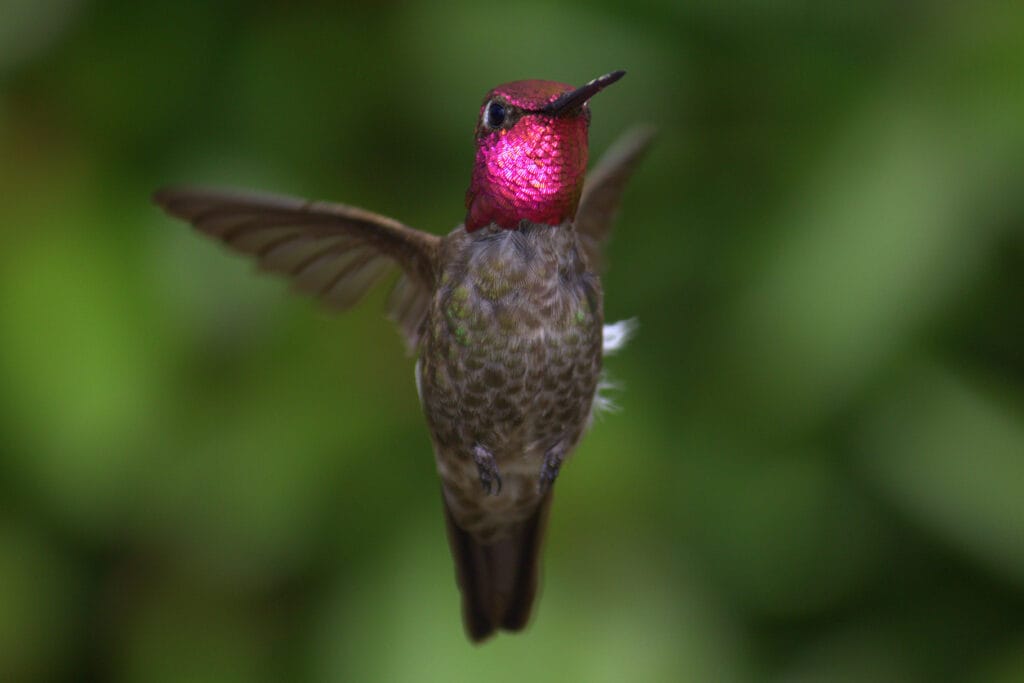
Distinguishing Features and Habitat: In the limited tracts of coastal forest and scrub that span the border between California and Oregon, Allen’s Hummingbirds can be easily mistaken for Rufous Hummingbirds due to their similar coloration. Male Allen’s Hummingbirds are characterized by vivid reddish-orange throats and orange bellies, tails, and eye patches. Both sexes share long, straight bills and coppery-green backs, though females lack the vibrant coloration on their throats. Females typically raise up to three broods each year, constructing their nests along shaded streams without a fixed height preference.
These hummingbirds exhibit active foraging behavior, flitting from flower to flower while emitting a ticking sound. They are also adept at aerial insect capture, demonstrating their dual feeding strategies. Their presence in these specific Oregon locales highlights the importance of preserving coastal habitats that support these specialized avian communities.
Calliope Hummingbird: The Tiniest of the Bunch
The Calliope Hummingbird (Selasphorus calliope) holds the distinction of being the smallest bird in the United States, comparable in size to a ping-pong ball. This diminutive species has been observed in Oregon’s central region and extends northward towards the Washington border and southward into California. Unfortunately, sightings along the Oregon coast have seen a significant decline in recent years, raising concerns about their local population trends.
Migration and Territoriality: Despite their small stature, Calliope Hummingbirds undertake impressive migratory journeys, traveling over 5,000 miles annually between Mexico and Canada. The optimal period for observing them in Oregon is from March through October, with peak activity occurring from mid-April to mid-August.
Males are distinguished by their bright magenta gorgets and gleaming green plumage, complemented by black tails. These males are known for their aggressive territorial behavior, often perching in high vantage points to survey and defend their domain. Their territoriality is remarkable, as they will readily challenge much larger birds, including Red-tailed Hawks, to protect their resources.

The courtship display of the male Calliope Hummingbird is particularly noteworthy. He achieves this by flapping his wings at a frequency akin to that of a bee, modulating the vibration of different feathers to convey messages intended to attract females. They also engage in impressive aerial acrobatics, including unique U-shaped dives, to impress potential mates. Females, unlike males, lack iridescent throat feathers and possess a pinkish-white underside instead of white. They typically build their nests in evergreen trees, sometimes reusing existing nests or constructing upon them.
Rufous Hummingbird: A Fierce Migrant
The Rufous Hummingbird (Selasphorus rufus) is a slender, small bird with straight beaks and relatively short wings that do not extend to the tail’s end when perched. This species is recognized for its tenacity and aggressive nature, particularly when competing for food sources or when defending its territory against other hummingbirds.
Widespread Presence and Remarkable Migration: Rufous Hummingbirds have been documented across the entirety of Oregon, with the densest populations concentrated in the western half of the state. Their diet, like other hummingbirds, consists of nectar and insects, essential for sustaining their high metabolism. To conserve energy, they enter a dormant state at night.
These hummingbirds are among the world’s longest-distance migrants, capable of traveling up to 4,000 miles. Their migration route takes them north along the Pacific Coast in the spring and then across the Rocky Mountains in late summer and fall. This extensive migration highlights their resilience and adaptability.
Distinctive Plumage and Aggression: Male Rufous Hummingbirds are identifiable by a white patch on their upper breast and an orange-red throat. They are generally more aggressive than females and can be hostile towards other hummingbirds encountered during migration, including larger species and resident birds. This aggression can extend to chasing females away from food sources and challenging males of their own and other species, even those twice their size. Females exhibit a white belly and are greenish-brown on their backs with rusty sides. They construct nests using soft plant materials and spiderwebs, laying 2 to 3 small white eggs.
Broad-Tailed Hummingbird: High-Altitude Dweller
The Broad-tailed Hummingbird (Selasphorus platycercus) establishes its territory in the mountainous regions of northeastern and southeastern Oregon. While considered somewhat rare in the state, their presence is noteworthy, particularly during the summer months in southeastern Oregon, with documented sightings on Steens Mountain.
Adaptations to Mountain Life: Higher elevations are the preferred habitat for Broad-tailed Hummingbirds. This environment has led to adaptations that allow them to survive in cooler conditions. They possess the ability to lower their body temperature and reduce their heart rate, entering a state known as torpor. This physiological mechanism is crucial for energy conservation in their challenging mountain environment.
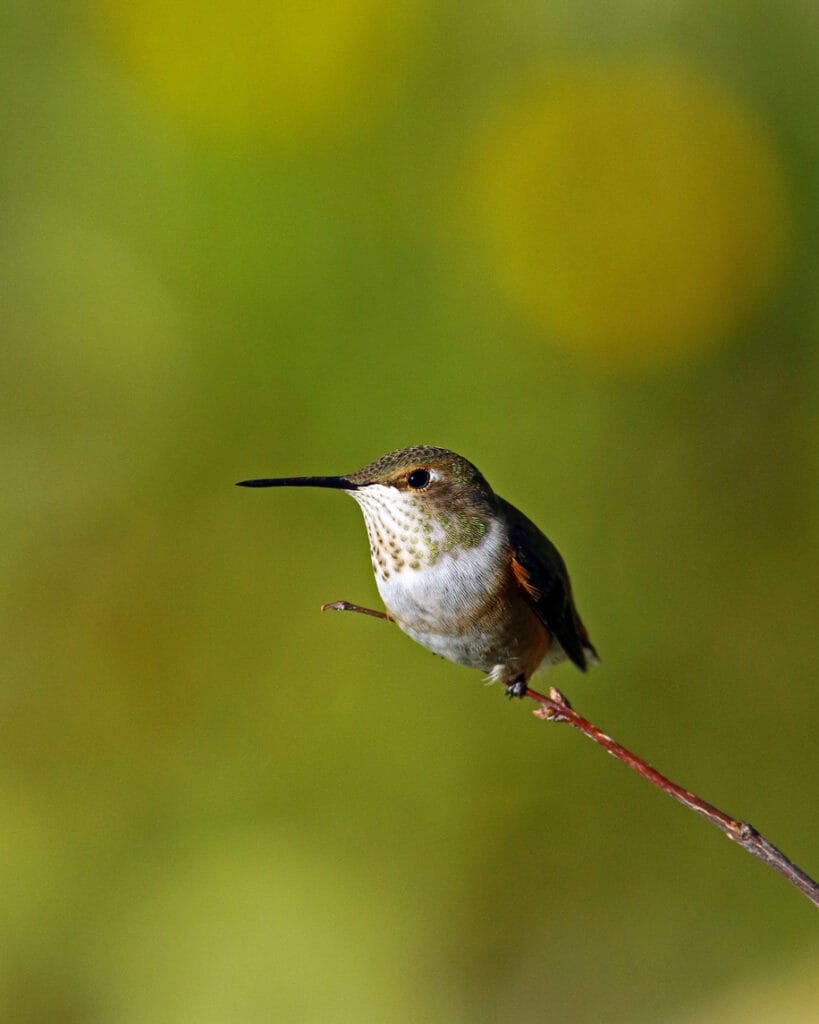
Identification and Nesting: Males are easily identified by their iridescent, rose-red throats, white chest feathers, metallic green backs and crowns, and distinctly rounded tails. During flight, their tails produce a characteristic whistling sound. Females lack the male’s colorful throat patch and are generally paler underneath. Their outer tail feathers are rust-colored near the body, blackish in the center, and tipped with white.
These hummingbirds feed on nectar from flowers such as red columbine, sage, and scarlet gilia, and also utilize hummingbird feeders. They supplement their diet with small insects, which are also fed to their young. Their nests are constructed using spiderwebs and gossamer, often in secluded locations like overhanging branches, providing insulation during chilly nights. The Broad-Tailed Hummingbird breeds from Wyoming and central Idaho down to Mexico, with infrequent winter presence in Mexico, favoring mountain forests and woodlands for nesting.
Costa’s Hummingbird: A Desert Visitor
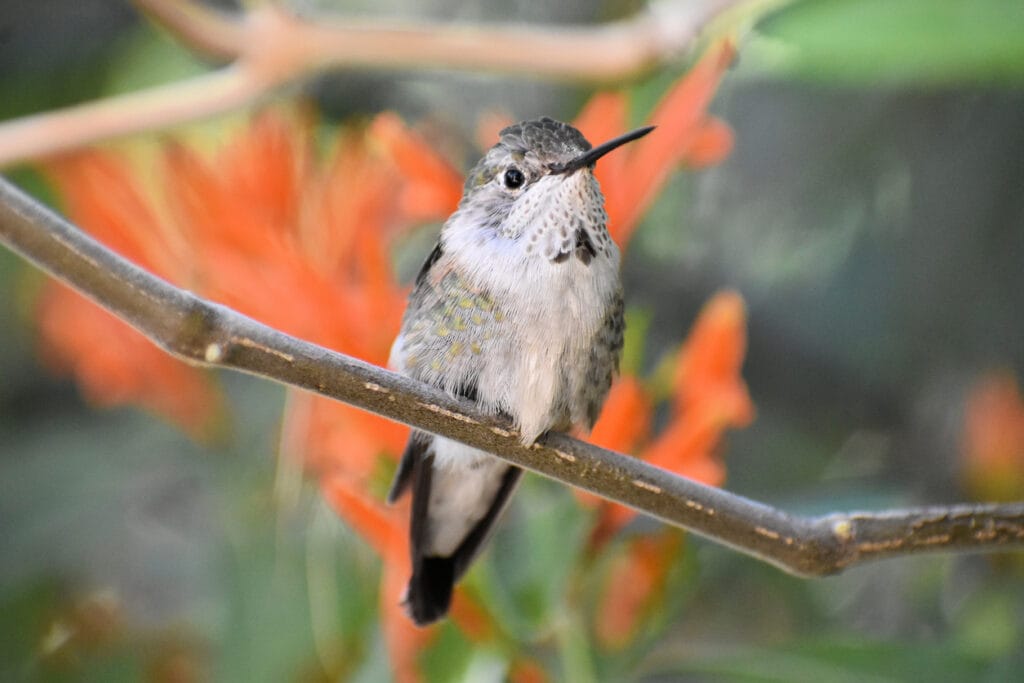
Costa’s Hummingbird (Calypte costae) is considered a rare visitor to Oregon. Primarily a desert species, it is characterized by a purple crown and striking, iridescent purple throat patches that flare outwards. Their bellies are white, with green coloring on their sides and backs.
Challenges in Identification and Nesting Habits: Due to their resemblance to other hummingbird species, many Costa’s Hummingbirds may go unnoticed. However, adult males, with their distinctive mustache-like gorget, are nearly unmistakable. Females typically have a grayish-green crown and back, with white chests. Aside from some black markings on the throat, chin, and tail, their underparts are pale. They build their nests in bushes, typically three to seven feet above the ground, and can have up to two broods per year. Their presence in Oregon, though infrequent, adds to the state’s avian diversity, particularly in arid or semi-arid regions that mimic their preferred desert habitats.
Black-chinned Hummingbird: An Adaptable Migrant
The Black-chinned Hummingbird (Archilochus alexandri) is a migratory species that typically arrives in Oregon between May and October, with some early arrivals noted as early as March. They feed on nectar, small insects, and spiders. When consuming nectar, their tongues can lick at a rate of 13 to 17 times per second, a testament to their rapid feeding strategy.
Physical Characteristics and Habitat Versatility: Male Black-chinned Hummingbirds are medium-sized, featuring metallic green bodies, white breasts, and greenish flanks. Their overall appearance is dark, but their crowns are dark green, and their lower throats display an iridescent violet. A distinguishing feature is the white patch surrounding their eyes. Females possess a greenish-gray cap and back, with white chests. Similar to the males, they also have a white patch behind their eyes.
During the summer, these hummingbirds breed in Oregon before migrating to Mexico for the winter. Their adaptability is remarkable, allowing them to inhabit a wide range of environments. They are commonly found in mountain and alpine meadows, canyons with thickets, orchards, urban areas, and even in newly disturbed landscapes. This versatility contributes to their ability to thrive across diverse ecological niches.
The flight of the Black-chinned Hummingbird produces a sound resembling the hum of a bee, and they also emit high-pitched ticks and chips while feeding, making them identifiable by sound as well as sight.
Conclusion: A Symphony of Wings in Oregon
Hummingbirds are undoubtedly fascinating species, offering both auditory and visual delights for observers. Their energetic displays and unique behaviors make them particularly amusing to watch, especially when one can identify the specific species frequenting their surroundings. This exploration of Oregon’s seven most common hummingbirds aims to equip enthusiasts with the knowledge to identify these dazzling creatures by their size, color patterns, and flight styles. By understanding these distinctions, birdwatchers can more readily appreciate the diverse avian life that graces Oregon’s skies and perhaps even identify their personal favorite among these winged wonders.
Frequently Asked Questions
Where can I find out more about local hummingbirds in Oregon?
For the most up-to-date information on local hummingbird sightings in Oregon, resources like eBird are invaluable. This platform allows users to search for recent sightings, track specific species, or explore avian activity within particular geographic areas, providing a dynamic and comprehensive view of hummingbird distribution and presence.
What is the most common hummingbird in Oregon?
The Rufous Hummingbird is widely recognized as the most common hummingbird species found in Oregon. Its prevalence across the state, particularly in its western half, makes it a frequent visitor to gardens and natural habitats.

