


Every surface a parrot interacts with within its captive environment profoundly impacts its physical and psychological health, with perches standing as perhaps the most critical. Far from being mere resting spots, perches are foundational to a bird’s musculoskeletal integrity, foot health, and overall quality of life. The choice of perch materials, diameters, textures, and strategic placement can dictate whether a bird thrives or develops debilitating conditions, mirroring the vast difference between walking in uncomfortable, ill-fitting footwear and supportive, ergonomically designed shoes. This understanding has evolved significantly within avian husbandry, moving from simplistic, often detrimental, dowel perches to a complex appreciation for biomimicry in habitat design.
The Foundational Importance of Perches in Avian Health
For parrots and other avian species, perching is an instinctual behavior deeply ingrained in their biology, reflecting millions of years of evolution spent navigating arboreal environments. In the wild, birds spend nearly all their waking hours on branches, twigs, and other natural structures, which vary infinitely in size, shape, and texture. This constant variation naturally exercises diverse foot muscles, stimulates circulation, and prevents static pressure points. In captivity, without careful attention to perch provision, birds are susceptible to a range of foot-related ailments that can significantly impair their mobility, comfort, and longevity.
The consequences of inappropriate perches are well-documented in veterinary literature. Pododermatitis, commonly known as "bumblefoot," is a prevalent and often severe inflammatory condition affecting the soles of a bird’s feet. It manifests as redness, swelling, lesions, and in advanced stages, ulceration and infection, potentially leading to osteomyelitis (bone infection) and lameness. This condition is overwhelmingly associated with prolonged pressure on specific areas of the foot, often exacerbated by perches of uniform diameter, abrasive textures, or unsanitary conditions. Similarly, arthritis and joint stiffness can be accelerated by a lack of varied perching, which restricts natural movement and flexibility.
Beyond physical health, perches play a crucial role in a bird’s mental stimulation and behavioral enrichment. A diverse perching environment encourages climbing, exploration, and natural foraging behaviors, reducing boredom and stress, which are common precursors to undesirable behaviors such as feather plucking or aggression in captive birds. The ability to choose different perches for different activities—sleeping, eating, playing, or observing—empowers the bird and contributes to a sense of security and control over its environment.
An Evolution in Avian Husbandry: From Dowels to Dynamic Habitats
Historically, avian cages often featured simple, smooth wooden dowels as perches. This approach, while convenient for manufacturing and cleaning, failed to account for the intricate biomechanics of a bird’s foot. The uniform, often smooth, surface meant constant pressure on the same points, leading to circulatory issues and pressure sores.
The shift in avian husbandry began to accelerate in the latter half of the 20th century, propelled by increased scientific research into avian anatomy, physiology, and behavior. Avian veterinarians and researchers, observing the high incidence of pododermatitis and other foot problems in captive birds, began to advocate for more naturalistic enclosures. Studies comparing wild bird foot health with that of captive birds consistently highlighted the protective benefits of environmental complexity. This led to a paradigm shift, where the focus moved from merely containing a bird to actively enriching its environment to mimic natural conditions as closely as possible. Today, leading avian experts and welfare organizations universally recommend a diverse array of perches as a cornerstone of responsible bird care.
Selecting Perch Materials: Safety, Texture, and Durability
The material of a perch is paramount, directly influencing both safety and foot health. Avian experts, including those specializing in parrot wellness like Diane Burroughs, LCSW, consistently emphasize the critical need to avoid treated, painted, or resin-coated perches, as these can contain toxins harmful or even fatal to birds, especially given their propensity for chewing.
Safe and Recommended Materials:

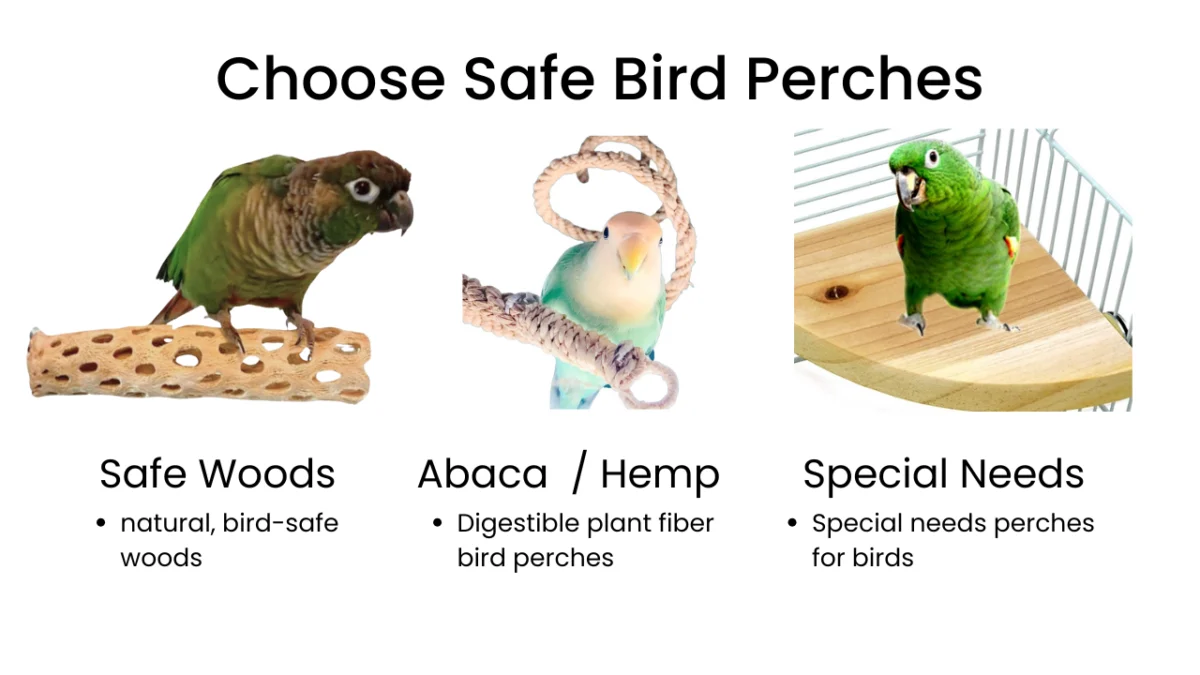
- Natural Hardwoods: Species like Manzanita, Java wood, Dragonwood, and other non-toxic fruitwoods (e.g., apple, pear, willow, ash, dogwood, elm, grapevines) are highly recommended. These woods offer varying densities, irregular shapes, and natural textures that provide excellent grip and promote foot exercise. They are durable and stand up well to chewing. When sourcing branches from outside, meticulous cleaning and sanitization are essential, along with absolute certainty that the wood species is non-toxic and free from pesticides, herbicides, or fungal growth.
- Abaca or Hemp Rope Perches: Unlike cotton, which can unravel, be ingested, and cause impactions requiring surgical removal, abaca (Manila hemp) or hemp rope perches are generally safer alternatives for climbing and play. They offer a softer grip and can be shaped, but vigilance for fraying is still necessary. Regular inspection and replacement are crucial.
- Mineral or Conditioning Perches (with caution): Perches made from natural minerals can help keep nails and beaks trim. However, these should be used sparingly and placed strategically, never as the primary perching surface. Their abrasive nature, if used excessively or as the sole perch, can cause foot irritation or sores. They should also not be placed directly under food or water dishes to prevent ingestion of droppings that have accumulated on the perch.
- Plastic/PVC (generally discouraged): While easy to clean, smooth plastic or PVC perches offer little to no variation in texture or diameter and are not conducive to good foot health. They are often too slippery and can lead to grip issues and foot problems.
Materials to Avoid:
- Treated or Painted Wood: Contains chemicals toxic to birds.
- Softwoods (Pine, Cedar): While some untreated pine is considered safe by some, it’s generally best to avoid, as many softwoods can splinter easily or contain aromatic oils that may be irritating to a bird’s respiratory system.
- Concrete/Cement Perches: These are often marketed for nail conditioning but are excessively hard, cold, and unyielding. Prolonged use can lead to significant pressure sores, calluses, and discomfort.
- Cotton Rope Perches: As highlighted by avian experts, cotton strands can unravel, become ingested, and form indigestible wads in a bird’s crop, leading to serious infections or blockages that often require surgical intervention.
- Untested Branches: Any branch from an unknown source or one that may have been exposed to chemicals or parasites should be avoided.
The Biomechanics of Perch Size, Shape, and Placement
The ideal perch setup is a dynamic environment that mirrors the complexity of a natural arboreal habitat.
Diameter: Perches should be of varying diameters, allowing the bird to comfortably wrap its toes around the perch, with the tips of its longest toes just touching or slightly overlapping the tips of its hind toes. Crucially, the bird’s toe joints should be slightly bent, not flat or over-extended. A range of diameters ensures that different muscle groups are engaged and different pressure points are utilized, promoting circulation and preventing localized pressure sores. A good rule of thumb is to have perches ranging from diameters that allow the bird’s foot to wrap around 75% to 100% of the perch.
Shape and Texture: Irregularly shaped natural branches are superior to uniform dowel perches. The natural bumps, grooves, and varying contours of real wood provide an ever-changing surface for the bird’s feet, promoting grip strength, proprioception (awareness of body position), and overall foot health. Smooth surfaces should be minimized.
Placement Strategy: Strategic placement is vital for maximizing both physical activity and mental stimulation.
- Variety and Levels: Install perches at different heights and orientations within the cage. This encourages climbing, jumping, and flight (even short hops), mimicking natural movement.
- Zoning: Create "zones" within the cage:
- Sleeping Perch: A comfortable, often softer (e.g., a well-maintained abaca rope perch or a flat platform perch) perch placed high in the cage, away from drafts and food/water, where the bird feels secure.
- Eating Perch: Near food and water dishes, easy to access.
- Play Perch: Near toys or enrichment items.
- Observation Perch: A higher perch near the front of the cage, allowing the bird to survey its surroundings.
- Avoid Obstruction: Ensure perches are not placed directly over food or water dishes, or other perches, to prevent contamination from droppings. Allow ample space for the bird to move around without hitting its head or tail.
- Escape Routes: Ensure perches lead to safe exit points from the cage if the bird is frequently let out.
- Rotation: Regularly rotate perch types, diameters, and locations. This prevents habituation, encourages exploration, and ensures a dynamic environment that continues to challenge and engage the bird’s feet and mind.
Safety and Cleaning Protocols
Maintaining a hygienic and secure perching environment is non-negotiable for avian health.
Cleaning: Perches, especially those made of porous materials like wood, can harbor bacteria, fungi, and parasites if not cleaned regularly. A weekly cleaning regimen is ideal, or more frequently if visibly soiled.
- Method: Scrape off dried droppings. Scrub perches with a bird-safe disinfectant (e.g., diluted bleach solution followed by thorough rinsing and drying, or veterinary-grade disinfectants). For natural wood perches, baking and boiling can also sterilize. Ensure perches are completely dry before returning them to the cage to prevent mold growth.
- Replacement: Porous perches, particularly those that are heavily chewed or consistently soiled, should be replaced periodically.
Security: Unstable perches are a significant safety hazard.
- Anchoring: Always ensure perches are firmly anchored to the cage bars and do not wobble or spin. Wobbly perches can cause falls, injury, and create anxiety for the bird.
- Hardware: Inspect all metal hardware for rust, sharp edges, or loose components that a bird could ingest or injure itself on. Use bird-safe stainless steel hardware where possible.
- DIY Perches: If using self-sourced natural branches, ensure they are thoroughly cleaned, debarked if necessary, and properly secured with non-toxic hardware.
Broader Implications: Wellness, Behavior, and Longevity
The cumulative effect of proper perch selection extends far beyond mere foot health. A well-designed perching environment contributes to:

- Reduced Stress: A bird that feels secure and comfortable in its environment is less likely to exhibit stress-related behaviors.
- Enhanced Physical Fitness: Varied perches promote climbing, balance, and muscle development, contributing to overall physical conditioning.
- Behavioral Enrichment: The opportunity to choose, explore, and manipulate different perches combats boredom and encourages natural behaviors, fulfilling the bird’s intrinsic need for engagement.
- Prevention of Veterinary Issues: Proactive perch management significantly reduces the incidence of pododermatitis, arthritis, and other foot-related ailments, leading to fewer veterinary visits and lower healthcare costs over the bird’s lifetime.
- Increased Longevity: A healthy, active, and mentally stimulated bird is more likely to live a longer, happier life.
Addressing Common Concerns: Expert Insights
The complexities of perch selection often lead to common questions among bird owners.
Q1: Is a single type of perch sufficient?
A: Absolutely not. Variety is paramount. Imagine if humans only had one type of shoe for every activity and occasion—it would be uncomfortable and detrimental over time. Different diameters, textures, and materials are essential for exercising diverse foot muscles and preventing static pressure points.
Q2: What is the ideal perch diameter?
A: There isn’t a single "ideal" diameter. Instead, aim for a range. Each perch should allow your bird’s toes to comfortably wrap around it, with a slight bend in the toe joints. The tips of the longest toes should meet or slightly overlap the tips of the hind toes. Crucially, prioritize irregular branches over uniform dowels, as natural variations are key to foot health.
Q3: Are natural wood perches truly safe?
A: Yes, provided they are from known non-toxic species (like Manzanita, Java, Dragonwood, apple, willow) and are untreated by pesticides, paints, or chemicals. Proper cleaning and inspection for pests or mold are also vital, especially for outdoor-sourced branches.
Q4: How frequently should perches be cleaned?
A: Perches should be cleaned weekly as a minimum, or immediately if visibly soiled. Birds often wipe their beaks and defecate on perches, making them breeding grounds for bacteria. Thorough cleaning with bird-safe disinfectants is essential for hygiene.
Q5: Can rope perches replace wood perches entirely?
A: No. While rope perches (specifically abaca or hemp, not cotton) offer excellent climbing and play opportunities, they should not be the sole perch type. They lack the varied hard surfaces needed for optimal foot conditioning and nail wear. Cotton rope, in particular, poses a severe ingestion risk due to unraveling fibers.
Q6: Can I use branches collected from my yard?
A: In most cases, yes, provided you are certain the wood species is non-toxic to birds and has not been exposed to pesticides, herbicides, or vehicle exhaust. Branches should be thoroughly scrubbed, disinfected, and baked or boiled to kill pathogens and insects before introduction to the cage.
Q7: How does modern research influence perch choice?
A: Contemporary avian research, drawing from biomechanics, veterinary medicine, and ethology, underscores the importance of environmental enrichment for captive animal welfare. Studies have shown that birds actively adjust their grip based on perch characteristics. This research reinforces the need for perches with varied textures, diameters, and orientations to promote natural foot mechanics, reduce the incidence of common ailments like pododermatitis, and provide crucial mental stimulation. The goal is to move beyond mere survival to thriving.
In conclusion, the humble bird perch is anything but simple. It is a critical component of avian wellness, demanding careful consideration from every bird owner. By prioritizing a diverse array of safe, appropriately sized, and strategically placed perches, owners can significantly enhance their bird’s physical health, mental well-being, and overall longevity. This commitment to thoughtful habitat design is a hallmark of responsible pet ownership and a testament to the evolving understanding of our feathered companions’ complex needs.
Diane Burroughs, LCSW, brings 30+ years helping bird lovers build stronger bonds with their parrots. Through her books, behavior consultations, and UnRuffledRx parrot wellness products, she’s dedicated to helping birds thrive. Featured in the Journal of Avian Medicine and Surgery and ExoticsCon, Diane’s products are trusted by avian vets nationwide.

