


The evolution of avian medicine has increasingly shifted from a reactive model of treating illness to a proactive paradigm centered on holistic welfare and environmental optimization. On March 18, 2026, Dr. M. Scott Echols, a Diplomate of the American Board of Veterinary Practitioners specializing in Avian Practice, delivered a comprehensive technical session through the LafeberVet platform titled "Foraging and Enrichment." This session, which has been formally approved by the American Association of Veterinary State Boards (AAVSB) Registry of Approved Continuing Education (RACE), provides a critical framework for veterinarians and veterinary technicians to integrate advanced environmental modifications into their clinical recommendations. The curriculum focuses on the physiological and psychological necessity of foraging behaviors and the often-overlooked role of ultraviolet (UV) radiation in avian homeostasis.
The Convergence of Behavioral Science and Physiology
The core of the 2026 guidelines rests on the premise that captive birds require more than just basic nutritional requirements; they require an environment that stimulates their innate cognitive faculties. Dr. Echols emphasizes that "enrichment" is not a luxury but a clinical necessity for species that possess high metabolic rates and complex neurological structures. The webinar outlines how foraging—the act of searching for, identifying, and processing food—serves as the primary occupation for wild avian species, often consuming 50% to 80% of their daily activity budget.
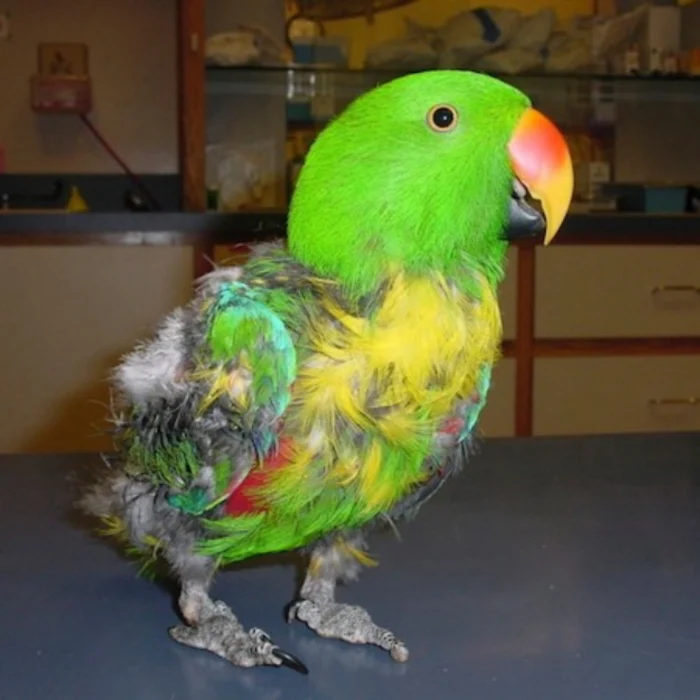
In a clinical setting, the absence of foraging opportunities is linked to a variety of pathological behaviors, including feather-destructive behavior (FDB), chronic egg laying, and generalized anxiety disorders. By providing one hour of RACE-approved continuing education, the program aims to standardize the way veterinary professionals prescribe environmental enrichment as a therapeutic intervention.
Technical Analysis of Ultraviolet Radiation and Avian Health
A significant portion of the specialized training focuses on the role of light, specifically ultraviolet B (UVB) radiation, in avian health. Unlike humans, most avian species are tetrachromatic, meaning they possess a fourth cone type in their retinas that allows them to perceive light in the ultraviolet spectrum (specifically UVA, ranging from 320 to 400 nm). This visual capability is essential for identifying ripe fruit, locating mates through plumage fluorescence, and recognizing healthy offspring.
However, the webinar goes beyond visual perception to address the endocrine functions of light. UVB radiation (290–320 nm) is the primary catalyst for the cutaneous synthesis of Vitamin D3 (cholecalciferol). This vitamin is a precursor to the hormone calcitriol, which is essential for calcium metabolism. In the absence of adequate UVB, birds are prone to hypocalcemia, metabolic bone disease, and poor immune function. Dr. Echols provides data-driven insights into how the artificial lighting environments of most households fail to meet these requirements, leading to sub-clinical health declines that often go unnoticed until they manifest as acute crises.
Chronology of Advancements in Avian Husbandry Standards
The release of this comprehensive guide marks a significant milestone in a decades-long timeline of avian veterinary medicine:
- The 1980s – The Era of Basic Husbandry: Avian medicine was primarily focused on infectious disease and emergency stabilization. Diets were largely seed-based, and "enrichment" was rarely discussed in a clinical context.
- The 1990s – The Nutritional Revolution: The industry saw a shift toward formulated pelleted diets. Research began to highlight the deficiencies inherent in all-seed diets, such as Vitamin A deficiency and hepatic lipidosis.
- The 2000s – Behavioral Awareness: Veterinary behaviorists began to recognize that "boredom" in parrots was a precursor to self-mutilation. Foraging toys began to enter the mainstream market.
- The 2010s – The Integration of Lighting Science: Studies began to quantify the "UV Index" requirements for different species. Researchers like Dr. Echols started advocating for full-spectrum lighting that mimics the natural solar output of a bird’s indigenous habitat.
- 2020 to Present – Holistic Environmental Management: The current standard, as reflected in the March 2026 webinar, treats light, foraging, and social structure as an interconnected web. The focus is now on "functional enrichment"—activities that serve a specific biological or psychological purpose.
Supporting Data: The Impact of Enrichment on Clinical Outcomes
Data presented in the session and supported by contemporary veterinary literature suggest a strong correlation between environmental complexity and longevity. In a study of captive Psittaciformes, birds provided with multi-step foraging challenges showed a 30% reduction in cortisol levels (a primary stress hormone) compared to those fed from open bowls. Furthermore, the implementation of controlled UVB exposure resulted in a measurable increase in serum ionized calcium levels in African Grey parrots (Psittacus erithacus), a species notoriously prone to hypocalcemia.
The technical data also indicates that light intensity and "flicker rate" are crucial. Many domestic LED or fluorescent lights flicker at a rate that is imperceptible to humans but highly distracting or even stressful to birds, who have a much higher "flicker fusion frequency." The webinar instructs professionals on how to recommend lighting systems that provide high-frequency, stable output to ensure a calm environment.
The AAVSB RACE Approval and Professional Responsibility
The approval of this content by the AAVSB RACE program underscores its importance within the professional veterinary community. RACE-approved programs must meet stringent criteria for scientific accuracy and educational integrity. For veterinarians, the 1-hour credit is more than a regulatory requirement; it represents a commitment to the "Gold Standard" of care.
The program includes a rigorous post-test assessment, allowing practitioners only three attempts to demonstrate mastery of the material. This ensures that those who receive the certification are capable of accurately advising clients on the nuances of ultraviolet radiation safety, such as the "inverse square law" (how the intensity of light changes with distance) and the degradation of UVB bulbs over time.
Implications for the Global Veterinary Industry
The broader implications of this educational initiative are twofold. First, it empowers veterinary technicians to take a leading role in client education. Often, the technician is the primary point of contact for husbandry discussions, and providing them with RACE-approved training ensures that the advice given is consistent and evidence-based.
Second, it signals a shift in the pet product industry. As more veterinarians become educated on the specific requirements of avian light and foraging, there is increased pressure on manufacturers to produce high-quality, biologically appropriate products. The demand for bulbs with verified UVB output and foraging toys that require actual problem-solving skills is expected to rise significantly following these professional updates.
Analysis of Potential Challenges in Implementation
While the scientific benefits of foraging and UV enrichment are clear, the veterinary community faces challenges in client compliance. High-quality UV lighting systems can be expensive, and implementing a foraging-only feeding schedule requires a significant time commitment from the owner.
Dr. Echols and LafeberVet address these challenges by providing "scalable" solutions. Enrichment does not always require expensive equipment; it can involve the creative use of cardboard, non-toxic branches, and hidden food items. The goal of the 2026 guidelines is to provide a menu of options that can be tailored to the owner’s budget while still providing the bird with the necessary biological stimuli.
Future Directions in Avian Enrichment Research
As the veterinary community moves forward from this March 2026 session, the focus is expected to turn toward species-specific light requirements. While a general "UV Index" is helpful, a macaw from the bright canopies of South America has vastly different needs than a cockatiel from the scrublands of Australia.
Ongoing research, often supported by the experts featured on LafeberVet, is currently looking into the "D-synergy" effect—how the combination of diet and light works more effectively than either factor alone. There is also emerging interest in the "circadian health" of birds, exploring how specific wavelengths of light in the evening might influence sleep patterns and, by extension, immune health.
Conclusion
The "Foraging and Enrichment" webinar by M. Scott Echols, DVM, DABVP, represents the cutting edge of avian veterinary medicine in 2026. By bridging the gap between high-level physiological research and practical, in-home application, the program provides a roadmap for the future of avian welfare. As practitioners across jurisdictions recognize the value of this AAVSB RACE-approved training, the standard of care for captive birds is set to reach new heights, prioritizing the complex needs of these highly intelligent and biologically demanding animals. For the veterinary professional, the message is clear: environmental management is no longer an "extra" service—it is the foundation of a healthy avian patient.

