



The American Federation of Aviculture (AFA) has maintained a rigorous documentation of the evolution of avian husbandry, conservation, and legislative advocacy through its flagship publication, the AFA Watchbird. This extensive archive, spanning from the organization’s inception in 1974 through 2015, represents one of the most significant collections of specialized ornithological and avicultural knowledge in the world. As a "journal of record" for the bird-keeping community, the Watchbird has served as a primary resource for veterinarians, researchers, professional breeders, and conservationists for over forty years. The preservation of these volumes highlights the transition of aviculture from a niche hobby into a sophisticated branch of animal science dedicated to the survival of avian species across the globe.
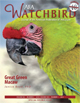
The Genesis of the American Federation of Aviculture and its Official Voice
To understand the weight of the Watchbird archive, one must look at the historical context of its founding. In the early 1970s, the United States faced significant challenges regarding exotic bird importation, primarily due to outbreaks of exotic Newcastle disease (VVND). The resulting government-mandated culls and strict quarantine regulations threatened the future of bird keeping in America. In 1974, a group of dedicated bird enthusiasts and professionals formed the AFA to provide a unified voice for aviculturists and to promote the welfare of birds through education and captive breeding.
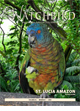
The first issue of the Watchbird, Volume 1, No. 1, was published in 1974. It was designed not merely as a newsletter, but as a technical journal that could bridge the gap between scientific academia and the practical experience of the private breeder. From its earliest pages, the publication established a precedent for high-quality reporting on species-specific breeding protocols, nutritional breakthroughs, and medical advancements.

A Chronological Journey: Four Decades of Avian Documentation
The archive follows a clear timeline that mirrors the broader trends in global environmentalism and the pet industry. By examining the chronology of the volumes from 1974 to 2015, historians can track the maturation of the industry.
The Foundational Years (1974–1979)
During the late 1970s, represented by Volumes 1 through 6, the magazine focused heavily on establishing basic husbandry standards. This era was characterized by the "pioneer spirit" of aviculture, where many species were being bred in captivity for the first time. Articles often detailed the construction of aviaries, the development of specialized hand-feeding formulas, and the initial attempts to stabilize captive populations of parrots, finches, and softbills.

The Expansion and Boom Era (1980–1989)
The 1980s (Volumes 7 through 16) saw a massive surge in the popularity of exotic birds as companions. The Watchbird expanded its scope to include more detailed veterinary columns and scientific research. This decade was pivotal for the development of avian medicine; contributors often shared peer-reviewed findings on infectious diseases such as PBFD (Psittacine Beak and Feather Disease) and Pachecho’s Disease. The AFA used these volumes to educate the public on the importance of buying captive-bred birds rather than wild-caught individuals, a movement that gained significant traction during this period.

The Legislative Shift (1990–1999)
The 1990s (Volumes 17 through 26) represent perhaps the most tumultuous decade in the archive. The passage of the Wild Bird Conservation Act (WBCA) of 1992 fundamentally changed the landscape of American aviculture by effectively ending the commercial importation of most CITES-listed bird species. The Watchbird served as a critical platform for analyzing the implications of this law. The magazine’s role shifted toward promoting "sustainable aviculture," emphasizing that the future of many species rested solely on the success of domestic breeding programs and international conservation efforts.
The Conservation and Digital Era (2000–2015)
As the publication entered the 21st century (Volumes 27 through 42), the focus intensified on field conservation and the use of technology in bird care. The Watchbird began reporting more frequently on AFA-funded conservation projects in the wild, such as the protection of the Thick-billed Parrot in Mexico and the Blue-throated Macaw in Bolivia. This era also saw the magazine adapt to the digital age, eventually leading to the comprehensive online archive that exists today, ensuring that the decades of gathered wisdom remain accessible to a new generation of digital-native bird enthusiasts.
Technical Evolution and Educational Contributions
The Watchbird has consistently served as a repository for technical data that is often unavailable in mainstream zoological journals. One of the magazine’s most enduring contributions is its "Species Spotlight" series, which provides exhaustive data on the natural history, diet, and reproductive behavior of specific birds.

Supporting data within these volumes often includes:
- Clutch Size and Incubation Records: Detailed statistics on various species, providing benchmarks for successful captive reproduction.
- Nutritional Analysis: Studies on the protein, fat, and vitamin requirements of growing chicks versus breeding adults.
- Pathology and Necropsy Reports: Crucial information for avian veterinarians regarding the spread and treatment of viral and bacterial infections.
- Genetic Diversity Studies: Guidance on maintaining healthy gene pools within closed populations to prevent the negative effects of inbreeding.
By providing this data, the Watchbird empowered the "citizen scientist." Private aviculturists were encouraged to keep meticulous records, many of which were eventually compiled and published in the journal, contributing to the global understanding of avian biology.

Legislative Advocacy and Official Responses
Throughout its history, the AFA has used the Watchbird to respond to regulatory changes from the U.S. Fish and Wildlife Service (USFWS), CITES (Convention on International Trade in Endangered Species), and the USDA. The archive documents the organization’s stance on controversial issues, such as the listing of certain parrot species as "Endangered" under the Endangered Species Act (ESA), which often imposes strict interstate travel and sale restrictions.
Statements found within the archive reflect a consistent philosophy: that "aviculture is conservation." The AFA has frequently argued that restrictive legislation can sometimes hinder conservation by making it more difficult for breeders to exchange genetic material. The Watchbird provided a forum for legal experts and policy analysts to dissect these regulations, offering members a clear understanding of their rights and responsibilities under the law.

Industry reactions to the publication have historically been overwhelmingly positive. Dr. Branson Ritchie, a renowned avian veterinarian, and other prominent figures in the field have frequently cited the Watchbird as a vital link between the laboratory and the aviary. The magazine’s ability to translate complex scientific findings into practical advice for the everyday bird keeper is cited as its greatest achievement.
Broader Impact and Implications for the Future
The enrichment of this archive serves a purpose far beyond nostalgia. As habitat loss continues to threaten avian populations in the wild, the knowledge contained in the Watchbird becomes a blueprint for emergency intervention. For species that may one day become extinct in the wild, the captive breeding protocols documented in these volumes provide the only hope for reintroduction programs.
Furthermore, the archive illustrates the shift in the ethical considerations of bird keeping. Early volumes reflect a time when the primary goal was simply to keep birds alive and healthy in cages. Modern volumes reflect a deep commitment to environmental enrichment, psychological well-being, and the ethics of conservation. This evolution mirrors the global trend toward higher standards of animal welfare and a more holistic approach to wildlife management.

The decision to digitize and maintain this 41-year history ensures that the collective memory of the avicultural community is not lost. In an era where information is often fragmented and transient on social media, the Watchbird archive stands as a stable, fact-based foundation. It provides a historical benchmark that allows current researchers to see how far the field has progressed and identifies areas where further research is needed.
Conclusion: A Legacy of Stewardship
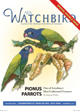
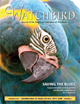
The AFA Watchbird archive is more than a collection of magazines; it is a testament to the dedication of thousands of individuals who have devoted their lives to the study and care of birds. From the first black-and-white pages of 1974 to the vibrant, high-resolution issues of 2015, the publication has remained steadfast in its mission.

As the American Federation of Aviculture moves forward, these volumes serve as both a map of where the industry has been and a guide for where it must go. The implications of this archive are clear: informed aviculture is a powerful tool for global conservation. By preserving this data, the AFA ensures that the "watchbird" continues to stand guard over the world’s avian treasures, promoting a future where birds thrive both in the wild and under human care. The archive remains an essential resource for anyone serious about the science, the art, and the heart of aviculture.

