


By Diane Burroughs
Published On: July 28, 2025
Last updated on: December 27, 2025
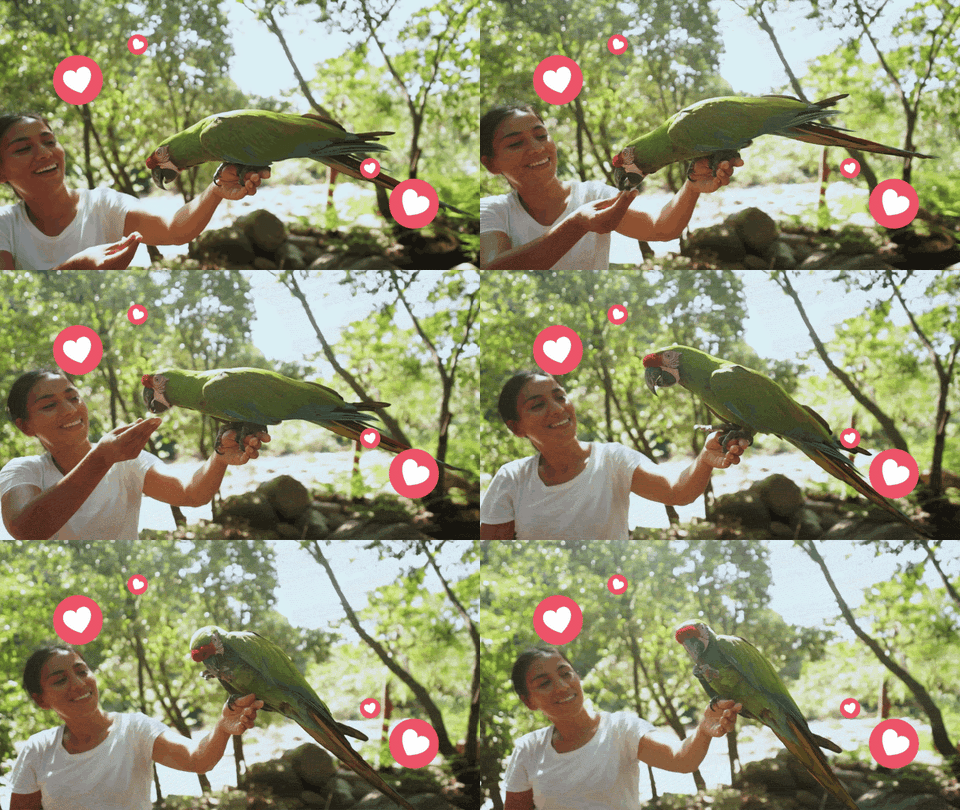
For individuals sharing their homes with companion birds, particularly those that are fully flighted, the seemingly simple behavior of "stepping up" is far more than a mere trick; it is a fundamental cornerstone of daily interaction, safety, and the overall well-being of the avian companion. Without a reliably trained step-up, the routine management of a bird can quickly devolve into a frustrating and potentially hazardous pursuit, as the bird takes flight on impulse, leading its owner on a chase from furniture to fixtures. This lack of control is not merely an inconvenience; it represents a significant safety risk. In moments of unexpected fright, environmental danger, or urgent need, the capacity to calmly and effectively cue a bird to step onto a hand or perch can be the decisive factor between its safety and a potentially devastating accident or escape.
The "step up" command is globally recognized by avian veterinarians, behaviorists, and experienced bird owners as an indispensable skill, forming the bedrock of effective bird training and responsible pet ownership. Its mastery ensures that birds can be safely moved, handled for health checks, transported, and redirected away from potential hazards, thereby fostering a secure and predictable environment for both the bird and its human caretakers.
The Foundation of Avian Companionship: Why Step-Up is Non-Negotiable
Parrots and other intelligent companion birds are highly social, sentient beings with complex cognitive abilities. Their welfare in a domestic setting is intrinsically linked to their ability to interact safely and cooperatively with their human families. The "step up" behavior embodies this cooperation, transforming a potentially flighty and independent creature into a willing participant in its own care and daily routine.
Consider a common scenario: a sudden loud noise, the unexpected entry of a child, or a startled reaction to a new object. A parrot, disoriented and frightened, might suddenly take flight, landing in an unfamiliar or dangerous location—perhaps on a hot stove, behind heavy furniture, or near an open window. In such an instance, attempting to physically grab a panicked bird can lead to bites, injuries, and further trauma for the animal. However, if the bird is trained to "step up," its owner can calmly approach, offer the cue, and guide the bird to safety, averting a crisis. This level of control is not about dominance but about establishing clear communication and trust, which are paramount in any interspecies relationship.
Beyond emergencies, the step-up is vital for routine care. It enables owners to easily transfer their bird to a travel carrier for vet visits, move them to a different room for enrichment, or simply facilitate interaction outside their cage. Avian veterinarians consistently emphasize that birds who are comfortable with handling and step-up commands experience less stress during examinations, leading to more thorough and accurate diagnoses. Behavioral issues, often stemming from a lack of foundational training and clear communication, are a significant factor in the surrender of companion birds to rescue organizations. By investing in training like the step-up, owners actively contribute to their bird’s long-term placement and well-being.
Understanding Avian Reluctance: Diagnosing Why Birds Resist
While the "step up" seems straightforward, many bird owners encounter resistance. This reluctance is rarely "stubbornness" but rather a manifestation of underlying fear, confusion, or physical discomfort. Understanding these common reasons is the first step toward effective training.
-
Past Trauma or Negative Associations: Birds possess excellent memories. If a bird has previously experienced forced handling, rough grabbing, or painful experiences associated with human hands (e.g., being pulled from a cage, an owner reacting negatively to a bite), it will develop a strong aversion. This past trauma can manifest as fear, aggression, or a flight response whenever a hand approaches. Rebuilding trust in such cases requires immense patience and a consistent, positive approach.
-
Unfamiliarity or Discomfort with Human Hands: A human finger or arm is fundamentally different from a natural tree branch or a manufactured perch. It moves, it can feel warm or cold, and it lacks the rough texture a bird’s feet are accustomed to gripping. For a bird new to human interaction, or one that has spent little time outside its cage, the hand itself can be an intimidating, unstable, or simply "weird" object. They may not perceive it as a safe or stable platform.
-
Handler Instability or Lack of Confidence: Birds are sensitive to their environment and the demeanor of their caretakers. An unsteady hand, an arm that wobbles once the bird steps on, or a handler who projects nervousness can easily unnerve a bird. A sudden, jerky movement can trigger their flight instinct, making them less likely to trust the handler in the future. Consistency and a calm, confident presence are crucial.
-
Physiological Challenges: Not all birds have the same physical capabilities. Young birds may have underdeveloped balance and grip strength. Elderly birds or those suffering from conditions like arthritis may experience pain or difficulty gripping firmly. Overweight birds might struggle with the effort required to lift themselves. In such cases, a veterinary consultation is essential to rule out any underlying health issues that might be contributing to their reluctance to step up. Adapting the training method to accommodate physical limitations (e.g., using a thicker, more stable perch) may be necessary.
-
Ineffective or Inconsistent Training Methods: Birds are intelligent and learn best through positive reinforcement. Methods that involve punishment, force, or yelling will not only be ineffective but will also damage the bond between bird and owner. Similarly, inconsistent cues, unclear expectations, or infrequent training sessions can lead to confusion and a breakdown in communication, leaving the bird unsure of what is being asked of it.
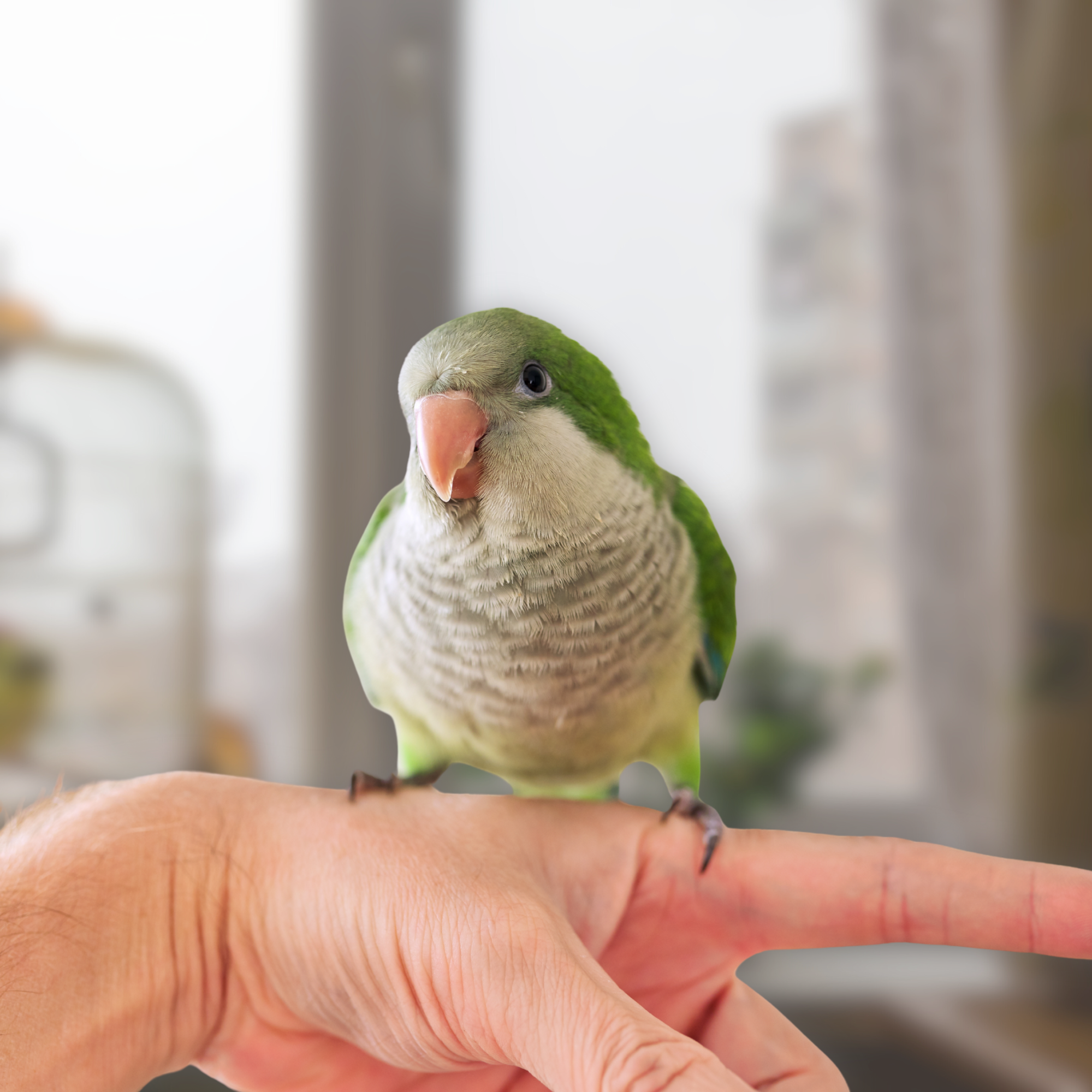
Mastering the "Step-Up": A Step-by-Step Training Protocol
Successful step-up training relies on a clear, consistent communication system built on trust and positive reinforcement. This systematic approach ensures the bird understands the request and associates it with a positive outcome.
Essential Supplies:
Before beginning, gather the following:
- High-Value Treats: Small, favorite treats that your bird doesn’t get often (e.g., a sliver of almond, a piece of millet, a sunflower seed). These act as powerful motivators.
- Target Stick (Optional but Recommended): A chopstick or a specific training stick can be invaluable for guiding your bird without direct hand pressure, especially for fearful birds.
- Clicker (Optional but Recommended): A clicker provides a precise "marker" signal, immediately indicating to the bird the exact moment it performed the desired action, followed by a treat.
- Safe Training Environment: A quiet, familiar space free from distractions and potential hazards.
1. Building Trust and Positive Associations:
The absolute prerequisite for step-up training is trust. Your bird must associate your hand and presence with positive experiences.
- Start with Proximity: Begin by simply being near your bird’s cage, speaking calmly. Gradually introduce your hand into its vicinity, offering treats through the cage bars or placing them in a dish while your hand is nearby.
- Hand-Feeding: Once comfortable with your hand’s presence, offer treats directly from your fingers, allowing the bird to approach and take the treat voluntarily. Avoid forcing interaction.
- Observation: Pay close attention to your bird’s body language. Relaxed feathers, soft eyes, and a willingness to approach indicate comfort. Puffed-up feathers, darting eyes, or backing away signal stress or fear, indicating you need to slow down.
2. Introducing the Cues: Verbal, Visual, and Gentle Pressure:
A clear and consistent communication system is vital.
- Verbal Cue: Choose a simple, calm phrase like "Step up" or "Up." Say this phrase every single time you initiate the behavior.
- Visual Cue: Present your hand, finger, or a training perch (if your bird is fearful of hands) just below your bird’s chest, where its feet meet its body. The visual cue shows the bird where to go.
- Gentle Pressure: With your chosen visual cue (hand or perch), apply a very slight, upward pressure against the bird’s chest or lower belly. This is not a jab or a shove, but a gentle nudge, signaling the bird to lift its foot. The combination of verbal cue, visual cue, and gentle pressure helps the bird understand the request.
3. Reinforcing Every Win (Shaping Behavior):
Positive reinforcement is the most effective method for training birds.
- Reward Incremental Progress: Don’t wait for a perfect step-up initially. Reward any approximation of the desired behavior.
- Phase 1: Looking at the hand/perch. Say "Step up," present your hand/perch. If the bird even looks at it, click (if using) and offer a treat.
- Phase 2: Touching the hand/perch. When the bird comfortably looks, try to get it to touch the hand/perch with its beak or foot. Reward immediately.
- Phase 3: Lifting one foot. Apply gentle pressure. The moment the bird lifts one foot onto your hand/perch, click and treat.
- Phase 4: Both feet on. As soon as both feet are securely on your hand/perch, click and treat generously, accompanied by calm verbal praise ("Good bird!").
- Timing is Critical: The reward (click and treat) must occur within 1-2 seconds of the desired behavior for the bird to make the association.
- Short, Positive Sessions: Keep training sessions brief, typically 5 to 10 minutes maximum. Birds have short attention spans for focused training. Always end on a successful note, even if it’s a small victory, so your bird associates training with positive experiences and looks forward to the next session.
- Video Integration: Visual aids are incredibly helpful. Observing techniques like those demonstrated in a video showing the use of a target stick and treats can clarify the process and timing for owners.
Addressing Challenges: Overcoming Fear and Miscommunication
When a bird refuses to step up, bites, or flies away, it is crucial to reframe this behavior not as "stubbornness" but as a clear signal of fear, confusion, or a breakdown in communication.
-
Fear-Based Reactions: If your bird is lunging, biting, or consistently flying away, it’s likely afraid of your hand or the training process.
- Slow Down: Revert to an earlier step where your bird was comfortable, such as simply offering treats near your hand or from a distance.
- Use a Perch or Target Stick: For highly fearful birds, use a neutral object like a wooden dowel or a target stick as the initial "step up" platform. Once the bird trusts the perch, you can gradually introduce your hand closer to the perch, and eventually transition to your hand directly.
- Desensitization: Gradually expose your bird to your hand in a non-threatening way. This might involve placing your hand in the cage for short periods without demanding interaction, simply allowing the bird to get used to its presence.
- Avoid Punishment: Never scold, tap, or punish a bird for biting or refusing to step up. This will only increase fear and break down trust, making future training exponentially harder.
-
Confusion or Miscommunication: If your bird seems unsure but not necessarily fearful, it may not understand the cue.
- Consistency: Ensure your verbal cue, visual cue, and gentle pressure are exactly the same every time. Inconsistency leads to confusion.
- Clear Reinforcement: Are you rewarding immediately and with high-value treats? Is the reward consistent?
- Shorten Sessions: If your bird is getting overwhelmed, shorten the sessions further.
- Change Location: Sometimes a different, calmer environment can help a bird focus.
Remember, building trust and confidence takes time. Each bird is an individual, and patience, consistency, and a positive attitude are your most valuable tools. Celebrate small victories and never push your bird beyond its comfort zone.
Beyond the Basic Step-Up: Advanced Avian Handling and Enrichment
Once your bird has mastered the basic "step up," this foundational skill opens the door to a wealth of other behaviors that further enhance its safety, mental stimulation, and your bond.
-
Step-Down: This is equally important as the step-up. It teaches your bird to voluntarily move from your hand to a designated perch or its cage. Use the same principles: a verbal cue ("Step down"), a visual cue (the target perch), and gentle pressure. Reward when the bird places one foot, then both feet, onto the new surface. This reinforces the idea that stepping off your hand is also a positive experience, preventing "perch guarding" or refusal to return to its cage.
-
Laddering: This exercise involves having your bird alternate stepping from one hand to the other. "Step up" onto your left hand, then immediately present your right hand with the cue, and so on. Laddering builds coordination, balance, and stamina, and significantly reinforces the bird’s responsiveness to your cues. It’s an excellent form of physical and mental exercise.
-
Target Training: Using a target stick, teach your bird to touch the end of the stick with its beak. This can then be used to guide your bird to step onto your hand, move to a specific perch, or even enter a carrier. Target training is incredibly versatile and allows for "hands-off" guidance, which is particularly useful for birds that are still wary of direct hand contact.

-
Recall Training (for Flighted Birds): A reliable step-up is critical for recall. Once a bird is comfortable stepping up, you can gradually introduce distance and flight. The ultimate goal is for your bird to fly to you on command and step onto your hand, a vital safety skill that prevents escapes and allows for outdoor enrichment in controlled environments.
-
Environmental Enrichment: Trained behaviors contribute significantly to a bird’s overall enrichment. A bird that can be safely handled can explore more of its environment, participate in more interactive play, and engage in a wider variety of activities, preventing boredom and associated behavioral problems like feather plucking or screaming.
Expert Consensus and Broader Implications
The emphasis on "step up" training is not arbitrary; it is rooted in avian behavioral science and the practical realities of caring for intelligent, potentially flighted animals.
Veterinary Perspective: Avian veterinarians universally advocate for consistent positive reinforcement training, with the "step up" as a top priority. Dr. Sarah Smith, a board-certified avian veterinarian, notes, "A bird that steps up reliably is a bird that can receive prompt medical attention. It reduces stress for the animal during examinations, allows for easy administration of medication, and facilitates safe transport in emergencies. It’s a fundamental aspect of preventive care."
Behavioral Science and the Human-Animal Bond: Drawing on principles of Applied Behavior Analysis (ABA), as championed by experts like Diane Burroughs, the process of teaching "step up" goes beyond simple obedience. It is a dialogue, a process of mutual understanding. By consistently using positive reinforcement, owners teach their birds that interaction with humans is safe, predictable, and rewarding. This fosters a deep sense of trust and strengthens the human-animal bond, transforming a pet into a truly integrated family member. The bird learns to view its owner not as a threat, but as a source of positive interaction and security.
Broader Impact on Welfare and Safety: The implications of effective step-up training extend far beyond individual interactions.
- Reduced Rehoming: Birds with good foundational training are less likely to develop severe behavioral issues, which are a leading cause of birds being surrendered to rescue organizations.
- Enhanced Quality of Life: A well-trained bird is a bird that can safely interact with its environment, reducing stress and increasing opportunities for enrichment and socialization.
- Public and Avian Safety: A bird that can be recalled and handled reliably is less likely to escape and face the dangers of the outdoors (predators, traffic, starvation) or cause accidental harm to others.
In essence, "step up" training is an investment in the bird’s physical and psychological health, the owner’s peace of mind, and the longevity and quality of the unique avian-human relationship.
In conclusion, understanding that your bird requires clear communication and trust is one thing, but actually implementing the training and reaping its profound benefits is another. The journey of teaching your bird to step up is a testament to patience, consistency, and empathy. It is a critical skill that underpins safety, facilitates care, and enriches the lives of both bird and owner. As Diane Burroughs, LCSW, whose mission is to help parrots thrive, emphasizes, positive reinforcement, clear cues, and consistent practice are the keys to unlocking a lifetime of positive experiences with feathered companions. The rewards—a safer bird, a stronger bond, and a more harmonious home—are immeasurable.
TAGS: #BirdTraining #BirdStepUp #ParrotBehavior
Diane Burroughs, LCSW, brings over 30 years of experience helping bird lovers build stronger, healthier bonds with their parrots. With a foundation in psychotherapy and Applied Behavior Analysis (ABA), Diane combines proven behavioral science with simple, real-life strategies anyone can use. Through her books, behavior consultations, and UnRuffledRx parrot wellness products, she’s dedicated to helping real bird owners create trust, confidence, and a lifetime of positive experiences with their feathered companions.
Diane’s products been featured in the Journal of Avian Medicine and Surgery and at ExoticsCon, a national conference for exotic animal veterinarians. Her bird collars and supplements are trusted by avian vets and stocked in vet clinics across the U.S. With thousands of individualized behavior plans under her belt, Diane’s mission is simple: to help parrots and their people thrive together.

