


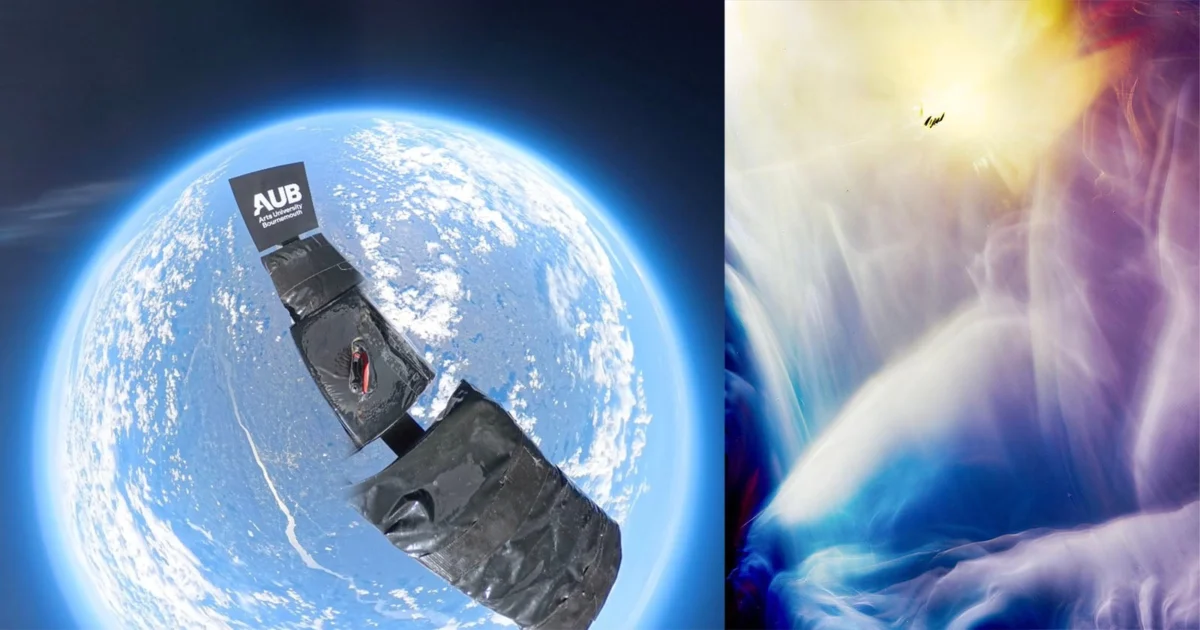
Tom Liggett, a third-year BA (Hons) Photography student at Arts University Bournemouth (AUB) in the United Kingdom, has successfully executed a pioneering project titled HELIOS, which bridges the gap between abstract art and high-altitude physics. On April 19, Liggett launched a series of weather balloons from New York State, carrying 5×4 color negatives to altitudes exceeding 121,000 feet. This height, roughly three times the cruising altitude of commercial aircraft, placed the film well into the Earth’s stratosphere, where it was directly exposed to cosmic radiation and high-energy particles that are typically filtered out by the planet’s denser atmospheric layers.
The project represents a radical departure from traditional photographic methods. Rather than using a camera body, a lens, or a shutter to focus light onto a light-sensitive surface, Liggett opted for a "lensless" approach. He secured 5×4 large-format film—a medium traditionally reserved for high-resolution landscape or architectural photography—inside a light-tight, dark bag. This ensured that the resulting images would not be the product of visible light, but rather the result of invisible energy sources interacting directly with the film’s chemical emulsion.
The Technical Execution of Project HELIOS
To facilitate the launch, Liggett collaborated with Filmed in Space, a specialized organization that provides logistics and technical support for sending payloads into the stratosphere for cinematic and scientific purposes. The choice of New York State as a launch site was strategic, providing the necessary airspace clearances and geographical conditions for a high-altitude balloon ascent and subsequent recovery.
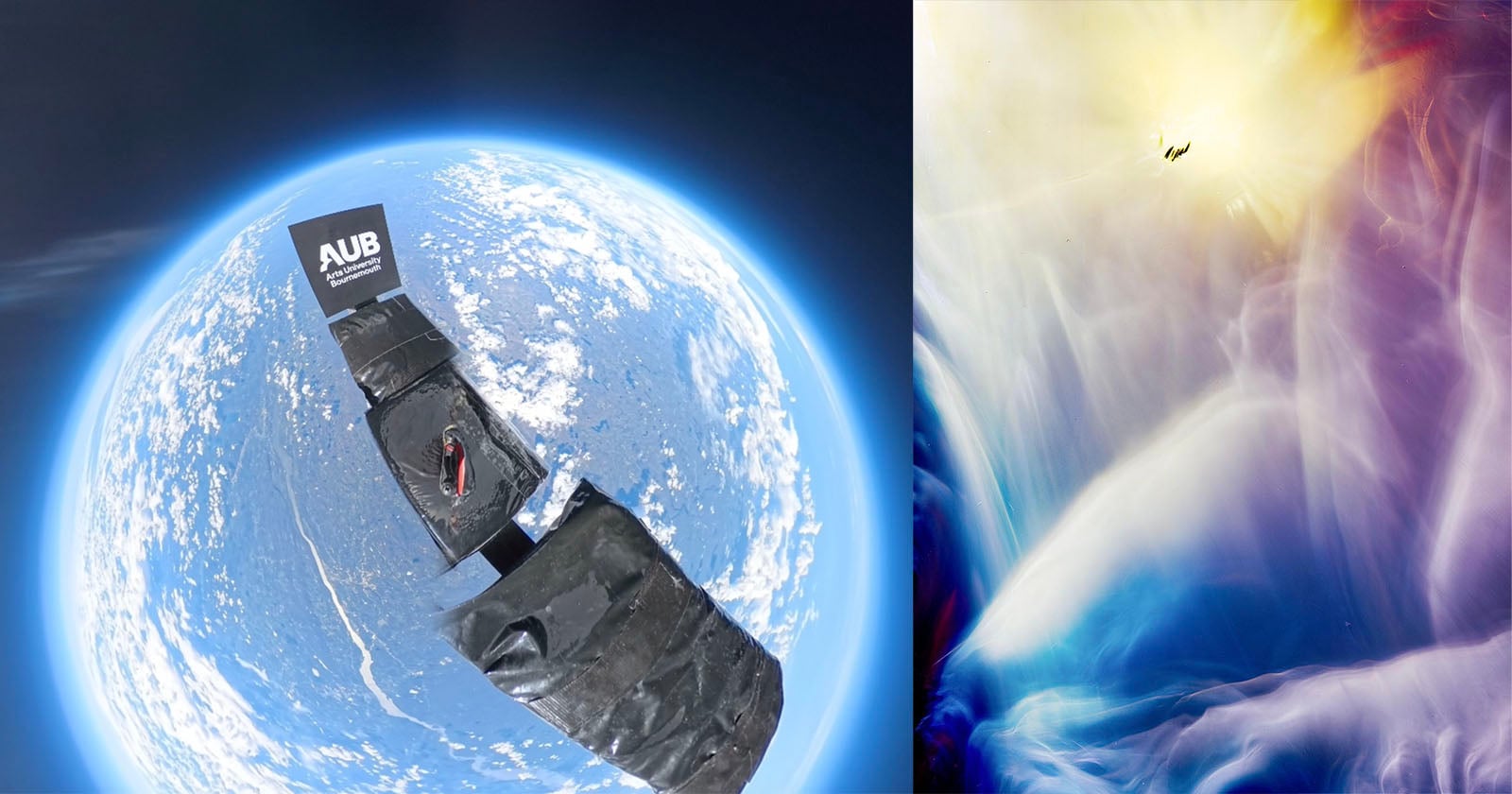
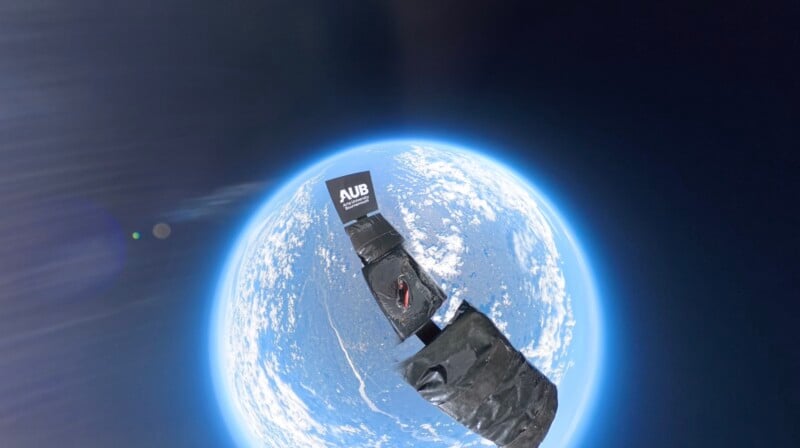
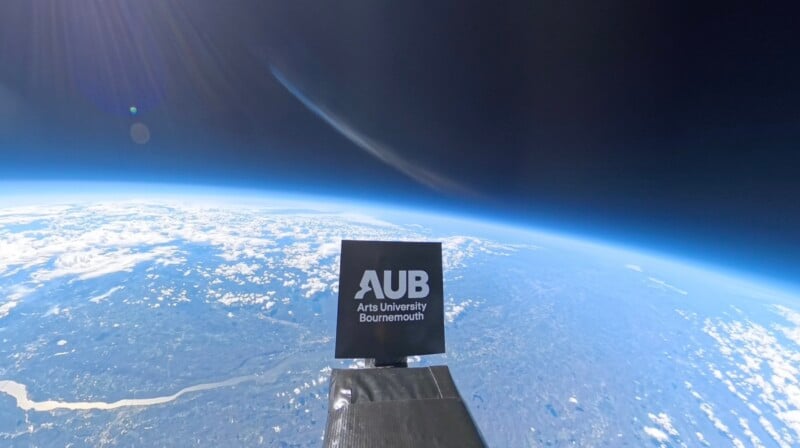
The 5×4 film was duct-taped inside a protective plastic bag designed to be light-proof but permeable to high-energy particles. As the weather balloon ascended through the troposphere and into the stratosphere, the atmospheric pressure dropped significantly. At 121,000 feet, the film was subjected to an environment characterized by extreme cold, low pressure, and intense radiation.
Unlike standard photography, where an exposure lasts a fraction of a second, the HELIOS project utilized the entire duration of the flight as a continuous exposure. The film acted as a biological and chemical sensor, recording every interaction with muons, UV-C rays, and other cosmic particles. Liggett noted that the thinning of the atmosphere was a critical component of the process, as it allowed subatomic particles from deep space to strike the film with minimal interference.
Chronology of the Mission and Recovery
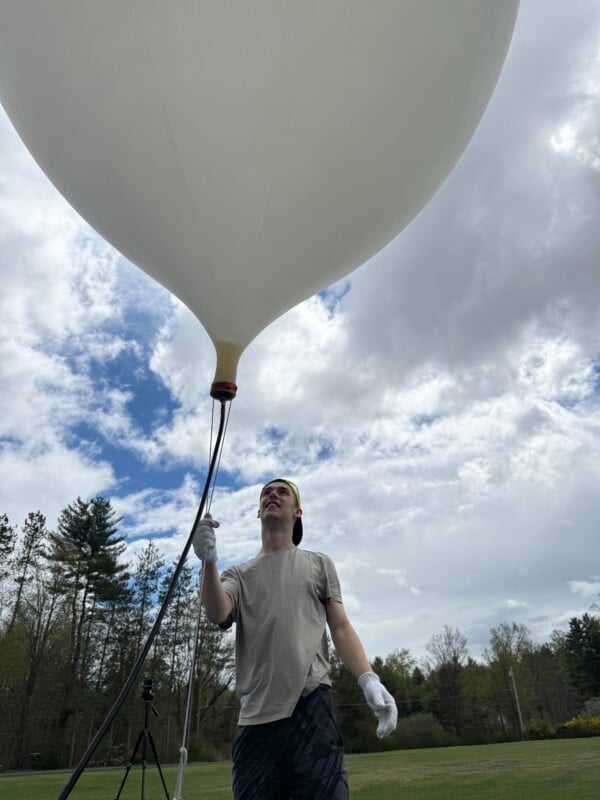
The mission began in rural New York, where the team prepared the hydrogen-filled weather balloon and its payload. The ascent lasted several hours, with the balloon expanding as the external air pressure decreased. Upon reaching its peak altitude of approximately 23 miles, the balloon reached its physical limit and burst—a standard but dramatic conclusion to such flights.
Following the burst, the payload began its descent, stabilized by a small parachute. The tracking equipment indicated that the payload had drifted approximately 50 miles from its original launch site, eventually crossing state lines and landing on private property in Connecticut. The recovery phase required the team to locate the specific landing site using GPS coordinates and seek permission from the local landowner to retrieve the equipment.
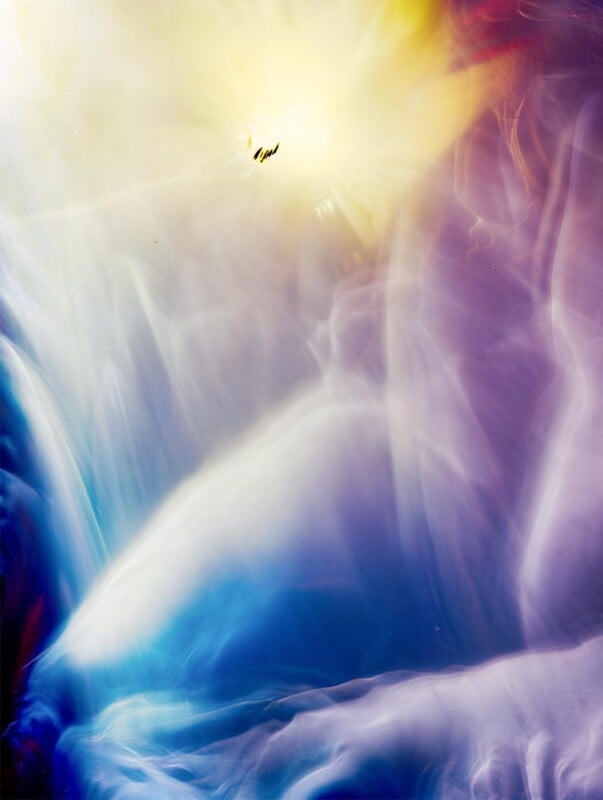
During the descent, an unexpected environmental factor influenced the final image. The payload landed in a wooded area, and a tree branch pierced the protective bag containing the film. This breach allowed a small amount of terrestrial light and environmental elements to interact with the emulsion, resulting in what Liggett described as a "violent yellow bloom" at the top of the developed frame. While unintended, this interaction provided a visual anchor to the film’s return to Earth, contrasting the celestial radiation with a physical mark of the landing.
Scientific Context: Radiation and the Stratosphere
The resulting image, titled HELIOS II, displays a complex array of swirling blues, purples, and ethereal white patterns. According to Liggett’s analysis and subsequent research, these colors are the direct result of the film’s interaction with the "molecular formula of space."
UV-C Radiation
One of the primary drivers of the exposure was UV-C radiation. While UV-A and UV-B rays reach the Earth’s surface and are responsible for sunburns, UV-C is almost entirely absorbed by the ozone layer. By sending the film to 121,000 feet, Liggett positioned the emulsion above the majority of the ozone layer, allowing the high-energy UV-C photons to strike the silver halide crystals in the film, creating distinct color shifts and patterns that are impossible to replicate at sea level.
Muons and Cosmic Rays
The abstract textures in the image are also attributed to muons—subatomic particles that are created when cosmic rays (high-energy protons and atomic nuclei from outside the solar system) collide with the Earth’s upper atmosphere. These particles travel at near-light speeds and can penetrate deep into solid matter. On the 5×4 negative, these particles left "ghostly" tracks and patterns, essentially creating a portrait of energy emanating from black holes and distant stellar events billions of light-years away.
The Intersection of Art and Science
Liggett’s work follows a long tradition of experimental photography that seeks to visualize the invisible. In 1896, Henri Becquerel discovered radioactivity when he left uranium salts on top of a photographic plate in a drawer, finding that the plate had fogged despite not being exposed to light. Project HELIOS applies this principle on a much larger, more intentional scale.
The use of 5×4 film was particularly significant. Large-format film offers a much greater surface area than standard 35mm film, providing a larger "canvas" for cosmic particles to hit. This increased the probability of capturing rare particle interactions and allowed for a higher level of detail in the final abstract "portrait."
"I actually think it’s a more accurate representation of space than a photograph is," Liggett stated in an interview with the BBC. "It’s capturing the actual molecular formula of space." This perspective challenges the conventional definition of photography as the "writing of light" (from the Greek phos and graphê), suggesting instead a form of "energy-graphy" where the universe itself acts as the artist.
Institutional and Academic Significance
The Arts University Bournemouth has expressed support for Liggett’s innovative approach to his final year project. For an undergraduate student to coordinate an international high-altitude launch involves significant logistical planning, fundraising, and technical risk. The success of HELIOS demonstrates the growing trend of interdisciplinary studies, where art students utilize scientific methodology to explore complex themes.
The project also highlights the enduring relevance of analog technology in a digital age. While digital sensors are highly sensitive to radiation (often manifesting as "noise" or "hot pixels"), the chemical emulsion of analog film provides a physical, archival record of the radiation’s impact. The organic nature of the grain and the way the chemicals react to high-energy particles produce a visual aesthetic that digital manipulation struggles to authentically replicate.
Broader Implications and Future Research
The success of Project HELIOS opens doors for further exploration into how different types of film stock might react to stratospheric conditions. Different emulsions, such as infrared-sensitive film or high-speed black-and-white film, would likely produce vastly different interpretations of the same cosmic energy.
Furthermore, Liggett’s work serves as a reminder of the "hidden" environment that surrounds the Earth. While space is often viewed through the lenses of powerful telescopes like Hubble or James Webb, which capture visible and infrared light, HELIOS captures the "background noise" of the universe—the constant rain of particles that shapes the cosmos.
As Liggett prepares to graduate from AUB, the HELIOS project stands as a testament to the potential of creative inquiry. By stripping away the camera and the lens, he has managed to capture a direct impression of the universe’s most fundamental forces. The "celestial abstract results," as he calls them, are not just art pieces but are data points in a creative experiment that bridges the gap between the terrestrial and the cosmic.
Liggett’s future endeavors are expected to continue exploring the boundaries of the photographic medium. His work remains available for public viewing on his professional website and social media platforms, where he continues to document the intersection of analog processes and the physical sciences. For the photography community, HELIOS serves as a provocative example of how looking beyond the visible spectrum can yield some of the most compelling images of our time.

