


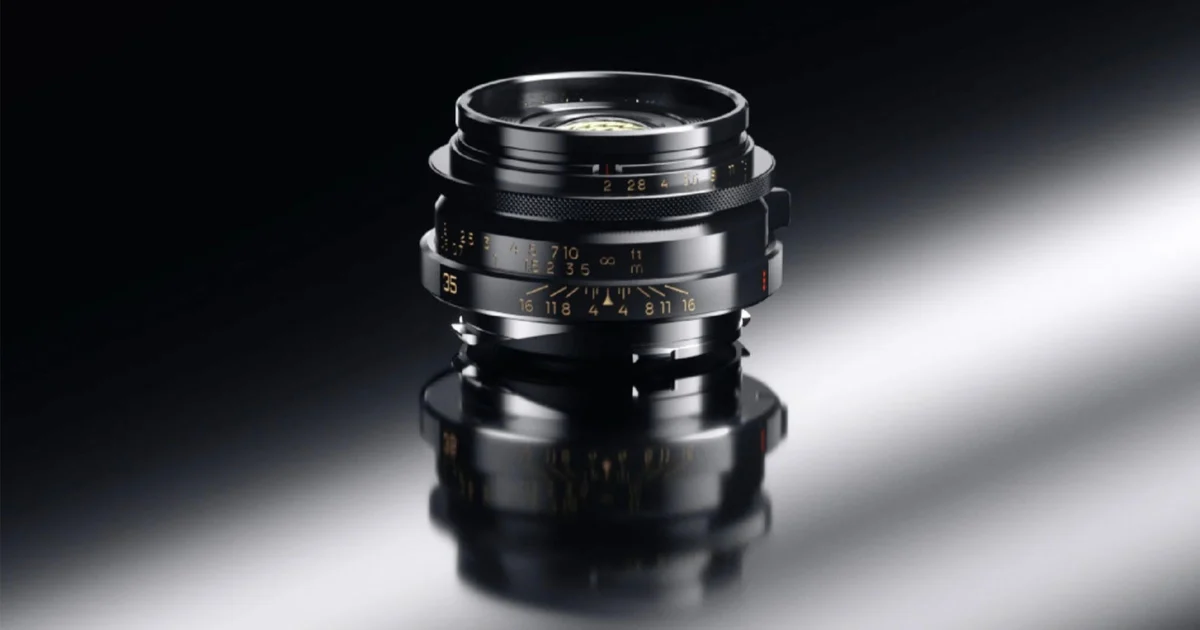
Thypoch, an emerging manufacturer in the high-end manual focus lens market, has officially announced the second entry in its specialized Ksana product line: the Ksana 35mm f/2. Designed specifically for the Leica M-mount system, this new prime lens follows the recent release of the ultra-wide Ksana 21mm f/3.5, signaling a rapid expansion of the brand’s portfolio. While the lens is natively engineered for rangefinder cameras, its manual design and mechanical aperture control make it an ideal candidate for adaptation to modern full-frame and APS-C mirrorless systems, including the Nikon Z, Sony E, and Fujifilm X mounts.
The Ksana 35mm f/2 is positioned as a "standard" prime, a focal length historically revered by street, documentary, and travel photographers for its versatility and natural perspective. Thypoch’s design philosophy for the Ksana series emphasizes a marriage between vintage tactile experiences and contemporary optical precision. By focusing on a compact form factor and premium materials, the company aims to capture the attention of photographers who prioritize the "process" of image-making as much as the final result.
Design Philosophy and Aesthetic Engineering
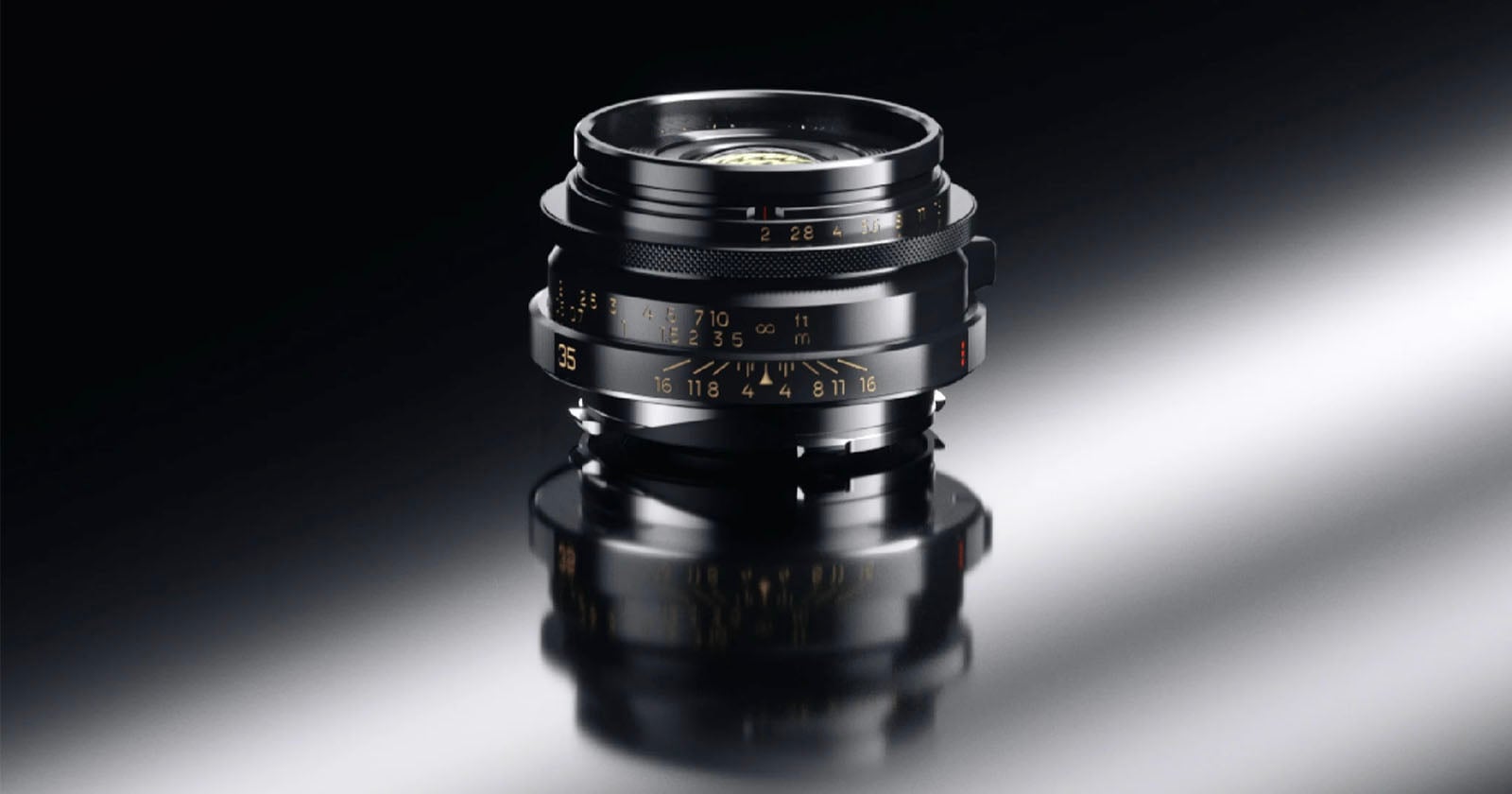
The physical construction of the Ksana 35mm f/2 pays direct homage to the legacy of Leica optics. Constructed from solid brass, the lens offers a density and durability often absent in modern plastic or aluminum-based lenses. The use of brass is a deliberate choice for the enthusiast market; it provides a weighted, professional feel and, in the case of the "black paint" edition, allows for a natural "brassing" effect over years of use, where the underlying metal begins to show through the finish—a characteristic highly prized by vintage camera collectors.
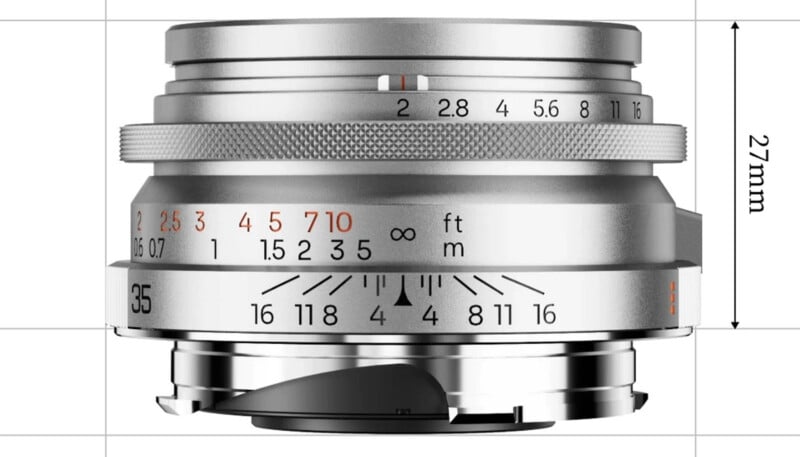
In terms of dimensions, the lens is remarkably compact, measuring just 27 millimeters in length and weighing approximately 198.6 grams (7 ounces). This "pancake-adjacent" profile ensures that the camera remains balanced and unobtrusive, making it a suitable choice for candid street photography where a large lens might draw unwanted attention. The lens features a 39mm front filter thread, a standard size for Leica M-mount accessories, allowing users to easily swap filters between various vintage and modern optics.
Ergonomically, the Ksana 35mm f/2 utilizes a crescent-shaped focusing tab, a traditional design element that allows photographers to focus the lens by feel. This is particularly useful for rangefinder users who rely on muscle memory to estimate distances before bringing the camera to their eye. Furthermore, the lens includes a tactile detent at the 0.7-meter mark. This serves as a physical reminder of the close-focusing limit for most traditional rangefinder coupling systems, though the lens can often be focused closer when used on mirrorless cameras via live view.
The Epoch Coating 84: A Cinematic Narrative
One of the most distinctive features of the Thypoch Ksana series is the "Epoch Coating Project." Each lens in the series is assigned a specific coating formula designed to replicate the visual characteristics of a particular era in photographic history. While the previous 21mm f/3.5 utilized "Epoch Coating 73" to mimic the warm, low-contrast look of 1970s cinema, the new 35mm f/2 introduces "Epoch Coating 84."
According to Thypoch, Epoch Coating 84 is engineered to evoke the "iconic coating aesthetics of the 1980s." During that decade, lens coatings began to evolve from simple single-layer applications to more complex multi-coatings, resulting in unique flare patterns and color renditions. The Ksana 35mm f/2 is specifically tuned to produce "magnificent gold and purple flares" when shooting into direct light sources.
This approach represents a significant shift in modern lens manufacturing. While major players like Sony, Canon, and Nikon compete to eliminate flares and ghosting entirely through nano-coatings, boutique manufacturers like Thypoch are leaning into these "optical imperfections" as creative tools. The goal is to provide a "visual narrative" that feels organic and film-like, rather than the sometimes sterile and overly sharp look produced by modern computer-perfected optics.

Optical Construction and Performance Specifications
Despite its vintage aspirations, the internal engineering of the Ksana 35mm f/2 is decidedly modern. The lens features an optical formula consisting of eight elements arranged in five groups. To ensure that the lens remains sharp even at its maximum f/2 aperture, Thypoch has incorporated several specialized glass elements:
- Aspherical Element: One aspherical lens is used to correct spherical aberrations and ensure corner-to-corner sharpness, a common challenge for compact wide-angle and standard lenses.
- Extra-Low Dispersion (ED) Element: This element is designed to minimize chromatic aberration (color fringing), particularly in high-contrast transitions.
- High-Refractive-Index (HRI) Lenses: A pair of HRI elements allows the lens to maintain a high level of light transmission and contrast while keeping the physical size of the glass elements small.
Thypoch claims that this combination results in a lens that offers "sharp resolution" at the plane of focus while transitioning into "smooth, creamy bokeh" in the out-of-focus areas. The f/2 maximum aperture provides a shallow depth of field that is ideal for portraiture, allowing for subject separation that is often difficult to achieve with slower wide-angle lenses.
Chronology of Thypoch’s Market Entry
The release of the Ksana 35mm f/2 marks a significant milestone in Thypoch’s short but impactful history. The brand first gained international attention with its "Simera" line of f/1.4 lenses, which prioritized high speed and modern rendering. However, the introduction of the "Ksana" series represents a pivot toward a more niche, "lifestyle" segment of the photography market.

- Late 2023: Thypoch enters the market with the Simera 28mm and 35mm f/1.4 lenses, targeting users who want modern performance in a manual focus package.
- Early 2024: The company announces the "Epoch Coating Project," signaling a move toward "character lenses."
- March 2024: The Ksana 21mm f/3.5 is launched, introducing the compact, brass-built design language and the 1970s-inspired coating.
- May 2024: The Ksana 35mm f/2 is officially unveiled, expanding the series into the most popular focal length for M-mount users.
Industry analysts suggest that Thypoch is following a strategy similar to that of Voigtländer or Zenit, carving out a space for users who are dissatisfied with the "perfection" of modern autofocus lenses and seek a more tactile, expressive tool.
Market Analysis and Adaptability
The decision to lead with a Leica M-mount is a calculated business move. The M-mount is the most adaptable lens mount in the world due to its short flange focal distance. This means the Ksana 35mm f/2 is not just a lens for Leica M11 or M10 owners; it is a lens for the entire mirrorless community.
With the rise of "vintage-inspired" digital cameras, such as the Nikon Z f and the Fujifilm X-T5, there is a growing demand for lenses that look and feel like they belong on a classic camera body. The Ksana 35mm f/2, with its brass build and manual rings, fits this aesthetic perfectly. On an APS-C sensor (such as the Fujifilm X-series), the 35mm focal length provides an equivalent field of view of approximately 52.5mm, transforming it into a classic "nifty fifty" portrait lens.

Furthermore, the $599 price point places the lens in a competitive "mid-tier" bracket. It is significantly more affordable than Leica’s own 35mm Summicron-M ($3,895+), yet it offers a more premium build quality than entry-level offerings from brands like TTArtisan or 7Artisans. This positioning targets the "prosumer" who wants a high-quality mechanical experience without the four-figure investment required by European manufacturers.
Official Responses and Creative Impact
Early feedback from photographers who were granted pre-release access to the lens—including notable names like Jonas Dyhr Rask and the team at Analog Insights—highlights the lens’s unique rendering. Samples provided by the manufacturer showcase the Epoch Coating 84 in action, with sunstars and lens flares that exhibit a distinct warmth and geometry.
In a statement regarding the launch, Thypoch emphasized that the lens is "more than just a tribute to the past." The company views it as a "creative powerhouse designed to spark inspiration." By deliberately engineering "flaws" like specific flare colors, Thypoch is responding to a broader trend in the digital arts where creators are looking for ways to make digital imagery feel more "analog" and "human."
Pricing, Availability, and Conclusion
The Thypoch Ksana 35mm f/2 is available for order immediately through authorized retailers and the Thypoch official website. The lens is offered in two finishes: a classic Silver and a sophisticated Black Paint. The base price for the lens is set at $599. For photographers who prefer a complete vintage look and added protection against stray light, a matching lens hood is available for an additional $50.
As the photography industry continues to bifurcate between high-speed, AI-driven autofocus systems and the "slow photography" movement, the Ksana 35mm f/2 stands as a testament to the enduring appeal of manual glass. By focusing on materials, historical coatings, and compact design, Thypoch has successfully created a lens that appeals to the emotions of the photographer as much as the technical requirements of the sensor. The Ksana 35mm f/2 is likely to become a staple for M-mount enthusiasts looking for a daily-carry lens that offers a unique visual signature in an increasingly standardized digital world.

