


The persistent rhythm of a drumming woodpecker is one of nature’s most distinctive sounds, a testament to avian engineering and territorial assertion. These avian architects, capable of striking their heads against wood at speeds up to 20 times per second and reaching velocities exceeding 15 miles per hour, are a source of fascination for bird enthusiasts worldwide. For those residing in or visiting Minnesota, the opportunity to observe and learn about the state’s diverse woodpecker population offers a unique connection to the natural world. This comprehensive guide delves into the eight species of woodpeckers that grace the diverse landscapes of Minnesota, from the familiar flutter of the Downy Woodpecker to the commanding presence of the Pileated Woodpecker.
The Resilient Drumbeats of Minnesota’s Forests
Minnesota’s varied ecosystems, from its dense northern forests to its sprawling southern woodlands and even suburban backyards, provide a rich tapestry of habitats for woodpeckers. These birds play a crucial role in forest health, acting as natural pest controllers and contributing to the nutrient cycle through their foraging activities. Their drumming, far from being mere noise, serves multiple purposes: excavating nesting cavities, communicating with mates, and warding off rivals. Understanding the nuances of each species—their physical characteristics, preferred habitats, dietary habits, and vocalizations—enhances the appreciation of these remarkable birds.

The Familiar Neighbors: Downy and Hairy Woodpeckers
Among the most commonly encountered woodpeckers in Minnesota are the Downy Woodpecker (Dryobates pubescens) and the Hairy Woodpecker (Dryobates villosus). Often mistaken for one another due to their similar black and white plumage and the male’s characteristic red occipital patch, these two species present a fascinating study in subtle distinctions.
The Miniature Marvel: Downy Woodpecker
The Downy Woodpecker, the smallest member of the woodpecker family found in North America, is a ubiquitous presence across the United States, including Minnesota. Weighing less than an ounce, these diminutive birds are often observed foraging in areas inaccessible to larger species, demonstrating a remarkable adaptability. Their black and white checkered wings and crowns, coupled with a mostly white body, make them easily recognizable. The males are distinguished by a vivid red patch on the back of their heads, a feature absent in females.
Downy Woodpeckers are primarily bark foragers, meticulously searching tree trunks and branches for their sustenance, which largely consists of small insects like ants. Their presence is a common sight wherever trees are abundant, including residential areas equipped with bird feeders. Their small stature often leads them to associate with flocks of similar-sized birds, such as chickadees, for enhanced protection against predators. Their vocalizations are a series of quick, delightful chirps, often accompanied by light, short drumming. Their modest pecking strength ensures they remain relatively unobtrusive, making them a gentle addition to any backyard avian community.
The Robust Relative: Hairy Woodpecker
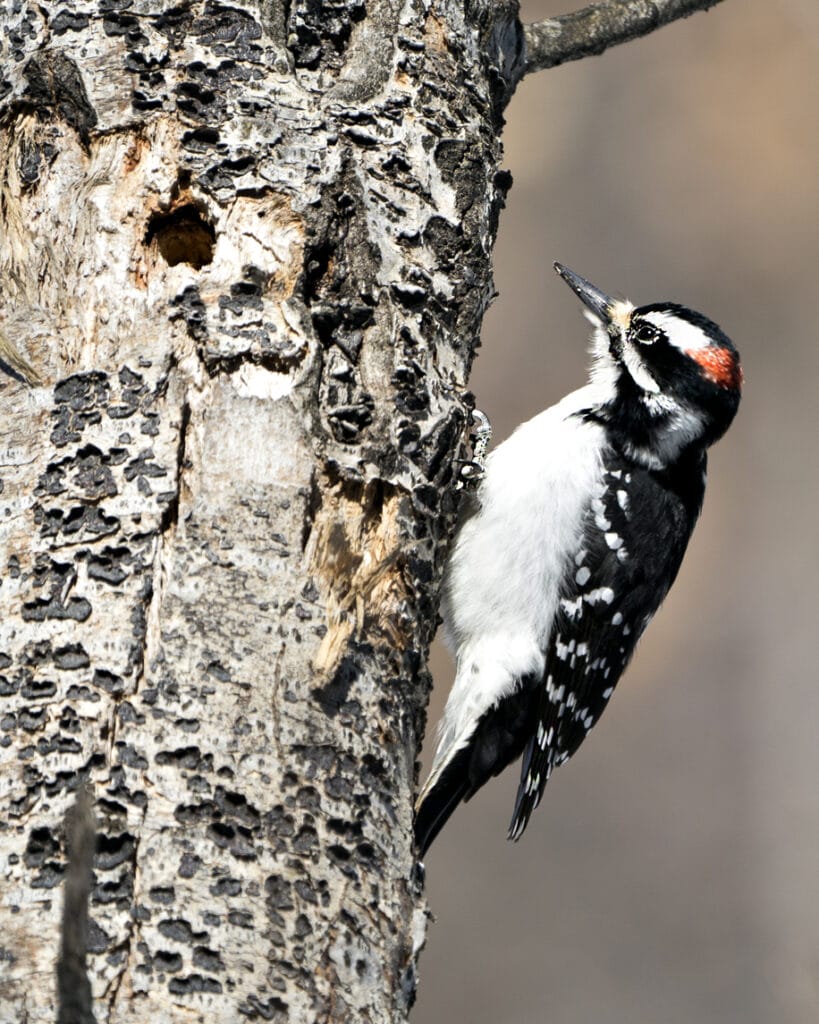
The Hairy Woodpecker presents a larger, more robust version of its Downy cousin, boasting a body size approximately 40% larger and triple the weight. Like the Downy Woodpecker, the Hairy Woodpecker is a year-round resident of Minnesota. However, their preference for larger trees and mature forests means they are less frequently observed in urban settings and small parks compared to their smaller counterparts. They are more likely to be found in larger, more established woodlands.
The Hairy Woodpecker shares a striking resemblance in coloration with the Downy Woodpecker, including the male’s distinctive red occipital patch. Their calls and drumming patterns are also similar, though typically louder and more forceful due to their larger size. Distinguishing between the two can be challenging from a distance, but closer inspection reveals key differences. Beyond its greater size, the Hairy Woodpecker possesses a noticeably longer and sturdier bill. Its back also appears straighter, contributing to a more upright posture, sometimes likened to that of a soldier. Patience and keen observation are often required to confidently differentiate these two closely related species.
The Specialized Foragers: Black-backed and Yellow-bellied Sapsuckers
Venturing into more specialized niches within the woodpecker community, the Black-backed Woodpecker and the Yellow-bellied Sapsucker showcase unique adaptations and feeding strategies.

The Shadow Dweller: Black-backed Woodpecker
The Black-backed Woodpecker (Picoides arcticus) shares a similar size with the Hairy Woodpecker but is less common throughout the United States, with its primary range extending into Canada. In Minnesota, however, they are present year-round, particularly in the northern regions adjacent to the Canadian border, where cooler climates prevail. Their predominantly black plumage is broken by white patches on their wings and often a white belly. A distinctive feature is their black crown adorned with two white lines near the bill, resembling a mustache.
A key identifier between sexes is a yellow patch on the forehead of males, a feature also present in juveniles of both genders, which recedes in adult females. The Black-backed Woodpecker exhibits a remarkable camouflage, blending seamlessly with darker or recently burned trees, a habitat preference that allows them to thrive. Their diet consists primarily of wood-boring beetles, which they locate by drilling test holes to find beetle tunnels. Once located, they employ their elongated tongues to extract the unsuspecting prey. Their vocalizations are among the quietest of the woodpecker species, consisting of infrequent, single chirps separated by pauses.
The Sap Drinkers: Yellow-bellied Sapsucker
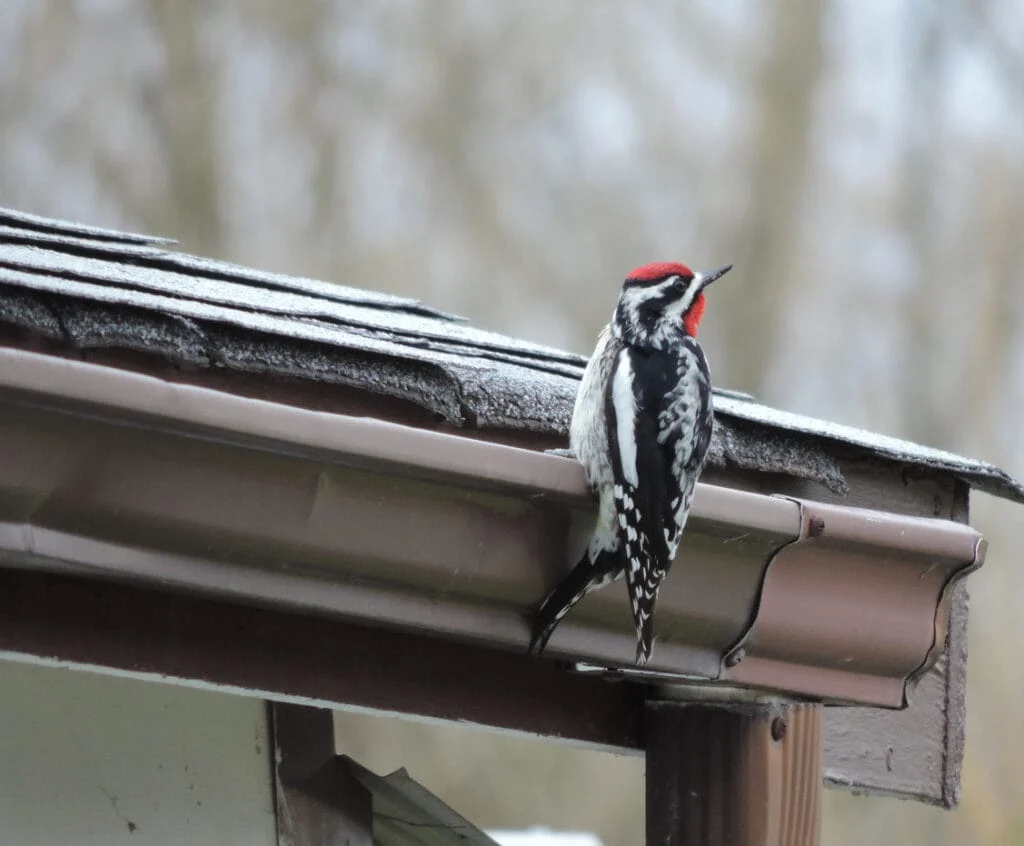
The Yellow-bellied Sapsucker (Sphyrapicus varius) is a beautifully plumaged bird, roughly the size of an American Robin, that breeds in northern Minnesota. While they migrate south for the winter, their presence in the southern parts of the state ensures they are observable for most of the year. Their plumage is a striking mosaic of black and white, lacking a highly defined pattern. Both sexes share a red forehead, but only males exhibit a red throat. The small yellow patch on their chest gives them their name.

Their unique feeding behavior, which earns them the "sapsucker" moniker, involves drilling rows of small, precise holes, known as "sap wells," into tree bark to feed on the flowing sap. While they supplement their diet with insects and fruits, tree sap forms the cornerstone of their nutrition. This sap-feeding habit also benefits other species; hummingbirds, such as the Ruby-throated Hummingbird, often capitalize on these wells for a sweet treat, unable to create them independently. The Yellow-bellied Sapsucker’s call is distinctively repetitive, often described as a "pew pew pew," without a set pattern, continuing until the bird decides to cease.
The Ground Foragers and Masters of Display: Northern Flicker and Red-headed Woodpecker
Moving beyond arboreal foraging, two species, the Northern Flicker and the Red-headed Woodpecker, exhibit unique behaviors and striking appearances.
The Versatile Ground Forager: Northern Flicker
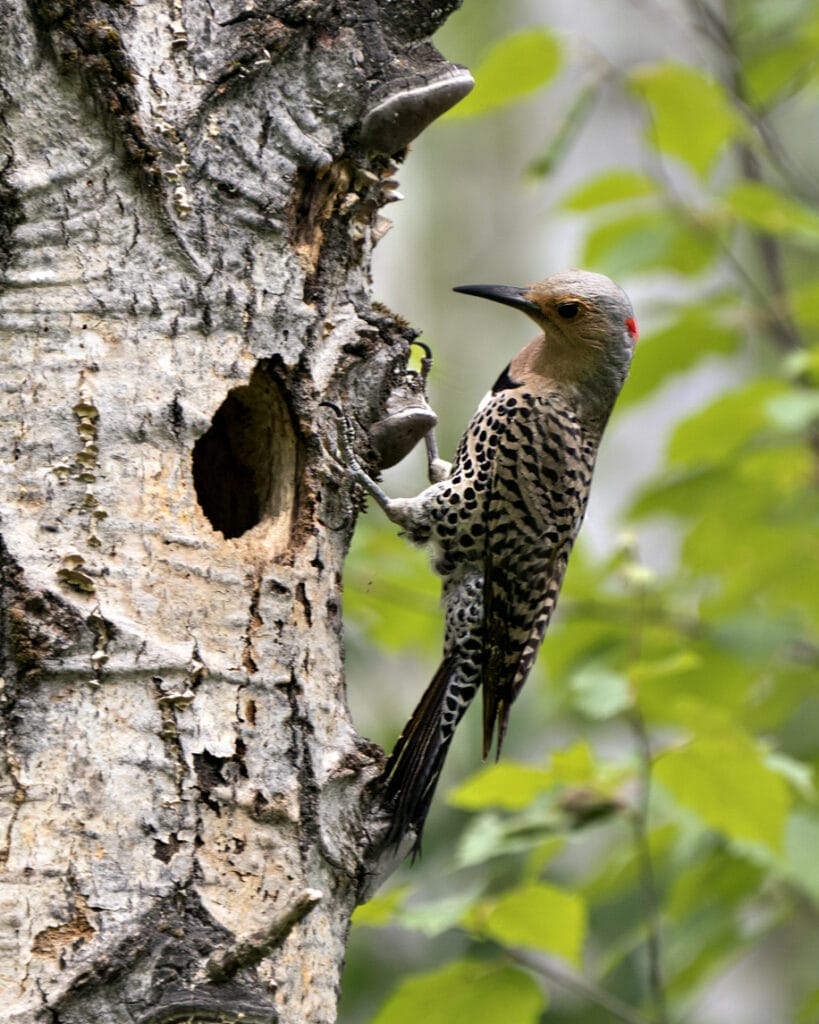
The Northern Flicker (Colaptes auratus) is a relatively large woodpecker, slightly smaller than a crow, and a year-round resident of Minnesota. They are commonly found in woodlands, backyards, and parks. Their plumage is a captivating blend of gray adorned with black spots, complemented by a red patch on the nape and a distinct black crescent on the chest. Males possess a red cheek patch, while females have a black one.

A notable characteristic of the Northern Flicker is its tendency to forage on the ground, seeking ants and beetles. This ground-based feeding habit is so prevalent that many inadvertently startle them while they are foraging. During the mating season, Northern Flickers are among the most rapid drummers, often incorporating intense drumming, sometimes on metallic surfaces, to attract mates. This can lead to impressive and loud displays, especially in urban environments where they may utilize man-made structures for their resonant communication. Their drumming can be likened to a rapid-fire machine gun, a potent signal in their courtship rituals.
The Striking Spectacle: Red-headed Woodpecker
Easily identifiable from a distance, the Red-headed Woodpecker (Melanerpes erythrocephalus) is renowned for its vivid red crown, which starkly contrasts with its "checkered body." This striking pattern, characterized by bold blue and white markings, has earned them the informal title of "flying checkerboards." Their vocalizations are equally distinctive, beginning with a loud, harsh call that can be startling, often followed by softer chirps.
In Minnesota, Red-headed Woodpeckers are most visible during the breeding season, from spring through summer. However, in the southeastern part of the state, they can be observed year-round. Juvenile Red-headed Woodpeckers lack the vibrant red crown and blue feathers, instead displaying dark brown plumage that gradually matures into the adult coloration. Like many woodpeckers, they are bark foragers but are also omnivores, consuming fruits, seeds, insects, and occasionally the eggs of other birds, showcasing a broader dietary flexibility.
The Elusive and the Enormous: American Three-toed and Pileated Woodpeckers
Rounding out Minnesota’s woodpecker roster are two species that represent the extremes of rarity and size: the specialized American Three-toed Woodpecker and the imposing Pileated Woodpecker.
The Rare Specialist: American Three-toed Woodpecker
The American Three-toed Woodpecker (Picoides dorsalis) is one of the least commonly sighted woodpeckers in Minnesota and across the United States. It is found primarily in the northeastern regions of the state, a testament to its specialized habitat requirements. The species earns its name from its unique foot structure, possessing only three toes instead of the typical four found in most woodpeckers. This anatomical difference allows them to lean back slightly more, providing increased force to their drumming.
This enhanced pecking power is utilized to drill into tree barks in search of beetles and ants. Their calls are typically a single, loud chirp, though juveniles are considerably more vocal, emitting a continuous stream of chirps until attended to by their parents. Their rarity makes any sighting a significant event for birdwatchers and ornithologists.

The Majestic Giant: Pileated Woodpecker
The Pileated Woodpecker (Dryocopus pileatus) reigns as the largest woodpecker species in Minnesota, rivaling the size of a crow. These magnificent birds are present year-round, favoring woodlands, forests, and even backyards equipped with feeders. Their plumage is predominantly black, accented by white stripes along the neck and crown. Their most striking feature is the prominent, angular crest atop their heads, a characteristic that instantly sets them apart. Males can be identified by a red patch on their cheeks.
While not considered rare, their populations have faced challenges due to historical deforestation. However, they are making a comeback in suitable habitats. Pileated Woodpeckers are known for their loud, resonant calls, often described as a series of "wak wak wak wak" sounds. The intensity and speed of these calls can indicate the bird’s level of defensiveness or excitement. Their commanding presence and distinctive calls make them an unforgettable sight and sound in the Minnesota wilderness.
Conservation and Coexistence
The woodpeckers of Minnesota, each with their unique ecological roles and behaviors, demonstrate the intricate balance of our natural world. While these species have adapted to coexist with human populations, it is imperative to respect their wild nature. Providing supplementary food and water sources can be beneficial, but attempts to capture or domesticate these birds are strongly discouraged. Their continued presence and the health of their populations are indicators of the vitality of Minnesota’s forests and ecosystems.

Frequently Asked Questions About Minnesota’s Woodpeckers
What is the most common woodpecker in Minnesota?
The Downy Woodpecker and the Northern Flicker are generally considered the most commonly observed woodpecker species in Minnesota due to their adaptability to various habitats, including urban and suburban environments.
Where can I find more information about local woodpecker sightings in Minnesota?
For the most up-to-date information on woodpecker sightings and distribution in Minnesota, resources like eBird are invaluable. This platform allows users to search for recent sightings of specific species or explore what has been observed in particular geographical areas, aiding birdwatchers in their quest to locate these fascinating birds.

