


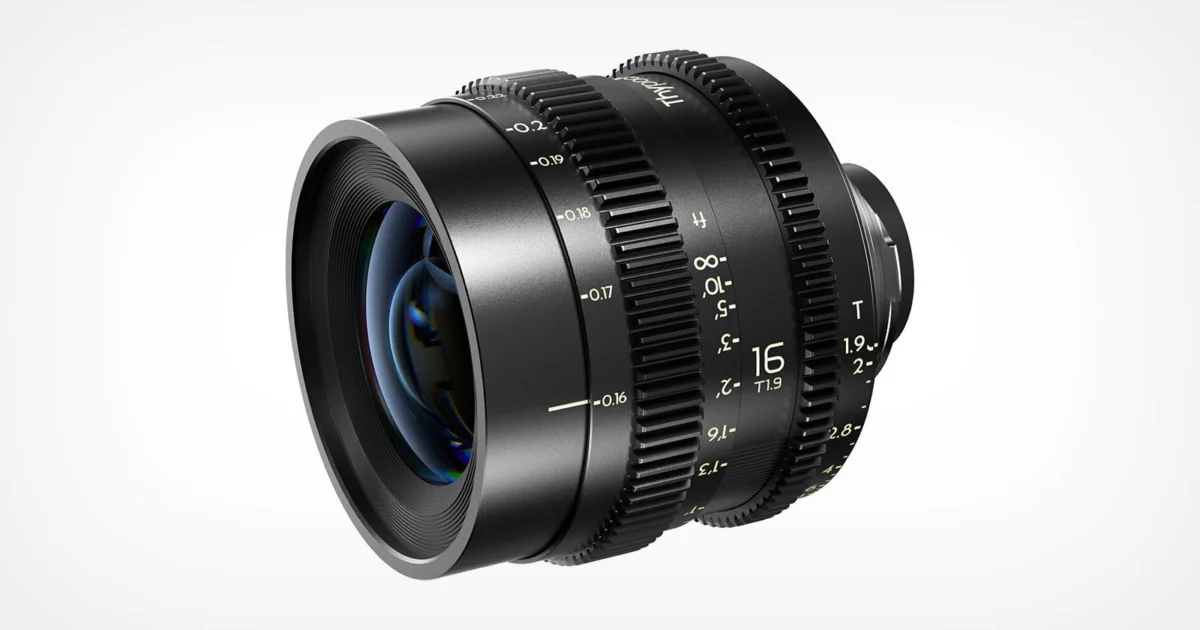
Thypoch has officially announced the latest addition to its rapidly growing Simera-C series, the Simera-C 16mm T1.9. This new ultra-wide-angle prime represents the widest focal length in the manufacturer’s cinema-oriented portfolio to date, specifically engineered to meet the demands of full-frame cinematography. By combining a compact form factor with professional-grade optical specifications, Thypoch aims to provide independent filmmakers and production houses with a high-performance tool that maintains the aesthetic consistency of the existing Simera-C lineup.
The introduction of the 16mm T1.9 marks a significant milestone for Thypoch, a Chinese lens manufacturer that has quickly gained a reputation for producing manual-focus optics that bridge the gap between vintage character and modern precision. The Simera-C series was originally conceived to offer a lightweight, affordable alternative to bulky traditional cinema primes without sacrificing the mechanical reliability required for professional sets.
Chronology and Development of the Simera-C Series
The trajectory of the Simera-C lineup has been remarkably swift. The series made its initial debut in October 2024, launching with a core set of four focal lengths: 28mm, 35mm, 50mm, and 75mm. Shortly thereafter, the company teased the development of a fifth lens, a 21mm prime, intended to bridge the gap between the wide-angle and standard focal lengths.
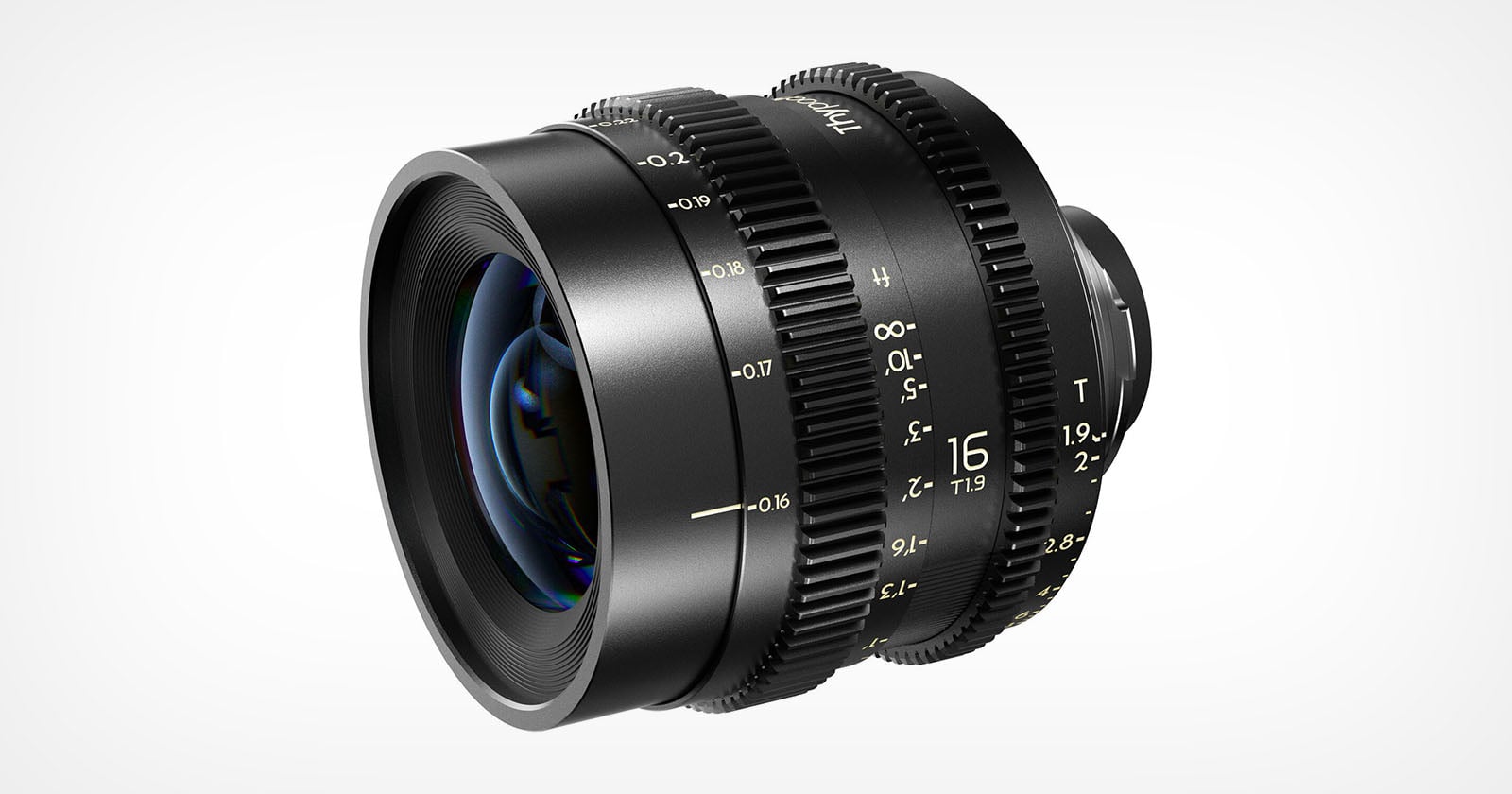
The announcement of the 16mm T1.9 indicates a strategic expansion into the ultra-wide territory, a segment of the market that is notoriously difficult to engineer for full-frame sensors due to the challenges of managing edge distortion and peripheral illumination. While the first four lenses in the series featured a fast T1.5 aperture, the 16mm variant arrives with a T1.9 rating. Although numerically "slower" than its siblings, a T1.9 aperture at a 16mm focal length remains impressively fast within the broader cinema lens industry, where ultra-wide primes often settle at T2.1 or T2.8 to manage size and optical aberrations.
Technical Specifications and Optical Engineering
The Simera-C 16mm T1.9 is built upon a sophisticated optical formula consisting of 15 lens elements arranged in 11 distinct groups. This complex arrangement is designed to combat the inherent optical flaws associated with ultra-wide-angle photography, such as chromatic aberration and curvilinear distortion. Thypoch asserts that the lens achieves "near-zero distortion," a claim that, if verified in field testing, would make it a primary choice for architectural cinematography and interior shooting where straight lines are critical.
One of the standout features of the lens is its resolving power. Thypoch reports a center resolution of 85 line pairs per millimeter (lp/mm). In practical terms, this high level of detail ensures that the lens is capable of resolving the high-resolution data produced by modern 8K and 12K cinema sensors, such as those found in the Sony VENICE 2 or the RED V-RAPTOR.
To ensure pleasing out-of-focus highlights, the 16mm T1.9 utilizes a 16-bladed aperture diaphragm. This high blade count maintains a nearly perfect circular aperture throughout the stop range, resulting in smooth, organic bokeh that avoids the polygonal shapes often seen in lenses with fewer blades. Furthermore, the lens is designed with a 43.2mm image circle, providing full coverage for standard 35mm full-frame sensors and ensuring compatibility with various "open gate" recording modes.
Mechanical Design and Ergonomics for Cinema
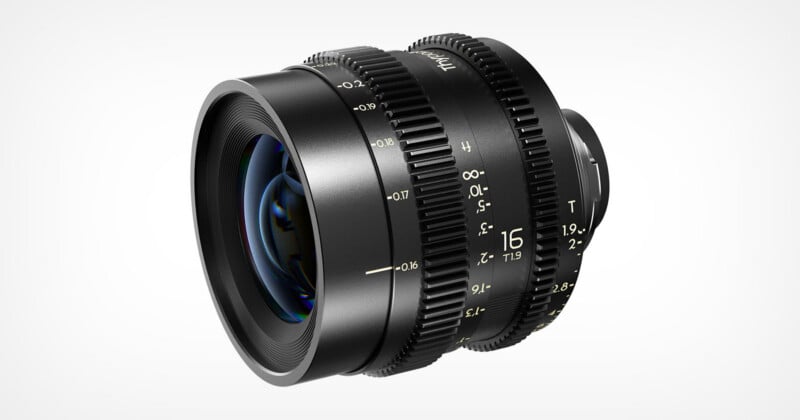
Consistent with the rest of the Simera-C family, the 16mm T1.9 is designed with a focus on ergonomics and workflow efficiency. Cinema lenses must often be swapped quickly on set, and Thypoch has addressed this by maintaining a uniform 67mm front diameter across the series. This allows camera assistants to use the same matte boxes and screw-in filters without needing step-up rings or adjustments to the matte box height.
The lens features a 210-degree focus throw, providing the precision necessary for manual focus pulling, especially when using follow-focus systems. The geared rings for aperture and focus are positioned consistently with other lenses in the lineup, ensuring that motorized FIZ (Focus, Iris, Zoom) systems do not need to be recalibrated when changing focal lengths.
In terms of physical dimensions, the 16mm T1.9 is the longest lens in the Simera-C series, yet it remains remarkably portable. The M-mount version measures less than 70 millimeters (approximately 2.7 inches) in length, while the E-mount version is slightly longer at 79.3 millimeters (3.1 inches). Weight is also kept to a minimum to facilitate use on handheld gimbals and drones; the M-mount version weighs 467 grams (16.5 ounces), and the E-mount version weighs 490 grams (17.3 ounces). Interestingly, despite its larger element count, the 16mm is slightly lighter than the 21mm T1.5, emphasizing Thypoch’s commitment to "feather-light" construction.
The M-Mount Advantage and Universal Adaptability
A defining characteristic of the Simera-C series is the choice of lens mounts. While the Sony E-mount version caters to the massive market of mirrorless shooters using FX6, FX3, and Alpha series cameras, the Leica M-mount version offers a unique level of versatility for high-end professional use.
The M-mount has a very short flange focal distance, which makes it an ideal "universal" mount for adaptation. Thypoch notes that the M-mount Simera-C lenses can be easily adapted to almost any modern camera system. This includes professional PL-mount Arri and RED cameras, as well as mirrorless mounts like Canon RF, Nikon Z, and L-mount (used by Panasonic, Leica, and Sigma). Furthermore, the compact size of the M-mount lenses makes them compatible with specialized equipment like the DJI Zenmuse X9 gimbal camera used on the Ronin 4D, where weight and balance are paramount.
Market Analysis and Industry Implications
The release of the Simera-C 16mm T1.9 comes at a time when the demand for affordable, high-quality cinema glass is at an all-time high. The "prosumer" and independent film markets have moved away from using modified still lenses in favor of dedicated cinema primes that offer geared rings, de-clicked apertures, and minimal focus breathing.
By pricing the 16mm T1.9 at $879 for E-mount and $959 for M-mount, Thypoch is positioning itself as a direct competitor to brands like Sirui, Meike, and DZOFilm. However, Thypoch’s differentiator lies in its "clean and sharp" philosophy. While many budget cinema lenses lean into "vintage" flaws—such as heavy flares and edge softness—to hide manufacturing limitations, Thypoch has marketed the Simera-C series as a modern, high-fidelity option. This makes the lenses more versatile for commercial work, documentaries, and corporate productions where a clean, predictable look is often preferred over stylized aberrations.
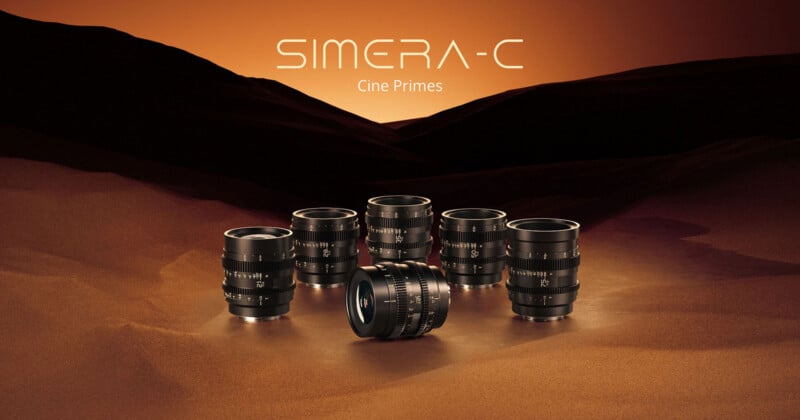
The unified aesthetic across the Simera-C series is also a significant selling point. For cinematographers, "lens matching" is a critical concern. If a 35mm lens has a warm tint and a 50mm lens has a cool tint, the color grader’s job becomes significantly more difficult. Thypoch’s promise of consistent color rendition and contrast across the 16mm, 21mm, 28mm, 35mm, 50mm, and 75mm focal lengths allows for a seamless visual narrative.

Implications for Ultra-Wide Cinematography
The 16mm focal length on a full-frame sensor provides an immersive field of view that is particularly effective for establishing shots, action sequences in confined spaces, and high-energy gimbal movements. Historically, ultra-wide lenses suffered from "focus breathing"—the phenomenon where the field of view changes as the focus is adjusted. Thypoch claims to have minimized this effect in the 16mm T1.9, a crucial feature for narrative filmmaking where focus pulls are used to direct the audience’s attention without distracting shifts in framing.
The inclusion of a T1.9 aperture also opens up creative possibilities for low-light cinematography. While ultra-wide shots typically utilize a deep depth of field, the ability to open the aperture to T1.9 allows for better exposure in dimly lit environments without resorting to excessive ISO gains, which can introduce digital noise and reduce dynamic range.
Official Responses and Pricing
In official statements regarding the launch, Thypoch emphasized that the 16mm T1.9 is intended to "push the boundaries of ultra-wide cinematography" by providing a tool that does not force the filmmaker to choose between portability and optical quality. The company highlighted the lens’s suitability for modern workflows, specifically mentioning its performance on high-resolution sensors and its ease of use on stabilization systems.
The Thypoch Simera-C 16mm T1.9 is currently available for purchase through authorized retailers. The Sony E-mount version is priced at $879, while the M-mount version, reflecting its more complex adaptation potential and mounting hardware, is priced at $959.

With the addition of the 16mm T1.9, the Simera-C series now offers a comprehensive range of focal lengths, covering almost every standard requirement for a narrative or commercial production. As Thypoch continues to expand its footprint in the global market, the Simera-C series stands as a testament to the increasing capability of boutique lens manufacturers to deliver professional-grade optics at a fraction of the cost of traditional cinema glass.

