


When a bird owner observes a sudden increase in loose feathers or persistent self-grooming that seems abnormal, it often signals the onset of a serious condition known as feather plucking. Far from being a mere cosmetic issue, feather plucking is a complex behavioral and physiological response indicating underlying distress, discomfort, or illness in psittacine and other avian species. Early detection and intervention are paramount, as this behavior, if left unaddressed, can escalate from feather damage to severe self-mutilation, significantly impacting a bird’s health and overall quality of life. Understanding the nuances between normal avian behaviors like molting and preening versus the destructive patterns of plucking is the critical first step for any vigilant owner.
Distinguishing Normal Avian Grooming from Destructive Plucking
The initial challenge for many bird owners lies in accurately identifying whether their bird is engaging in normal maintenance or exhibiting signs of a deeper problem. Three distinct behaviors often cause confusion: molting, preening, and plucking.
Molting is a natural physiological process where birds periodically shed old, worn-out feathers and replace them with new ones. This process typically occurs one to two times a year, depending on the species, age, and environmental factors. During a molt, feather loss is generally symmetrical across the body, and new feathers, known as pin feathers, emerge encased in a keratin sheath. These pin feathers can be itchy, prompting increased preening, but the core characteristic of molting is the orderly replacement of feathers, not their destruction. A bird undergoing a healthy molt might appear somewhat disheveled, but the skin underneath remains intact and healthy.
Preening, on the other hand, is a daily grooming ritual essential for maintaining feather health and insulation. Birds use their beaks to realign feather barbs, remove debris, and spread preen oil (secreted from the uropygial gland at the base of the tail) across their plumage, waterproofing and conditioning the feathers. This is a calm, methodical activity, moving across various parts of the body, and results in smooth, well-kept feathers. Social preening (allopreening) between bonded birds is also a common and normal behavior that reinforces social bonds.
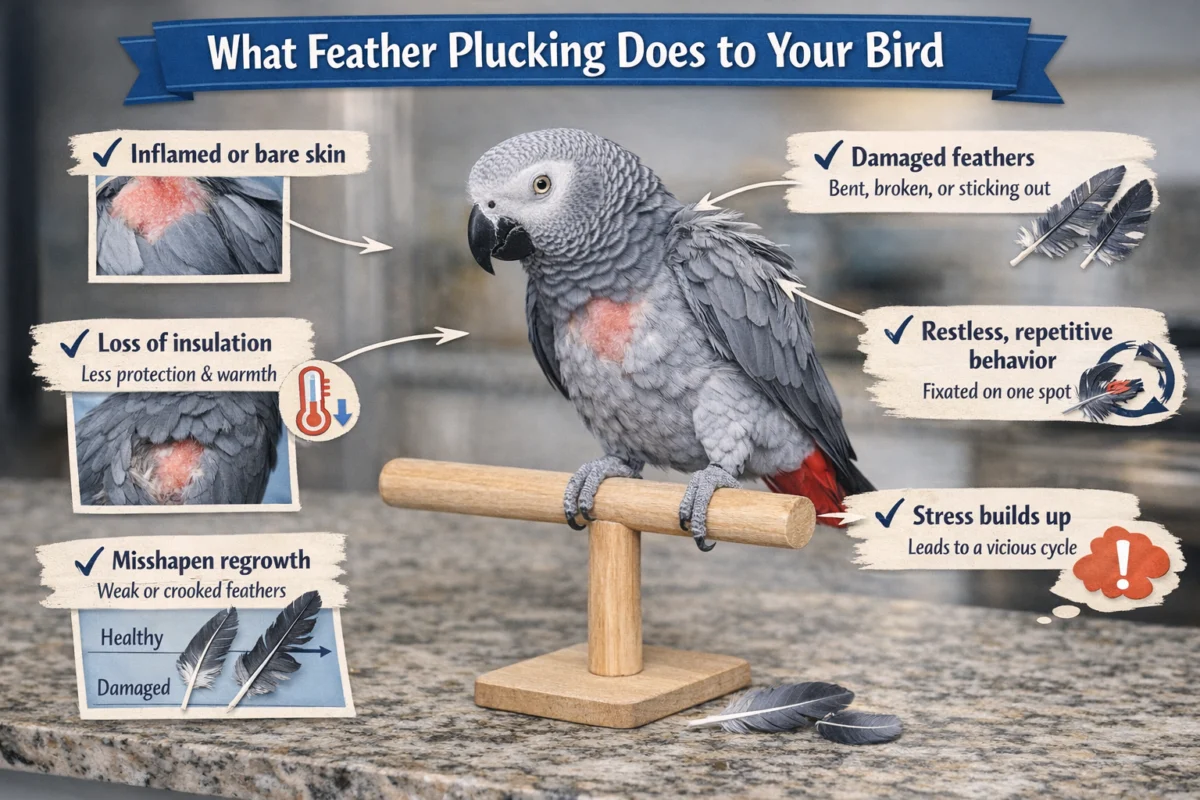
Feather plucking, however, deviates significantly from these natural behaviors. It is characterized by the bird intentionally pulling out, chewing, or breaking its own feathers, often fixating on specific areas of the body that are within reach, such as the chest, abdomen, legs, or under the wings. Unlike molting, the feather loss is often asymmetrical and patchy, and the feathers themselves appear damaged, frayed, or entirely absent. The underlying skin may become irritated, red, inflamed, or even broken. Avian veterinarians consistently observe that plucking is a sign that "something feels off" within the bird’s body or environment, leading to a compulsive behavior aimed at self-soothing or attempting to "fix" an internal issue.
The most severe manifestation of this destructive behavior is self-mutilation, where the bird goes beyond damaging feathers to inflict harm directly on its skin, muscle, or even bone. This is an urgent medical emergency requiring immediate veterinary intervention to prevent severe infection, hemorrhage, and permanent tissue damage. The transition from plucking to mutilation often signifies chronic, intense distress and a desperate attempt by the bird to alleviate profound discomfort.
The Multifaceted Etiology of Feather Plucking
Feather plucking is rarely attributable to a single cause; rather, it is typically a complex interplay of medical, environmental, and behavioral factors. A comprehensive diagnostic approach is therefore essential to uncover the root problem.
Medical and Physiological Causes:
A significant percentage of plucking cases have an underlying medical origin.
- Infections and Parasites: Bacterial, fungal, or viral infections (e.g., Psittacine Beak and Feather Disease – PBFD, Polyomavirus), as well as internal or external parasites (mites, giardia), can cause intense itching, pain, or general malaise, leading to plucking.
- Nutritional Deficiencies: Diets high in seeds and lacking in essential vitamins, minerals, and amino acids are a common culprit. Deficiencies in Vitamin A, calcium, or essential fatty acids can compromise feather quality and skin health, leading to irritation and subsequent plucking.
- Organ Disease: Liver or kidney disease can manifest as poor feather quality, skin issues, and generalized discomfort that prompts plucking.
- Allergies: Similar to humans, birds can develop environmental or food allergies that cause persistent itching.
- Pain and Injury: Undetected injuries, arthritis, or even growing painful pin feathers can cause a bird to focus on and pluck at the affected area.
- Hormonal Imbalances: Reproductive issues, chronic egg laying, or hormonal surges can lead to frustration, territoriality, and sometimes plucking.
- Heavy Metal Toxicity: Exposure to lead or zinc from cage components or toys can cause systemic illness, neurological symptoms, and skin irritation leading to plucking.
Environmental Stressors:
The captive environment, if not optimally managed, can be a major contributor to plucking.
- Inadequate Humidity: Many pet bird species, particularly parrots from tropical regions, require high humidity. Dry air can lead to dry, itchy skin and brittle feathers.
- Poor Lighting: Lack of access to natural sunlight or full-spectrum UV lighting can disrupt circadian rhythms, impair Vitamin D synthesis, and affect mood and feather health.
- Cage Size and Enrichment: A small, barren cage without sufficient space for flight or a variety of toys, perches, and foraging opportunities leads to boredom, frustration, and a lack of mental stimulation, which can be redirected into self-destructive behaviors.
- Exposure to Irritants: Smoke, strong chemical fumes, air fresheners, or certain cleaning products can irritate a bird’s sensitive respiratory system and skin.
- Sleep Deprivation: Birds require 10-12 hours of uninterrupted sleep in a dark, quiet environment. Chronic sleep deprivation can lead to stress, irritability, and plucking.
- Social Isolation or Over-Stimulation: While birds are social creatures, both insufficient interaction and excessive, inconsistent stimulation can be stressful.
Behavioral and Psychological Factors:
Even in the absence of obvious medical or environmental issues, psychological distress can drive plucking.

- Anxiety and Stress: Changes in routine, new pets, moving homes, loud noises, or the loss of a companion can induce anxiety.
- Boredom: Highly intelligent and active species, when under-stimulated, can develop compulsive behaviors, including plucking, as an outlet for their energy and intelligence.
- Attention-Seeking: If plucking elicits a strong reaction from owners, birds can learn to use it as a way to gain attention, even if that attention is negative.
- Learned Behavior: Some birds may observe other birds plucking and adopt the behavior.
- Obsessive-Compulsive Tendencies: For some individuals, plucking can become a deeply ingrained compulsive disorder, where the behavior persists even after the original trigger is removed.
Progression and Observable Warning Signs
The progression of feather plucking can vary, but typically follows a timeline from subtle indicators to severe manifestations. Initially, owners might notice:
- Increased feather dust or broken feather pieces at the bottom of the cage.
- Frayed feather tips or feathers that appear chewed on.
- A bird spending an unusually long time preening a single area.
- Small, localized patches of thinning feathers or bare skin.
- Changes in vocalization or general demeanor, such as increased irritability or withdrawal.
As the condition advances, more obvious signs emerge:
- Large, symmetrical bald patches, especially on the chest, abdomen, or under the wings.
- Red, inflamed, or scabby skin in plucked areas.
- Visible wounds or bleeding if the bird has progressed to self-mutilation.
- Chronic discomfort or pain, leading to changes in posture or reluctance to be handled.
- Increased aggression or fear responses.
Impact on Avian Health and Welfare
The consequences of feather plucking extend far beyond aesthetics.
- Physical Health Deterioration: Exposed skin is highly vulnerable to bacterial, fungal, and yeast infections. Loss of insulation can lead to hypothermia, particularly in cooler environments. Damaged feather follicles may prevent future feather regrowth, leading to permanent baldness. In severe cases of mutilation, blood loss, deep tissue infections, and even death can occur.
- Psychological Distress: Birds are sensitive creatures. Chronic plucking is indicative of chronic stress, anxiety, or pain, leading to a diminished quality of life. This can result in a cycle where stress leads to plucking, which causes physical discomfort, further increasing stress and perpetuating the behavior.
- Compromised Flight and Mobility: Significant feather loss, especially on the wings, can impair a bird’s ability to fly, affecting its exercise, confidence, and natural behaviors.
Diagnostic Approaches and Veterinary Intervention
Upon noticing any signs of abnormal feather loss or destructive grooming, immediate consultation with an avian veterinarian is crucial. A thorough diagnostic workup is essential to pinpoint the cause.
- Comprehensive Physical Examination: This includes evaluating the bird’s overall health, feather quality, skin condition, and palpating for any abnormalities.
- Diagnostic Tests:
- Blood work: Complete blood count (CBC) and biochemistry panel can reveal underlying infections, organ dysfunction, nutritional deficiencies, or inflammation.
- Feather and Skin Biopsies: Microscopic examination of feathers and skin samples can identify parasites, fungal infections, bacterial infections, or specific dermatological conditions.
- Viral Testing: PCR tests for common avian viruses like PBFD and Polyomavirus.
- Radiographs (X-rays): Can detect internal organ issues, tumors, or heavy metal toxicities.
- Fecal Analysis: To check for internal parasites.
- Environmental and Behavioral History: The veterinarian will meticulously review the bird’s diet, cage setup, daily routine, enrichment activities, social interactions, and any recent changes in its environment. Owners are often asked to keep a detailed log of the bird’s behavior, diet, and environment.
- Consultation with Avian Behaviorists: In cases where medical causes are ruled out or behavioral components are significant, an avian behaviorist can provide tailored strategies for environmental enrichment, behavioral modification, and stress reduction.
Treatment protocols are highly individualized, targeting the identified underlying cause. This might involve medication for infections or pain, dietary adjustments, environmental modifications (e.g., humidifiers, full-spectrum lighting), behavioral therapy, and in some severe cases, protective collars (Elizabethan collars) to prevent self-mutilation while healing. Anti-anxiety medications may be considered as a last resort under strict veterinary guidance, alongside other interventions.
Proactive Strategies for Prevention
Prevention is always preferable to treatment. Owners can significantly reduce the risk of plucking by providing an optimal environment and attentive care.
- Optimal Nutrition: Transitioning birds from an all-seed diet to a high-quality pelleted diet supplemented with a variety of fresh fruits, vegetables, and occasional sprouts is fundamental.
- Environmental Enrichment: A spacious cage with a diverse array of safe toys (chewable, foraging, puzzle toys), natural perches of varying diameters, and opportunities for bathing or misting. Toys should be rotated regularly to maintain novelty.
- Humidity and Lighting: Maintaining adequate humidity (40-60% for most parrot species) and providing access to unfiltered natural sunlight or avian-specific full-spectrum UV lighting.
- Social Interaction: Consistent, positive interaction with owners, including training, play, and quiet companionship, is vital for social species. For some birds, a compatible avian companion can be beneficial, but this must be carefully considered.
- Stress Reduction: Establishing a predictable daily routine, providing a quiet "sleep cage" at night, and minimizing exposure to sudden loud noises or stressful situations.
- Regular Veterinary Check-ups: Annual wellness exams can catch potential health issues before they escalate into plucking.
The Role of Avian Professionals and Owner Responsibility
Addressing feather plucking requires a collaborative effort between dedicated owners and specialized avian professionals. Avian veterinarians possess the specific knowledge to diagnose and treat the complex medical conditions that can lead to plucking. Avian behaviorists offer expertise in modifying environmental factors and behavioral patterns. Owners play a crucial role through vigilant observation, meticulous record-keeping, and consistent implementation of recommended care strategies. The commitment to understanding and meeting the intricate needs of companion birds is the most powerful tool in preventing and resolving this challenging condition.
In conclusion, feather plucking in birds is a distress signal, a tangible manifestation of underlying problems ranging from medical conditions to psychological stress. Its early recognition and a diligent, multi-pronged approach to diagnosis and treatment are essential for restoring a bird’s health, comfort, and natural beauty. By prioritizing comprehensive care, owners can help their feathered companions live healthier, happier lives, free from the destructive cycle of plucking.

