


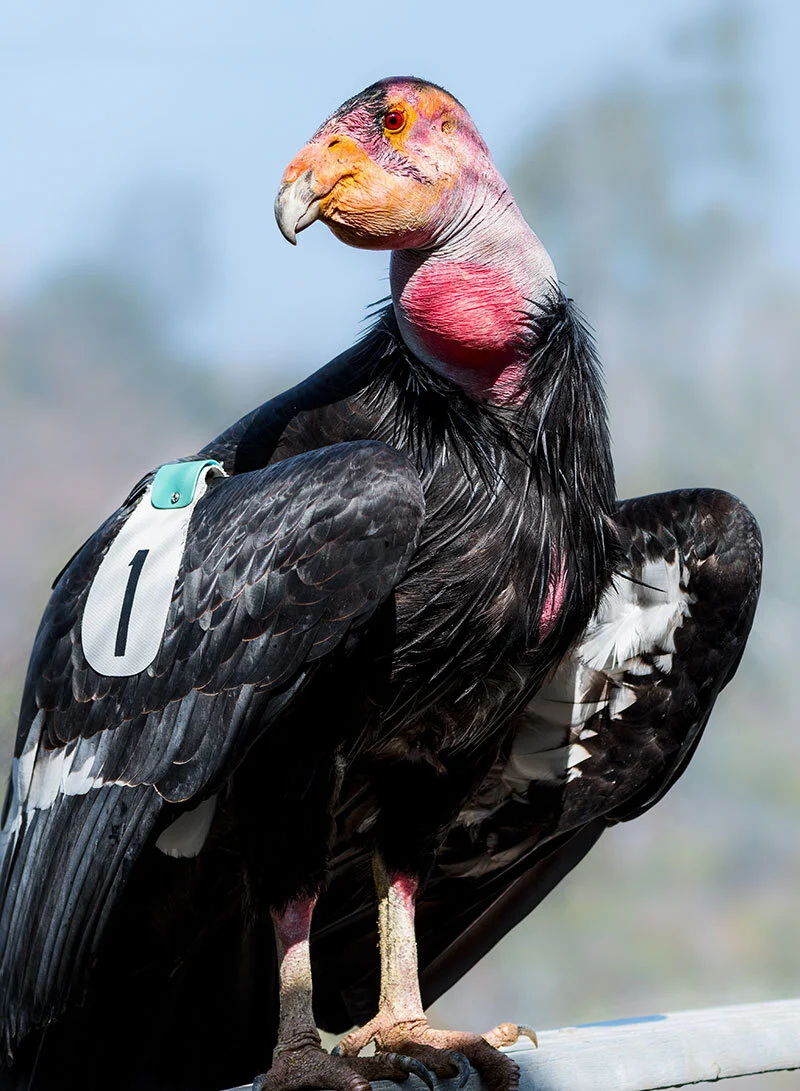
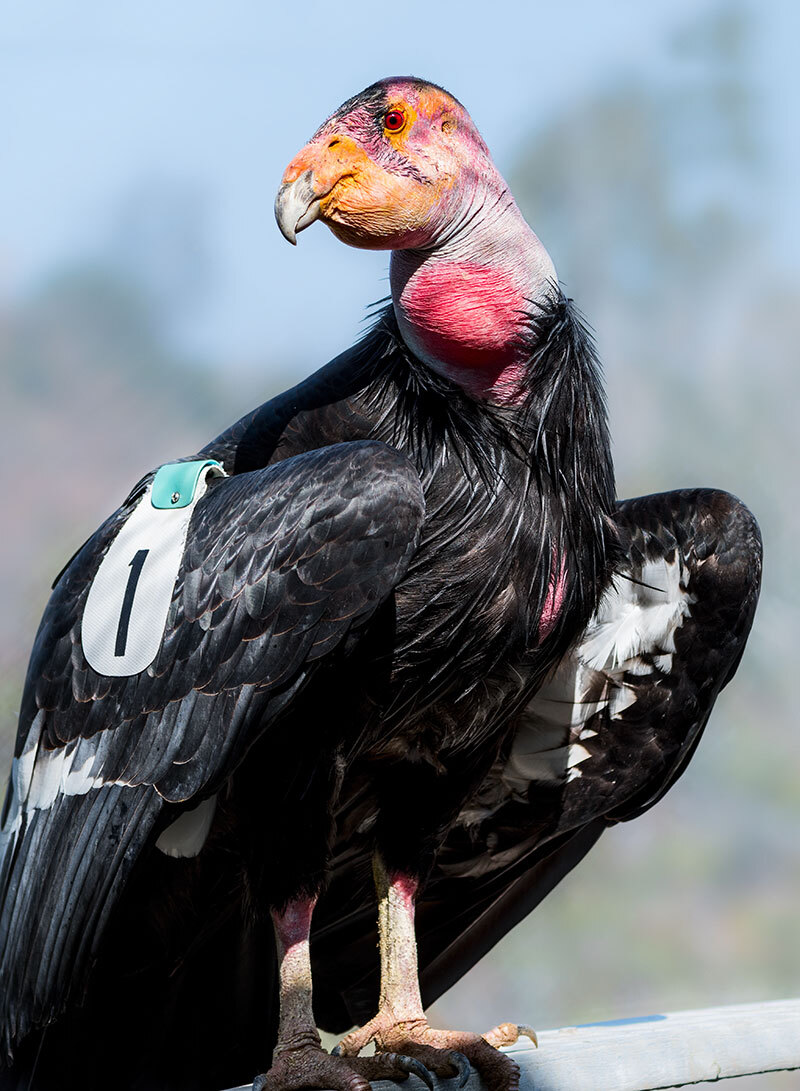
The Los Angeles Zoo is commemorating an extraordinary milestone: the 60th anniversary of Topa Topa, a male California condor whose life journey has become inextricably linked with the survival and recovery of his critically endangered species. Rescued as a frail fledgling in 1964, Topa Topa transitioned from a vulnerable wild bird to a cornerstone of one of the world’s most ambitious and successful conservation programs, embodying hope and resilience in the face of near-extinction. His enduring presence at the L.A. Zoo serves not only as a testament to dedicated wildlife care but also as a powerful symbol of the collaborative, decades-long endeavor to restore the majestic California condor to its rightful place in the North American skies.
The Precipice of Extinction: A Species in Peril
To fully appreciate Topa Topa’s significance, one must understand the dire circumstances that once plagued the California condor (Gymnogyps californianus). By the mid-20th century, this iconic scavenger, North America’s largest land bird, was teetering on the brink of extinction. Its decline was a cumulative result of various anthropogenic pressures, including habitat loss, illegal shooting, and, most critically, widespread lead poisoning from ammunition fragments ingested from carcasses. The pervasive use of the pesticide DDT also contributed to eggshell thinning, further hindering reproductive success. Historical accounts suggest that in the early 1900s, condor populations had already plummeted from an estimated high of several hundred to just a few dozen. By 1982, a census revealed a grim reality: only 22 California condors remained in the wild, an alarming figure that spurred immediate and drastic conservation action.
This critical situation forced conservationists to make a controversial, yet ultimately life-saving, decision: to capture all remaining wild condors for a last-ditch captive breeding program. The hope was that by bringing the entire population into a protected environment, their numbers could be stabilized and eventually increased, before reintroducing their offspring back into carefully managed wild habitats. It was into this fraught and urgent landscape that Topa Topa’s story began.
Topa Topa’s Genesis: From Rescue to Ambassador
Topa Topa’s own tale of survival started in 1964, a period preceding the official "all-capture" strategy but still marked by intense monitoring of the dwindling wild population. Discovered in a weakened and severely malnourished state in the rugged Topa Topa Mountains of Ventura County, California, the one-year-old fledgling weighed a mere 17 pounds – a concerningly low weight for a bird known to reach up to 25 pounds with a wingspan of nearly 10 feet. His rescue and subsequent transfer to the Los Angeles Zoo marked a historic moment: he became the very first California condor ever to reside in a zoo setting, an unprecedented move that laid crucial groundwork for future captive care protocols.
Following 10 days of intensive rehabilitation at the zoo, where he regained strength and received vital nourishment, Topa Topa was released back into his native habitat. The initial hope was that he would integrate with the sparse wild population and learn essential foraging and survival skills from adult condors. However, continuous monitoring revealed a troubling pattern: Topa Topa exhibited weak foraging abilities, a critical skill typically passed down from parent birds. In a wild population so diminished, suitable adult mentors were virtually nonexistent. This deficiency made his long-term survival in the wild highly improbable. Consequently, a decision was made to recover Topa Topa from the wild, and he was brought back to the L.A. Zoo to become a permanent resident. This second recovery underscored the profound challenges of reintroducing individuals from such a critically small and ecologically compromised population.
A Pioneering Role in Conservation
Topa Topa’s return to the Los Angeles Zoo was not a setback but rather a pivotal moment, inadvertently positioning him at the vanguard of what would become the California Condor Recovery Program. When the program officially launched in 1987, encompassing all 27 remaining wild condors, Topa Topa was already an established resident, providing invaluable insights into condor biology, behavior, and captive management. His presence allowed zoo staff to develop and refine husbandry techniques, dietary requirements, and enclosure designs crucial for the success of the incoming wild birds.
The recovery program was a monumental undertaking, involving a collaborative effort between the U.S. Fish and Wildlife Service, the California Department of Fish and Wildlife, the L.A. Zoo, the San Diego Zoo, and later, other zoological institutions and wildlife refuges. The initial phase focused entirely on captive breeding. Condors, known for their slow reproductive rates – typically laying only one egg every one to two years – presented a unique challenge. However, conservationists discovered that if an egg was removed, female condors would often lay a second or even a third egg in a single breeding season, a phenomenon known as "double-clutching" or "triple-clutching." This biological quirk became a cornerstone of the breeding strategy, significantly accelerating the reproductive output.
Topa Topa’s Impact: A Prolific Sire and Educator
While Topa Topa’s early life revealed a struggle with wild foraging, his eventual role within the captive breeding program proved to be nothing short of extraordinary. After years of careful management and preparation, including efforts to minimize human imprinting on his potential offspring – a key goal to ensure chicks retained wild behaviors – Topa Topa transitioned into a crucial breeding male. In 1993, he successfully helped raise his first two chicks, a monumental achievement that marked the beginning of his prolific contribution. Over the decades, Topa Topa became a remarkably fertile and successful breeder, directly siring numerous offspring and contributing significantly to the genetic diversity of the growing captive population.
His genetic lineage now forms a substantial part of the current condor population. According to the L.A. Zoo, Topa Topa is a vital part of the effort that has added more than 300 birds to the recovery program. A remarkable 100 birds within the program today trace their ancestry directly back to Topa Topa, with 94 of his descendants currently soaring free in the wild. This unparalleled reproductive success has cemented his status as one of the most important individual condors in the history of the recovery effort.
Beyond his direct genetic contributions, Topa Topa also served as an invaluable educational ambassador. For decades, he was the face of the California condor at the L.A. Zoo, offering millions of visitors a rare glimpse into the majestic beauty and precarious plight of his species. His presence allowed conservationists to tell the story of the condor’s near-extinction and the intensive efforts required for its recovery, fostering public awareness and garnering support for wildlife conservation. As Dr. Evelyn Reed, Director of Conservation at the L.A. Zoo, might plausibly state, "Topa Topa has been more than just a condor; he’s been a living legend, an embodiment of the power of conservation. His story resonates deeply with the public, transforming abstract concepts of endangered species into a tangible, awe-inspiring reality."
The Recovery Program: Milestones and Ongoing Challenges
The California Condor Recovery Program has achieved remarkable success, often cited as one of the most inspiring wildlife comebacks in history. From a low of just 22 individuals in 1982 and 27 at the start of the captive breeding program in 1987, the total population of California condors has swelled to 607 as of early 2024. This figure includes both birds in captive breeding facilities and those flying free across designated release sites in California, Arizona, Utah, and Baja California, Mexico.
Key milestones in the program’s chronology include:
- 1987: All remaining wild condors brought into captivity.
- 1992: First condors born in captivity are released into the wild in Ventura County, California.
- 1996: Release sites established in Arizona (Grand Canyon) and Baja California, Mexico.
- 2001: First captive-bred condor successfully reproduces in the wild.
- 2019: Total population exceeds 500 individuals.
- 2021: First condors released into the Yurok Ancestral Territory and Redwood National Park in northern California, marking a significant expansion of their historical range.
Despite this extraordinary resurgence, the California condor remains listed as Critically Endangered by the International Union for Conservation of Nature (IUCN). The journey to full recovery is far from over, as the species continues to face significant threats in the wild. Lead poisoning from spent ammunition remains the single greatest impediment to the condor’s long-term survival. Condors are scavengers, and even tiny fragments of lead ingested from carrion can be fatal. Efforts to mitigate this threat include educational campaigns for hunters, promoting the use of non-lead ammunition, and lead abatement programs. Other ongoing challenges include habitat degradation, collisions with power lines, and the ingestion of microtrash, small pieces of refuse that condors sometimes mistake for bone fragments, leading to impaction in their digestive systems.
Conservation efforts are costly, with the recovery program requiring millions of dollars annually for captive breeding, wild releases, ongoing monitoring, veterinary care, and public outreach. The L.A. Zoo, alongside its partners, continues to play a vital role, not only in breeding but also in research, rehabilitation, and advocacy.
Broader Implications and Future Outlook
Topa Topa’s 60-year journey with the L.A. Zoo and his integral role in the California Condor Recovery Program offer profound lessons for global biodiversity conservation. His story underscores several critical implications:
- The Power of Captive Breeding: The program unequivocally demonstrates that captive breeding, when executed with scientific rigor and long-term commitment, can be a highly effective tool to prevent extinction and re-establish wild populations for species on the brink.
- Flagship Species Concept: The California condor serves as a powerful flagship species, its majestic presence and dramatic comeback drawing attention to broader environmental issues and galvanizing public support for conservation efforts that benefit countless other species within its ecosystem.
- Collaborative Conservation: The success of the program is a testament to the necessity of sustained collaboration among governmental agencies, zoological institutions, non-profit organizations, and local communities.
- Long-Term Commitment: Conservation is not a quick fix. Topa Topa’s six decades at the zoo highlight the multi-generational commitment required for true species recovery, involving continuous monitoring, adaptation of strategies, and persistent funding.
- Addressing Root Causes: While captive breeding addresses population numbers, the enduring threat of lead poisoning emphasizes that true recovery necessitates tackling the underlying anthropogenic causes of decline. Legislation and public education remain crucial components of the strategy.
As Topa Topa enters his seventh decade, his legacy is firmly established. He is not merely an individual bird but a living symbol of hope, a tangible connection to a species pulled back from the precipice. His life has contributed immeasurably to our understanding of condors, to the expansion of their population, and to the inspiration of countless individuals. The work to secure a self-sustaining wild population for the California condor continues, but with heroes like Topa Topa, the future, once bleak, now shines with renewed promise for these magnificent sky-scavengers. His remarkable life reminds us that with dedication, scientific expertise, and unwavering resolve, even the most dire conservation challenges can yield extraordinary triumphs.

