



The anticipation of summer travel often brings a familiar dilemma for pet owners: how to ensure their beloved animals are cared for in their absence. For those who share their lives with rats, this decision can be particularly complex, given the unique needs and sensitivities of these intelligent and social creatures. While leaving them behind with a trusted sitter is a common approach, an increasing number of rat enthusiasts are exploring a more adventurous alternative: taking their rats along for the ride. This comprehensive guide delves into the feasibility, preparation, and considerations involved in embarking on road trips with pet rats, drawing on extensive experience and expert advice to transform a potentially daunting prospect into a memorable journey.
The Case for Canine Companionship on the Open Road: Rethinking Rat Travel
For many, the idea of traveling with rats might initially seem unconventional, even impractical. Rats, by nature, thrive on routine and familiar surroundings, making the prospect of uprooting them for a journey seem counterintuitive to their well-being. However, for dedicated owners, the stress associated with finding reliable care, coupled with the desire to not leave their companions behind, can lead to a re-evaluation of traditional travel plans. The author of this guide, a seasoned rat owner, recounts numerous successful road trips spanning significant distances, from the arid landscapes of Northern Arizona and Southern California to the elevated terrains of Colorado and even a cross-country odyssey. These experiences underscore a compelling argument: for journeys not involving air travel, and where ground transportation is the mode of choice, incorporating rats into summer plans is not only feasible but can also enrich the travel experience, transforming it into an adventure of shared discovery. While "easier" might be an overstatement, the reward of shared experiences and strengthened bonds can make the effort profoundly worthwhile.

Acclimatizing Your Rodent Road Warriors: Gradual Exposure and Familiarization
The cornerstone of successful rat travel lies in their gradual acclimatization to novel environments and experiences. Rats are creatures of habit, and their inherent desire for predictability means that venturing outside their comfort zone requires a thoughtful and measured approach. The author emphasizes the importance of early exposure to the outside world, a process that can be initiated through simple, low-stress activities. Evening walks around the neighborhood, with rats safely ensconced in a ventilated bonding pouch or a small cloth bag lined with soft fleece, serve as an excellent starting point. During these excursions, offering opportunities for interaction – either holding them close or allowing them to perch on a shoulder, depending on their comfort level – provides reassurance and fosters a sense of security. Consistent gentle petting and reassuring vocalizations can further mitigate any apprehension. This process, while requiring patience, allows rats to explore new scents and sounds in a controlled manner, gradually building their confidence.
Further familiarization can be achieved through short car rides. These brief journeys, perhaps to pick up a child from school, offer a low-stakes environment to observe their reactions. Many rats exhibit curiosity and excitement when exposed to new stimuli, which can help to demystify car travel. It is crucial, however, to be acutely aware of ambient temperatures during these preparatory outings. Extreme weather conditions, whether scorching heat or biting cold, can pose significant risks and should be avoided during the acclimatization phase. This gradual introduction helps to create positive associations with leaving their familiar home environment, paving the way for more extended travel.
Selecting the Ideal Mobile Habitat: The Crucial Role of the Travel Cage
The selection of an appropriate travel cage is paramount to ensuring a safe and stress-free journey for rats. The primary objective is to replicate, as closely as possible, the sense of security and familiarity they experience in their home enclosure. This means providing ample space for movement, climbing, and exploration, thereby minimizing feelings of confinement and boredom. The author recounts a significant personal experience in 2018 when her husband’s five-week work assignment at the Smithsonian American Art Museum in Washington, D.C., extended into a seven-week road trip. The decision to bring their four rats along necessitated meticulous planning, particularly concerning their mobile living quarters.

The challenge was to find a cage that could comfortably house four rats, fit within the confines of a small car, and allow for ease of movement within the vehicle. Recognizing that their time outside the cage would be limited compared to their home environment, the priority shifted to maximizing the cage’s internal volume. The chosen solution was the largest cage that could physically fit in the car, a decision that prioritized the rats’ comfort and well-being over extreme portability. This expansive enclosure featured two additional half-levels, providing ample room for a hammock, a space pod, an igloo, and a litter box – creating a true "home away from home."
While this substantial cage was a significant investment and required two people to maneuver in and out of the car, its utility extended beyond this specific trip. It proved invaluable during fostering situations, emergency evacuations due to extreme weather, and numerous other travels. The author notes that the rats exhibited significantly more relaxed and normal behavior in this larger enclosure compared to smaller, more portable cages typically used for veterinary visits. Although the specific model, "The Rat Lodge by Martin’s Cage," is no longer in production, similar large, multi-level cages can potentially be found on secondary markets like Craigslist or eBay. For shorter excursions, such as rest stops or brief park visits, a smaller cat carrier was also utilized to facilitate quick out-of-cage time and ensure the rats could stretch their legs safely.
The Rat’s Packing List: Essential Supplies for the Road
Even for short excursions, a meticulously packed bag for your rats is indispensable. The principle of "better over-prepared than under-prepared" holds true, especially when venturing into unfamiliar territory where necessary items might be difficult to procure. A comprehensive packing list ensures that all their needs are met, from hydration and nutrition to comfort and hygiene.

Essential Packing Items for Rats:
- Hydration System: Two or more water bottles with secure cage attachments. Cleanliness is paramount, necessitating daily cleaning and regular functionality checks.
- Feeding Equipment: Dedicated food dishes for both dry kibble and fresh food.
- Sustenance: A generous supply of dry rat food, exceeding the estimated need for the trip.
- Water Supply: One to two gallons of filtered water. This is crucial as tap water quality can be variable and potentially harmful to rats, especially when traveling.
- Fresh Food Storage: A small, insulated cooler containing pre-cut fresh fruits and vegetables.
- Treats: A selection of rat-safe snacks to provide enjoyment and positive reinforcement.
- Emergency Staple: Bananas, a surprisingly effective natural remedy for diarrhea, as noted by the author’s personal experience.
- Sanitation Kit: Small bottle of dish soap, a scrubber, and a bottle brush for cleaning water bottles and food dishes.
- Bedding and Comfort: Extra bedding material (fleece, litter box bedding, hammocks) to maintain a comfortable and familiar sleeping environment.
- Security and Handling: Bonding pouches, huts, or pillowcases for nervous rats and for providing a safe haven during out-of-cage time.
- Comfort Items: Large rat blankets for protecting furniture and providing a sense of security.
- Environmental Control: A towel or blanket to cover the cage, acting as a sunshade or insulation against drafts. A windshield shade can also serve this purpose.
- Hygiene Essentials: Paper towels and unscented wet wipes for quick clean-ups. Antibacterial wipes for personal hygiene.
- Waste Management: Trash bags for the disposal of soiled bedding and waste.
- Medical Preparedness: An emergency medicine kit, particularly important for elderly or ill rats, containing items like those outlined in the article "Rat Safety During Evacuation and Emergencies."
The Rationale Behind Comprehensive Packing: Addressing Travel-Related Concerns
The imperative to pack thoroughly stems from the unpredictable nature of travel and the unique physiological vulnerabilities of rats. Ensuring an ample supply of food and water is not merely a matter of convenience but a critical safety measure, especially in the event of unforeseen vehicle breakdowns, particularly in adverse weather conditions. The consistent provision of filtered water is a proactive step to safeguard against potential contaminants found in local tap water at destinations.
The daily cleaning and replenishment of water bottles are non-negotiable practices to prevent the proliferation of harmful bacteria. Having spare bottles provides a practical solution for quick swaps during busy travel days or as a contingency in case of breakage. The author’s personal anecdote of a broken water bottle highlights the importance of this foresight.
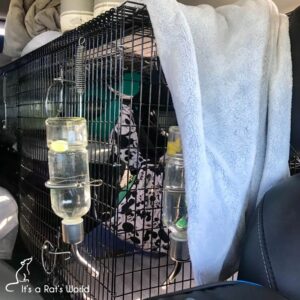
Environmental control is another crucial aspect of rat travel. Direct sunlight can be intensely harmful, posing risks of UV exposure and overheating. A cage positioned in direct sun, even for short periods, can lead to heatstroke. Conversely, during winter months, insulation around the cage can provide essential warmth. Blankets and towels serve a dual purpose, offering protection from the elements and comfort during out-of-cage time, whether on furniture or within the owner’s lap.
The need for frequent cage cleaning during longer trips is inevitable. Wet wipes are invaluable for spot cleaning, while trash bags provide a sanitary method for containing soiled materials. The author’s recommendation for paper towels, wet wipes, extra bedding, and antibacterial wipes is rooted in practical experience with rat digestive sensitivities during travel. Stomach upset, often manifesting as mushy stools, can be exacerbated by the stress of travel. The historical remedy of bananas, as shared by the author’s great grandmother, offers a simple yet effective natural solution for managing such issues. This preparedness extends to having a well-stocked emergency kit, especially for rats with pre-existing health conditions, drawing from recommendations for evacuation and emergency preparedness.
Navigating Pet-Friendly Lodging: Ensuring a Comfortable Stay
Finding suitable accommodation that welcomes rats requires diligent research and confirmation. While websites like PetsWelcome claim to offer assistance in identifying pet-friendly hotels, direct communication with establishments is essential. It is imperative to explicitly confirm their policy regarding rats, as many pet-friendly policies may not extend to smaller exotic animals.

For added security, the author strongly recommends utilizing the "Do Not Disturb" sign on the hotel room door whenever leaving the rats unattended. This measure helps to prevent accidental entry by housekeeping staff, safeguarding the rats from potential disturbance or unintended exposure. Furthermore, before departing the room, checking and adjusting the thermostat to maintain a comfortable temperature is crucial, ensuring the rats remain safe and at ease in the absence of direct supervision.
Critical Warnings for Car Travel: Prioritizing Rat Safety
The most critical and non-negotiable rule of traveling with any pet, including rats, is to never leave them unattended in a vehicle. The extreme temperature fluctuations within a car, even during seemingly brief stops, can have fatal consequences. The interior of a vehicle can rapidly transform into an oven or a freezer, posing an immediate threat of heatstroke or hypothermia.
To mitigate these risks, it is imperative to either leave the car running with the air conditioning or heating on during stops, or to ensure that the rats are removed from the vehicle entirely and kept in a secure, temperature-controlled environment. Continuous monitoring of the water bottle is also essential. Variations in the angle of the cage or the vehicle’s incline can affect the water pressure, leading to leaks or rendering the bottle unusable for drinking. Regular checks ensure that the rats have consistent access to fresh water throughout the journey.

An Adventure Rewarded: The Enduring Value of Traveling with Your Rats
The prospect of traveling with rats might initially seem daunting, fraught with logistical challenges and perceived inconveniences. However, for those who embrace the adventure, the rewards are profound. The author’s personal reflections highlight the joy and enrichment derived from these journeys, underscoring the strengthening of bonds with her rat companions. While traveling without them might appear simpler on the surface, the unique experiences and shared memories forged on the road offer a depth of connection that is truly irreplaceable. The decision to travel with your rats is not merely about logistics; it’s about embracing a unique lifestyle that prioritizes companionship and shared exploration, transforming ordinary trips into extraordinary adventures.

