


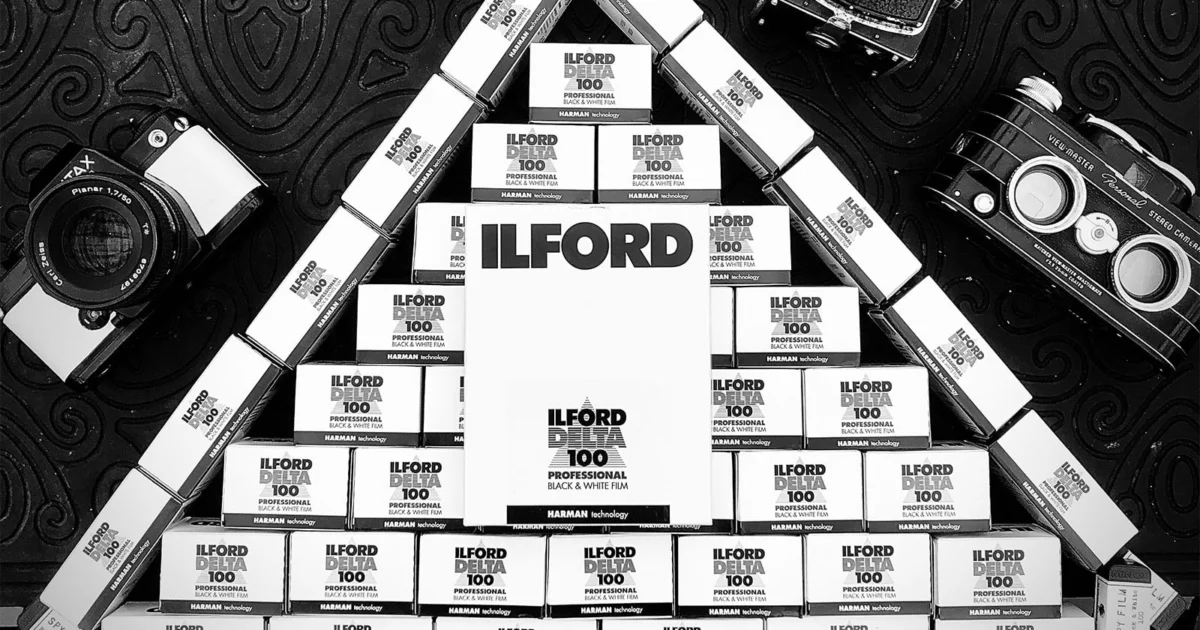
The landscape of contemporary analog photography is often dominated by a few iconic names, yet beneath the surface of popular mainstays like Kodak Tri-X or Ilford HP5+ lies a sophisticated tier of emulsions designed for high-resolution precision. Among these, Ilford Delta 100 Professional stands as a pinnacle of tabular grain technology, a film that despite its three-decade history, remains a subject of renewed interest for photographers seeking a bridge between traditional aesthetics and modern technical requirements. This resurgence in interest is driven in part by initiatives like the "Film Friday" series hosted by Blue Moon Camera and Machine, a Portland-based institution that has dedicated significant resources to re-evaluating emulsions that are frequently overlooked by the broader market. By subjecting Delta 100 to rigorous field testing across multiple formats—ranging from 35mm to medium format and pinhole applications—experts are finding that this film offers a unique "counter-harmony" to Ilford’s more traditional cubic-grain offerings, such as FP4 Plus.
The Evolution of the Delta Family and the Tabular Grain Revolution
To understand the significance of Delta 100, one must look back to the late 20th century, a period defined by intense competition between the world’s leading film manufacturers. In the 1980s, Kodak revolutionized the industry with the introduction of "T-Grain" (tabular grain) technology via its T-Max line. Traditional film emulsions utilize cubic grains of silver halide, which are essentially three-dimensional chunks. Tabular grain technology, however, involves flattening these silver crystals into thin, plate-like structures with a larger surface area. This allows the film to capture light more efficiently while maintaining a significantly finer grain structure and higher resolving power.
Ilford’s response to this technological shift arrived in the early 1990s. The Delta family of films was developed to compete directly with Kodak’s T-Max series, matching it ISO for ISO. The chronology of the Delta release reflects Ilford’s strategic rollout of this new technology:
- 1990: Introduction of Delta 400, providing a high-speed, fine-grain alternative to HP5.
- 1992: Introduction of Delta 100, targeting the professional landscape and studio markets.
- 1998: Introduction of Delta 3200, an ultra-high-speed film that utilized the tabular grain structure to make 3200-speed photography viable for fine-art printing.
For over 30 years, Delta 100 has occupied a specific niche. While it has never surpassed the sales volume of FP4 Plus—a film beloved for its "old-world" look and robust exposure latitude—Delta 100 has maintained a loyal following among photographers who prioritize sharpness and a clinical, yet smooth, tonal transition.
Technical Analysis: Grain Structure and Resolving Power
The primary advantage of Delta 100 is its grain architecture. Because the tabular grains are flatter and more uniform than cubic grains, they overlap in a way that minimizes the "sandiness" often associated with black-and-white film. In practical terms, this results in an image that appears "cleaner" when scanned or enlarged.
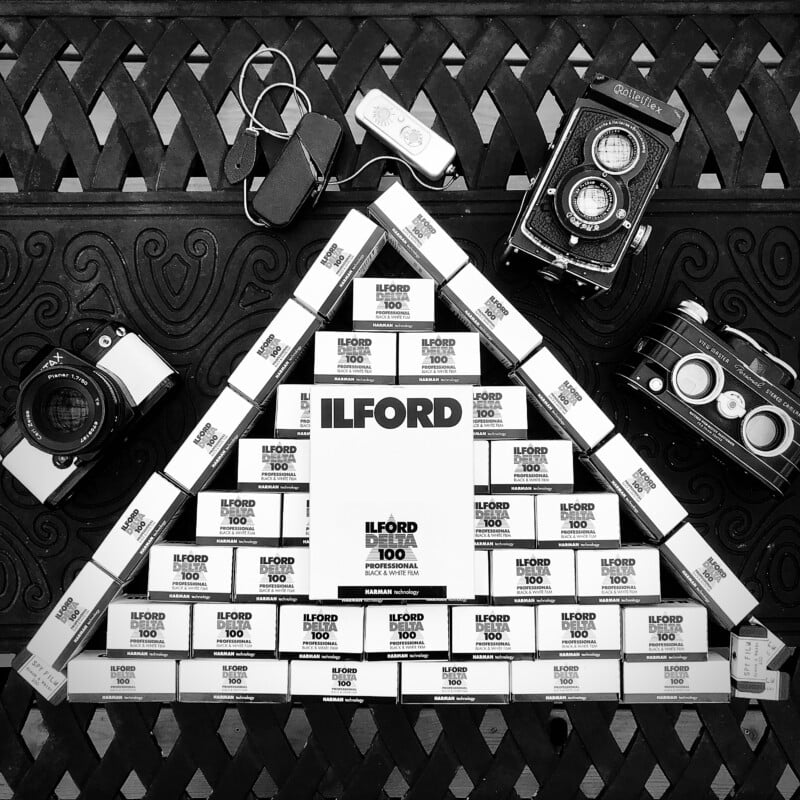
Field tests conducted by technicians at Blue Moon Camera suggest that while Delta 100 is often compared to Fuji Acros II and Kodak T-Max 100, it possesses a distinct "smoothness" that sets it apart. While Fuji Acros II is frequently cited as having the finest grain in the ISO 100 category, Delta 100 is noted for its superior rendering of micro-contrast. The film does not merely offer fine grain; it offers a high degree of edge acutance, meaning the boundaries between different tones are rendered with extreme clarity. This makes it an ideal choice for architectural photography and detailed landscape work where the textures of stone, foliage, or fabric must be preserved with surgical precision.
Tonality, Contrast, and the "Middle Ground" Excellence
In the realm of black-and-white photography, contrast is often a polarizing subject. Some films, like Fuji Acros, are known for their dramatic, punchy contrast, while others, like Agfa APX (now produced under the Rollei or RPX brands), are celebrated for their soft, silvery mid-tones. Delta 100 occupies a sophisticated middle ground.
Analysis of developed negatives reveals that Delta 100 manages to balance deep, rich shadows with bright, clean highlights without sacrificing the subtle gradations in between. It is often described as having a "smooth" tonal transition. Even when highlights are slightly overexposed—a common occurrence in high-contrast outdoor lighting—Delta 100 retains detail that would be "blown out" on less sophisticated emulsions. This characteristic provides a safety net for photographers while ensuring that the final print or scan feels full-bodied and dimensional. It avoids the "flatness" of some low-speed films while steering clear of the harshness found in high-contrast stocks.

Long Exposure Performance and Reciprocity Characteristics
For landscape and architectural photographers, a film’s performance during long exposures is a critical metric. This is governed by "reciprocity failure"—the phenomenon where a film becomes less sensitive to light during extended exposure times, requiring the photographer to add extra time to the metered value.
Delta 100’s reciprocity characteristics are not as "exceptional" as Fuji Acros II (which requires no compensation up to two minutes), but they are remarkably consistent. According to Ilford’s technical data and real-world testing:
- At a 1-second metered exposure, the film begins to require slight compensation.
- At a 10-second metered exposure, the photographer should add one full stop, resulting in a 20-second actual exposure.
- The compensation curve flattens significantly after this point. For a 60-second metered exposure, only 1.25 stops are needed.
This predictability is a major asset for fine-art photographers. Testing using specialized equipment, such as the Reality So Subtle 6×6 dual pinhole camera, confirms that Delta 100 can handle exposures lasting several minutes with ease, provided the compensation is calculated correctly. The consistency of the emulsion ensures that photographers can move from 35mm street photography to four-minute large-format exposures with the same predictable results.

Chemical Versatility and Processing Optimization
One of the most significant advantages of choosing a mature product like Delta 100 is the sheer volume of processing data available. The film has been tested with virtually every developer on the market, allowing photographers to "tune" the look of the film during development.
Based on industry data and the Massive Dev Chart (which contains over 200 specific combinations for Delta 100), the following developer pairings are most common:
- Kodak D-76 / Ilford ID-11: The industry standard. Used at a 1:1 dilution, this combination provides a classic balance of fine grain and moderate contrast.
- Ilford DD-X: Often considered the "best" developer for Delta films. It is specifically formulated to maximize the advantages of tabular grain, resulting in the finest possible grain and excellent shadow detail.
- Kodak HC-110 / Ilfotec HC: Preferred by photographers who want maximum sharpness and "bite" in their images.
- Rodinal (R09): Used in high dilutions (1:50 or 1:100), Rodinal produces a unique look with emphasized grain and extreme edge sharpness, though it can sacrifice some of the "smoothness" for which Delta 100 is known.
This versatility means that Delta 100 can be adapted to suit a photographer’s specific workflow, whether they are developing in a professional lab or a home darkroom.

Format Availability and the ULF Program
Perhaps the most compelling argument for adopting Delta 100 as a primary emulsion is its availability across an unprecedented range of formats. While many modern films are restricted to 35mm or 120, Ilford has maintained a commitment to large-format and specialty photographers.
Delta 100 is available in:
- Standard consumer formats: 35mm and 120 (Medium Format).
- Standard sheet film: 4×5 and 8×10 inches.
- Specialty formats: Minox (subminiature).
- Ultra Large Format (ULF): Through Ilford’s annual ULF program, Delta 100 can be ordered in massive sizes, including 8×20 inches, 16×20 inches, and even custom sizes for antique or bespoke cameras.
This range ensures that a photographer can master a single emulsion and use it across their entire arsenal of cameras, from a pocket-sized Minox to a massive Deardorff field camera. This consistency eliminates the learning curve associated with switching films when moving between different camera systems.

Market Implications and the Future of Analog Precision
The continued relevance of Ilford Delta 100 is a testament to the enduring value of high-fidelity analog imaging. In an era where digital sensors have reached extreme resolutions, Delta 100 offers a different kind of "high definition"—one that is organic, tactile, and rooted in the physical chemistry of silver.
The efforts by retailers like Blue Moon Camera to reintroduce these films to the public highlight a shift in the "Film Renaissance." While the initial wave of the analog revival was characterized by an interest in "lo-fi" aesthetics and expired film, the current phase is defined by a desire for technical mastery and archival quality. Delta 100 fits perfectly into this paradigm, offering a level of sophistication that challenges the notion that film is a "lower" resolution medium than digital.
As Ilford (under the umbrella of HARMAN technology) continues to support the Delta line, the film remains a cornerstone of the professional black-and-white market. Its balance of modern tabular grain technology with the soul of traditional darkroom practice ensures that it will remain a vital tool for photographers who demand both precision and character in their work. For those who have overlooked it in favor of more famous names, the current consensus is clear: Delta 100 is not just an alternative; it is a benchmark of excellence in its own right.

