



The release of the Canon EOS Digital Rebel 300D in August 2003 marked a definitive turning point in the history of imaging technology. Before its arrival, the world of digital single-lens reflex (DSLR) photography was an exclusive domain reserved for professionals and the wealthy, with camera bodies often costing upwards of $3,000. By breaking the psychologically significant $1,000 price barrier, Canon did more than just launch a product; it initiated a market shift that would eventually lead to the obsolescence of consumer film photography and the rise of the modern digital enthusiast.
The Socio-Economic Context of 2003
To understand the impact of the 300D, one must look at the photographic landscape of the early 2000s. While digital "point-and-shoot" cameras were gaining popularity, they lacked the sensor size, interchangeable lenses, and manual controls required for serious creative work. Professionals used the Canon EOS-1D or the Nikon D1 series, while advanced amateurs often settled for "bridge" cameras like the Canon PowerShot G-series or high-end film bodies.
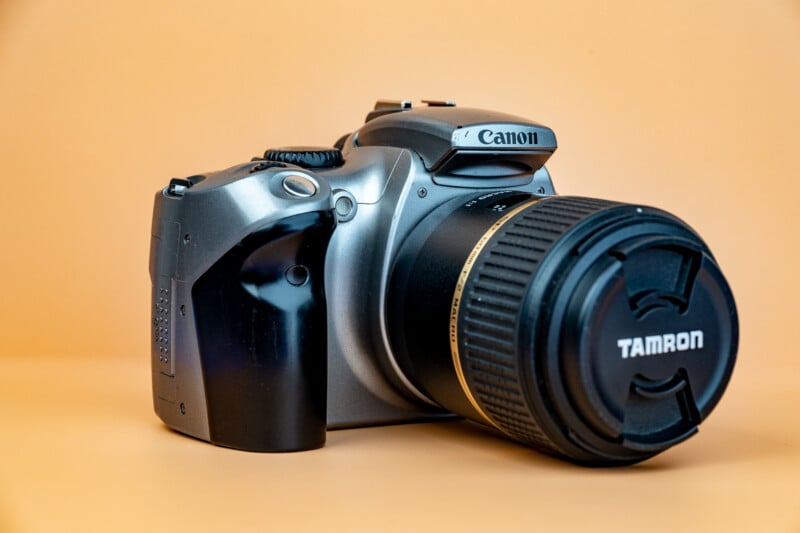
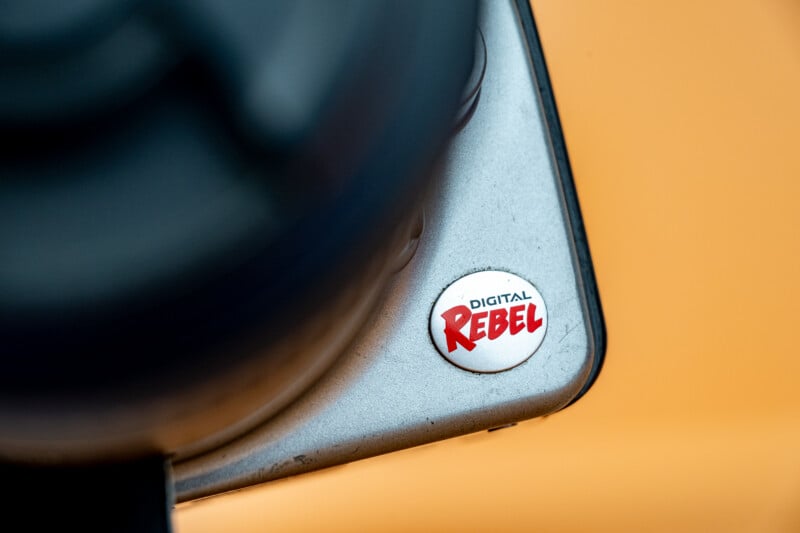
When Canon announced the EOS 300D (known as the Digital Rebel in North America and the EOS Kiss Digital in Japan), the MSRP was set at $899 for the body and $999 for a kit including the 18-55mm lens. This pricing strategy was aggressive and calculated. It brought professional-grade sensor technology into the hands of students, families, and hobbyists, forever changing the demographics of the photographic community.
Technical Specifications and Architecture
The EOS 300D was built around a 6.3-megapixel APS-C CMOS sensor, a variant of the sensor found in the more expensive, semi-professional Canon EOS 10D. At the time, 6.3 megapixels was considered a high resolution, capable of producing sharp 8×10-inch prints.
Sensor and Image Processing
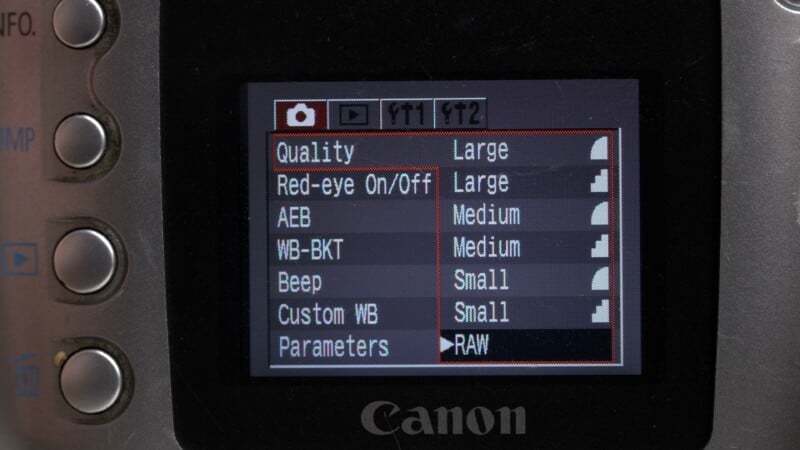
The heart of the 300D was the DIGIC (Digital Imaging Integrated Circuit) processor. This first-generation chip was responsible for color reproduction, auto-exposure, and the camera’s overall speed. While modern processors handle gigabytes of data per second, the original DIGIC was optimized for the 300D’s 2.5 frames-per-second (fps) burst rate. The sensor offered an ISO range of 100 to 1600, though noise became significantly prevalent at ISO 400 and above—a stark contrast to the clean high-ISO performance of modern mirrorless systems.
The Birth of the EF-S Mount
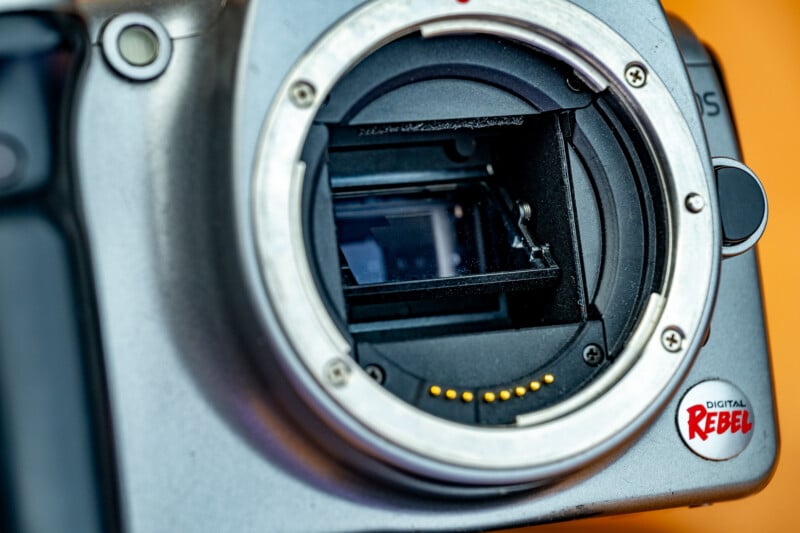
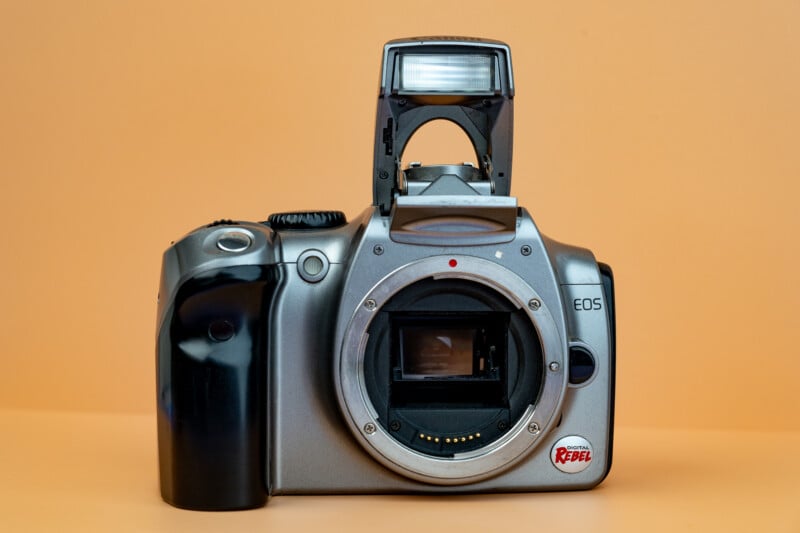
The 300D also served as the debut platform for the EF-S lens mount. Because the APS-C sensor was smaller than a traditional 35mm film frame, Canon developed a new line of lenses with a "short back focus." This allowed the rear element of the lens to sit closer to the sensor, enabling the production of smaller, lighter, and more affordable wide-angle lenses tailored specifically for digital sensors. The 18-55mm f/3.5-5.6 kit lens became a staple of the industry, despite its plastic construction and modest optical performance.
Design and Ergonomics: The Cost of Affordability
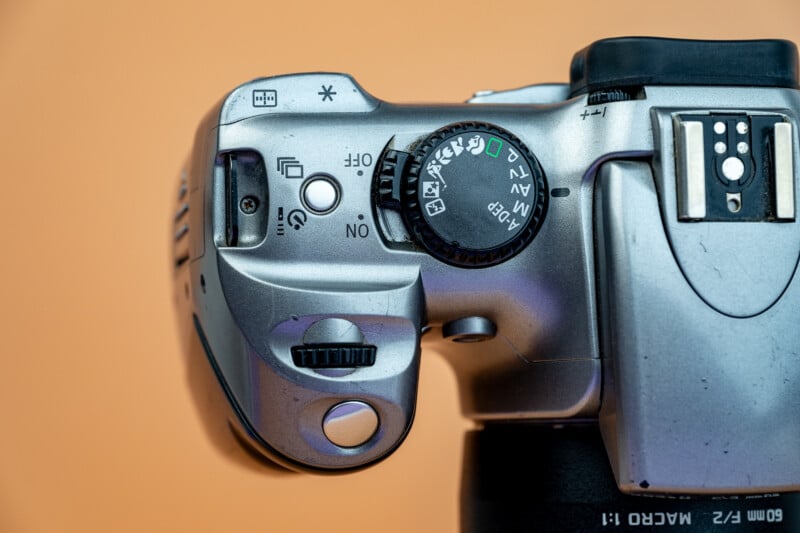
To achieve its groundbreaking price point, Canon had to make significant compromises in build quality and features. The 300D featured a chassis made primarily of polycarbonate plastic, finished in a distinctive silver paint that many critics at the time described as "cheap-looking." Unlike the magnesium-alloy 10D, the 300D felt hollow and creaky under pressure.
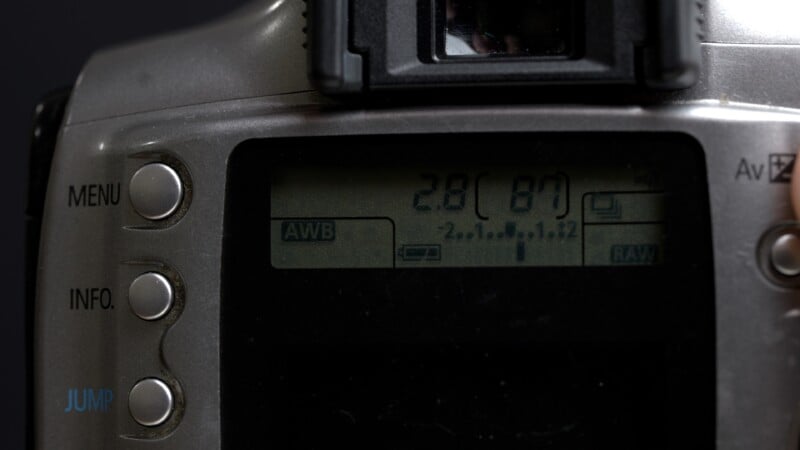
The user interface was intentionally simplified to avoid cannibalizing sales of higher-end models. The camera featured a single command dial and a small, monochromatic top-mounted LCD for settings, supplemented by a 1.8-inch color LCD on the rear for image playback. The rear screen, with only 118,000 pixels, was notoriously difficult to use for judging focus or fine detail, serving primarily as a tool for checking composition and basic exposure histograms.
Functional Limitations
Canon’s marketing department famously restricted several software features in the 300D that were present in the 10D. For instance, the 300D lacked the ability to switch between One-Shot, AI Focus, and AI Servo autofocus modes manually; the camera’s computer decided the mode based on whether it detected subject movement. This led to the famous "Russian Hack" or "Wasia Firmware," a modified firmware created by independent developers that unlocked hidden features like the Flash Exposure Compensation and manual AF mode selection, proving that the hardware was far more capable than the stock software allowed.
A Chronology of the Digital Rebel Era
The success of the 300D sparked a rapid release cycle that defined the "DSLR wars" of the mid-2000s.

- August 2003: EOS 300D Launch. It sells in unprecedented volumes, cementing Canon’s lead in the digital market.
- February 2004: Nikon responds with the D70. It is slightly more expensive but offers better build quality, faster shutter speeds, and more advanced flash control, sparking a fierce rivalry.
- February 2005: Canon releases the EOS 350D (Digital Rebel XT). It features an 8-megapixel sensor and a much smaller, more compact body, addressing complaints about the 300D’s bulk.
- August 2006: The EOS 400D (Digital Rebel XTi) introduces a 10-megapixel sensor and the first integrated sensor cleaning system to combat dust—a major pain point for early DSLR users.
- 2008 and Beyond: The line continues to evolve, eventually introducing video recording with the 500D and articulating screens with the 600D, maintaining the "Rebel" brand as the entry point for millions of photographers.
Supporting Data and Market Performance
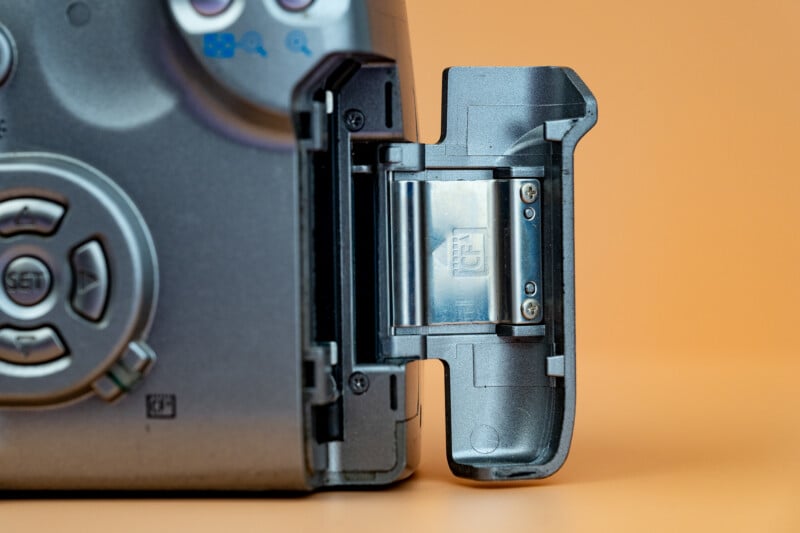
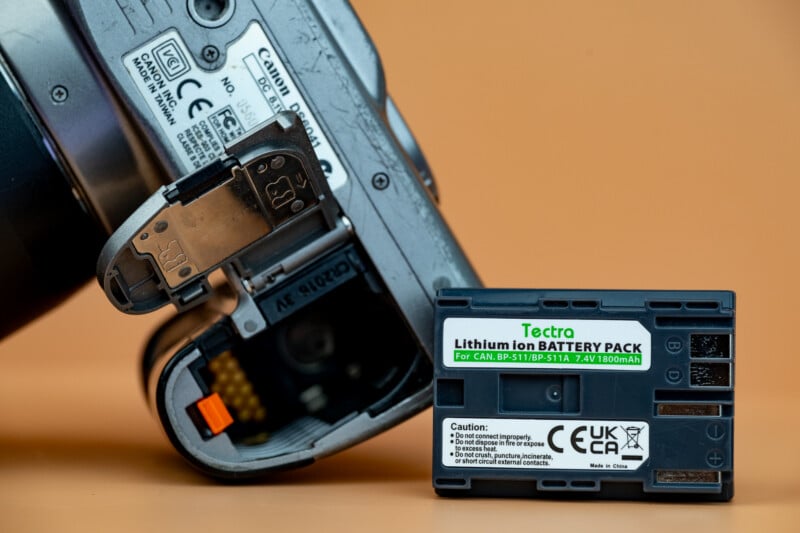
At the height of its popularity, the EOS 300D was a dominant force in retail. In its first year, it helped Canon capture over 50% of the global DSLR market. The reliance on CompactFlash (CF) cards was the industry standard, and the 300D’s use of the BP-511 rechargeable lithium-ion battery provided a significant advantage over competitors that still relied on AA batteries, offering hundreds of shots per charge.

The 300D’s 7-point autofocus system, while primitive by today’s standards (which feature hundreds of phase-detection points and AI-driven eye tracking), was a major upgrade for users moving from film SLRs. However, the buffer depth was a significant bottleneck; the camera could only hold four or five RAW images before the "busy" light would flash, forcing the photographer to wait as the data was written to the CF card.
Broader Impact and Industry Implications
The 300D’s legacy is not found in its technical perfection, but in its cultural impact. By making high-quality digital imaging accessible, it forced the entire industry to accelerate innovation.

The Democratization of Photography
Before 2003, professional photography was a gatekept profession due to the high cost of entry. The 300D allowed a new generation of wedding, event, and street photographers to hone their craft without the recurring costs of film and processing. It was the "gateway drug" that led many to eventually invest in professional bodies like the 5D or the 1D series.

The Death of Film for the Masses
While professional film usage lingered, the 300D was the "smoking gun" for consumer film. Once families realized they could take thousands of photos of their children, see them instantly, and print only the best ones at home or at a kiosk, the market for 35mm rolls and "1-hour photo" labs plummeted.

Influence on Modern Mirrorless Systems
The lessons learned from the Rebel series—balancing size, cost, and performance—are evident in today’s mirrorless cameras like the Canon EOS R10 or R50. These cameras carry the torch of the 300D, offering high-end features in accessible packages. The transition from the EF-S mount to the RF-S mount mirrors the transition from EF to EF-S twenty years ago, showing Canon’s continued commitment to the entry-level segment.
Analysis: Does the 300D Hold Up Today?
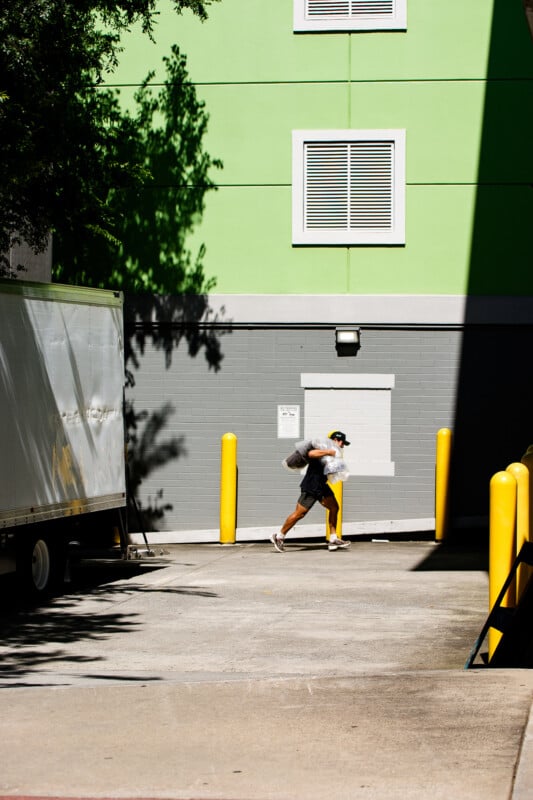
In a contemporary context, using an EOS 300D is an exercise in "slow photography." The startup time is sluggish, the shutter sound is a mechanical "clack" rather than a refined "click," and the lack of high-ISO capability limits it to well-lit environments. However, the 6.3MP CMOS sensor still produces colors that many photographers find more "organic" or "filmic" than the clinical perfection of modern high-resolution sensors.

The 300D remains a testament to the idea that a camera is merely a tool. While its specifications are now outmatched by the cheapest smartphones, the 300D is still capable of capturing stunning images in the hands of a skilled operator. It stands as a monument to a time when digital photography moved from the laboratory to the living room, forever changing how we document our lives and the world around us.

