


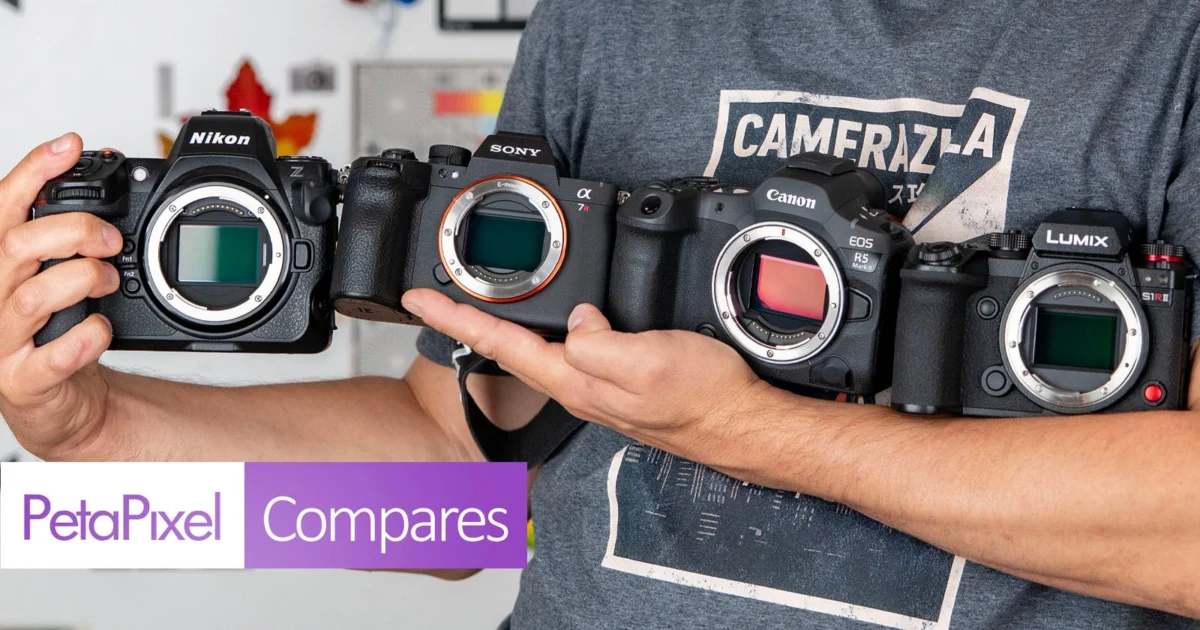
The landscape of professional photography has undergone a radical transformation over the last decade, transitioning from the reliable mechanical mirrors of DSLRs to the sophisticated, silicon-heavy architecture of high-end mirrorless systems. In the current market, while mid-range sensors cater to the enthusiast majority, the high-end segment serves as a technological proving ground where manufacturers like Nikon, Canon, Sony, and Panasonic compete for the loyalty of professional studio photographers, wildlife specialists, and commercial cinematographers. This segment is characterized by sensors that push the boundaries of resolution, dynamic range, and data readout speeds, representing the pinnacle of modern imaging science.
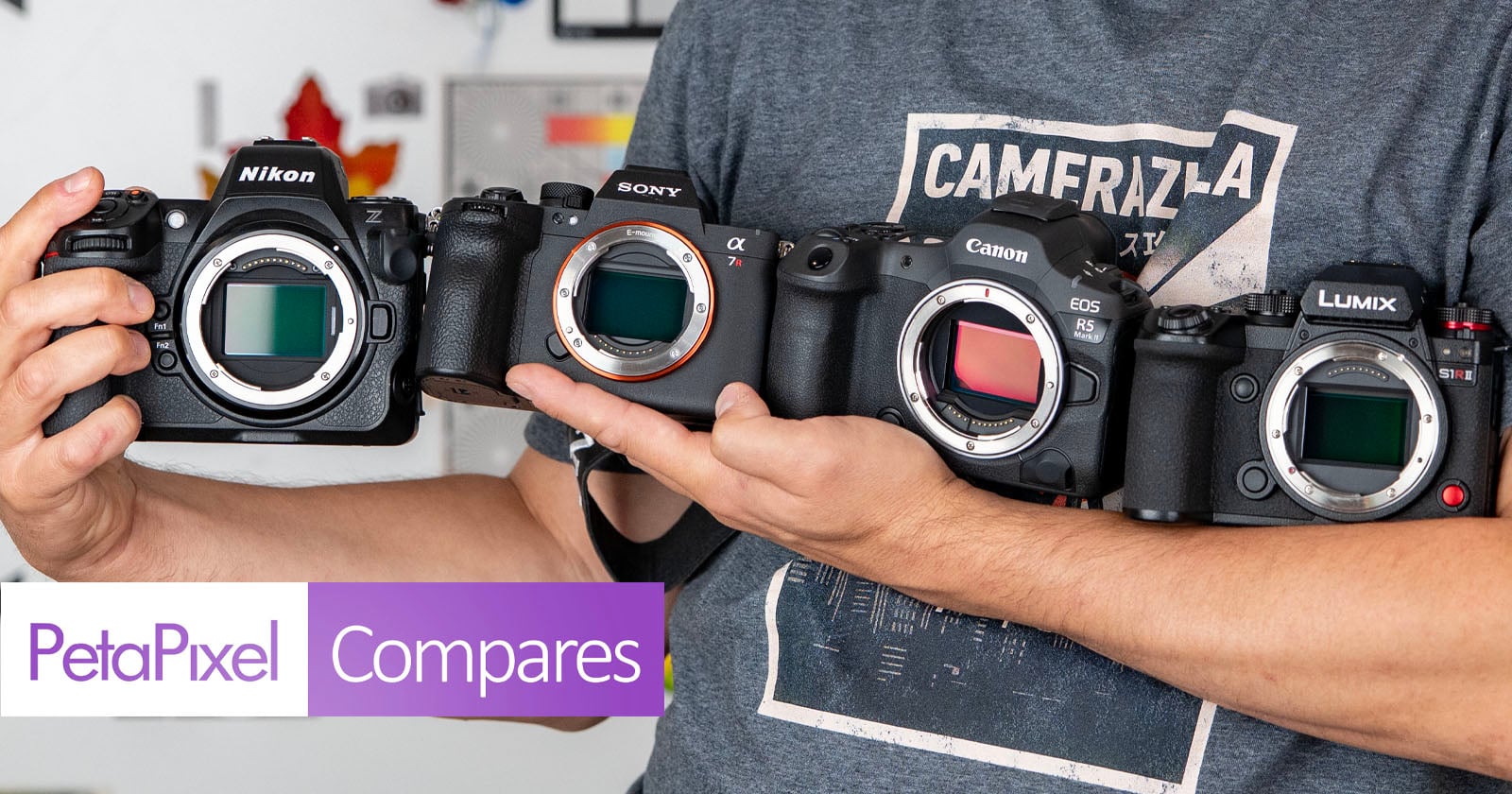
A comprehensive technical evaluation of the industry’s leading contenders—the Nikon Z8, the Panasonic S1R II, the Canon EOS R5 Mark II, and the Sony a7R VI—reveals a market divided by specific use cases. While all four cameras are capable of producing world-class imagery, their internal sensor architectures dictate their strengths in areas such as electronic shutter reliability, low-light performance, and extreme resolution.
The Evolution of High-Resolution Imaging
The journey to the current generation of high-resolution sensors began in earnest around 2012 with the release of the Nikon D800, which stunned the industry with a 36.3-megapixel sensor. This set off an "arms race" that eventually saw Sony take a dominant lead in sensor fabrication, providing the backbone for many of the industry’s most popular bodies. The transition to mirrorless mounts allowed for shorter flange distances and more complex lens designs, which in turn necessitated sensors capable of resolving finer details.
By 2020, the 45-megapixel threshold became the industry standard for "high resolution," a balance that offers significant cropping potential without overwhelming computer processing workflows. However, as of 2024, the market has bifurcated into two philosophies: the "speed-centric" high-resolution sensors found in the Nikon Z8 and Canon R5 Mark II, and the "detail-centric" sensors exemplified by the Sony a7R VI’s 66-megapixel powerhouse.
Technical Profiles of the Industry Titans
Nikon Z8: The Speed Specialist
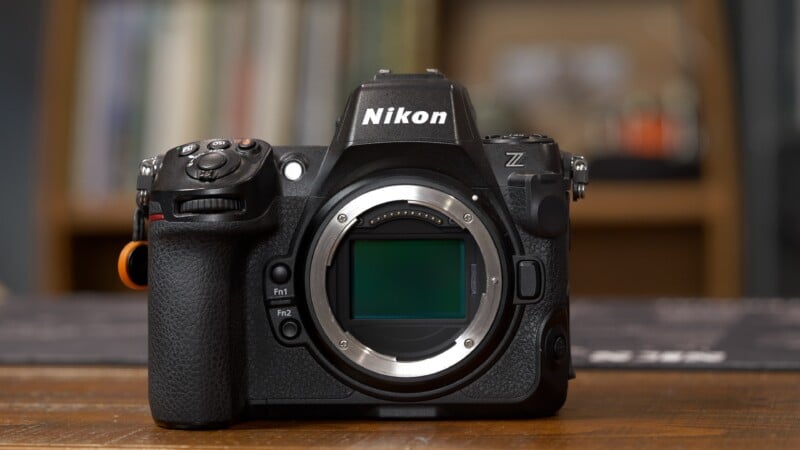
The Nikon Z8, often referred to as a "mini-Z9," utilizes a 45.7-megapixel stacked CMOS sensor. It is unique in this group for having completely eliminated the mechanical shutter, a move that signals Nikon’s confidence in its sensor’s readout speed. By using a fully stacked architecture, where the light-gathering pixels are layered directly over the processing circuitry, the Z8 achieves data transfer rates that effectively eliminate "rolling shutter" distortion. At a retail price of approximately $3,700, it is positioned as a versatile workhorse for sports and wildlife photographers who require speed without sacrificing resolution.
Panasonic S1R II: The Studio and Landscape Choice
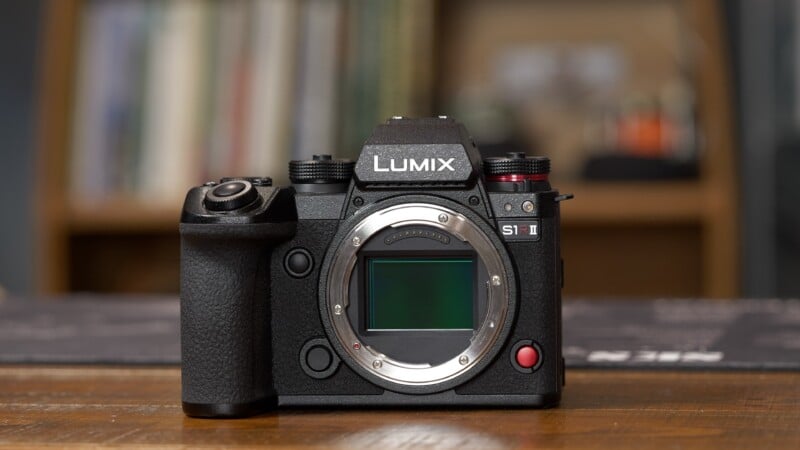
The Panasonic S1R II occupies the more traditional end of the high-resolution spectrum. Featuring a sensor with approximately 45 megapixels housed in a rugged, weather-sealed chassis, the S1R II is designed for durability and precision. While it lacks the stacked sensor architecture of its Nikon and Canon rivals, it compensates with an sophisticated in-camera high-resolution mode. This allows the sensor to shift slightly between exposures to create massive, detail-rich files directly in the camera. Priced at roughly $3,000, it represents the most cost-effective entry point into the professional high-resolution market.
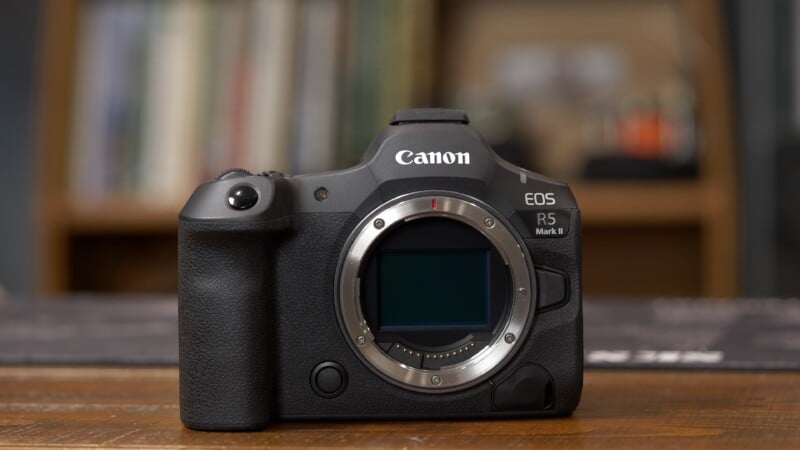
Canon EOS R5 Mark II: The Hybrid All-Rounder
Canon’s R5 Mark II is the successor to the highly successful R5, featuring a brand-new 45-megapixel stacked sensor designed and manufactured in-house. Canon has focused heavily on the synergy between sensor readout and autofocus processing. The R5 Mark II is engineered to handle blistering burst rates and advanced video specifications, making it the primary choice for hybrid creators who move between high-end stills and professional 8K video. It sits at a mid-to-high price point of $4,000.
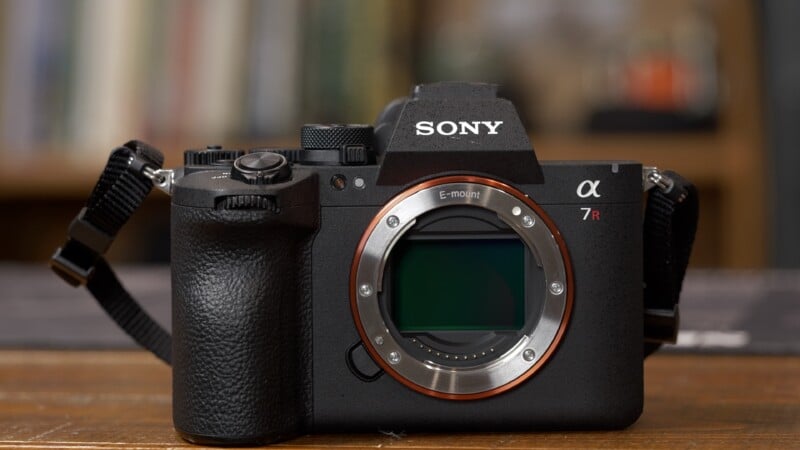
Sony a7R VI: The Resolution King
The Sony a7R VI is the newest entry and currently holds the crown for the highest resolution in the full-frame category. Its 66-megapixel stacked sensor represents a significant leap over the 45-megapixel standard. Historically, the "R" series from Sony was considered too slow for action photography, but the addition of a stacked sensor in the Mark VI iteration has bridged that gap. With a price tag of $4,500, it is the most expensive of the group, targeting professionals who require the absolute maximum in detail for large-format printing and aggressive cropping.
Comparative Data Analysis: Resolution and Detail
In empirical testing, resolution is the most immediate differentiator. The Sony a7R VI, with 21 million more pixels than its closest competitors, offers a clear advantage in fine-detail rendition. In landscape photography, this translates to the ability to resolve distant foliage or architectural textures that appear blurred on lower-resolution sensors.
However, the Panasonic S1R II offers a unique alternative through its multi-shot high-resolution mode. Unlike the Sony, which captures its 66 megapixels in a single shot, the Panasonic can stack multiple 45-megapixel exposures to create a single file with superior color accuracy and noise characteristics. The limitation of this method is that it requires a static subject and a tripod, whereas the Sony’s resolution is available for handheld, moving subjects.
Sensor Readout Speeds and Electronic Shutter Performance
The "readout speed" of a sensor refers to how quickly the data can be scanned from the top of the sensor to the bottom. This metric is critical for photographers using electronic shutters, as slow readout speeds result in the "rolling shutter" effect, where moving objects appear slanted or distorted.
| Camera Model | Readout Speed (approx.) | Performance Category |
|---|---|---|
| Nikon Z8 | 3.7ms | Industry Leading (No Mechanical Shutter) |
| Canon R5 Mark II | 6.5ms | Professional Action Ready |
| Sony a7R VI | 19.5ms | Improved but Moderate |
| Panasonic S1R II | 37.0ms | Studio/Static Only |
The Nikon Z8’s 3.7ms readout is the gold standard, allowing it to function without a mechanical shutter even in high-flicker environments or during high-speed sports. The Canon R5 Mark II follows closely, making it highly reliable for electronic shutter use. In contrast, the Panasonic S1R II’s 37ms readout makes its electronic shutter almost unusable for anything involving movement, necessitating the use of its mechanical shutter for most professional applications.
Low Light and Dynamic Range Performance
As pixel density increases, the physical size of each individual pixel (photosite) decreases, which traditionally leads to higher noise levels in low light. However, modern back-side illuminated (BSI) and stacked designs have mitigated this issue.
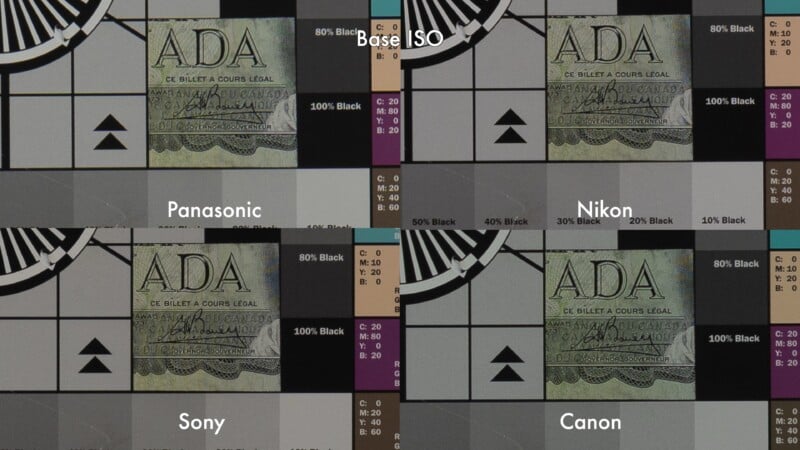
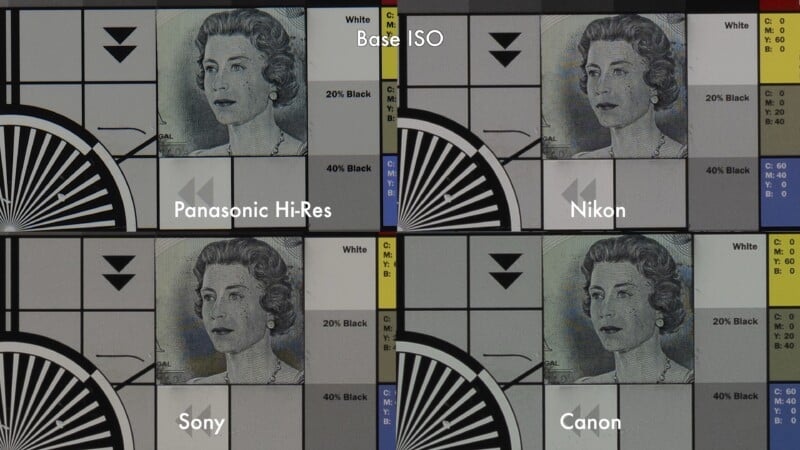
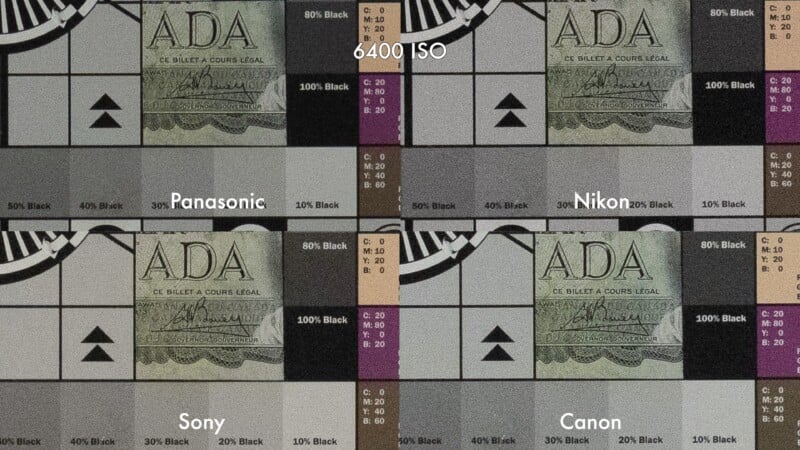
Testing at ISO 6400 reveals that all four cameras maintain professional-grade image quality. The Panasonic S1R II applies aggressive internal noise reduction, which produces cleaner-looking files at the cost of some fine detail. The Sony a7R VI, despite its smaller pixels, performs remarkably well; when its 66-megapixel images are downsampled to match the 45-megapixel output of the others, the noise becomes less visible, effectively giving it a slight edge in perceived low-light performance.
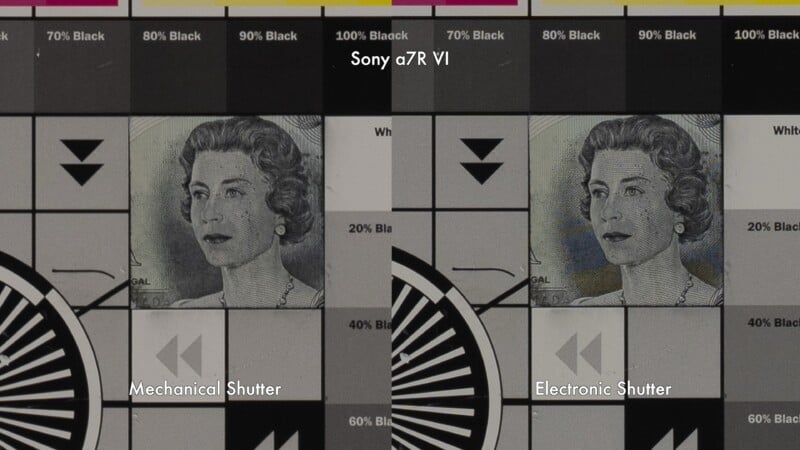
In terms of dynamic range—the ability to capture detail in both the deepest shadows and brightest highlights—the Sony a7R VI shows a measurable advantage at base ISO. This is largely attributed to Sony’s advanced on-sensor analog-to-digital conversion. Nikon and Canon follow closely, with the Nikon Z8 showing slightly less noise in the shadows when files are "pushed" in post-production compared to the Canon, which relies more on software-based noise management.
Market Implications and Professional Reactions
Industry analysts suggest that the current crop of sensors represents a plateau in traditional CMOS technology. The shift toward "stacked" sensors has been the defining trend of the 2020s, prioritizing data throughput over simple megapixel increases.
Professional reactions have been largely positive, though split along brand lines. Wildlife photographers have gravitated toward the Nikon Z8 for its silent operation and lack of moving parts. Commercial and fashion photographers have shown a preference for the Sony a7R VI, citing the flexibility of its 66-megapixel files for magazine layouts. Meanwhile, the Canon R5 Mark II remains a favorite for agency photographers who need a "do-it-all" tool that integrates seamlessly into existing professional workflows.
The Future of Sensor Technology
The results of this showdown indicate that while resolution is still a major marketing point, the real battleground has shifted to sensor speed and AI integration. The next logical step in this evolution is the "Global Shutter," currently found in the Sony a9 III, which reads the entire sensor at once. While global shutters currently face challenges with dynamic range and base ISO sensitivity, it is expected that this technology will eventually migrate to the high-resolution segment.
For now, the consumer is the primary beneficiary of this intense competition. The gap in image quality between these four titans is narrower than it has ever been. Choosing between them is no longer a matter of which sensor is "better," but rather which sensor’s specific architecture aligns with the photographer’s specific technical requirements. Whether it is the unmatched speed of the Nikon, the extreme resolution of the Sony, the hybrid versatility of the Canon, or the rugged value of the Panasonic, the high-end sensor market has reached a state of unprecedented excellence.

