



The landscape of behavioral neuroscience and pharmaceutical research is undergoing a profound transformation as regulatory bodies, academic institutions, and multinational corporations move to abandon the forced swim test (FST). Once a staple of antidepressant research, this controversial procedure—often referred to as the "Porsolt test"—is being phased out globally following a decade of intense scientific scrutiny and advocacy. The shift reflects a growing consensus that the experiment not only raises significant ethical concerns regarding animal welfare but also fails to provide reliable translational data for human mental health conditions. As of July 2026, the momentum against the practice has reached a critical mass, with major jurisdictions in Europe, Asia, and North America implementing bans or severe restrictions on its application.
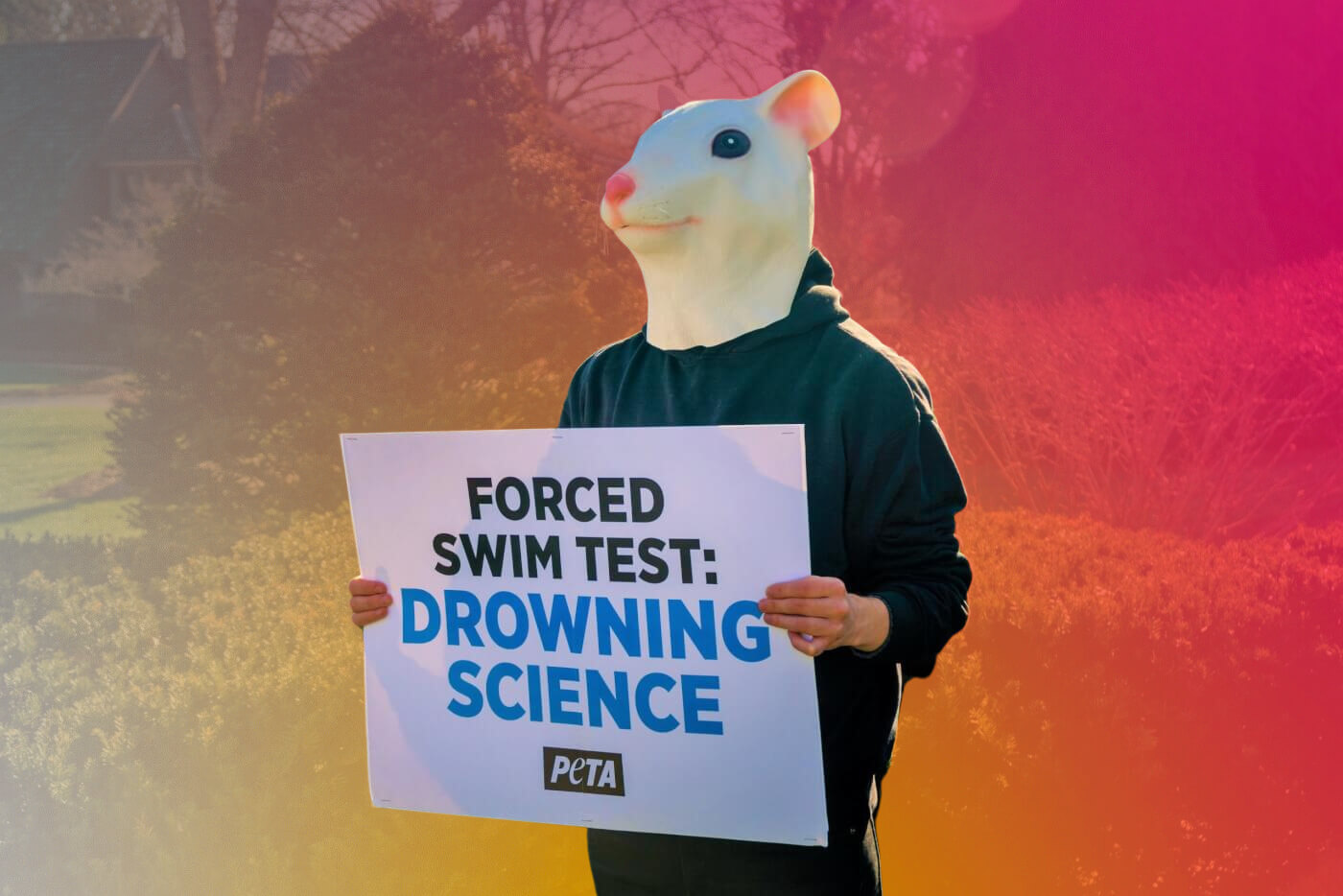
The forced swim test involves placing small animals, typically mice or rats, into inescapable transparent containers filled with water. Observed by researchers, the animals instinctively swim frantically in an attempt to find an exit. When the animals eventually cease struggling and begin to float, experimenters traditionally interpreted this "immobility" as a sign of behavioral despair or a "depressed" state. However, contemporary neuroscientific research has increasingly debunked this interpretation. Critics and modern researchers argue that immobility is not a symptom of depression but rather an adaptive survival mechanism or a learned behavior to conserve energy once the animal realizes escape is impossible. A pivotal 2021 study published in Drug Discovery Today suggested that the test is less reliable than a coin toss in predicting the efficacy of human antidepressants, noting that several compounds that "passed" the FST failed in human clinical trials, while other effective human medications did not show results in the animal model.
A Chronology of Institutional and Corporate Rejection
The movement to eradicate the forced swim test gained significant traction in 2018 when major pharmaceutical companies began responding to shareholder resolutions and scientific critiques. This corporate "domino effect" saw industry leaders such as AbbVie, AstraZeneca, and Pfizer publicly commit to ending the use of the test. By 2026, the list of corporations that have banned the FST has grown to include 19 major firms, including Johnson & Johnson, Roche, and Sanofi.
The timeline of reform accelerated between 2024 and 2026 as national regulatory bodies began to intervene. In the United Kingdom, the Home Office took a decisive stance in 2024 following a massive public petition and a formal review by the Animals in Science Committee. This led to a 2025 roadmap issued by the Department for Science, Innovation & Technology (DSIT), which explicitly prioritized the development of non-animal approaches. By early 2026, the policy landscape had shifted toward a near-total prohibition of the FST for modeling human depression across several continents.
Regulatory Milestones in Europe and Ireland
In the United Kingdom, the 2025 DSIT roadmap marked a turning point in national science policy. The department concluded that the FST possessed "limited scientific validity" and failed the essential "harm-benefit test" required for animal research licensing. This led to the UK’s first designation of the FST as a "technique of special interest," requiring rigorous justification that few researchers could provide. Currently, 15 major UK universities, including King’s College London and the University of Manchester, have confirmed they no longer utilize the test.
Parallel developments occurred in Ireland, where the Health Products Regulatory Authority (HPRA) sought advice from the National Committee for the Protection of Animals Used for Scientific Purposes. In February 2026, the committee’s findings led to a landmark restriction: the FST is no longer permitted in Ireland as a model for depression, anxiety disorders, or "depression-like" behaviors. Furthermore, the committee prohibited experiments that force animals to swim to the point of exhaustion, effectively ending the most grueling versions of the procedure in Irish laboratories.
Germany has also seen regional breakthroughs. In April 2026, Dr. Madeleine Martin, the State Animal Welfare Commissioner for Hesse, announced that the forced swim test is no longer conducted within the state. Authorities in Brandenburg and Bremen followed suit, confirming that no such experiments are currently authorized or planned. Significantly, the German Mouse Clinic at the Helmholtz Center Munich—a major hub for genetic research—announced in June 2026 that it has permanently retired the FST from its protocols, citing a lack of scientific necessity for its reintroduction.
Expansion of the Ban Across Asia and Oceania
The movement has seen a rapid expansion in the Asia-Pacific region, driven by both regulatory directives and institutional leadership. In India, the Pharmacy Council of India issued a directive in April 2025, urging all institutions under its purview to review the continued use of the experiment. This led to a historic decision by Chitkara University in February 2026 to become the first Indian university to formally ban the test. Dr. Thakur Gurjeet Singh, Dean of the Chitkara College of Pharmacy, emphasized that the decision was rooted in aligning academic research with modern scientific standards and ethical expectations.
In Oceania, the University of Melbourne prohibited the test in 2025 following extensive internal reviews and external pressure from scientific advocacy groups. This was followed in 2026 by Victoria University of Wellington in New Zealand. The New Zealand decision was the result of a collaborative effort between international advocacy groups and local organizations like the New Zealand Anti-Vivisection Society and Save Animals From Exploitation. These institutional bans in the Southern Hemisphere are seen by analysts as a signal that the rejection of the FST is not merely a Western European trend but a global shift in research ethics.
Latin America and the United States: Shifting Research Paradigms
In Latin America, a growing number of universities have quietly moved away from the FST. While regulatory frameworks vary by country, academic leaders in the region have increasingly cited the lack of translational relevance as the primary driver for dropping the test.
In the United States, the shift is particularly visible in the private sector and contract research organizations (CROs). In 2025, Creative Biolabs and Melior Discovery—companies that provide research services to the pharmaceutical industry—announced they would no longer offer the FST. A representative from Creative Biolabs stated that the test was "no longer relevant for drug development efforts," reflecting a pragmatic realization that the industry is moving toward more sophisticated, human-relevant technologies.
Despite the lack of a federal ban in the U.S., the majority of the world’s "Big Pharma" companies headquartered or operating extensively in the U.S. have abandoned the test. Companies like Bristol Myers Squibb, GSK, and Eli Lilly have faced pressure not only from animal welfare advocates but also from investors who view unreliable animal models as a financial risk that contributes to the high failure rate of neurological drugs in clinical trials.
Scientific and Economic Analysis of the Transition
The phase-out of the forced swim test is supported by a robust economic and scientific rationale. The "valley of death" in pharmaceutical R&D—the gap between successful animal testing and successful human clinical trials—is particularly wide in the field of psychiatry. It is estimated that over 90% of drugs that appear promising in animal models fail when tested on humans, often due to lack of efficacy. By relying on a 50-year-old model like the FST, researchers may have been inadvertently filtering out potentially effective compounds or pursuing "false positives" that do not translate to the human brain’s complexity.
The transition away from the FST is facilitating the adoption of "New Approach Methodologies" (NAMs). These include:

- Human-derived Organoids: "Mini-brains" grown from human stem cells that allow researchers to study drug reactions on actual human neural tissue.
- In Silico Modeling: Advanced computer simulations and AI that can predict molecular interactions with higher accuracy than behavioral animal models.
- Neuroimaging and Biomarkers: Focusing on measurable physiological changes in human subjects rather than interpreting the "mood" of a rodent.
The Department for Science, Innovation & Technology in the UK noted in its 2025 roadmap that the development of these technologies is not just an ethical imperative but a competitive necessity for the modern biotech sector.
Broader Implications for Animal Research Ethics
The global retreat from the forced swim test marks a significant milestone in the application of the "Three Rs" principle: Replacement, Reduction, and Refinement. While many animal experiments continue, the FST has become a case study in how a specific procedure can be systematically dismantled when its scientific utility no longer justifies its animal welfare cost.
The consensus among the 40+ universities and 19 major corporations currently honoring the ban is that the "harm-benefit" equation of the FST has permanently tilted toward "harm." The psychological and physical distress caused to the animals—near-drowning and extreme terror—is no longer balanced by a "benefit" of actionable scientific data.
As we move further into 2026, the focus of the scientific community is shifting toward ensuring that the replacement methods are validated and accessible. Regulatory agencies are expected to continue updating their guidelines, potentially leading to a formal international standard that excludes the forced swim test from drug approval dossiers. For the thousands of mice and rats previously subjected to these tests annually, this global policy shift represents a monumental victory for welfare; for the scientific community, it represents a necessary evolution toward more rigorous, human-centered medicine.

