


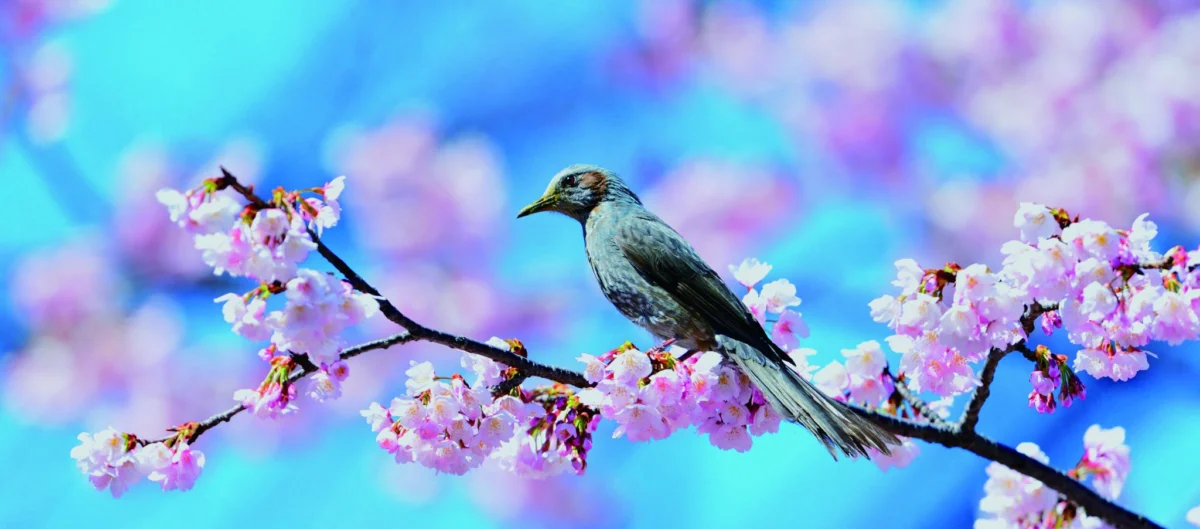
As the chill of winter recedes, signaling the arrival of spring, HIH Princess Takamado draws attention to a ubiquitous yet often overlooked avian resident of Japan: the Brown-eared Bulbul (Hypsipetes amaurotis). Through a collection of her striking photographs and insightful commentary, published in the April 2026 issue of Fujingahou Magazine, Princess Takamado aims to elevate the public’s appreciation for this common bird, urging a deeper understanding of its ecological significance and fascinating adaptability. The accompanying text, prepared in English by BirdLife International for reference, offers a compelling narrative that challenges the prevalent dismissive attitude towards the species.
The article, a feature titled "Through the Lens," is a testament to Princess Takamado’s long-standing passion for ornithology and conservation. Her observations, meticulously documented and presented, highlight the Brown-eared Bulbul’s integral role in Japanese ecosystems and its remarkable resilience in the face of environmental changes. This comprehensive look at the species goes beyond mere identification, delving into its behavioral patterns, dietary habits, and evolutionary trajectory, all viewed through the lens of Princess Takamado’s keen eye and dedication.
The Familiar Call of the Hiyodori
The Brown-eared Bulbul, known in Japan as "hiyodori," derives its onomatopoeic name from its distinctive call, often described as "hee-yo, hee-yo." It is a bird so commonplace that it ranks among the most familiar avian species for Japanese people, alongside sparrows and crows. Despite its ubiquity, Princess Takamado observes a curious lack of deep engagement with the species. "At first glance, it may appear plain," she writes, "but when you look closely, you discover it has a rather charming appearance. However, it is so common that one often hears the dismissive remark, ‘Oh… it’s just a Brown-eared Bulbul,’ as if it were hardly worth observing even at birding gatherings filled with enthusiasts." This sentiment underscores a societal tendency to overlook the extraordinary within the ordinary, a phenomenon Princess Takamado seeks to redress.

Her observations also touch upon the bird’s assertive nature. Brown-eared Bulbuls are known for their strong territorial instincts, often seen aggressively defending food sources like camellias and cherry blossoms from other avian visitors. Their loud, piercing calls can be perceived as disruptive, contributing to a perception of them as potentially annoying rather than admirable. This perceived lack of pleasantness, coupled with their sheer commonality, has unfortunately led to them being "not very well loved among Japanese people," according to Princess Takamado.
A Global Perspective on a Local Icon
Paradoxically, the Brown-eared Bulbul garners significant interest from international birdwatchers visiting Japan. Princess Takamado attributes this popularity to the species’ restricted geographic distribution. Primarily inhabiting East Asia, with Japan as its core territory, the Brown-eared Bulbul presents a unique opportunity for foreign visitors to encounter a bird endemic to the region. This underscores a broader trend in ecotourism where unique, localized species become significant drawcards for inbound tourism, contributing to the economic value of biodiversity.
An Evolutionary Journey: From Satoyama to the Cityscape
Princess Takamado provides a fascinating historical perspective on the Brown-eared Bulbul’s presence in Japan. She recalls a childhood in central Tokyo where, despite abundant greenery, she did not frequently hear their calls or see them in her family’s garden. This contrasts sharply with their current prevalence. Historically, the species predominantly inhabited satoyama forests – secondary woodlands traditionally managed by local communities – typically at elevations between 400 and 1,000 meters. During winter, they would descend to lower plains.
The significant shift in their habitat preference, with a marked expansion into urban areas, is a phenomenon linked to what Princess Takamado terms the increase in "greening" within cities. This refers to the growing presence of parks, gardens, and other vegetated spaces within urban environments. This urban adaptation is a testament to the species’ remarkable resilience and ability to exploit new ecological niches.

The Urban Omnivore: A Feast of Opportunities
The success of the Brown-eared Bulbul in urban settings is further bolstered by the diverse and readily available food sources that cities offer. As omnivores, their diet is remarkably varied, encompassing far more than just the blossoms of camellias and cherry trees. They consume nectar from plum and apricot blossoms, willow buds and young leaves, insects, and the berries of common street trees such as nandina and pyracantha. Their resourcefulness extends to drinking sap from broken branches and finding fully ripened fruits like persimmons, mandarins, grapes, and apples, as well as leafy vegetables such as cabbage and Chinese cabbage in suburban areas. This adaptability in diet ensures they rarely face food scarcity throughout the year, a critical factor in their successful colonization of urban landscapes.
Their breeding habits further illustrate their integration into human environments. Brown-eared Bulbuls nest in city parks, residential areas, and private gardens. Intriguingly, their nest-building materials are not limited to natural elements like twigs and plant fibers; they also skillfully incorporate man-made materials such as vinyl and plastic. This pragmatic use of available resources highlights their "tough way of surviving" in a human-dominated world.
Ecological Dynamics and Inter-Species Interactions
Princess Takamado shares personal anecdotes that vividly illustrate the Brown-eared Bulbul’s assertive behavior within her own garden. She describes how their loud warnings would often prompt other birds to flee from the birdbath. In one instance, she recounts how a bulbul, upon finding a feeding table empty during winter, would persistently flap its wings against the sunroom window, an action that, while perhaps demanding, ultimately led to the replenishment of food and the benefit of other birds. This observation, she notes, felt like witnessing "a small act of mutual support among the birds," hinting at a complex web of interdependencies, even among seemingly dominant species.
Subspecies and Conservation Concerns
The Brown-eared Bulbul’s distribution spans the entire Japanese archipelago, from Hokkaido to Kyushu, and includes the Izu Islands. Resident populations are also found on island regions such as Ogasawara, Amami, and Okinawa. This wide geographic spread has led to the classification of the species into eight distinct subspecies, each exhibiting unique forms and colorations. These subspecies can be further grouped into three larger categories, and Princess Takamado notes the "possibility that they may someday be classified as three separate species."

While the Brown-eared Bulbul is currently not considered globally threatened, this potential future speciation raises important conservation considerations. If the populations on smaller islands were to be recognized as distinct species, they might face designation as Endangered. This highlights the delicate balance of conservation, where common species can harbor hidden vulnerabilities within their diverse populations. The current conservation status of the Brown-eared Bulbul, as per BirdLife International data, is Least Concern globally, with an estimated population of 10-100 million mature individuals. However, the dynamic nature of taxonomy and potential future assessments warrant continued monitoring.
A Call for Re-evaluation and Appreciation
Princess Takamado concludes her piece with a heartfelt plea for a shift in public perception. "From now on, rather than saying dismissively, ‘Oh… it’s just a Brown-eared Bulbul,’ I hope we will warmly observe and appreciate its handsome appearance and acrobatic movements." Her photographs, capturing the bird in various poses and natural settings, serve as visual evidence of its inherent beauty and dynamism. The image accompanying the introductory text, for example, showcases the distinct brown cheek patch and the subtle elegance of the bird’s plumage. Another photograph details the characteristic crest, which stands erect when the bird is excited or alarmed, adding to its expressive character. A further image highlights the broad, pale band on the underside of its wings, which catches the light to create a striking visual effect.
The Brown-eared Bulbul’s migration patterns also offer a fascinating aspect of its life cycle. Individuals in snowy regions like Hokkaido and Tohoku form flocks in autumn and migrate south for the winter, returning north between late April and May. Their daytime migration makes them visible across Japan, providing consistent opportunities for observation.
Princess Takamado’s initiative serves as a potent reminder that commonality does not equate to insignificance. By championing the Brown-eared Bulbul, she encourages a broader appreciation for the natural world that surrounds us, urging a more mindful and informed engagement with the species that share our landscapes. Her work underscores the vital role of public figures in raising awareness and fostering a deeper connection with nature, especially in an era increasingly shaped by climate change and habitat alteration. The future classification of the Brown-eared Bulbul into potentially distinct species also serves as a stark reminder of how subtle evolutionary divergences within a widely distributed species can necessitate nuanced conservation strategies, ensuring that even the most familiar of creatures are not taken for granted.

