


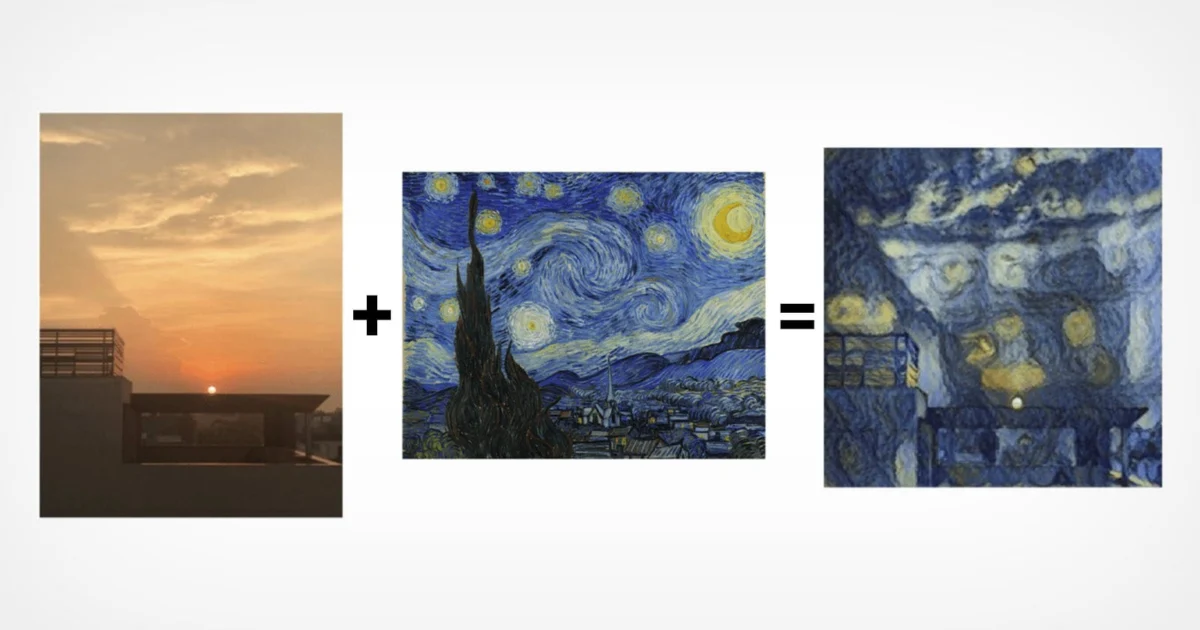
The legal landscape surrounding artificial intelligence and intellectual property has entered a significant new chapter as Ankit Sahni, through his company Suryast U.S. Enterprises LLC, has officially filed a lawsuit against the United States Copyright Office (USCO). The complaint, filed in the U.S. District Court for the Central District of California, challenges the federal agency’s decision to deny copyright protection for a work titled "Suryast." This legal action marks a pivotal moment in the ongoing debate over where human creativity ends and machine generation begins, specifically regarding images that blend original human photography with AI-driven stylistic enhancements.
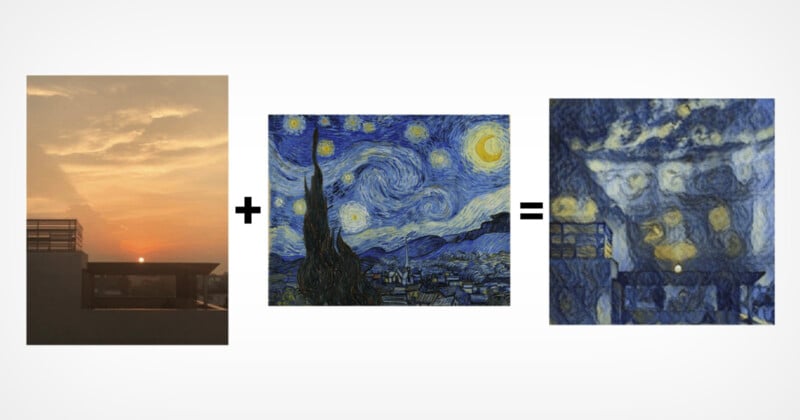
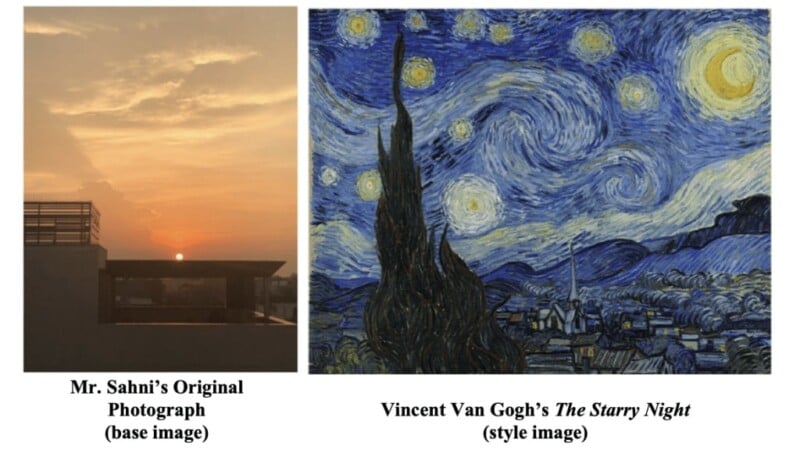
At the heart of the dispute is an image that Sahni created by combining a sunset photograph he captured himself with the iconic aesthetic of Vincent van Gogh’s 1889 masterpiece, The Starry Night. To achieve the final result, Sahni utilized a specialized software application known as RAGHAV, an acronym for "Robust AI-assisted Graph-based Hierarchical Abstractive Valuation." The resulting artwork maintains the structural composition of Sahni’s original photograph—featuring a city skyline and a vibrant sunset—while adopting the swirling brushstrokes and distinct color palette of Van Gogh’s post-impressionist style.
The Core of the Legal Dispute
The U.S. Copyright Office initially rejected Sahni’s registration request in late 2023, asserting that the work lacked the necessary "human authorship" required for protection under the Copyright Act. According to the Office’s Review Board, the RAGHAV app contributed the vast majority of the expressive elements in the final image. The Office maintained that because the specific expressive transitions—the brushstrokes, the blending of colors, and the stylistic texture—were generated by an algorithm rather than a human hand, the work was a product of a machine and therefore ineligible for copyright.
However, Sahni’s lawsuit argues that this interpretation fundamentally misunderstands the role of the artist in the digital age. In his complaint, Sahni contends that he provided the "baseline creative elements" that define the work. He argues that as the photographer of the base image, he made the initial creative decisions regarding composition, lighting, subject matter, and framing. Furthermore, he asserts that the selection of The Starry Night as a style reference was a deliberate creative choice intended to evoke a specific emotional response, and that the use of RAGHAV was merely the use of a sophisticated tool, no different from a camera or a paintbrush.

The complaint states: "The Author exercised creative control and input into the work by selecting himself taking the Base Photo, which established the baseline creative elements of the work, including that it would have buildings, a sunset, a large portion of the sky, and the relative location of each of these features. He then selected a specific style… and used RAGHAV to modify the Base Photo to retain the baseline elements but add these additional creative features."
Chronology of the Case and USCO Policy
The conflict between Sahni and the USCO has been brewing for several years, reflecting the rapid evolution of generative AI technology.
- 2021-2022: Sahni applies for copyright registration for "Suryast." Notably, Sahni had already successfully registered the work in other jurisdictions, including India and Canada, where the legal frameworks for AI-assisted works differ slightly from those in the United States.
- March 2023: The U.S. Copyright Office issues its "Copyright Registration Guidance: Works Containing Material Generated by Artificial Intelligence." This policy clarifies that while works containing AI-generated material may be registered, the registration only covers the human-authored portions. It explicitly states that "pure" AI-generated content cannot be copyrighted.
- December 2023: The USCO officially rejects Sahni’s second request for reconsideration. The Board concludes that the AI’s contribution to "Suryast" was not "de minimis" and that the human author did not exercise sufficient control over how the AI rendered the final image.
- September 2024: Sahni, via Suryast U.S. Enterprises LLC, files a formal lawsuit against Shira Perlmutter, the Register of Copyrights and Director of the U.S. Copyright Office.
Technical Analysis of the RAGHAV Process
To understand the legal weight of Sahni’s argument, it is necessary to examine the technology behind the image. RAGHAV utilizes a process known as Neural Style Transfer (NST). Unlike text-to-image generators like Midjourney or DALL-E, which create images from scratch based on a text prompt, NST requires two distinct inputs: a "content" image and a "style" image.
In Sahni’s case, the content image was his original photograph. The style image was The Starry Night. The algorithm functions by identifying patterns, textures, and color distributions in the style image and "mapping" them onto the geometric structures of the content image. Sahni argues that because he provided both the structural "skeleton" (the photo) and the aesthetic "skin" (the style choice), he is the ultimate author of the synthesis.
The Copyright Office, conversely, views the algorithm’s mapping process as an autonomous creative act. Their position is that the human cannot predict or control exactly where every pixel or brushstroke will land, meaning the "expressive" part of the work is controlled by code, not consciousness.
Comparison with Precedent-Setting AI Cases
Sahni’s lawsuit is being closely watched because it represents a "middle ground" in the AI copyright debate, making it potentially more legally influential than previous cases.
The most famous predecessor is that of Dr. Stephen Thaler, who attempted to register an image titled "A Recent Entrance to Paradise" with an AI system, the "Creativity Machine," listed as the sole author. The USCO rejected this, and federal courts upheld the rejection, confirming that an author must be a human being. The Supreme Court declined to hear Thaler’s appeal in March 2024, effectively closing the door on machine-as-author claims.
Another significant case involves artist Jason M. Allen, whose AI-generated work "Théâtre D’opéra Spatial" won a blue ribbon at the Colorado State Fair. Allen is also suing the Copyright Office after his registration was denied. However, Allen’s work was created primarily through text prompts in Midjourney, which the USCO argues involves even less human "control" over the final visual output than Sahni’s style-transfer method.
Legal analysts note that Sahni’s case is "doctrinally more interesting" because it involves a hybrid process. Unlike Thaler, Sahni does not claim the machine is the author; he claims he is the author using a machine. Unlike Allen, Sahni started with a copyrighted human photograph that he himself took. This forces the court to decide at what point human-made art becomes "un-copyrightable" simply because it was filtered through an advanced digital tool.
Official Responses and Industry Reaction
The U.S. Copyright Office has remained steadfast in its commitment to the "Human Authorship" doctrine, which traces its roots back to the 1884 Supreme Court case Burrow-Giles Lithographic Co. v. Sarony. In that landmark decision, the Court ruled that photographs were copyrightable because they were "representative of original intellectual conceptions of the author," rather than mere mechanical reproductions.
Current Register of Copyrights Shira Perlmutter has stated in various public forums that the Office is not "anti-AI," but is bound by the law to protect only human creativity. The Office’s stance is that if an artist uses AI, they must "disclaim" the AI-generated portions of the work, leaving only the human-arranged elements protected. In Sahni’s case, the Office argued that if you remove the AI’s stylistic contribution, you are left with just the original photo—which Sahni could copyright separately, but not the combined "Suryast" image.
The creative industry is deeply divided on the issue. Professional photographers and digital artists are concerned that a ruling in favor of Sahni could lead to a flood of low-effort AI works receiving the same legal protections as labor-intensive traditional art. On the other hand, many modern creators argue that the USCO’s current stance is antiquated, failing to account for how modern tools like Photoshop’s "Generative Fill" or AI-driven color grading have already become standard in professional workflows.
Broader Implications and Future Outlook
The outcome of Suryast U.S. Enterprises v. Perlmutter could redefine the boundaries of the $1.5 trillion global creative economy. If the court rules in favor of Sahni, it could establish a precedent that "style transfer" and other guided AI tools are legally equivalent to traditional editing software. This would provide a significant boost to AI startups and digital creators who seek to monetize and protect their AI-assisted portfolios.
Conversely, if the court sides with the Copyright Office, it will reinforce a strict barrier between human and machine art. This could create a "copyright vacuum" for a vast amount of modern digital content, potentially making AI-enhanced works vulnerable to widespread unauthorized use, as they would technically exist in the public domain from the moment of their creation.
As the case moves forward in the Central District of California, both technology companies and the global arts community will be watching for a ruling that clarifies the definition of "author" in the 21st century. The fundamental question remains: Does the "spark of creativity" reside in the hand that holds the brush, or in the mind that chooses the tool? For Ankit Sahni and the U.S. Copyright Office, the answer to that question will likely be decided by a federal judge, shaping the future of intellectual property for decades to come.

