


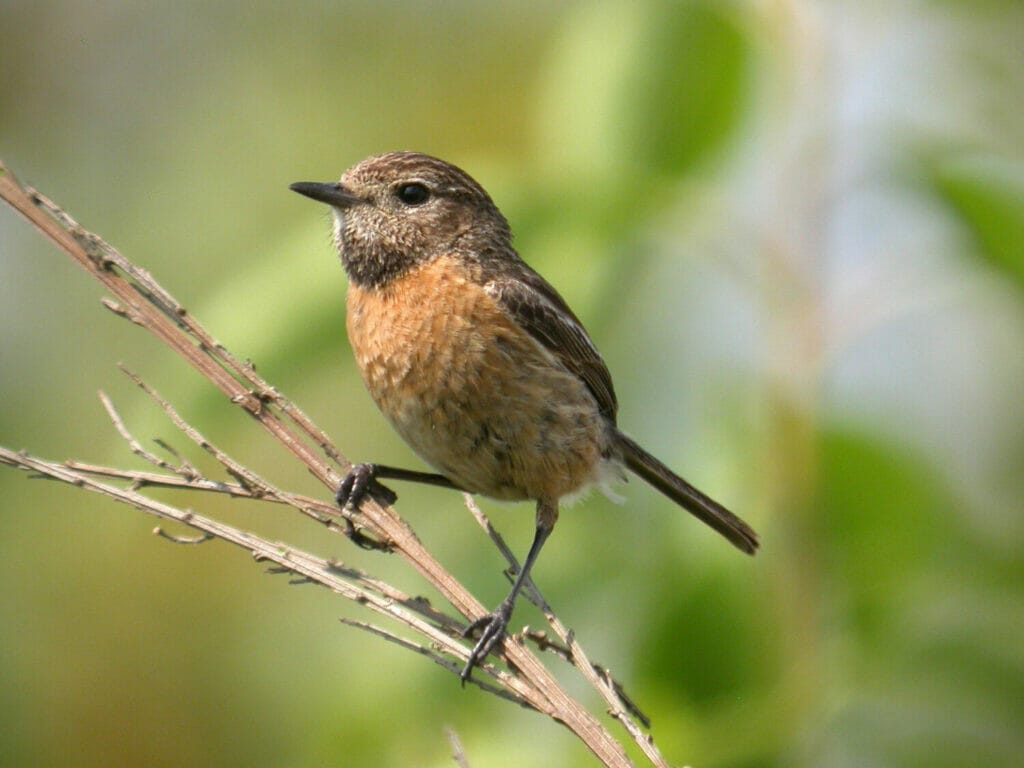
The biological mechanisms governing avian coloration are fundamental to understanding species survival, mate selection, and environmental adaptation. Ornithologists have long studied the specific combination of brown plumage paired with orange chests, a trait observed in a diverse range of species spanning multiple continents. While the visual spectrum of birds is vast, the specific palette of brown and orange is rarely an aesthetic choice; rather, it is a functional evolutionary adaptation rooted in complex biochemical processes and environmental necessity.
The Biochemistry of Avian Coloration
To understand why a bird exhibits specific colors, one must examine the two primary pigment categories that dictate feather appearance: melanin and carotenoids. Melanin is a structural pigment synthesized internally by the bird, responsible for the spectrum of black, brown, grey, and duller orange tones. It provides structural integrity to the feathers, making them more resistant to wear and bacterial degradation.

Conversely, carotenoids—the pigments responsible for the most vibrant reds, oranges, and yellows—cannot be synthesized by the birds themselves. These must be ingested through the diet, typically via fruits, seeds, or specific insects. The intensity of an orange chest in many species often serves as an "honest signal" of health. In a biological context, a male bird with a particularly vivid orange chest indicates to potential mates that he is a superior forager, capable of securing high-quality food resources, and that he possesses the metabolic efficiency to process these nutrients effectively.

Blue coloration, while common, is an optical illusion rather than a pigment. It is the result of light scattering—a physical phenomenon known as Tyndall scattering—where the structure of the feather reflects blue light while absorbing other wavelengths. Thus, when observing a brown bird with an orange chest, we are looking at a creature defined by chemical pigmentation rather than light-based trickery.
Evolutionary Drivers: Camouflage and Sexual Selection
The prevalence of brown and orange in female birds is largely attributed to the need for crypsis, or camouflage. During the nesting phase, females are often responsible for incubation, a task that renders them vulnerable to predation. Muted, earth-toned feathers allow them to blend into the forest floor or nesting vegetation.
In contrast, the male’s ornamentation serves as a counterbalance. While bright colors may attract predators, they also fulfill the requirements of sexual selection. Research published in the Journal of Avian Biology suggests that the contrast between a brown, cryptic back and a striking orange chest allows a male to remain inconspicuous when viewed from above by aerial predators, yet highly visible to females during courtship displays when viewed from the side or front.

Case Studies in Avian Diversity
A global survey of species exhibiting this coloration reveals a fascinating cross-section of avian evolution, from the common backyard visitor to endangered mountain dwellers.

The American Robin (Turdus migratorius)
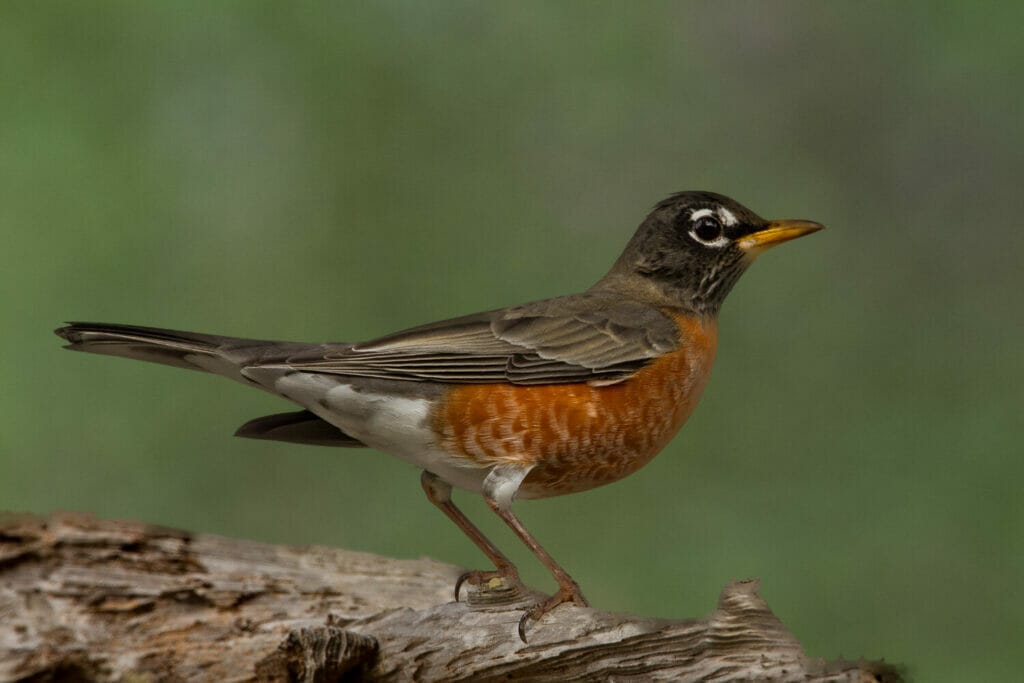
The American Robin stands as a hallmark of this color profile. Widespread across North America, from the sub-arctic regions of Alaska to the temperate zones of Mexico, the species has successfully adapted to human-modified landscapes. Measuring roughly 8 to 11 inches in length, the robin is a thrush that relies on an omnivorous diet of earthworms, insects, and berries. While often hailed as the "harbinger of spring," ornithological data shows that robins do not migrate strictly based on temperature, but rather on food availability. During the winter, they shift from lawn-foraging for invertebrates to berry-foraging in forests, which explains their sudden "disappearance" from suburban gardens during the colder months.

The European Robin (Erithacus rubecula)
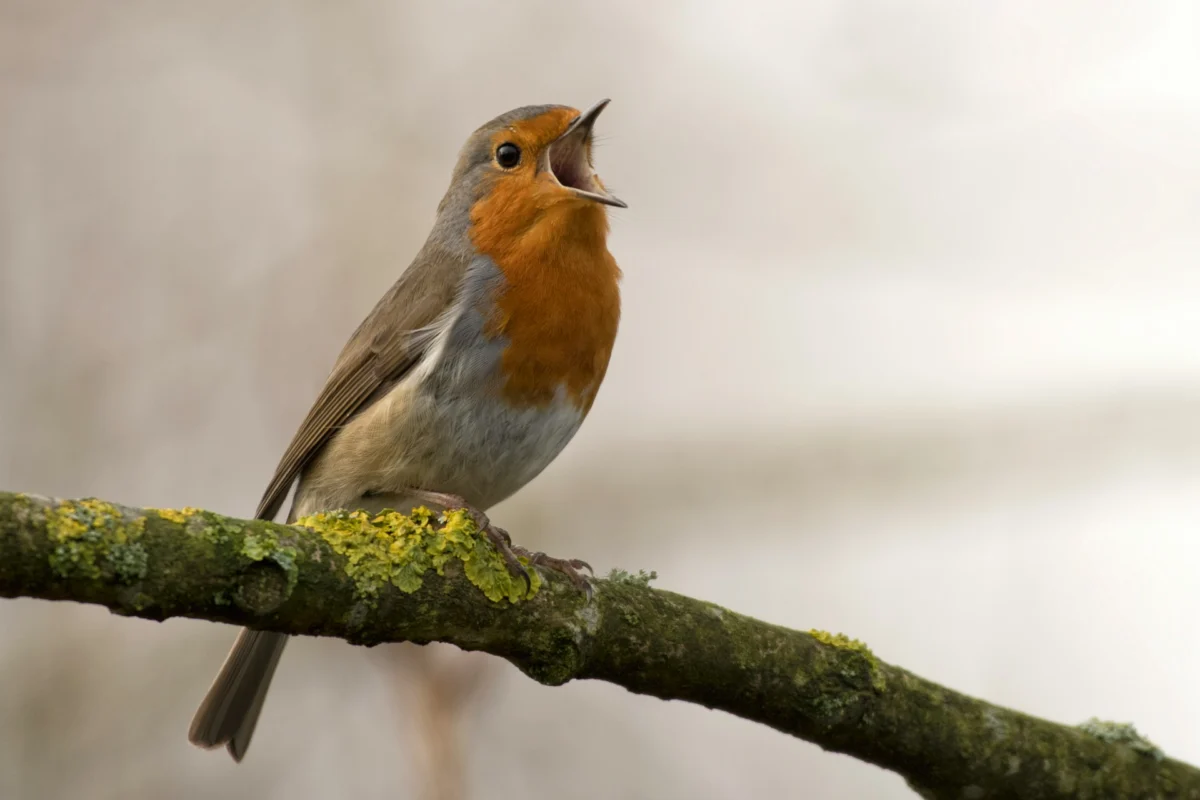
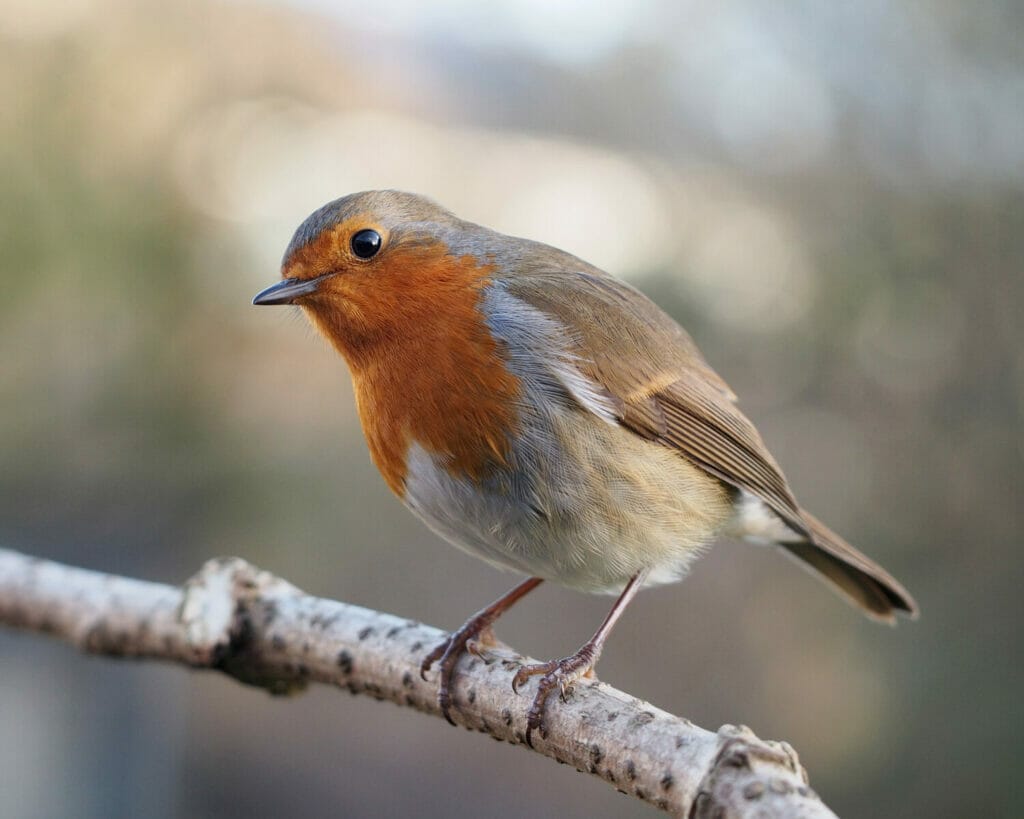
Distinct from its American namesake, the European Robin is a smaller, more solitary bird. Its iconic "red-breast" is actually a vibrant shade of orange, extending into the face and throat. Found across Europe, Western Asia, and North Africa, the species is highly territorial. Unlike the communal foraging seen in many North American thrushes, European Robins are known for their aggressive defense of feeding sites, a behavior fueled by their high metabolic rates and need to secure consistent food sources throughout the winter.
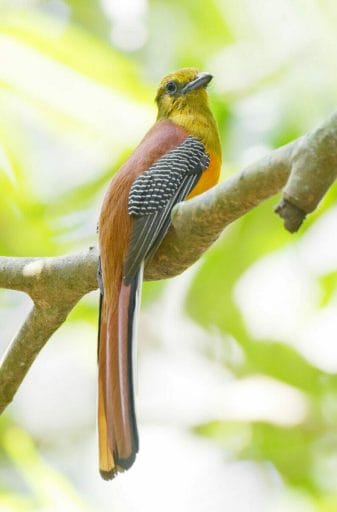
The Sharp-shinned Hawk (Accipiter striatus)
The Sharp-shinned Hawk provides an example of this color profile within the raptor family. This small, agile predator utilizes its brown-streaked orange breast as a form of "disruptive coloration," which masks its silhouette as it darts through dense forest canopies to ambush smaller birds. Its legs, which are notably unfeathered and slender, allow for rapid movement and precise grasping of prey.

The Orange-breasted Trogon (Harpactes oreskios)
In the tropical forests of Southeast Asia, the Orange-breasted Trogon offers a different evolutionary path. Found in the mid-canopy of lowland forests, this bird utilizes a "sally-stall" hunting technique. It launches from a perch, stalls in mid-air to disorient an insect, and then strikes. Its coloring serves as a form of camouflage against the mottled light of the rainforest floor. Unlike many dimorphic species, both males and females of this species exhibit similar coloration, suggesting that the pressure for sexual signaling is shared equally or that both sexes require similar camouflage.

The Russet-bellied Spinetail (Synallaxis zimmeri)
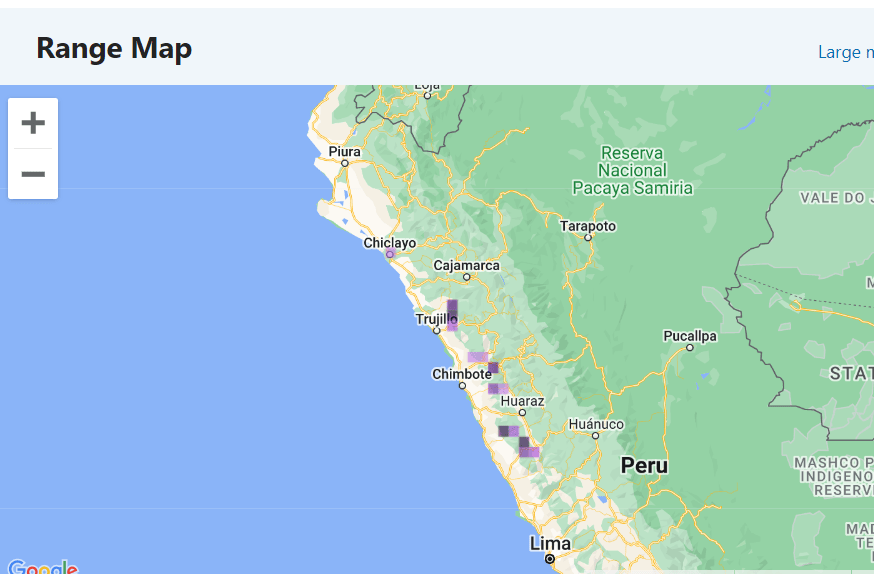
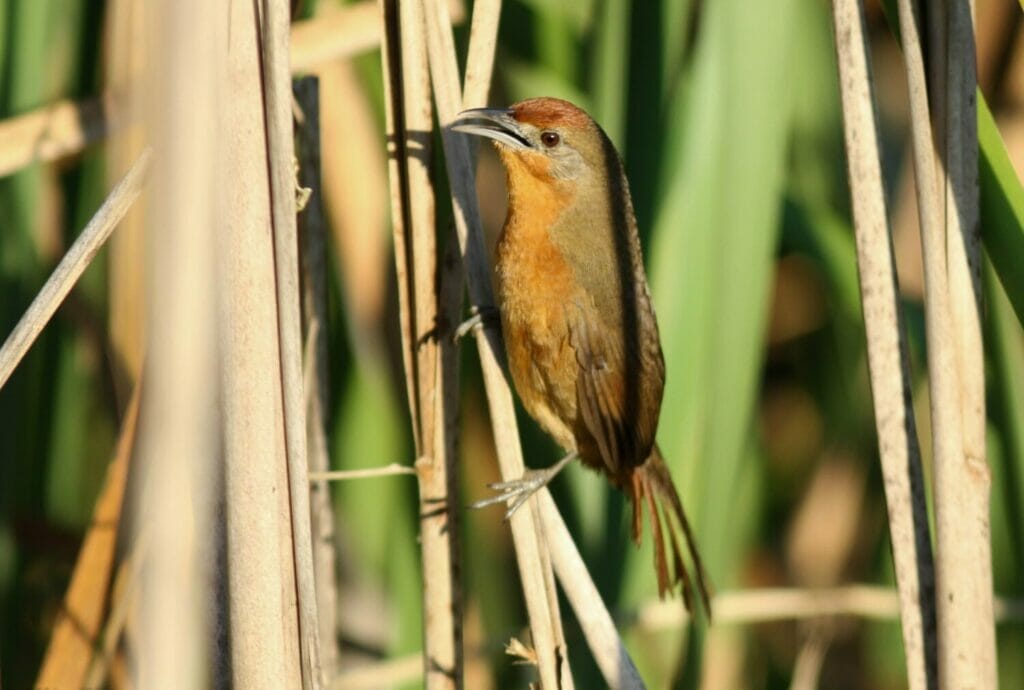
The Russet-bellied Spinetail of Peru highlights the intersection of color and conservation. Listed as vulnerable, this species is endemic to the arid scrublands of the Andes. Its limited range and habitat fragmentation have created a precarious existence. The "russet" or orange tones on its belly are critical for species recognition in the dense, tangled undergrowth where it resides. The decline of this species is a direct consequence of the removal of vegetation corridors, which prevent the population from migrating to more suitable habitats.
The Brambling (Fringilla montifringilla)
The Brambling is a master of seasonal adaptation. During the breeding season, it displays striking plumage, but in its non-breeding phase, it shifts toward the familiar orange-chested, brown-backed profile. Its massive migratory flocks, sometimes numbering in the millions, are a testament to the success of this species across the Eurasian continent. Their movement is highly dependent on the "mast" years of beech trees, which provide the seeds that sustain them through the winter.
Analytical Perspectives: The Impact of Habitat Loss
The persistence of these species is increasingly tied to the stability of their respective ecosystems. Analysis of global bird populations indicates that species relying on specific dietary pigments—such as those found in native fruits and specialized insects—are the most susceptible to climate change. As warming temperatures shift the phenology of plant life, the timing of fruit production and insect emergence often becomes decoupled from the migratory cycles of these birds.
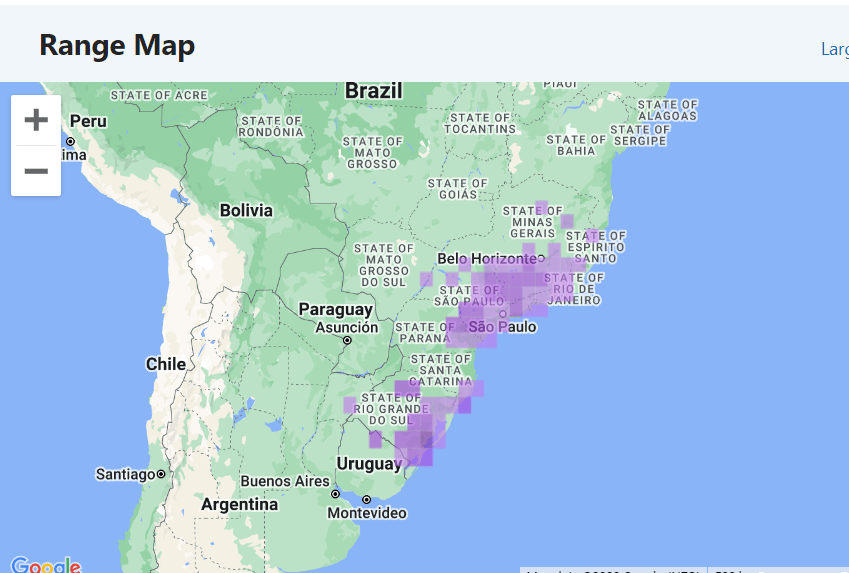
For species like the Russet-bellied Spinetail, the implications are dire. Without intervention to restore ecological corridors, the genetic diversity of the species will continue to contract. Conversely, generalists like the American Robin show that urban adaptation is a viable strategy, though it comes with risks, including increased exposure to pesticides and window collisions.
Conclusion and Future Outlook
The brown-backed, orange-chested bird is a recurring motif in the natural world, representing a balance between the need for concealment and the necessity of display. Whether it is the territorial European Robin or the elusive, endangered Russet-bellied Spinetail, these birds occupy unique niches that are critical to the health of their respective environments.

The study of these species reinforces the importance of maintaining biodiversity. The "orange chest" is not merely a visual trait; it is a complex biological indicator of the health of the individual and, by extension, the ecosystem upon which it depends. Moving forward, conservation efforts must focus on the preservation of the specific dietary resources—such as native berry-producing shrubs and insect-rich undergrowth—that allow these species to maintain their vibrant, functional plumage and successfully navigate their changing worlds. As research continues to uncover the secrets of avian biochemistry and behavior, these birds remain essential subjects for those seeking to understand the delicate interplay between evolution, environment, and survival.

