


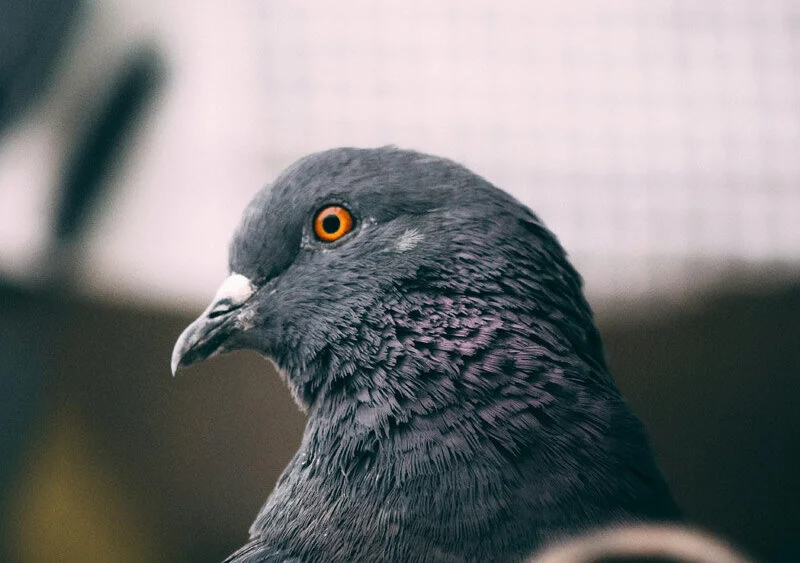
For centuries, the homing pigeon has occupied a unique place in human history, serving as a reliable courier during some of the world’s most perilous conflicts and challenging environmental conditions. From the ancient Persian Empire to the tactical theaters of World War I and II, these birds demonstrated an uncanny ability to return to their lofts across vast, unfamiliar distances. While their bravery is well-documented in military archives, the biological mechanisms facilitating this "avian GPS" have remained a subject of intense scientific debate. Recent findings published in the journal Science have brought us closer to a definitive answer, suggesting that the secret to their precision may lie not in the brain alone, but deep within the bird’s liver.
The Historical Legacy of Avian Navigation
The utility of pigeons as messengers relies on the phenomenon of "homing," the innate ability of an animal to return to a specific location after being displaced. During World War I, the United States Army Signal Corps utilized thousands of carrier pigeons. One of the most famous, a bird named Cher Ami, was credited with saving the lives of 194 soldiers from the "Lost Battalion" in 1918 by delivering a critical message despite being shot through the breast and leg.
These historical feats relied on the pigeon’s ability to navigate under various atmospheric conditions. Historically, ornithologists proposed that pigeons relied on a combination of celestial navigation—using the sun as a compass—and the recognition of low-frequency infrasounds or visual landmarks. However, these methods fail during heavy cloud cover or when the bird is transported to a completely foreign territory. The persistence of the pigeon’s performance under adverse conditions led researchers to hypothesize the existence of a magnetoreception system, an internal biological compass capable of detecting the Earth’s magnetic field.
Chronology of the Scientific Investigation
The quest to identify the biological seat of magnetoreception has spanned several decades. In the late 20th century, researchers began focusing on magnetite crystals found in the beaks of various migratory species. However, evidence remained inconclusive. The latest study marks a shift in focus from the beak to the liver, prompted by the identification of iron-oxide nanoparticles.
The timeline of this specific research began with the observation that pigeons possess a unique population of cells known as superparamagnetic microphages. These cells function as a biological storage unit for iron-oxide nanoparticles, which are harvested from the bloodstream via specialized proteins. Researchers sought to prove that these magnetized particles interact with the Earth’s magnetic field to provide the bird with a sense of orientation.
To test this hypothesis, a rigorous study was designed involving 34 trained homing pigeons. The birds were conditioned to return to their lofts from a distance of 11.8 miles (19 kilometers). The experiment was specifically conducted during overcast weather to eliminate the possibility of the pigeons relying on solar cues. The researchers introduced a variable: they depleted the microphage levels in a control group of birds while leaving the experimental group intact. The subsequent release of these birds under cloudy skies provided the definitive data needed to link liver function to navigational success.
Understanding the Superparamagnetic Mechanism
At the center of this discovery is the superparamagnetic microphage, a specialized cell that acts as a sensor. These cells ingest iron-oxide nanoparticles that have been transported by blood proteins. Once inside the liver, these particles become strongly magnetized upon contact with an external magnetic field—in this case, the geomagnetic field of the Earth.
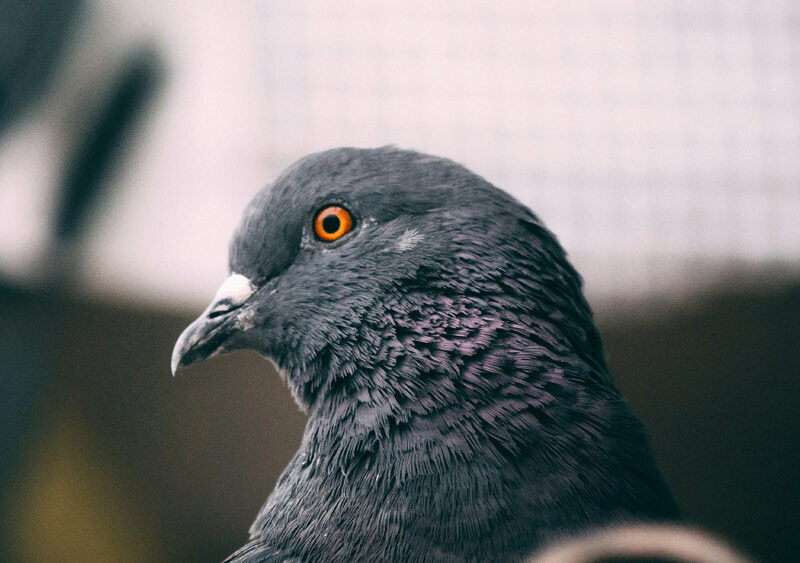
The proximity of these iron-rich cells to hepatic nerve fibers is critical. When the Earth’s magnetic field interacts with these magnetized microphages, it triggers a neurological response that is transmitted to the pigeon’s central nervous system. This effectively creates a "magnetic map" that the bird can interpret. When solar cues are absent, the pigeon shifts its reliance to this internal, liver-based mechanism. The study concluded that when these microphages are depleted, the bird’s ability to orient itself toward home is severely compromised, if not entirely lost.
Data Analysis and Experimental Results
The results of the 11.8-mile flight trials were statistically significant. Every pigeon in the control group—those with intact microphage levels—successfully returned to their lofts despite the overcast conditions. Conversely, the pigeons whose microphage levels had been depleted failed to navigate back to their home base in every instance.
This data provides a compelling argument for the liver’s role in magnetoreception. While critics have previously argued that magnetite-based sensors would be too small to detect the weak magnetic field of the Earth, the concentration of these particles within the liver’s hepatic tissue suggests a higher level of sensitivity than previously modeled. The findings align with the "cluster model" of magnetoreception, which posits that magnetic sensors are distributed throughout the body rather than localized in a single organ like the eye or the brain.
Broader Scientific Implications
The implications of this study extend far beyond the study of pigeons. Understanding how animals perceive magnetic fields could provide significant insights into the broader field of sensory biology. If pigeons use their livers to "see" the Earth’s magnetic field, it raises questions about whether other migratory animals, such as sea turtles, salmon, or monarch butterflies, possess similar internal mechanisms.
Furthermore, this discovery offers a new framework for analyzing the impact of anthropogenic environmental changes on wildlife. As urbanization increases and electromagnetic pollution—caused by cellular networks, high-voltage power lines, and other electronic infrastructure—becomes more prevalent, the ability of migratory species to navigate may be under threat. If a bird’s navigation system is dependent on subtle magnetic interactions within its liver, external magnetic interference could potentially disrupt these processes, leading to disorientation and increased mortality rates during migration.
Future Directions in Magnetoreception Research
Despite the success of the recent experiments, the scientific community remains cautious. There are currently four competing theories regarding how animals detect magnetic fields, and while the liver-microphage theory is the most robust to emerge in recent years, it does not necessarily exclude other mechanisms. Some researchers suggest that pigeons may possess multiple, redundant sensory systems that work in concert.
Ongoing research is now focused on the exact pathway of the neurological signal from the liver to the brain. Mapping this neural route will be the next major hurdle in confirming the biological architecture of the pigeon’s compass. Additionally, studies are being designed to determine if these microphages are present in other species, which could fundamentally change our understanding of vertebrate evolution.
As the scientific community continues to dissect the intricate biology of the homing pigeon, the bird serves as a reminder of the complexity of the natural world. What was once viewed through the lens of instinct or animal intelligence is now being revealed as a sophisticated, biochemical engineering marvel. The pigeon’s ability to traverse the globe is not just a feat of endurance, but a masterclass in the utilization of planetary physics, a process now firmly rooted in the biology of the liver. The integration of these findings into our broader understanding of avian physiology will undoubtedly occupy researchers for years to come, potentially leading to new breakthroughs in the fields of sensory biology and navigational technology.

