


For more than three hundred years, Isaac Newton’s third law of motion has stood as an unshakeable pillar of classical mechanics. Formulated in 1687 in the foundational text Philosophiae Naturalis Principia Mathematica, the principle dictates that for every action, there is an equal and opposite reaction. From the simple act of walking—where feet push backward against the Earth while the ground pushes forward with equivalent force—to the complex propulsion of rockets escaping Earth’s atmosphere, this law of reciprocity has governed the human understanding of physical interactions.
However, nature frequently defies its own simplest rules. Across multiple scales of existence, from microscopic cellular tissues to massive flocks of migrating birds, living and dynamic systems routinely operate on one-way interactions. In these environments, an individual component influences its neighbor, but the neighbor does not exert a corresponding force back. For decades, this glaring deviation from classical physics has vexed researchers, creating a formidable barrier in computer simulations and theoretical modeling.
Now, a team of physicists based in Dresden and Würzburg has unlocked a groundbreaking solution to this enduring puzzle. By developing and mathematically proving an innovative theoretical framework, the researchers have finally bridged the gap between reciprocal theory and non-reciprocal reality. Published in the prestigious journal Nature Physics, the breakthrough enables scientists to study, describe, and precisely simulate systems that violate Newton’s third law using conventional, well-established mathematical tools.
The Chronology of a Theoretical Impasse
The limitations of classical mechanics in addressing non-reciprocal systems are not new, but the urgency to solve them has grown exponentially with advancements in biophysics, computational modeling, and non-equilibrium statistical mechanics. Historically, theoretical physics prioritized closed systems where energy conservation and reciprocal forces dominated. When physicists first began observing collective animal behavior and bacterial swarms in the late 20th century, the inadequacies of traditional modeling quickly became apparent.
As computer processing power surged in the early 2000s, researchers gained the ability to simulate large groups of interacting agents, such as flocks of starlings or schools of fish. Yet, these models consistently struggled with accuracy. Algorithms designed around strict action-reaction balances frequently broke down when applied to systems where interactions were inherently directional.
The turning point arrived through a collaborative effort led by researchers associated with the Würzburg-Dresden Cluster of Excellence ct.qmat (Complexity, Topology and Dynamics in Quantum Matter) and the Max Planck Institute for the Physics of Complex Systems (MPI-PKS) in Dresden. Working alongside prominent condensed matter physicist Roderich Moessner, research group leader Marin Bukov, and biophysicist Ricard Alert, the team embarked on a mission to reconcile classical mechanics with the untamed dynamics of living matter. Over several years of intense mathematical derivation and computational testing, the team formulated a method that bypasses the limitations of traditional reciprocity without discarding the foundational educational frameworks taught in universities worldwide.
Understanding the Phenomenon of Non-Reciprocity
To grasp the magnitude of the Dresden team’s achievement, one must first examine the nature of non-reciprocal interactions in the natural world. A quintessential example is found in the aerial choreography of bird flocks. When thousands of starlings wheel and dive in unison across the evening sky, they do not possess a panoramic view of the entire collective. Instead, empirical studies of bird movement have demonstrated that an individual bird maintains its position by paying strict attention only to its immediate neighbors flying beside or directly ahead of it.
Crucially, a bird does not adjust its flight path to accommodate the birds trailing behind it. The leading bird acts upon the trailing bird, but the trailing bird does not exert a reciprocal mechanical or informational influence on the leader in an equal and opposite manner.
This behavioral asymmetry is far from isolated. Bacterial swarms navigating viscous fluids, human crowds dispersing through transit hubs, and even densely packed groups of cells migrating during embryonic development or wound healing all exhibit similar non-reciprocal dynamics. In each of these scenarios, components process partial environmental inputs, rendering the foundational assumption of mutual, balanced forces obsolete.
"Whatever we normally teach our students in theoretical mechanics, it ultimately rests on the action-reaction principle," explains Marin Bukov, highlighting how deeply entrenched reciprocity is in the academic curriculum. Because traditional mathematical frameworks were constructed exclusively for reciprocal interactions, scientists lacked the theoretical vocabulary and computational architecture to simulate these one-way systems accurately.
The Innovative Solution: Fictitious Partners and Auxiliary Degrees of Freedom
The core of the Dresden researchers’ breakthrough lies in a brilliantly counterintuitive mathematical maneuver: the introduction of auxiliary degrees of freedom, manifested as fictitious partners for every real component within a system.
In standard physics, mathematical variables correspond to measurable, physical properties—such as the exact coordinates and velocity of a car in traffic, the spatial location of a fish within a school, or the momentum of a particle. The new theory expands upon this traditional approach by inventing imaginary counterparts for every genuine actor in the system.
Ricard Alert, a biophysicist and co-architect of the study, details the mechanics of the approach: "The trick behind the new theory is that it constructs a partner for each component of the system—a fictitious partner that doesn’t exist in nature. The original non-reciprocal interactions are replaced by reciprocal interactions with these auxiliary degrees of freedom."
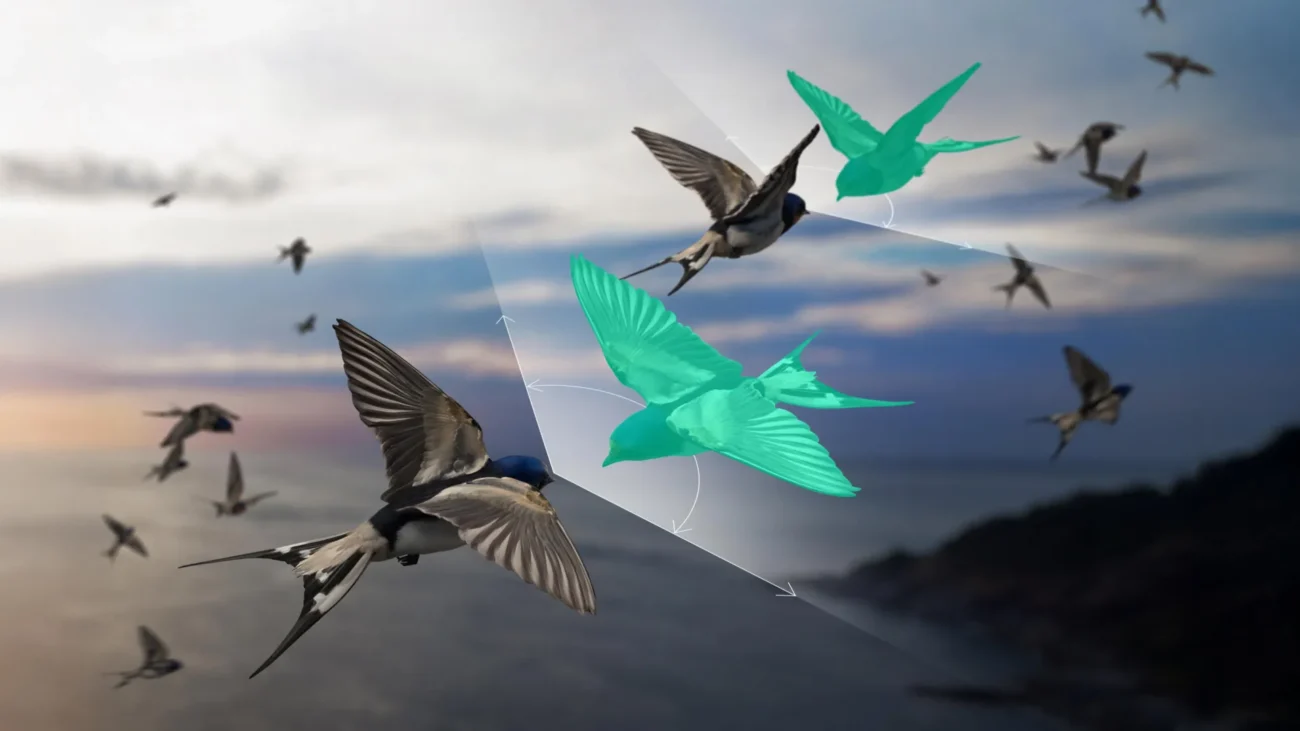
To visualize this in a practical context, consider the aforementioned flock of birds. Under the new theoretical model, researchers simulate the complex dynamics of the flock by artificially pairing each real bird with a fictitious bird placed precisely in front of it, aligned in the opposite direction. These imaginary entities do not represent physical animals, nor do they consume energy or occupy physical space in the real world. Instead, they serve as sophisticated mathematical placeholders that absorb the directional asymmetry of the system.
By mapping the one-way interactions of the real birds onto reciprocal interactions with these mathematical ghosts, the researchers successfully transform an intractable non-reciprocal problem into a standard reciprocal format. This allows scientists to deploy powerful, pre-existing analytical and computational tools that were originally designed for traditional physics problems.
Official Responses and Expert Perspectives
The academic community has received the publication in Nature Physics with considerable enthusiasm, viewing it as a vital bridge between theoretical physics and applied biophysics.
"The research team has developed and proven a theory that makes much of what we teach our students applicable to non-reciprocal systems as well," notes Marin Bukov. "These systems, where Newton’s third law does not apply, can now finally be described exactly and simulated precisely—even using established methods. This is exactly the kind of tool that has been missing in recent years."
Roderich Moessner, director at the Max Planck Institute for the Physics of Complex Systems and a Principal Investigator for ct.qmat, emphasizes the broader implications of the discovery for fundamental physics, particularly in the realm of quantum matter.
While auxiliary degrees of freedom have occasionally been utilized in specialized branches of physics, their systematic application to non-reciprocal systems represents a paradigm shift. Moessner points out that the intersection of quantum mechanics and non-reciprocal dynamics opens an entirely uncharted frontier of scientific inquiry.
"In Würzburg and Dresden, we study quantum matter whose particles interact under certain conditions in ways that give rise to new phenomena such as magnetism or lossless current transport," Moessner states. "The exciting question now is whether these exceptions to Newton’s law lead to entirely new forms of collective quantum behavior. We still know very little about this—and that is precisely what makes this so fascinating."
Broader Impact and Future Implications
The ability to accurately model and simulate non-reciprocal systems carries profound implications across a diverse array of scientific disciplines.
In the biological sciences, understanding the collective motion of cells is critical for unraveling the mysteries of embryonic development, immune system responses, and the metastatic spread of cancer. Cellular migration is inherently non-reciprocal, driven by chemical gradients and mechanical traction where cells pull on extracellular matrices without receiving an equal counter-force. Precise simulations could eventually lead to novel therapeutic strategies that disrupt cancer cell dissemination.
In engineering and social sciences, the accurate modeling of non-reciprocal interactions promises to revolutionize crowd control and autonomous swarm robotics. Designing self-driving vehicular platoons or drone swarms requires algorithms capable of managing directional dependencies safely and efficiently. Current simulation software often struggles to predict emergent panic behaviors in human crowds or traffic gridlocks; the integration of auxiliary degrees of freedom could yield predictive models of unprecedented fidelity.
Furthermore, the theoretical framework established in Dresden lays the groundwork for discovering entirely new states of matter. As physicists begin to explore active quantum matter—systems operating far from thermodynamic equilibrium where particles exhibit non-reciprocal forces—they may uncover macroscopic physical properties that defy conventional intuition just as thoroughly as quantum entanglement or superconductivity once did.
Conclusion
Isaac Newton’s third law will undoubtedly remain a cornerstone of introductory physics and macroscopic engineering. It successfully governs the structural integrity of bridges, the propulsion of spacecraft, and the mechanics of everyday machinery. Yet, science continually evolves by recognizing the boundaries of its foundational doctrines.
By devising a rigorous mathematical method to account for the unreturned forces of the natural world, the researchers in Dresden have transformed an apparent exception to physical law into a gateway for new discovery. As this theoretical framework is adopted by laboratories and computational centers worldwide, it promises to illuminate the hidden mechanics behind everything from the flight of a starling flock to the quantum choreography of subatomic particles, expanding the horizons of modern physics for decades to come.

