


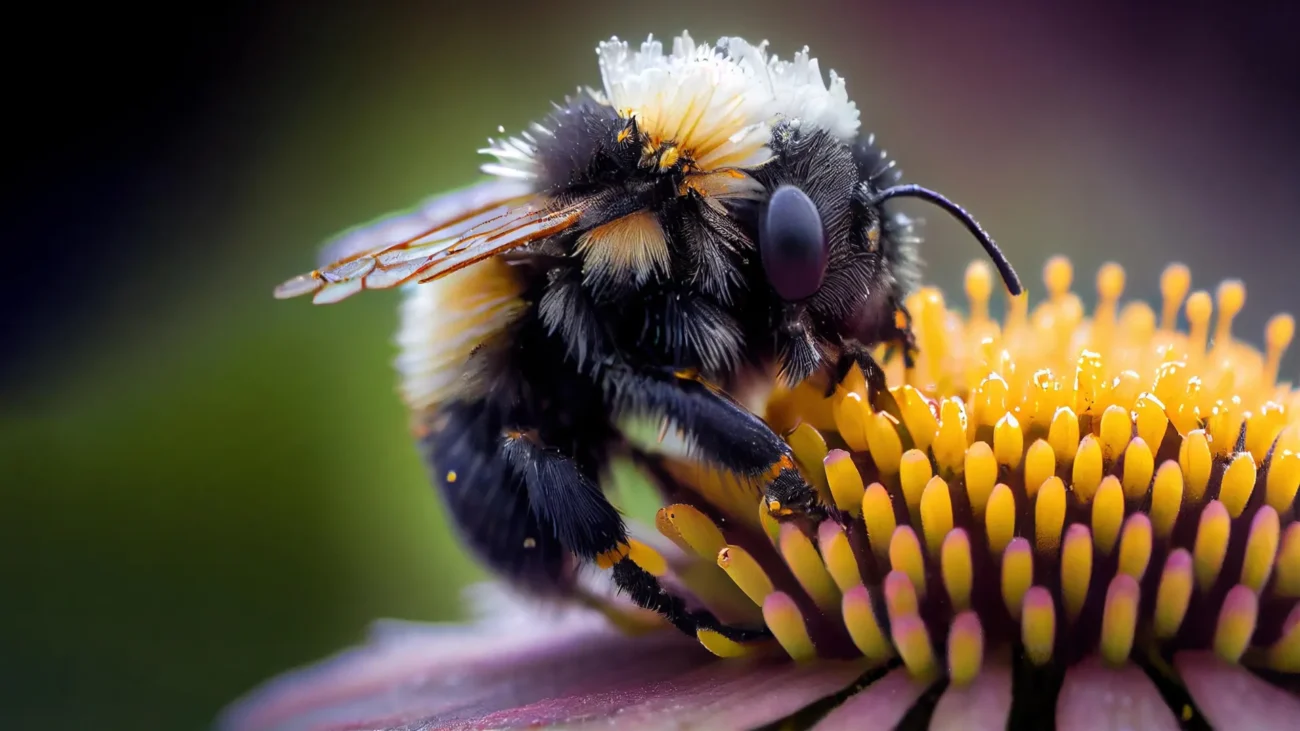
New research from the University of Cambridge has unveiled a critical disparity in how bumblebees and honeybees interact with environmental pollutants, revealing that bumblebees can accumulate dramatically higher levels of toxic heavy metals than their honeybee counterparts, even when foraging in the same areas. This groundbreaking study, published in the esteemed journal Ecological Entomology, indicates that bumblebees may be absorbing up to seven times more heavy metals in their collected pollen, a finding that casts a long shadow of concern over the hidden threats to their health, survival, and reproductive capabilities.
The Pervasive Reach of Heavy Metal Pollution
Heavy metal contamination, often associated with industrial zones, mining operations, and urban centers, is a far-reaching environmental issue. These toxic elements are not confined to localized hotspots; they can infiltrate even seemingly pristine rural landscapes. Atmospheric deposition, the application of sewage sludge and fertilizers, and various agricultural practices serve as conduits, dispersing contaminants into soils and water systems. This widespread distribution means that even areas not directly adjacent to industrial activity can harbor significant levels of heavy metals, posing an insidious threat to ecosystems.
The specific heavy metals examined in the Cambridge study—arsenic, cadmium, chromium, cobalt, lead, and tin—are known for their detrimental effects on living organisms. Their persistence in the environment means they can accumulate over time, leading to chronic exposure for wildlife.
How Bees Become Vectors of Contamination
Bees, in their tireless pursuit of nectar and pollen, inadvertently become exposed to these environmental toxins. As they forage, they come into contact with contaminated soil particles, airborne dust, and pollen from plants that have absorbed heavy metals from the soil. The very act of collecting food for their colonies exposes them to a cocktail of pollutants.
The consequences of this exposure can be profound. Even at seemingly low concentrations, heavy metals can interfere with crucial cognitive functions in bees, such as learning and memory. This impairment can make it significantly more challenging for them to navigate their environment, locate floral resources, and return safely to their nests. Furthermore, previous scientific investigations have established a link between heavy metal exposure and a decline in reproductive success, leading to fewer offspring and developmental abnormalities within the brood.
For decades, honeybees (Apis mellifera) have served as valuable biological indicators of environmental contamination, particularly in areas with high levels of pollution. Their widespread presence and relatively well-understood behavior have made them a benchmark for assessing environmental health. However, the University of Cambridge study challenges this established paradigm by demonstrating that different bee species exhibit distinct mechanisms for accumulating toxic metals. The findings unequivocally point to bumblebees (Bombus spp.) as being particularly vulnerable to this hidden environmental hazard.
A Striking Disparity: Bumblebees vs. Honeybees
The research, meticulously conducted by scientists at the University of Cambridge’s Department of Zoology, involved collecting pollen samples using specialized pollen traps. These samples, along with adult bees from both species, were then analyzed for the presence of arsenic, cadmium, chromium, cobalt, lead, and tin. The study focused on comparing honeybee and bumblebee colonies situated side-by-side in Cambridgeshire, England, a region generally considered to have low levels of soil contamination, thus providing a controlled environment to observe species-specific differences in metal uptake.
Despite both species foraging across the identical landscape, the results revealed a dramatic divergence in their heavy metal loads. Pollen gathered by bumblebees consistently contained significantly higher concentrations of heavy metals—between two and seven times more than that collected by honeybees—across the majority of the metals tested. This disparity extended to the bees themselves, with bumblebees accumulating approximately three times higher concentrations of these toxic elements within their bodies.
Dr. Sarah Scott, the lead researcher on the study during her tenure at the University of Cambridge and now based at Newcastle University, emphasized the subtle yet significant nature of the threat. "Most metal levels we found were not high enough to kill bees outright," Dr. Scott stated, "but even low levels can still harm bee health and colony success in subtle but important ways, such as affecting their ability to forage and reproduce." This highlights that the impact of heavy metals on bee populations is not always a direct, lethal outcome but can manifest as a chronic decline in overall well-being and productivity.
Unraveling the Biological and Behavioral Drivers
The researchers attribute the observed differences in heavy metal accumulation to a multifaceted interplay between the inherent biology of bumblebees and their distinct foraging behaviors.
Nesting Habits and Colony Size: A key distinction lies in their preferred nesting sites and colony structures. Honeybees typically establish their colonies above ground, favoring hollow trees or managed hives. Their colonies are characterized by their sheer scale, often comprising between 30,000 and 60,000 individuals. In contrast, bumblebees construct their nests underground, utilizing spaces within soil or leaf litter. Their colonies are considerably smaller, typically ranging from 50 to a mere 500 individuals. This difference in colony size means that the loss of even a few individuals due to pollution can have a more pronounced impact on the overall functioning and resilience of a bumblebee colony compared to a honeybee colony.
Foraging Strategies and Flower Preferences: The way bees forage for food also plays a crucial role. Flower selection is influenced by a complex array of factors, including nutritional requirements, body size, tongue length, and established feeding habits. Crucially, the concentration of heavy metals can vary significantly between plant species, as some plants have a greater capacity to absorb these contaminants from the soil. Therefore, a bee’s preference for certain plant species can directly dictate its level of exposure to heavy metals.
Honeybees, with their vast numbers and extensive foraging range, tend to collect pollen from a wide diversity of flower species. This broad dietary spectrum can effectively dilute any contaminants present in their pollen stores. Conversely, bumblebees collect smaller quantities of pollen from a more restricted range of plant species. This more specialized diet means their exposure levels are more heavily influenced by whether the particular plants they favor happen to be growing in metal-contaminated soil.
Foraging Range and Avoidance Behavior: The spatial extent of a bee’s foraging efforts also contributes to differing exposure risks. Honeybees are known to travel considerable distances from their colonies in search of food, sometimes covering areas up to 10 kilometers away. Their larger workforce enables them to spread their foraging efforts across a wider geographical area, potentially allowing them to avoid localized pockets of contamination. Bumblebees, on the other hand, typically forage within a much closer radius of their nests, usually around 1.5 kilometers. This more localized foraging pattern offers fewer opportunities to circumvent areas affected by pollution.
Physical Characteristics: An often-overlooked factor is the physical appearance of the bees. Bumblebees possess significantly hairier bodies compared to honeybees. This dense covering of hairs can act like a natural electrostatic collector, readily trapping dust and airborne particles that may be laden with heavy metals. These contaminated particles are then transported back to the nest along with the pollen, further increasing the bees’ exposure.
Hidden Dangers in Rural Sanctuaries
Professor Lynn Dicks, a senior author of the study and a researcher in the Department of Zoology at the University of Cambridge, underscored the far-reaching implications of these findings. "Even in areas that we usually consider safe or lower risk for heavy metals—typically rural areas, away from industrial or mining areas—bees can pick up toxic metals," Professor Dicks explained. This statement is particularly alarming, as rural landscapes are often perceived as havens for biodiversity and are less likely to be subjected to the same level of regulatory scrutiny as industrial zones. The vulnerability of bumblebees, with their smaller colony sizes, means that even a moderate level of pollution can have a disproportionately large negative impact on their overall colony function and survival.
The study’s findings paint a concerning picture of the widespread and often underestimated impact of environmental pollution on vital pollinator populations. The fact that bumblebees, which are crucial pollinators for many wild plants and agricultural crops, are disproportionately affected by common environmental contaminants raises significant questions about the long-term sustainability of both natural ecosystems and agricultural productivity.
The Enduring Importance of Supporting Pollinators
Despite the sobering revelations of the study, the researchers are keen to emphasize that the public should not cease their efforts to support bee populations. Planting flowers remains a vital and effective way to provide essential food sources for bees, even in areas where contamination is a concern.
Dr. Scott offered a pragmatic perspective: "Bees play a critical role in both biodiversity and food security, so we’d still encourage people to plant flowers to help them, even if you live in an area more likely to be contaminated. At the end of the day, bees still need food. Even if it carries traces of heavy metals, having some food is better than having no food." This sentiment underscores the delicate balance: while mitigating pollution is paramount, immediate action to provide adequate nutrition for bee populations is also essential for their survival.
The research, generously funded by the Royal Society, not only sheds light on the differential vulnerability of bee species to heavy metal pollution but also serves as a crucial call to action for environmental monitoring and conservation efforts. Professor Dicks’ affiliation as a Fellow at Selwyn College, University of Cambridge, further cements the credibility and academic rigor of this significant scientific endeavor.
Broader Implications and Future Research
The implications of this research extend beyond the immediate concern for bumblebee populations. The study suggests that current methods of assessing environmental contamination and pollinator health may need to be refined to account for species-specific sensitivities. The reliance on honeybees as the sole biological indicator might overlook significant threats to other pollinator groups.
Future research could explore a wider range of pollinator species and investigate the synergistic effects of heavy metal exposure combined with other environmental stressors, such as pesticide use and habitat loss. Understanding the precise physiological mechanisms by which bumblebees accumulate higher levels of metals could also pave the way for developing targeted mitigation strategies.
The study’s findings also have direct relevance for agricultural practices and land management. A more nuanced approach to soil management, fertilizer application, and the use of sewage sludge could help reduce the transfer of heavy metals into the food chain. Furthermore, increased monitoring of heavy metal levels in rural areas, particularly in soil and pollen, is warranted to better assess the risks to local pollinator communities.
Ultimately, this research serves as a powerful reminder that even seemingly invisible pollutants can have profound and differential impacts on the natural world. By understanding these complex interactions, scientists and policymakers can work towards creating a healthier and more sustainable environment for all species, including the essential pollinators that underpin our ecosystems and food security. The distinct vulnerability of bumblebees to heavy metals demands a re-evaluation of our environmental protection strategies and a renewed commitment to safeguarding these vital creatures.

