



Canon Inc., the Japanese multinational corporation specialized in optical, imaging, and industrial products, has officially released a new educational initiative titled "The Secret of Canon Star." Described by the company as a "corporate introduction booklet for children," the publication serves as a multifaceted tool designed to engage younger demographics with the complexities of modern imaging technology, medical science, and industrial manufacturing. The booklet, which was first identified and reported by the Japanese photography news outlet DC.Watch, is currently available on Canon Inc.’s global website in various PDF formats, catering specifically to children between the third and sixth grades.

The publication arrives at a time when traditional camera manufacturers are increasingly looking for ways to foster brand loyalty and technical interest among "Generation Alpha," a demographic born entirely within the era of the smartphone. By utilizing a narrative-driven approach, Canon aims to demystify its diverse business operations, which extend far beyond the consumer-level DSLRs and mirrorless cameras for which it is most widely known.
Narrative Structure and Educational Methodology
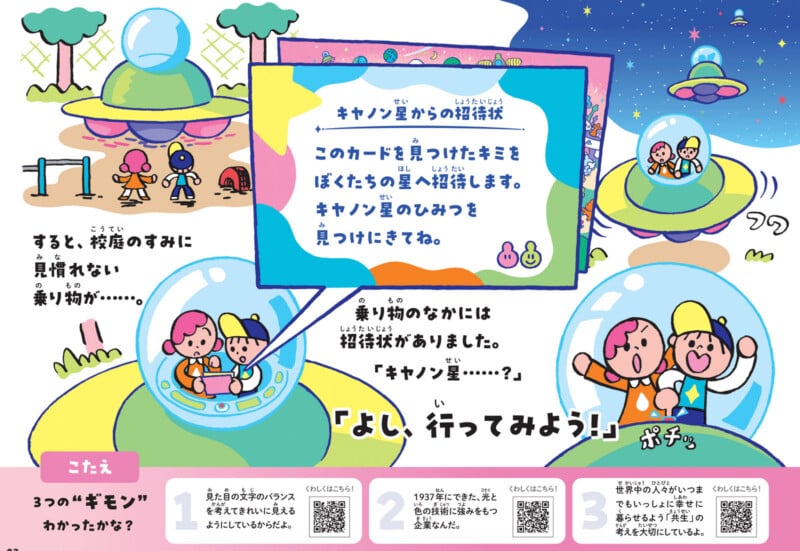
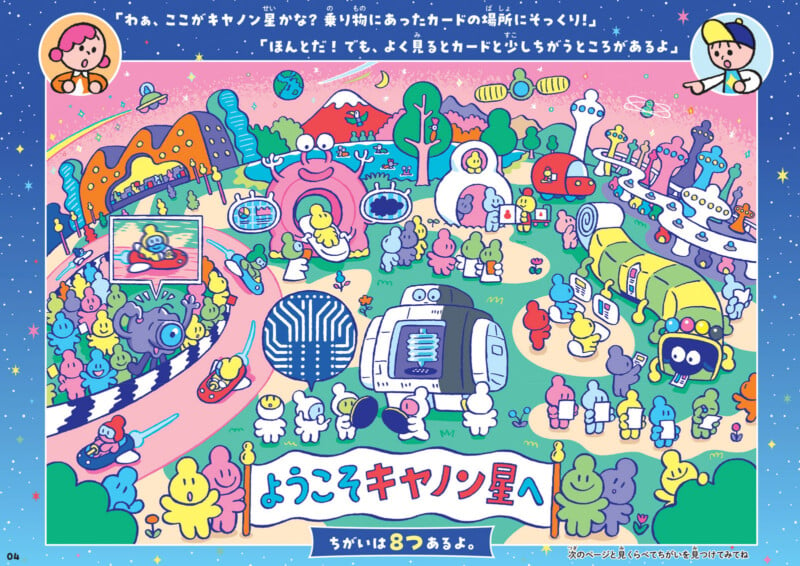
"The Secret of Canon Star" is structured as a 20-page or 11-page digital experience, depending on the version selected for download. The narrative follows two primary school-aged children who embark on an interstellar journey to "Planet Canon," a whimsical celestial body where the company’s technologies are brought to life through anthropomorphic characters and interactive scenarios. The booklet employs a "spot the difference" gamification strategy alongside bright, high-contrast illustrations to maintain engagement while delivering dense technical information.

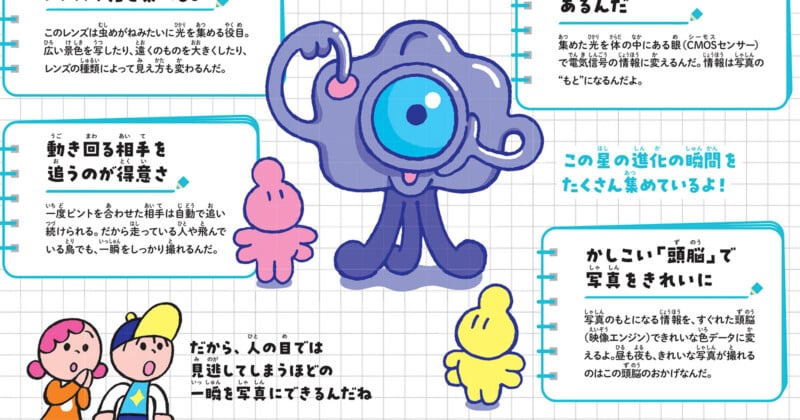
On Planet Canon, the children encounter a variety of creatures that represent Canon’s product lines. Notable characters include a humanoid camera with a large optical lens for a head and a colorful caterpillar that doubles as a high-speed printer, featuring cyan, magenta, yellow, and black (CMYK) ink reservoirs on its forehead. This creative personification allows the company to explain the fundamental principles of color theory and printing mechanics in a manner digestible for 10-year-olds.
Beyond simple consumer products, the booklet takes a deep dive into Canon Medical Systems. One segment features an anthropomorphic Magnetic Resonance Imaging (MRI) machine—depicted with six arms and a friendly demeanor—assisting smaller alien creatures with health check-ups. The inclusion of Computed Tomography (CT) scans and brain imaging reflects Canon’s significant market share in the healthcare sector, emphasizing that the same optical expertise used to take a family portrait is also used to save lives in a clinical setting.
Technical Concepts and STEM Integration
One of the primary objectives of "The Secret of Canon Star" is to provide a foundational understanding of optics and electronics, aligning with global Science, Technology, Engineering, and Mathematics (STEM) educational standards. The booklet provides a step-by-step breakdown of how a digital image is captured, a process that many children take for granted in the age of instant smartphone photography.
The educational material explains that a lens’s primary function is to gather ambient light and focus it precisely onto a Complementary Metal-Oxide-Semiconductor (CMOS) image sensor. It describes the sensor’s role in measuring light intensity and converting that physical data into electrical signals, which are then processed into digital files. Furthermore, the booklet introduces advanced photography concepts such as:
- Shutter Speed: Explained through the lens of capturing motion without blur.
- ISO Sensitivity: Described as the camera’s ability to "see" in low-light conditions.
- Aperture: Illustrated as the "eye" of the camera that controls light intake.
- Autofocus Technology: Demonstrated through the camera’s ability to track moving subjects like airplanes or birds in flight.
By introducing these terms early, Canon is effectively training a new generation of potential hobbyists and professionals in the vocabulary of high-end photography.
Chronology of Canon’s Corporate Evolution and Outreach
The release of "The Secret of Canon Star" is the latest entry in a long history of corporate social responsibility (CSR) and educational outreach by Canon Inc. To understand the context of this release, it is necessary to look at the company’s historical trajectory:
- 1937: Precision Optical Instruments Laboratory (the precursor to Canon) is established in Tokyo, focusing on creating Japan’s first 35mm camera with a focal-plane shutter.
- 1988: Canon announces its corporate philosophy of Kyosei, defined as "all people, regardless of race, religion, or culture, harmoniously living and working together into the future." This philosophy has since driven the company’s educational and environmental initiatives.
- 2000s: Canon expands its "Junior Photographers" program, a series of workshops designed to teach children the joy of photography and environmental awareness.
- 2016: Canon acquires Toshiba Medical Systems Corporation, significantly bolstering its presence in the medical imaging field.
- 2024: The launch of "The Secret of Canon Star" signals a shift toward digital-first educational content, moving away from traditional physical brochures to interactive, downloadable PDFs accessible to a global audience.
Supporting Data: The Business Behind the Booklet
While the booklet is whimsical in its presentation, the data underlying its content is rooted in a massive industrial operation. According to Canon’s most recent financial disclosures, the company operates across four primary business segments, all of which are represented in the children’s booklet:
- Printing Business: Accounting for approximately 55% of net sales, represented by the "printer caterpillar."
- Imaging Business: Representing roughly 20% of net sales, covering the cameras and lenses featured as the "protagonists" of the story.
- Medical Business: Contributing about 13% of net sales, represented by the MRI and CT scanning characters.
- Industrial Business: Comprising 12% of net sales, which includes the semiconductor lithography equipment and factory robots discussed on "Planet Canon."
The booklet highlights that Canon’s factory robots are responsible for the precision assembly of semiconductors and image sensors. This is a critical inclusion, as semiconductor lithography is one of the most sophisticated manufacturing processes in the world. By mentioning these industrial applications, Canon positions itself not just as a camera maker, but as a pillar of the global technology infrastructure.

Official Context and Industry Reactions
While Canon has not issued a formal press release for the English-speaking market regarding this specific booklet, the Japanese launch aligns with the "Canon Kids" initiative found on their domestic corporate site. This initiative is part of a broader trend among Japanese conglomerates—such as Sony, Panasonic, and Mitsubishi—to create "Corporate Discovery" materials that serve as both educational resources for teachers and soft-marketing for the brands.
Industry analysts suggest that this move is a strategic response to the shrinking market for dedicated cameras. By engaging children at the "third to sixth grade" level, Canon is attempting to build an emotional connection with the brand before these children become primary consumers. "The goal is to move the brand beyond a ‘device’ and into an ‘experience,’" says one marketing analyst specializing in the Asian tech sector. "When a child sees a Canon logo on an MRI machine in a hospital ten years from now, they will have a subconscious association with the friendly, helpful characters they saw in their youth."

Implications and Analysis
The publication of "The Secret of Canon Star" carries several implications for the future of corporate communication. First, it acknowledges the "black box" problem of modern technology. Most children use high-tech devices daily without any understanding of the physics or engineering involved. Canon’s attempt to peel back the curtain—even through the use of aliens and spaceships—is a necessary step in maintaining a technically literate society.
Second, the booklet highlights the increasing diversification of legacy brands. For many consumers, Canon is synonymous with the "EOS" line of cameras. However, the heavy emphasis on medical imaging and semiconductor manufacturing in this booklet suggests that Canon is preparing the next generation to view them as a "total imaging company" rather than just a camera manufacturer. This is essential for the company’s long-term survival as the consumer imaging market continues to be cannibalized by smartphone advancements.

Finally, the "bizarre" nature of the presentation—anthropomorphic machines and planetary travel—reflects a uniquely Japanese approach to corporate branding known as Yuru-chara (mascot culture). In Japan, using cute characters to explain serious or complex topics is a standard and highly effective practice. While it may seem unusual to Western audiences, it is a proven method for increasing information retention among younger audiences.
As digital literacy becomes a core component of early childhood education, materials like "The Secret of Canon Star" provide a bridge between play and professional science. Whether or not this leads to a resurgence in dedicated camera sales remains to be seen, but it undoubtedly secures Canon’s place in the educational landscape of the 21st century.

