


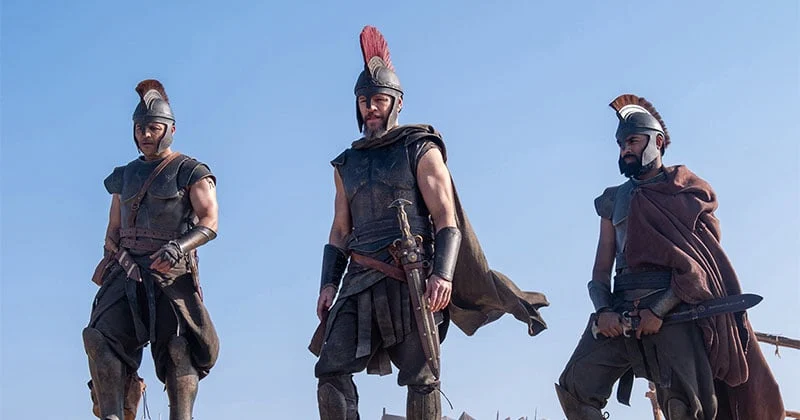
The upcoming release of Christopher Nolan’s latest cinematic venture, The Odyssey, represents more than just a seasonal blockbuster; it signifies a pivotal shift in the technical capabilities of modern filmmaking. Set to arrive in theaters in the coming weeks, the production has garnered international attention for being the first feature-length motion picture filmed entirely using IMAX 15-perf 70mm cameras. This achievement is the culmination of a decades-long ambition for Nolan, an auteur long recognized for his staunch advocacy of physical film over digital alternatives. The scale of the production, both in terms of its $250 million budget and its logistical complexity, has positioned The Odyssey as a litmus test for the future of large-format theatrical exhibition.
The Technical Evolution of the IMAX Format
To understand the significance of The Odyssey, one must look at the technical history of the IMAX format. Historically, IMAX cameras were reserved for nature documentaries and short educational films due to their immense size, weight, and the deafening noise produced by the film transport mechanism. Christopher Nolan first integrated the format into mainstream narrative cinema with the opening sequence of The Dark Knight in 2008. Over the subsequent fifteen years, he and Director of Photography Hoyte van Hoytema have incrementally increased the percentage of IMAX footage in their films, from the space-bound sequences of Interstellar to the nearly continuous tension of Dunkirk and the character-driven depth of Oppenheimer.
However, The Odyssey marks the first time the technical barriers have been fully dismantled. The production utilized over two million feet of 65mm Kodak film. Given that the cost of 65mm film stock was approximately $1.50 per foot at the time of production, the expenditure on raw film alone is estimated at $3 million. When factoring in the specialized processing, scanning, and the creation of 70mm projection prints, the investment in the medium itself is unprecedented in the 21st century.
Overcoming the Sound Barrier: The Innovation of the Blimp
The primary obstacle preventing a film from being shot entirely in IMAX has always been the acoustic profile of the camera. The internal motor of an IMAX camera, which must pull massive 15-perf frames through the gate at high speeds, generates a mechanical whirring sound that renders the recording of on-set dialogue nearly impossible. In previous films, Nolan was forced to switch to quieter, standard 35mm or 5-perf 70mm cameras for intimate, dialogue-heavy scenes.
For The Odyssey, Nolan and Van Hoytema introduced a custom-engineered housing system known as "the blimp." This specialized casing acts as a sophisticated soundproof shell, dampening the camera’s mechanical noise to a level that allows for the capture of "sync sound" (live dialogue) during filming.
Nolan described the blimp system as a "game-changer" in an interview with Variety, noting that it allowed the crew to place the massive camera within a foot of an actor’s face during whispered conversations. This innovation ensures that the visual fidelity of the IMAX format—which offers roughly ten times the resolution of standard 35mm film—is maintained throughout the entire duration of the movie, including its most quiet and personal moments.
Perspectives from the Set: The Actor’s Experience
The cast of The Odyssey, featuring a high-profile ensemble including Matt Damon, Zendaya, Anne Hathaway, Tom Holland, Robert Pattinson, and Himesh Patel, has spoken extensively about the unique atmosphere of the production. Matt Damon, a frequent collaborator with Nolan, likened the process to a blend of historical filmmaking and futuristic technology. He observed that the production felt like a return to the "big-picture" style of a century ago, yet was anchored by the most advanced analog technology available today.
Robert Pattinson offered a unique perspective on the physical presence of the IMAX hardware. Despite the cameras being described as having the physical footprint of an "SUV," Pattinson noted that the efficiency of the crew and the precision of the machinery allowed the production to move with surprising speed—at times faster than a shoot utilizing much smaller digital equipment.
Tom Holland and Zendaya highlighted the immersive nature of the project. Holland emphasized that the goal of the large-format cinematography was to "emmesh" the audience in the world of the film, while Zendaya noted that the collaboration between Nolan and Van Hoytema represents a pinnacle of trust and technical mastery. The consensus among the performers was that the format "does not lie," demanding a level of authenticity in performance that smaller formats might allow to be obscured.
Market Demand and the $1,500 Ticket Phenomenon
The public response to The Odyssey has been nothing short of a frenzy, reflecting a growing consumer preference for "event" cinema. While the broader film industry has struggled with fluctuating box office numbers in the post-pandemic era, premium large formats (PLF) like IMAX have seen consistent growth.
Evidence of this demand is most visible in the secondary market for tickets. For the highly coveted IMAX 70mm screenings—which are only available in a select few dozen theaters globally that maintain functional 70mm projectors—tickets sold out within minutes of being released. On platforms such as eBay, these tickets have been listed for prices exceeding $1,500. This "scalping" phenomenon underscores the rarity of the experience; audiences are no longer just looking for a movie, they are looking for a technical event that cannot be replicated in a home theater environment.
The commercial ecosystem surrounding the film has also extended into memorabilia. A limited-edition popcorn bucket, designed in the likeness of an IMAX camera, became an instant collector’s item, selling out across major theater chains. This level of engagement suggests that the IMAX brand itself has become a major draw, rivaling the star power of the actors involved.
Chronology of a Vision: From Dream to Screen
The realization of The Odyssey as a full-IMAX feature is the result of a timeline spanning over three decades:
- Circa 1986: A 16-year-old Christopher Nolan first conceives of the dream to shoot a narrative feature entirely on the IMAX format after being inspired by the scale of the medium.
- 2008: Nolan shoots 28 minutes of The Dark Knight in IMAX, the first time the format is used for a major Hollywood feature.
- 2014–2017: Productions of Interstellar and Dunkirk push the limits of the format, with Dunkirk utilizing IMAX for approximately 70% of its runtime.
- 2023: The success of Oppenheimer, which earned nearly $1 billion and relied heavily on 70mm presentation, provides the financial and critical leverage for Nolan to greenlight a 100% IMAX project.
- 2024–2025: Production of The Odyssey takes place, utilizing the newly developed "blimp" technology to solve the dialogue-recording issue.
- Present: Final preparations for a global theatrical rollout, supported by Universal Pictures and IMAX Corporation.
Broader Implications for the Film Industry
The release of The Odyssey carries significant implications for the future of the film industry. First, it reaffirms the viability of the "theatrical exclusive" model. By creating a product that is physically impossible to experience fully on a streaming platform, Nolan and Universal Pictures are providing a powerful argument for the continued existence of the cinema as a communal, high-tech space.
Second, the film represents a victory for the preservation of analog film. At a time when digital cinematography is the industry standard due to its lower cost and ease of use, the $3 million investment in film stock for The Odyssey proves that there is still a market for the specific aesthetic qualities of silver halide crystals—depth, color gradation, and a "living" texture that digital sensors have yet to perfectly replicate.
Finally, the project highlights the importance of technical innovation in service of storytelling. As cinematographer Hoyte van Hoytema stated, the decision to use IMAX was not merely a gimmick but a choice made because the story "wanted to be seen" in that window. The ability to capture intimate performances on such a grand scale suggests that the future of the format may not just be in action and spectacle, but in high-stakes drama and character-driven narratives.
As The Odyssey prepares for its worldwide debut, it stands as a testament to the persistence of a singular vision. Christopher Nolan has managed to bridge the gap between the silent era’s grand scale and the modern era’s technical precision, delivering what actor Himesh Patel accurately described as "pure cinema." Whether this will lead to a broader adoption of full-IMAX filming remains to be seen, but for now, The Odyssey remains a unique and historical landmark in the evolution of the moving image.

