


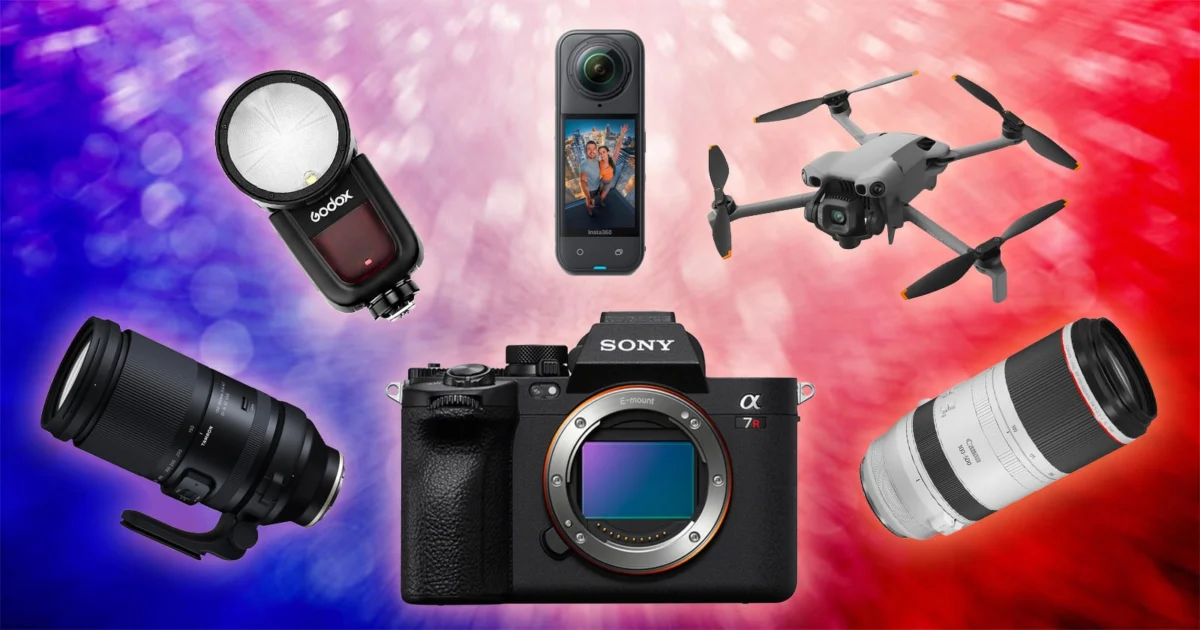
The mid-summer holiday season has traditionally served as a critical window for the consumer electronics and professional imaging industries to recalibrate inventory and stimulate market demand. As the Fourth of July 2026 approaches, major retailers and manufacturers have initiated a series of aggressive price reductions across a broad spectrum of photography and filmmaking equipment. This year’s promotional landscape is characterized by significant markdowns on high-performance mirrorless systems, professional-grade cinema cameras, and advanced aerial platforms, reflecting a highly competitive market where brand loyalty is increasingly driven by price-to-performance ratios and ecosystem versatility.
The State of the Mirrorless Camera Market in 2026
The transition from Digital Single-Lens Reflex (DSLR) systems to mirrorless technology is now largely complete among professional and enthusiast demographics. This year’s holiday sales highlight a strategic push by the industry’s "Big Three"—Canon, Nikon, and Sony—to capture the burgeoning hybrid creator market. These users demand hardware capable of producing high-fidelity still images while simultaneously offering cinema-quality video specifications.
High-Resolution Flagships and Professional Workhorses
Canon’s EOS R5 Mark II remains a cornerstone of the professional mirrorless market. Currently positioned at $3,999—a $400 reduction from its standard $4,399 MSRP—the R5 Mark II represents the pinnacle of Canon’s high-resolution hybrid lineup. Industry analysts suggest this discount is aimed at maintaining market share against Nikon’s aggressive expansion in the same tier. The R5 Mark II is lauded for its 45-megapixel sensor and robust 8K video capabilities, making it a preferred choice for commercial photographers who require substantial cropping headroom and high-definition video output.
Nikon has responded with substantial price cuts on its Z-series lineup. The Nikon Z8, often described as a "mini-Z9" due to its shared internal architecture with Nikon’s top-tier flagship, has seen a significant price adjustment. Previously retailing for $4,297, the Z8 is now available for $3,397. This $900 discount is one of the most substantial in the current sales cycle, reflecting Nikon’s strategy to dominate the $3,000–$3,500 price bracket. The Z8’s lack of a mechanical shutter and its emphasis on high-speed internal RAW video recording have made it a favorite among sports and wildlife photographers.
Furthermore, the Nikon Z6 III has seen an unprecedented $700 price reduction, bringing the cost of entry for this full-frame hybrid down to $1,997. This move is interpreted by market observers as an attempt to capture the "prosumer" segment, where competitors like the Sony a7 IV have historically held a strong grip.
Sony’s Specialized Systems
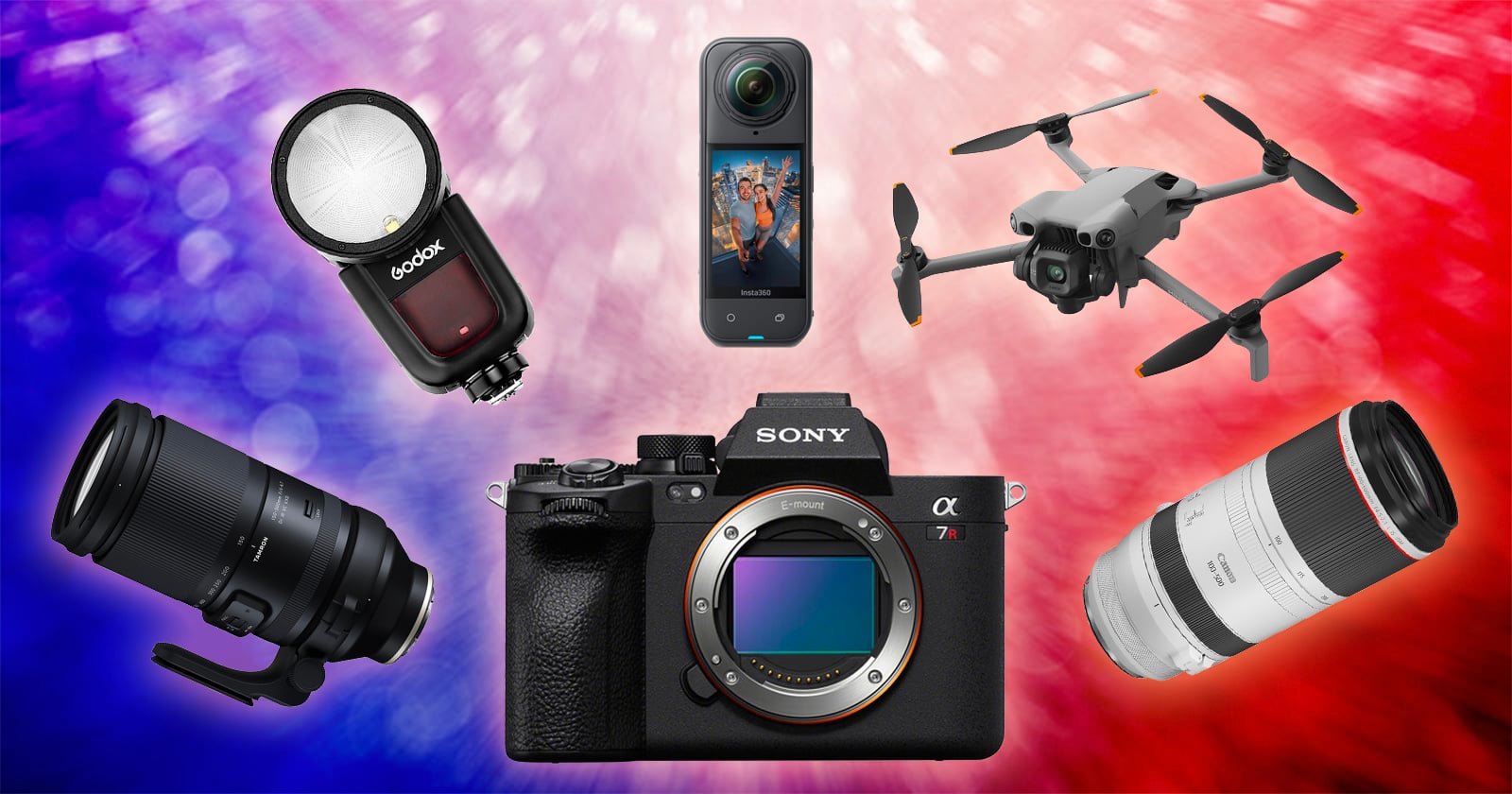
Sony’s promotional strategy for the 2026 holiday season focuses on its specialized high-resolution and cinema-focused offerings. The Sony a7R V, known for its 61-megapixel sensor and sophisticated AI-driven autofocus system, is currently discounted by $500, bringing the price to $3,298. This camera is specifically targeted at landscape, architectural, and studio photographers for whom detail and autofocus precision are paramount.
On the video-centric side, the Sony FX3A Full-Frame Cinema Camera has been reduced to $3,898. The FX3 series has become a staple in the independent filmmaking community and for high-end "run-and-gun" documentary work. The $400 discount on this model signifies Sony’s intent to keep its Cinema Line accessible to creators who are graduating from standard mirrorless bodies to dedicated video platforms.
Advancements in Optics: Lenses and Glass
The lens market in 2026 is defined by a balance between high-end proprietary optics and increasingly sophisticated third-party alternatives. Manufacturers like Tamron and Sigma have narrowed the performance gap with "first-party" lenses, often offering similar optical quality at a fraction of the cost.
Third-Party Versatility
Tamron’s 28-75mm f/2.8 Di III VXD G2, a staple for Sony E-mount users, is currently retailing for $699, down from $899. This lens is widely considered the "standard" zoom for wedding and event photographers due to its constant f/2.8 aperture and lightweight design. Similarly, the Tamron 150-500mm f/5-6.7 Di III VC VXD is seeing a $200 discount, now priced at $1,199. This telephoto zoom provides an affordable entry point for amateur wildlife and aviation photographers.
Sigma, another major player in the third-party space, has focused its discounts on both APS-C and full-frame users. The Sigma 56mm f/1.4 DC DN Contemporary—a favorite for portraiture on crop-sensor cameras—is now $454. For professionals requiring extreme reach, the Sigma 500mm f/5.6 DG DN OS Sports is available for $2,999, representing a $300 savings. This lens is particularly noteworthy for its portability, a key trend in 2026 as photographers move away from the heavy, cumbersome "super-telephotos" of the past decade.
Proprietary Optical Excellence
Canon and OM System have also participated in the optical price adjustments. The Canon RF 100-500mm f/4.5-7.1 L IS USM, a premium "L-series" lens, is discounted to $2,899. This lens is often cited as a benchmark for mirrorless telephoto performance, offering integrated image stabilization and weather-sealing.
For the Micro Four Thirds ecosystem, the OM System M.Zuiko Digital ED 45mm f/1.2 PRO has seen a $300 reduction, now priced at $1,300. Despite the industry’s heavy focus on full-frame sensors, the Micro Four Thirds system remains a vital niche for travel and macro photographers who prioritize a compact footprint.
Aerial and Action Capture: Drones and Immersive Video
The drone and action camera sectors continue to see rapid iterative cycles. DJI remains the dominant force in the aerial market, and its 2026 Fourth of July deals cover a wide range of skill levels.
DJI’s Dominance
The sale includes the DJI Mini 3 and the newly released Mini 5 Pro Bundle, indicating that DJI is clearing older stock while simultaneously incentivizing adoption of its latest hardware. The Mini series is particularly significant because its weight—often under 249 grams—allows it to bypass many of the stringent registration requirements found in various international jurisdictions. For more advanced pilots, the DJI Air 3S Fly More Combo is also featured in the promotion, offering a dual-camera system that has become a standard for professional real estate and travel content.
The 360-Degree Revolution
Action cameras have evolved beyond the traditional "box" design into immersive 360-degree capture devices. Insta360 has discounted the X5 and its associated bundles, catering to the growing demand for "reframable" video—a technique where creators record everything around them and choose the camera angle during the editing process.
GoPro, the pioneer of the action camera market, has responded with the MAX2 360 Action Camera Accessory Bundle. This competition between GoPro and Insta360 has resulted in better stabilization algorithms and higher resolution sensors for consumers, as both companies vie for the attention of extreme sports enthusiasts and travel vloggers.
Lighting and Studio Infrastructure
Professional imaging extends beyond the camera body to the control of light. Godox, a company that has disrupted the lighting market by offering feature-rich flashes and LEDs at competitive prices, has discounted a significant portion of its catalog.
The sale includes the Godox V1 Flash for Canon, known for its round head design that mimics natural light fall-off, and the AD300Pro Outdoor Flash, a battery-powered strobe that allows photographers to overpower the sun during midday shoots. For videographers, the SL60IIBI Bi-Color LED Video Light and the compact ML30Bi offer adjustable color temperatures, a necessity for matching ambient light in indoor environments. These discounts reflect a broader trend where high-quality lighting is no longer restricted to high-budget studio environments but is accessible to home-based creators and small production teams.
Archiving and Output: The Physical Image
Despite the digital nature of modern photography, the market for physical prints and archival tools remains resilient. Epson has positioned several of its key products for the holiday sale to address the needs of photographers who value the tangible medium.
The Epson Expression Photo HD XP-15000, capable of printing up to 13 x 19 inches, is now $250—a substantial drop from its $430 MSRP. This printer is targeted at enthusiasts who wish to exhibit their work or sell prints without the overhead of professional lab services. Additionally, the FastFoto FF-680W Photo Scanner is discounted to $560. As the "boomer" generation looks to digitize family archives, high-speed scanners have become essential tools for preserving historical print collections.
Market Analysis and Economic Context
The 2026 holiday sales cycle occurs against a backdrop of stabilizing global supply chains and a maturing mirrorless market. Several factors contribute to the depth of the discounts seen this year:
- Product Lifecycle Management: Many of the discounted models, such as the Nikon Z8 and Sony a7R V, have been on the market for over a year. Manufacturers often use holiday windows to clear inventory ahead of late-Q3 or Q4 product announcements.
- The "Creator Economy" Influence: The rise of TikTok, YouTube, and specialized streaming platforms has created a massive demand for mid-range "vlogging" and "hybrid" cameras. The $700 discount on the Nikon Z6 III and the pricing of the Canon PowerShot V1 at $899 are direct responses to this demographic.
- Technological Saturation: With autofocus systems now utilizing deep-learning AI to track subjects with near-perfect accuracy, the "spec war" has shifted from megapixels to software features and ecosystem integration.
- Competitive Pressure: The aggressive $900 price cut on the Nikon Z8 is a clear signal of the intense competition in the professional segment. Sony and Canon must respond with either similar price cuts or significant firmware updates to maintain their user bases.
Implications for Professionals and Enthusiasts
For the professional photographer, the Fourth of July 2026 sales represent a strategic opportunity to upgrade primary systems or expand lens kits with a lower capital expenditure. The inclusion of high-end cinema gear like the Sony FX3A suggests that the barrier between "stills" and "motion" photography continues to dissolve, requiring professionals to be proficient in both.
For enthusiasts, the availability of full-frame systems like the Nikon Z6 III for under $2,000 marks a significant milestone in the democratization of high-end imaging. As the industry moves further into the 2020s, the focus is expected to remain on AI integration, compact form factors, and the seamless bridge between capture and cloud-based distribution. These holiday deals are not merely seasonal discounts but are indicative of a broader shift toward a more accessible and technologically advanced imaging landscape.

