


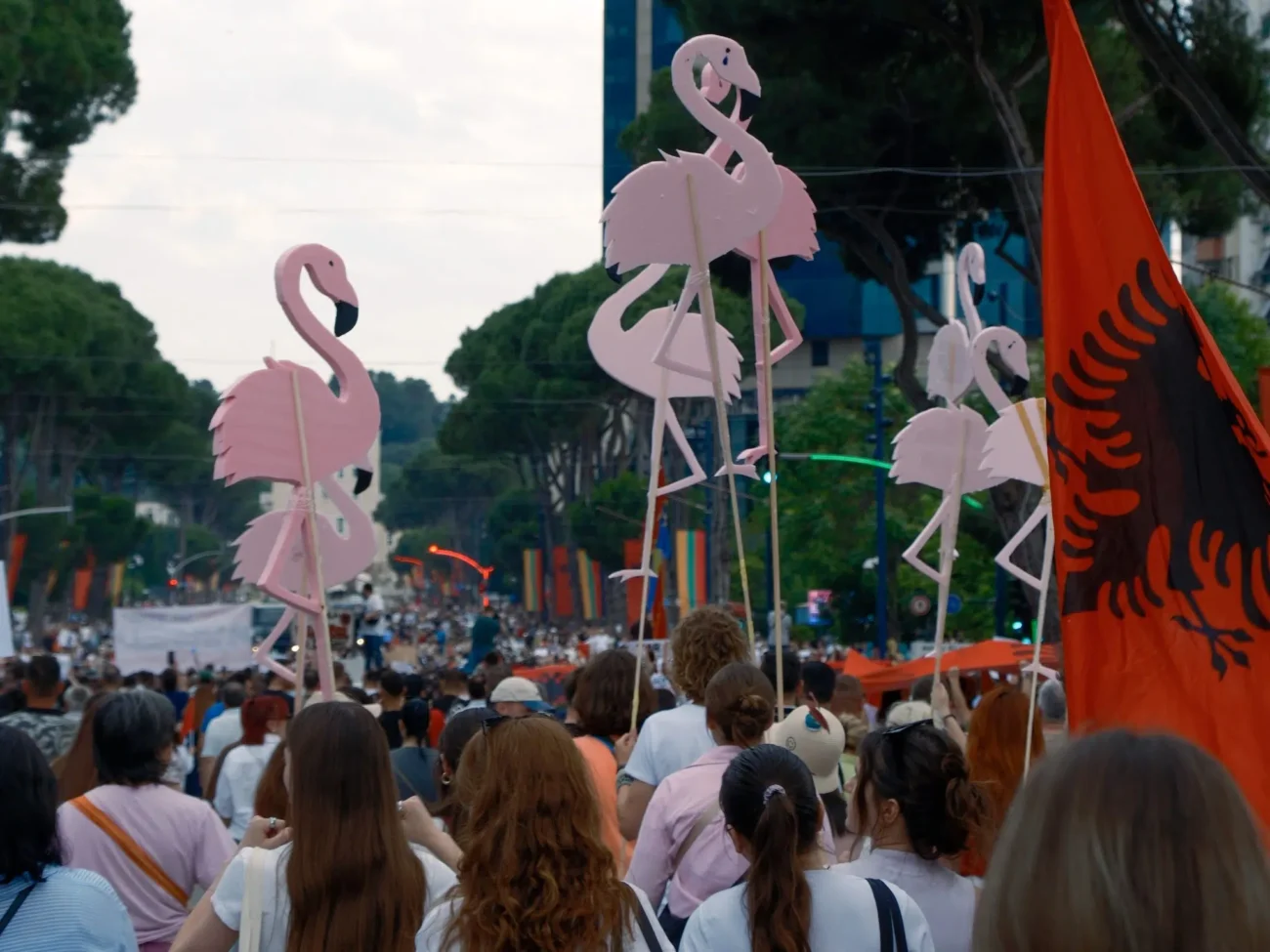
The European Parliament has delivered a strong rebuke to Albania’s environmental policies, adopting a resolution that expresses profound concern over the ongoing developments within the Vjosa-Narta Protected Area. The parliamentary vote unequivocally states that the rule of law and adherence to EU environmental standards are indispensable prerequisites for Albania’s accession to the European Union. This landmark resolution calls for the immediate repeal of Albania’s 2024 amendments to the Law on Protected Areas, legislation widely criticized for facilitating the degradation of one of the Mediterranean’s most ecologically significant natural sites. The adoption of these amendments has ignited widespread public outcry, culminating in the largest street protests Albania has witnessed in a generation.
The parliamentary resolution further stipulates an "immediate moratorium on new permitting procedures, construction works and development interventions within protected areas until incompatible provisions of Albania’s amended Law on Protected Areas are repealed and full compliance with EU nature protection standards is ensured." This decisive stance underscores the Parliament’s commitment to upholding environmental integrity as a cornerstone of the EU accession process, particularly for candidate countries in the Western Balkans.
The widespread public opposition in Albania, now globally recognized as the "Flamingo Revolution," has seen over 100,000 citizens take to the streets over the past 18 days. This popular uprising is a direct response to the reported illegal clearing of forests, ancient dunes, and vital protected habitats within the Vjosa-Narta Protected Landscape. The protests highlight a deep-seated concern among the Albanian populace regarding the government’s environmental stewardship and its alignment with European aspirations.
Specifically, the European Parliament’s resolution targets the 2024 amendments to the Law on Protected Areas. Critics argue these amendments permit the development of large-scale tourism infrastructure within protected zones and significantly weaken crucial environmental oversight mechanisms. Members of the European Parliament (MEPs) also voiced grave concerns regarding Albania’s Law on Strategic Investments. This legislation, with its expedited permitting procedures, is perceived as a potential conduit for circumventing rigorous environmental scrutiny in ecologically sensitive areas, thereby posing a substantial risk to biodiversity and natural heritage.
The Parliament’s decisive vote stands in stark contrast to the European Commission’s initial response to the unfolding environmental crisis. On June 15, Commissioner Oliver Várhelyi reportedly stated that the Commission had received assurances from the Albanian government that an environmental impact assessment would be conducted. This statement has been widely criticized for overlooking the fact that illegal construction activities had already commenced without the necessary permits, transparency, or any form of environmental impact assessment. The European Parliament’s current action demonstrates a more robust commitment to enforcing EU environmental legislation than was initially exhibited by the Commission, signaling a potential divergence in approach between the two EU institutions on this critical issue.
The Vjosa-Narta Protected Landscape is of immense ecological importance, representing a crucial part of the last intact delta system in the Mediterranean. Its rich biodiversity includes over 200 bird species and more than 70 endangered species. The area serves as a vital stopover on one of Europe’s most critical migratory bird corridors. Furthermore, it provides essential habitat for vulnerable species such as the Mediterranean monk seal and the Loggerhead sea turtle. These species are also subject to protection under the legal obligations of EU Member States like Greece, Italy, and Croatia, underscoring the transboundary ecological significance of Vjosa-Narta. The ecological health of this landscape, therefore, has implications that extend beyond Albania’s borders.
Since early May 2026, construction has reportedly been underway within the protected area without any publicly disclosed project details, environmental impact assessments, public consultations, or valid permits. This activity directly contravenes Albania’s accession commitments under both the Environmental acquis and Cluster 1 concerning the rule of law. This recent development adds to the existing controversy surrounding the illegal construction of Vlora International Airport in the same sensitive area, which commenced in November 2021 without adequate environmental safeguards.
Timeline of Key Events
- November 2021: Construction begins on Vlora International Airport within or adjacent to the Vjosa-Narta Protected Landscape, raising initial environmental concerns.
- Early May 2026: Reports emerge of ongoing construction activities within the Vjosa-Narta Protected Area, allegedly proceeding without permits, environmental impact assessments, or public consultation.
- Mid-June 2026 (approx.): European Commissioner Oliver Várhelyi reportedly states the Commission has received assurances from the Albanian government regarding future environmental impact assessments, a statement that is later criticized for downplaying ongoing illegal activities.
- Recent 18 Days (prior to EP vote): Over 100,000 Albanians participate in widespread street protests, dubbed the "Flamingo Revolution," against the environmental degradation in Vjosa-Narta.
- Current Date: The European Parliament adopts a resolution demanding the repeal of Albania’s 2024 amendments to the Law on Protected Areas and calls for an immediate moratorium on development within protected zones.
International and Local Reactions
Joni Vorpsi, Head of Policy and Advocacy at PPNEA (Protection and Preservation of the Natural Environment in Albania), emphasized the significance of the European Parliament’s call for a moratorium. "The European Parliament’s call for an immediate moratorium is exactly what is needed in our fight to protect Vjosa-Narta," Vorpsi stated. "It gives Albanian authorities the time and the clarity to align with EU standards on nature protection and avoid irreversible mistakes that would set back Albania’s EU path. We want Albania in the European family, and that is precisely why we cannot afford to get this wrong." This statement highlights the dual objective of environmental protection and continued EU integration, suggesting that the two are intrinsically linked.
Anouk Puymartin, Head of Policy at BirdLife Europe, underscored the Parliament’s alignment with the popular movement in Albania. "Today the European Parliament has stood with the thousands of Albanians on the streets of Tirana," Puymartin declared. "This vote sends the unambiguous message that you cannot join the EU while bulldozing protected wetlands and bypassing your own laws. Protecting Vjosa-Narta, and respecting the Birds and Habitats Directives, are a fundamental condition of EU accession. The Albanians protesting in Tirana already knew that defending nature and defending democracy are the same fight. Today, the European Parliament said so too." This highlights the interconnectedness of democratic values, the rule of law, and environmental protection in the context of EU enlargement.
While official statements from the Albanian government on the European Parliament’s resolution are pending, it is anticipated that the decision will be met with a range of responses. Sources close to the government may reiterate commitments to environmental protection and adherence to EU standards, while simultaneously defending national development priorities. Opposition parties and environmental organizations within Albania are likely to hail the resolution as a crucial victory and a validation of their activism.
Broader Implications for EU Enlargement and Regional Stability
The European Parliament’s firm stance on the Vjosa-Narta issue carries significant implications for the broader EU enlargement process, particularly for the Western Balkan countries. There are growing concerns that other accession countries in the region may be observing Albania’s situation closely and potentially considering similar legislative approaches that prioritize rapid development over environmental protection. Today’s vote sends a clear message that such a trajectory is incompatible with the fundamental principles and standards required for EU membership.
The resolution serves as a critical precedent, reinforcing the idea that environmental safeguards and the rule of law are not merely technical chapters to be addressed but are core values that underpin the entire accession framework. The integration of Albania and other Western Balkan nations into the EU is contingent upon their ability to demonstrate a genuine commitment to these principles. Failure to do so risks not only hindering their own accession prospects but also potentially creating a precedent that could undermine the EU’s environmental and democratic standards across the region.
The Vjosa-Narta Protected Landscape, with its exceptional biodiversity and ecological significance, represents more than just a local environmental concern; it is a tangible example of the challenges and opportunities inherent in the EU enlargement process. The European Parliament’s resolution underscores the responsibility of candidate countries to uphold international and EU environmental standards, and it signals the EU’s willingness to hold them accountable. The outcome of this situation will undoubtedly be closely watched by environmental advocates, policymakers, and citizens across Europe and the Western Balkans, as it will shape the future of environmental governance and the integrity of the EU accession process. The "Flamingo Revolution" has, through the European Parliament’s decisive action, become a symbol of the ongoing struggle to balance economic development with the imperative of preserving irreplaceable natural heritage in the pursuit of European integration.
Notes to Editors:
BirdLife Europe and PPNEA have been actively engaged in monitoring and campaigning on the Vjosa-Narta issue. PPNEA has been at the forefront of efforts to protect the Vjosa-Narta for years and has been actively involved in the recent protests on the ground. Representatives from both organizations were present in Strasbourg to observe and advocate during the European Parliament’s vote. Their ongoing work highlights the critical role of civil society in advocating for environmental protection and adherence to democratic principles within the EU accession framework.

