


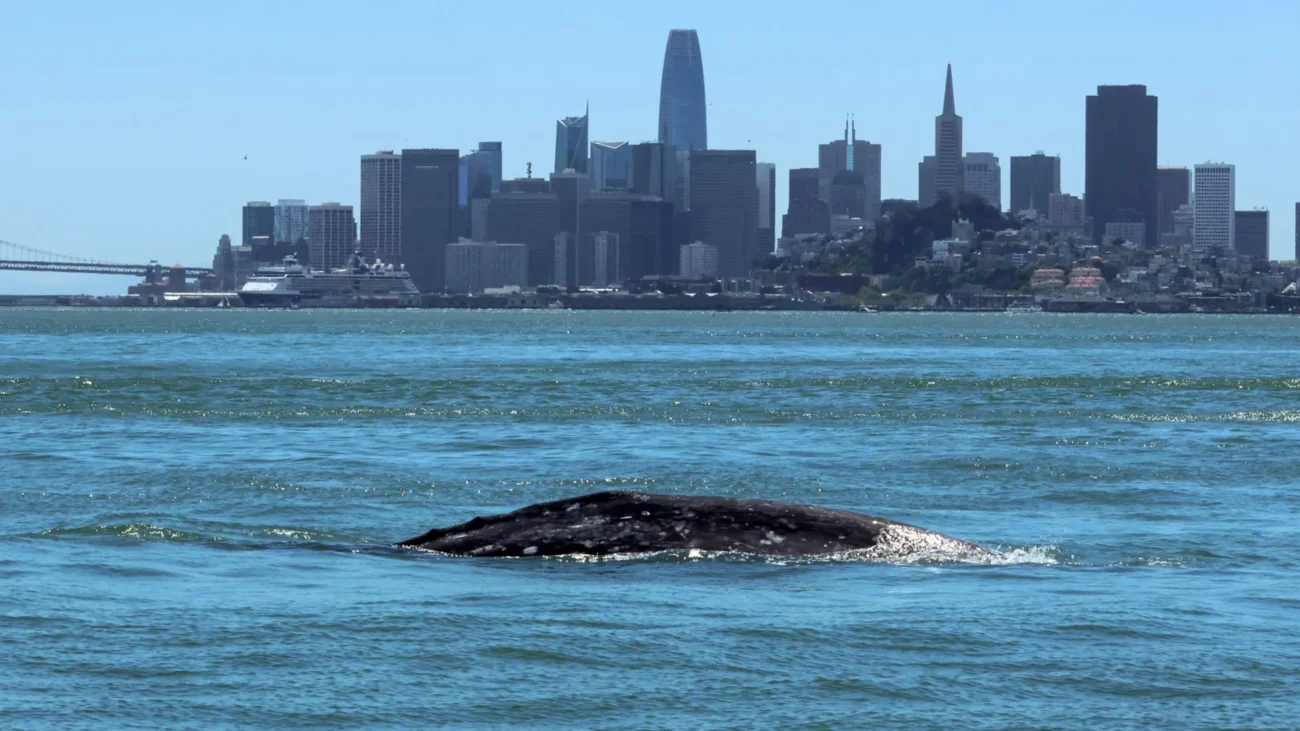
The epic journeys of gray whales, a millennia-old testament to nature’s resilience, are being profoundly altered by the escalating impacts of climate change. These magnificent marine mammals, renowned for their arduous migrations between the nutrient-rich Arctic feeding grounds and the protected, warmer lagoons of Baja California, Mexico, are exhibiting increasingly erratic behaviors. In recent years, an alarming number of gray whales have been observed venturing into unfamiliar, and in many cases, perilous environments, most notably the heavily trafficked waters of San Francisco Bay. This shift in migratory patterns and feeding habits has coincided with a tragic surge in gray whale mortality, with researchers from Sonoma State University and the Center for Coastal Studies revealing that nearly 20% of the gray whales entering the Bay do not survive, a stark statistic heavily attributed to deadly boat strikes and the pervasive threat of starvation.
Shifting Tides: Climate Change as the Catalyst
The fundamental disruption to the gray whale’s life cycle stems from the warming of Arctic waters, the whales’ primary food source. These frigid seas are home to abundant populations of amphipods, benthic invertebrates that form the cornerstone of the gray whale’s diet. However, as global temperatures rise, these crucial food webs are unraveling. Reduced sea ice extent, altered ocean currents, and changes in plankton blooms are directly impacting the availability and nutritional quality of these prey species. Consequently, gray whales are finding themselves increasingly undernourished as they embark on their annual migrations, forcing some to seek alternative, albeit riskier, feeding opportunities.
"Gray whales have a low profile to the water when they surface, and this makes them difficult to see in conditions like fog which are common to San Francisco Bay," explained Josephine Slaathaug, a marine mammal biologist at Sonoma State University and lead author of the recent study published in Frontiers in Marine Science. "Additionally, San Francisco Bay is a highly trafficked waterway, and the Golden Gate Strait serves as a bottleneck through which all traffic and whales must enter and exit." This confluence of factors—reduced prey availability in traditional feeding grounds and the inherent dangers of a bustling urban waterway—has created a perfect storm for these vulnerable animals.
A New, Dangerous Haven: The San Francisco Bay Enigma
Historically, San Francisco Bay has not been a part of the gray whale’s migratory circuit. Their migration strategy typically involves fasting during their journey to and from tropical breeding grounds, relying on the substantial fat reserves built up during their Arctic feeding season. However, since 2018, a noticeable increase in gray whale sightings within the Bay has been documented, mirroring a concerning rise in local whale deaths. This phenomenon prompted scientists to launch dedicated research efforts to understand these "Bay Grays," aiming to determine if they were returning visitors or simply one-time, desperate arrivals.
The National Oceanic and Atmospheric Administration (NOAA) has reported a dramatic decline in the Pacific gray whale population, with numbers falling by more than half since 2016. The rarity of calf sightings further underscores the precarious state of this population. The shift in behavior observed in recent years, with whales actively foraging in areas previously avoided, is a clear indicator of the profound ecological pressures they are facing.
Deciphering the Data: A Multi-Year Investigation
To unravel the mystery of the "Bay Grays," researchers embarked on a comprehensive, multi-year study from 2018 to 2025. Their methodology involved building an extensive catalog of individual whales through opportunistic sightings and photographic identification contributed by the public. This citizen science component was augmented by more structured surveys conducted from 2023 to 2025. Crucially, these visual records were cross-referenced with necropsy data from stranded whales, allowing for a more definitive understanding of their fate.
The identification process relied on the unique markings, such as scars and barnacle patterns, on each whale’s skin. While these markings are distinctive, researchers acknowledge a potential limitation: these natural identifiers can fade or become obscured after a whale’s death, meaning some individual matches may have been missed. Despite this challenge, the study managed to document 114 individual gray whales within San Francisco Bay during the eight-year period.
An Emergency Stop: The Unsettling Findings
A particularly striking finding from the research indicates that only four of the 114 documented whales were observed in the Bay on more than one occasion. This suggests that for the vast majority, the Bay is not a regular stopover but rather a potential emergency feeding location, likely utilized by whales in compromised physical condition. This theory is further supported by observations of unusually thin individuals foraging in other non-traditional habitats, signaling a widespread struggle for sustenance.
The Grim Reality: Mortality in the Bay
Despite the potential for the Bay to serve as a temporary feeding refuge, the harsh reality is that many whales do not survive their presence there. Between 2018 and 2025, a sobering total of 70 gray whales were found dead in the region surrounding San Francisco Bay. Of these, a staggering 30 were confirmed to have been victims of vessel strikes, highlighting the immense danger posed by maritime traffic. For the remaining whales where a cause of death could be determined, malnutrition was a prevalent factor, indicating that even if they found food, it was insufficient to sustain them or their weakened bodies were unable to effectively forage.
Bekah Lane, a researcher with the Center for Coastal Studies and co-author of the study, emphasized the severity of the situation. "At least 18% of the individuals identified in San Francisco Bay later died in the area," she stated. "Our broader analysis of local strandings both inside and outside San Francisco Bay found that over 40% of these whales died of trauma from vessels." This dual threat of starvation and physical trauma from collisions with ships paints a grim picture for the future of these migrating whales.
A Call to Action: Urgent Protective Measures
The findings of this research underscore an urgent need for enhanced protective measures for gray whales, particularly within busy waterways like San Francisco Bay. Scientists are advocating for continued and more detailed research to fully comprehend the evolving patterns of whale use in the Bay and the underlying reasons for these shifts. In 2025 alone, the Bay saw 36 whale entries, with groups sometimes comprising more than 10 individuals, indicating a growing trend.
Enhanced tracking capabilities and additional necropsies are crucial to definitively ascertain whether the low rate of returning whales is a direct consequence of high mortality rates and to pinpoint the primary causes of death. It is highly plausible that weakened whales, struggling with malnutrition, are less capable of detecting and avoiding oncoming vessels, exacerbating the risk of fatal collisions.
Preventive strategies could encompass a range of interventions, including targeted educational campaigns for commercial vessel operators, potential adjustments to ferry routes to avoid known whale congregation areas, and the implementation of speed restrictions in high-risk zones.
"In San Francisco Bay, the biggest threat to these whales is vessel traffic," Lane reiterated. "Continued monitoring will help illuminate their distribution patterns and behaviors while within the Bay, which can impact risk. Route changes and speed restrictions have been found to significantly reduce vessel strike mortality to large whales, and an assessment of risk can help identify the most effective strategies to protect these animals."
The Broader Implications: A Population Under Immense Pressure
The study, while providing an invaluable snapshot, acknowledges that there remain significant gaps in our understanding of the day-to-day movements and intricate behaviors of these whales. However, the presented findings offer critical insights into how gray whales are attempting to adapt to the rapid and profound environmental changes brought about by climate change.
"This study is our best analysis of the data we collected, but it’s important to consider that we do not have the full picture of each whale’s movements on a daily timescale," Slaathaug concluded. "These results are an important piece of the larger puzzle of what is going on in the overall population as they attempt to adapt to climate change in real time." The challenges faced by gray whales in San Francisco Bay are not isolated incidents but symptomatic of a larger, global crisis affecting marine ecosystems and the species that depend on them. The resilience of these ancient mariners is being tested as never before, and their plight serves as a stark reminder of the urgent need for global action to mitigate climate change and protect the delicate balance of our oceans.

