


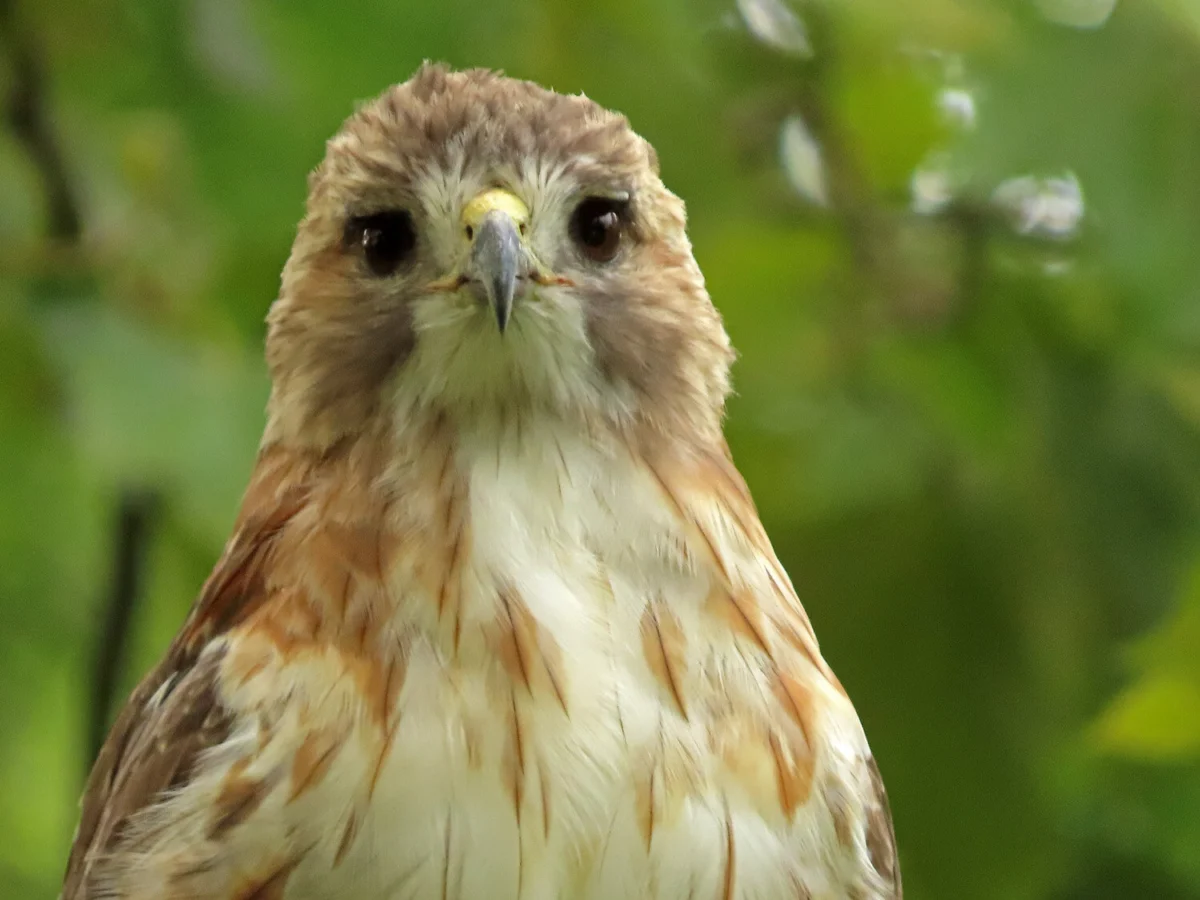
The diverse ecosystems of Georgia, from the mist-shrouded Blue Ridge Mountains to the sprawling Okefenokee Swamp and its coastal estuaries, provide a rich tapestry for avian life. While the Peach State ranks 32nd nationally with 438 documented bird species according to eBird, understanding the nuances of its raptor population, particularly hawks, can be a complex endeavor. This article aims to demystify the classification and identification of hawks found within Georgia, exploring the distinctions between various genera and species, and highlighting their unique characteristics and ecological roles.
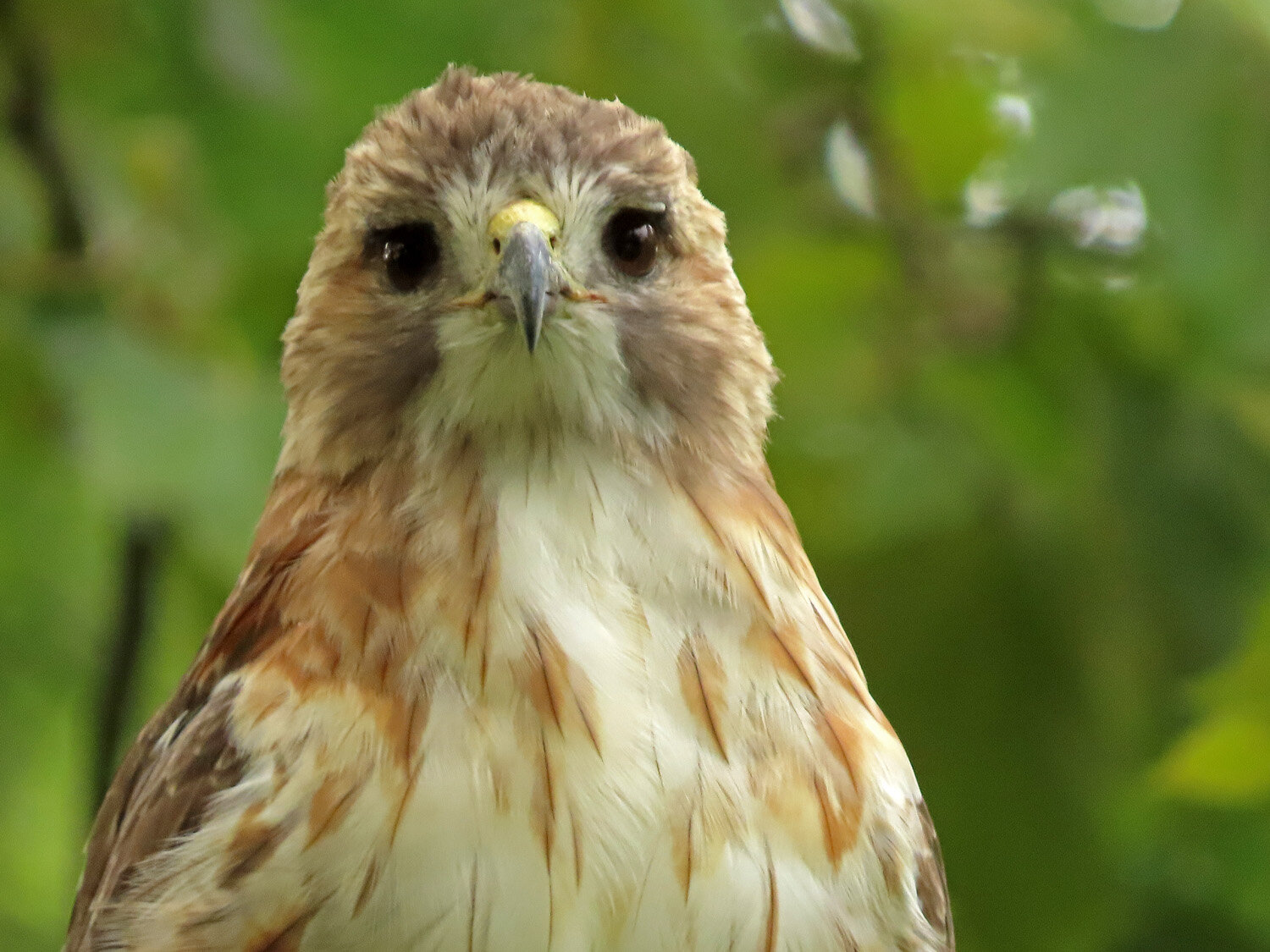
Understanding the Taxonomy of Hawks
The world of birds of prey is intricate, with overlapping classifications that can often lead to confusion. At the broadest level, the order Accipitriformes encompasses most diurnal birds of prey. Within this order lies the family Accipitridae, a diverse group commonly known as hawks, eagles, and kites. Further refining this classification, the subfamily Accipitrinae is recognized as containing the "true hawks." However, the common understanding of "hawk" extends beyond this strict definition to include birds from the genus Buteo, which are significant predators in their own right and are widely recognized and referred to as hawks. For the purpose of this guide, we will consider both the Accipitrinae subfamily and the Buteo genus when discussing hawks in Georgia.
The Accipitrinae subfamily is further divided into several orders, including Accipiter, Microspizias, Erythrotriorchis, Megatriorchis, and Circus. It is within these groups, alongside the Buteo genus, that we find the hawks gracing the skies of Georgia.

Hawks of Georgia: Species Profiles and Ecological Significance
Georgia is home to a notable array of hawk species, each with its own specialized adaptations and habitat preferences. While eBird data suggests four members of the Accipitrinae subfamily have been sighted, expanding to include the Buteo genus brings the total to eight commonly recognized "hawk" species that inhabit or visit the state.
The Red-shouldered Hawk (Buteo lineatus)
The Red-shouldered Hawk is a striking resident of Georgia, identifiable by its distinctive rufous (reddish-brown) coloring on the breast, head, and shoulders. The underside of its wings and tail are adorned with elegant black and white checks. These medium-sized raptors typically measure between 16.9 to 24.0 inches in length, with a wingspan ranging from 37.0 to 43.7 inches, and weighing between 17.1 to 27.3 ounces.
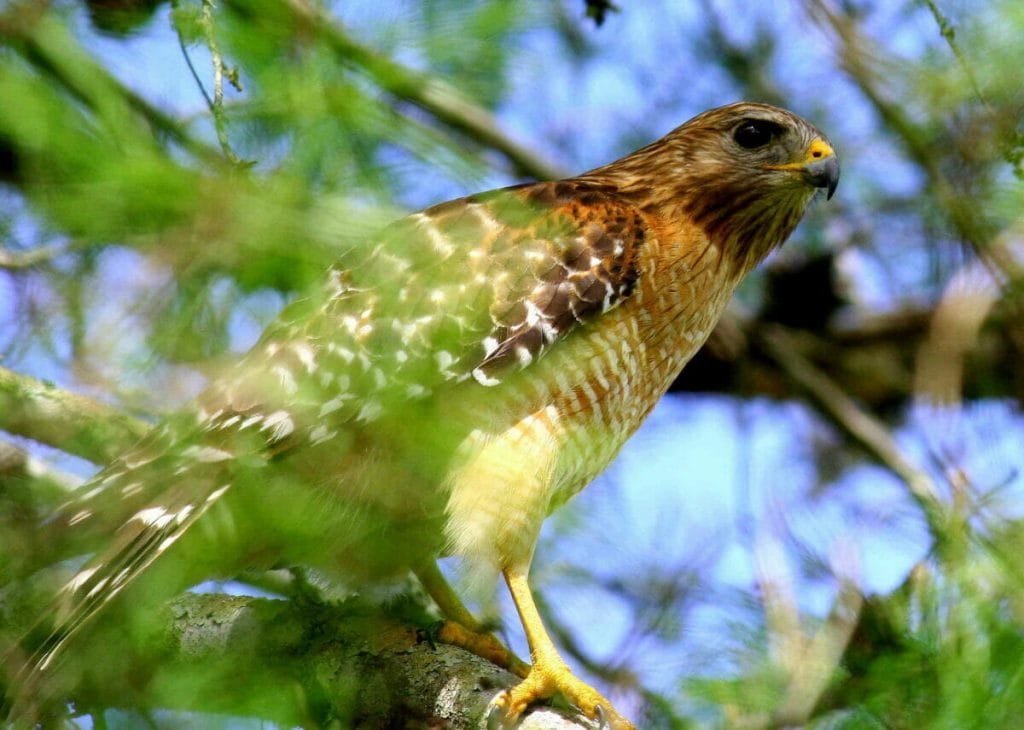
Distribution and Habitat: As a year-round resident, the Red-shouldered Hawk can be found throughout Georgia in environments that offer ample tree cover. Their preferred habitats include mature forests, particularly those near water sources like swamps, river bottoms, and wetlands. This species plays a crucial role in controlling populations of small prey.
Diet and Behavior: Red-shouldered Hawks are opportunistic hunters, preying on a variety of small animals. Their diet primarily consists of amphibians, reptiles (especially snakes), small mammals like mice and voles, and occasionally small birds. They are known for their distinctive, loud calls, often described as a piercing "kee-aah."
Cooper’s Hawk (Accipiter cooperii)
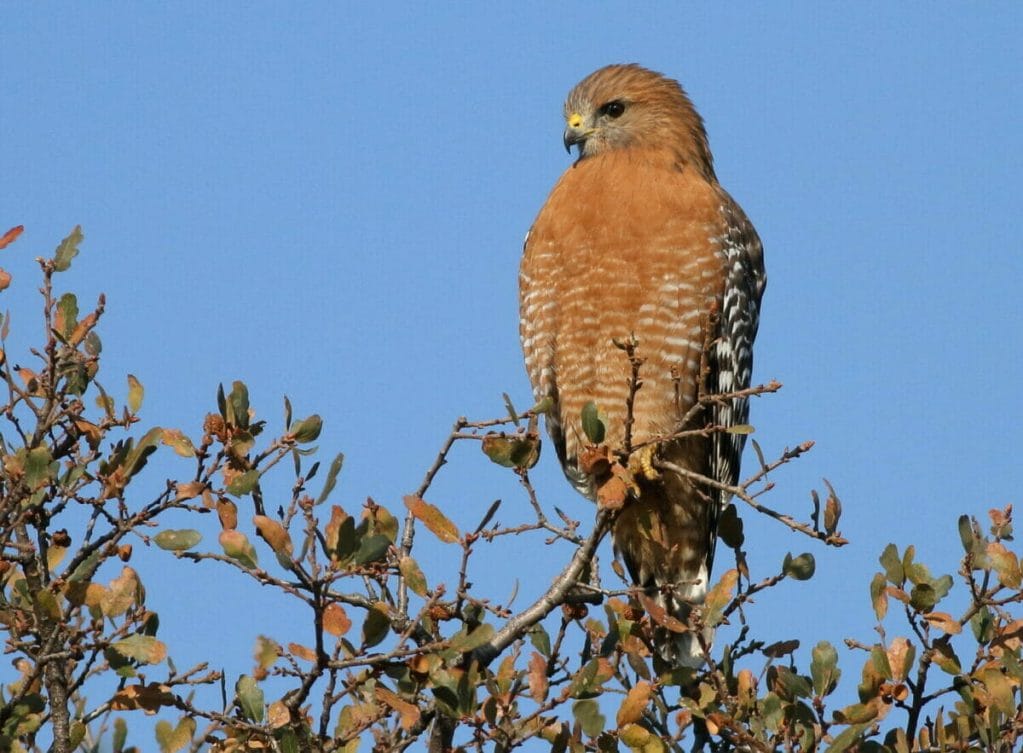
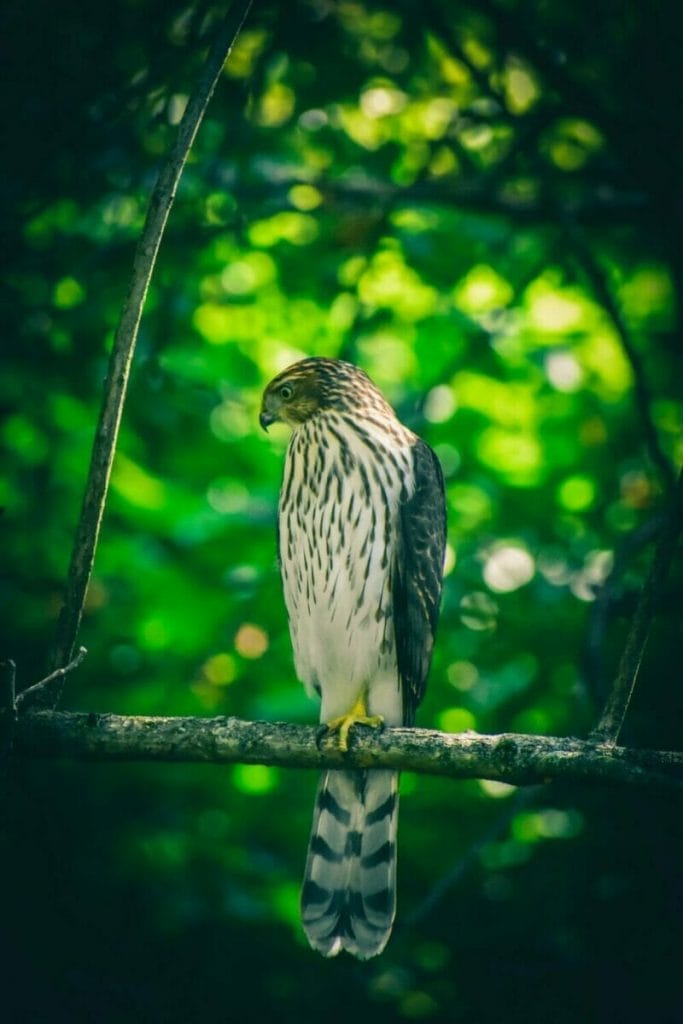
The Cooper’s Hawk, a member of the Accipiter genus, is a medium-sized hawk known for its agility in woodland environments. Adults are characterized by their dark gray upperparts and a distinctive orange or reddish barring on their pale undersides. Females are notably larger than males, a common trait in this genus. Juvenile Cooper’s Hawks are brown with streaky undersides, and both sexes possess striking, staring eyes. They typically measure between 14.6 to 17.7 inches in length, with a wingspan of 24.4 to 35.4 inches, and weigh between 7.8 to 24 ounces.
Distribution and Habitat: While migratory in many parts of North America, the Cooper’s Hawk is a year-round resident in Georgia. They are often found in woodlands and forests, particularly those with a dense canopy, which allows them to effectively ambush their prey. Their presence is slightly less conspicuous than the Red-shouldered Hawk, partly due to their preference for inhabiting the upper layers of the forest.
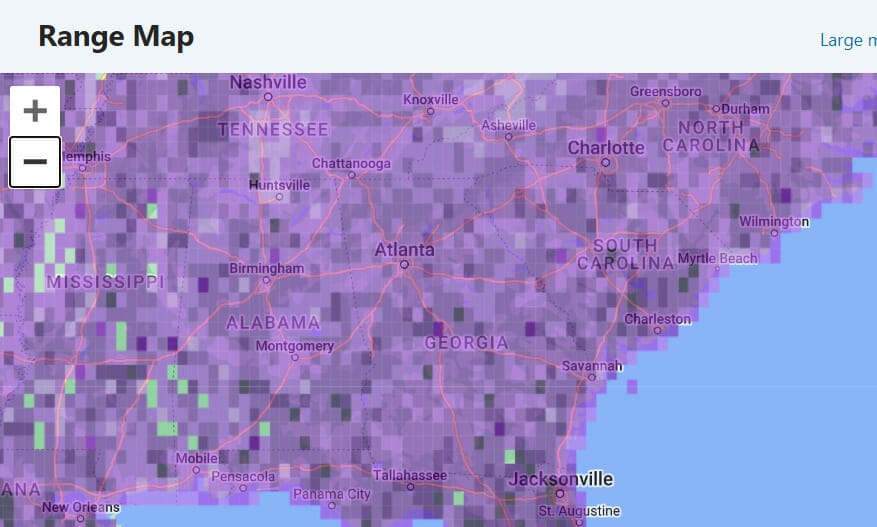
Diet and Behavior: Cooper’s Hawks are formidable predators, specializing in hunting medium-sized birds, such as robins, jays, and flickers. They are also known to take small mammals. Their hunting strategy involves surprise attacks, utilizing their speed and maneuverability within wooded areas to catch their prey. Their powerful talons are used to quickly dispatch their quarry.
Sharp-shinned Hawk (Accipiter striatus)
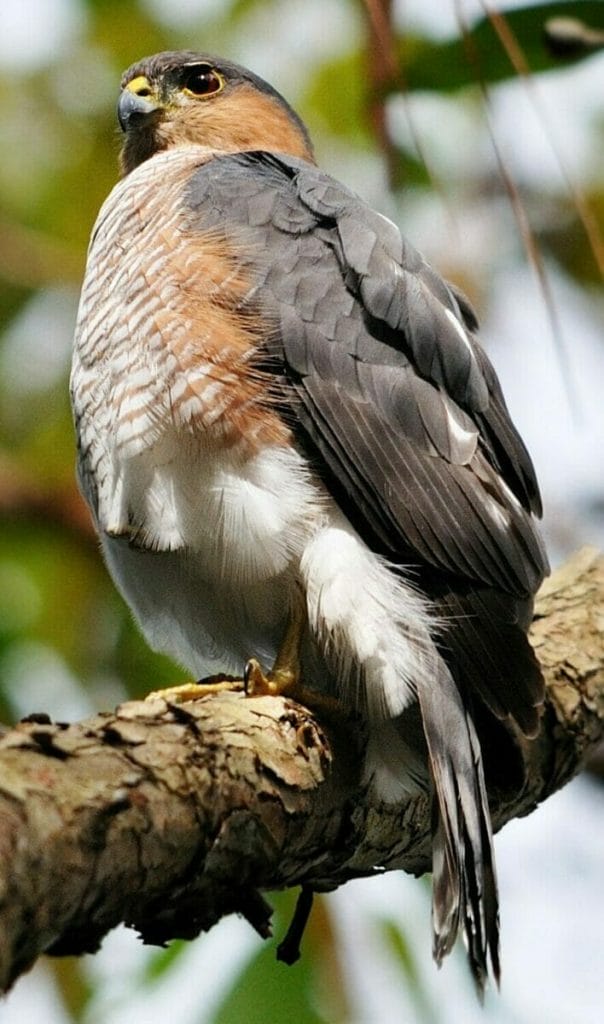
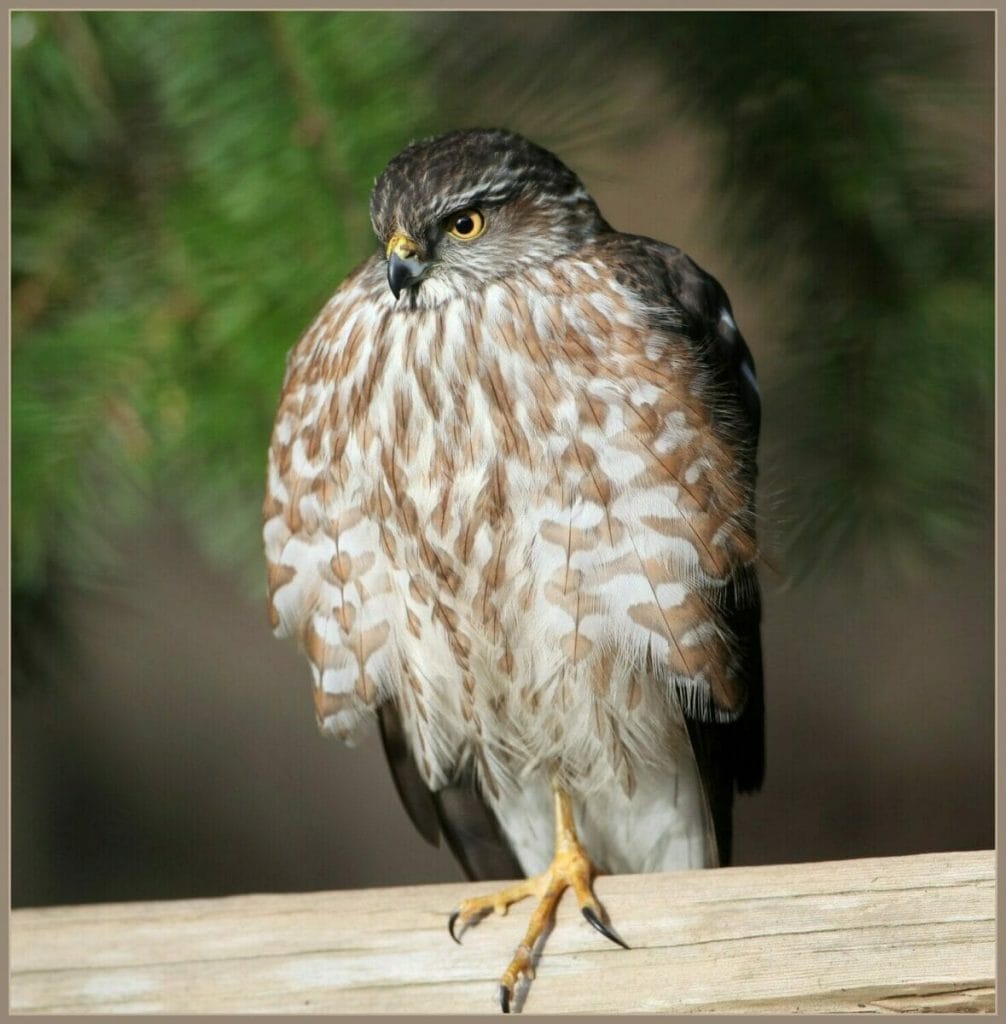
The Sharp-shinned Hawk, also belonging to the Accipiter genus, is the smallest of Georgia’s "true hawks." It bears a strong resemblance to the Cooper’s Hawk, but its smaller size is a key distinguishing feature. Adults display dark gray backs and paler breasts with finer barring compared to their larger relatives. Like other Accipiters, females are larger than males. Juvenile birds are brown with streaks. Their dimensions are considerably smaller, with a length of 9.4 to 13.4 inches, a wingspan of 16.9 to 22.1 inches, and a weight of 3.1 to 7.7 ounces.
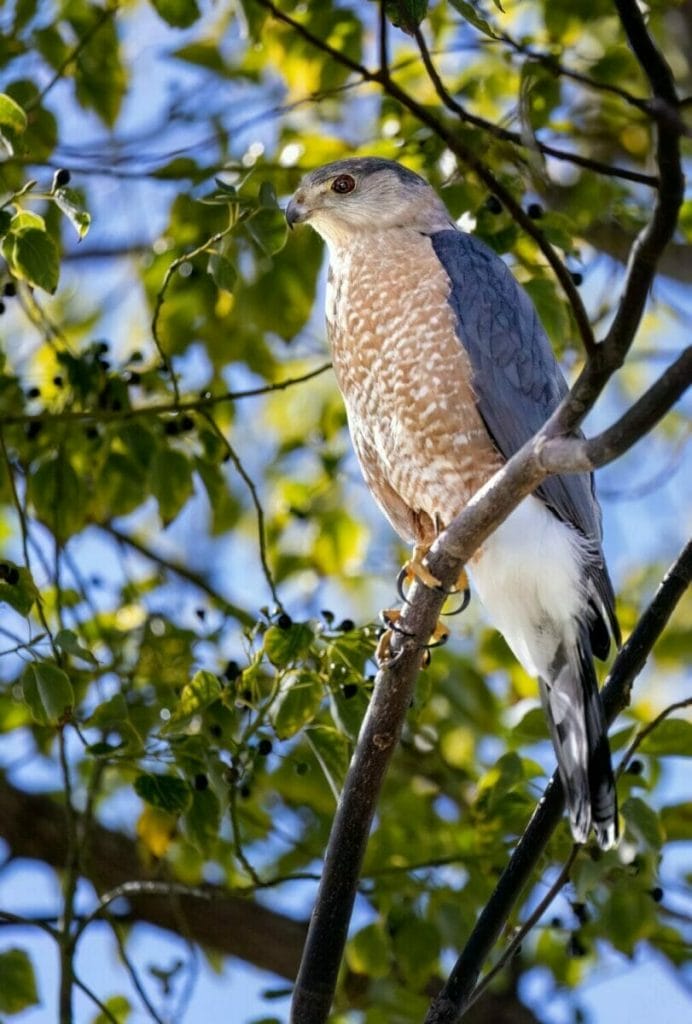
Distribution and Habitat: The Sharp-shinned Hawk is a migratory species that utilizes Georgia as a non-breeding ground. They arrive in the fall and depart for their breeding grounds in Canada during the spring. Their preferred habitat is dense forests, making them less commonly observed, especially in the southern regions of the state.
Diet and Behavior: This hawk is a specialist bird-hunter, adept at pursuing smaller avian species through dense vegetation. They employ a rapid, erratic flight pattern that makes them difficult for prey to evade. After capture, they often perch to pluck their meal before consuming it.
Red-tailed Hawk (Buteo jamaicensis)
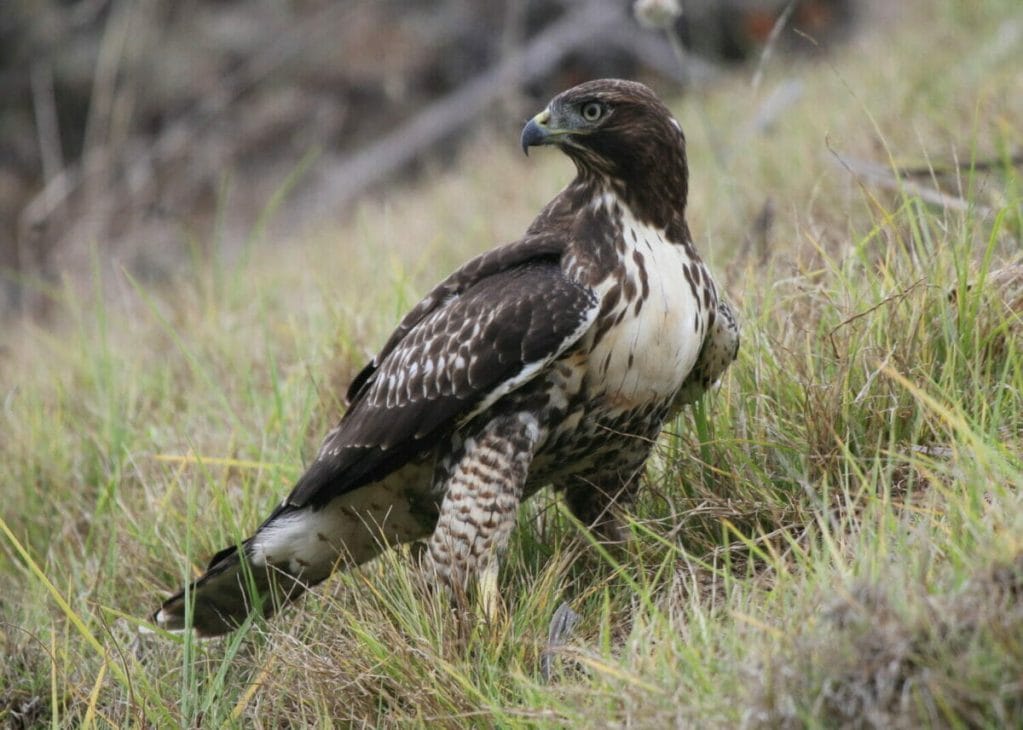
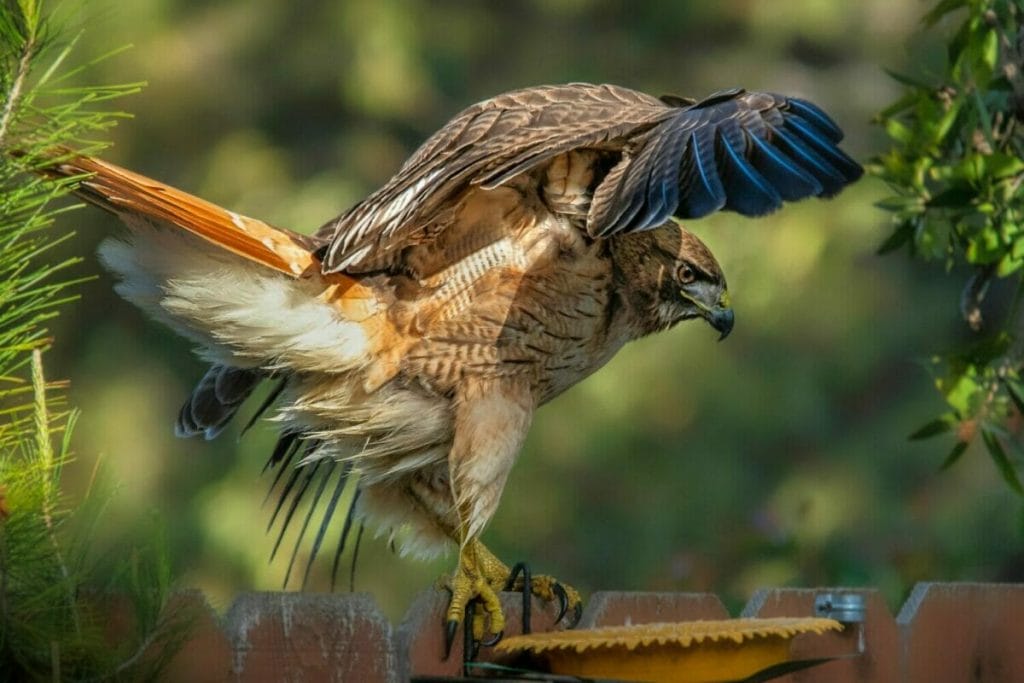
The Red-tailed Hawk is arguably the most common and widely recognized raptor in the United States, and Georgia is no exception. Its namesake red tail, particularly visible from behind, is a key identification feature for adults. While plumage can vary, individuals in Georgia typically exhibit a bright red tail, a pale underside with minimal red and brown markings, and a characteristic dark belly band. Males are smaller than females. They are substantial birds, with lengths ranging from 17.7 to 25.6 inches, wingspans from 44.9 to 52.4 inches, and weights between 24.3 to 51.5 ounces.
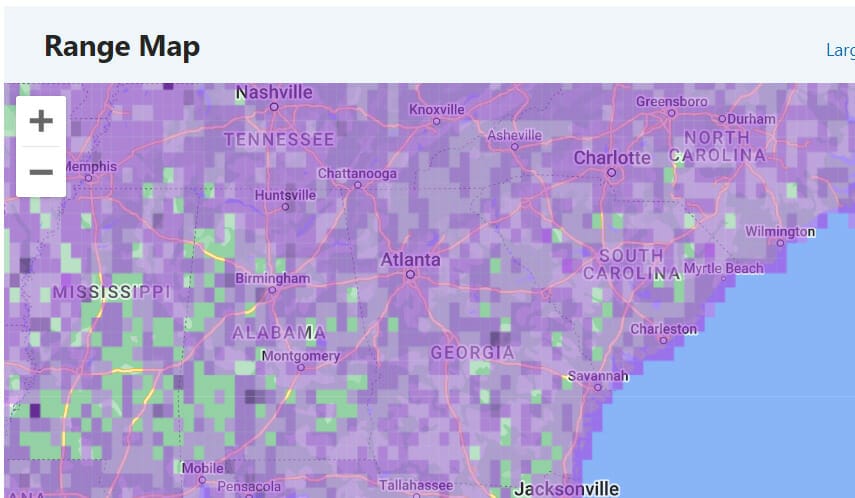
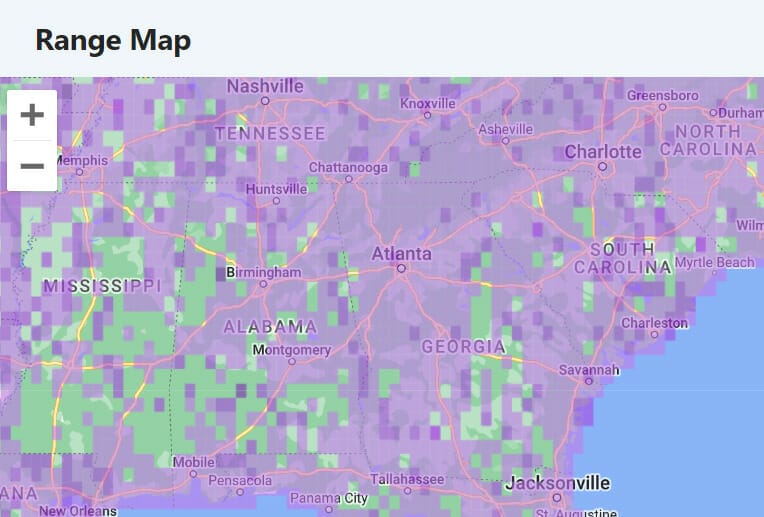
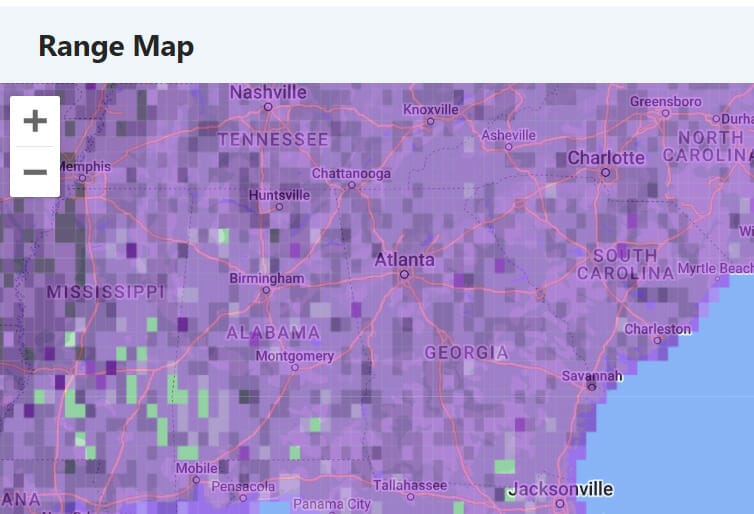
Distribution and Habitat: The Red-tailed Hawk is a year-round resident found across virtually all of Georgia. Their adaptability allows them to thrive in a wide array of habitats, including open woodlands, forests, deserts, grasslands, and even urban and suburban areas. Their presence is indicated by their widespread distribution across the state’s eBird range map.
Diet and Behavior: Red-tailed Hawks are generalist predators, with a diet that includes rodents (especially mice and voles), rabbits, snakes, and ground squirrels. Their hunting strategy often involves soaring at high altitudes to spot prey before diving down. Their distinctive, shrill cry is famously used in films to evoke a sense of wilderness or suspense.
Broad-winged Hawk (Buteo platypterus)
The Broad-winged Hawk is a summer visitor to Georgia, breeding in the state during the warmer months before migrating to Central and South America for the winter. This hawk is characterized by its short body and broad wings. Adults are typically brown above with barred undersides. The wings display rufous coloration near the shoulders and distinct black and white banding on the wingtips and tail. Their size is moderate, with a length of 13.4 to 17.3 inches, a wingspan of 31.9 to 39.4 inches, and a weight of 9.3 to 19.8 ounces.
Distribution and Habitat: Broad-winged Hawks prefer mature deciduous and mixed forests for breeding. They are most commonly found in the forested areas of Georgia during the spring and summer.
Diet and Behavior: Their diet consists mainly of small mammals, amphibians, and insects. A remarkable aspect of their behavior is their migratory gatherings. During migration, they form large flocks known as "kettles," circling together in the sky, creating a spectacular natural phenomenon.
Short-tailed Hawk (Buteo brachyurus)
The Short-tailed Hawk is a relatively rare visitor to Georgia, with a more established population in south Florida. Sightings in Georgia are infrequent, with fewer than 15 reported to eBird. This hawk is identifiable by dark patches around its face framing a white throat. It exists in two morphs: a dark morph with a predominantly dark body and white underwings, and a pale morph that is white underneath with black barring. Their size falls between 15.3 to 17.3 inches in length, with a wingspan of 32.7 to 40.5 inches, and a weight of 13.6 to 16.9 ounces.
Distribution and Habitat: While the main breeding population is in south Florida, Short-tailed Hawks breed further north, and Georgia lies within their extended range. They are typically found in forested areas, particularly near wetlands or pine forests.
Interesting Fact: The dark morph is more prevalent in Florida, suggesting this is the likely form observed in Georgia.
Northern Goshawk (Accipiter gentilis)
The Northern Goshawk is a large and powerful hawk, though its presence in Georgia is exceptionally rare, with only three eBird reports. Its range extends to the northwestern border of the state. Adults are distinguished by their dark gray backs and intricately marked pale undersides, coupled with a striking red eye and a prominent white brow. Juvenile birds exhibit varied brown plumage. They are large for accipiters, measuring between 20.9 to 24.0 inches in length, with a wingspan of 40.5 to 41.1 inches, and weighing between 22.3 to 48.1 ounces.
Distribution and Habitat: Their preferred habitat is mature, dense forests. While their primary range is further north, the northwestern parts of Georgia may occasionally host these magnificent birds.
Interesting Fact: Northern Goshawks are known to establish multiple nesting sites within their territory, sometimes up to eight, and may alternate between them or reuse successful nests year after year.
Northern Harrier (Circus hudsonius)
The Northern Harrier, belonging to the Circus genus, is a bird of striking elegance. It is characterized by its gray upperparts, distinctive facial markings, and prominent barring under its wings, which accentuates its long wings. The tail is also notably long. Georgia falls within the non-breeding range of the Northern Harrier, meaning they are present in the state during the spring, autumn, and winter months. They typically measure between 18.1 to 19.7 inches in length, with a wingspan of 40.2 to 46.5 inches, and weigh between 10.6 to 26.5 ounces.
Distribution and Habitat: Northern Harriers favor open habitats such as grasslands, open fields, and marshes, where they hunt for small mammals. Their distribution in Georgia is concentrated in areas with these suitable foraging grounds.
Interesting Fact: This species hunts by flying low over open terrain, using its exceptional hearing to locate prey hidden beneath vegetation.
Hawks vs. Falcons: A Key Distinction
A common point of confusion in identifying birds of prey is distinguishing between hawks and falcons. While both are raptors, they belong to different families and possess distinct characteristics. Falcons, part of the family Falconidae, possess a distinct notch on the top of their bill, known as a "tomial tooth," which aids in killing prey. Hawks, belonging to the Accipitridae family, lack this feature. Furthermore, falcons tend to be smaller, more slender, and possess a more agile, direct flight pattern compared to the generally larger and more varied flight styles of hawks.

Conclusion: A Rich Avian Landscape
Georgia’s varied geography supports a fascinating array of hawk species, contributing significantly to the state’s biodiversity. From the common and widespread Red-tailed Hawk to the rarer Northern Goshawk, each species plays a vital role in its ecosystem. Understanding the taxonomic classifications and identifying features of these raptors not only enhances our appreciation for the natural world but also underscores the importance of conserving the diverse habitats that allow these magnificent birds to thrive. Beyond the eight hawk species discussed, Georgia is also home to three eagle species (Bald, Golden, and Osprey) and three falcon species (Peregrine, Kestrel, and Merlin), further enriching its avian fauna and offering ample opportunities for bird enthusiasts.

