


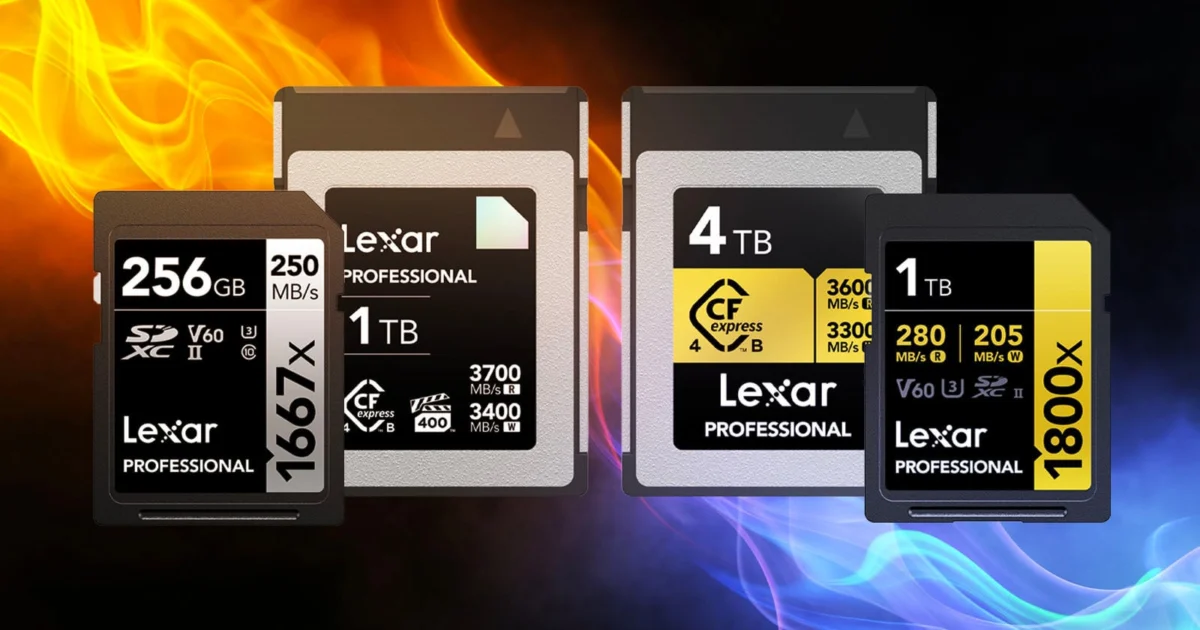
The professional imaging industry is currently witnessing an unprecedented shift in the memory storage market as Lexar, a leading manufacturer of high-performance flash memory solutions, has initiated a series of aggressive price reductions across its entire product catalog. This spring, photographers and videographers are encountering some of the most substantial discounts in recent history, characterized by a combination of reduced list prices and significant "in-cart" coupons that, in some instances, slash the cost of flagship media by nearly 50%. While seasonal promotions are common in the technology sector, the scale and depth of these specific discounts suggest a potential strategic reset in the valuation of high-capacity CFexpress 4.0, SDXC, and microSDXC storage media.
A Significant Market Correction in High-Capacity Storage
For several years, the cost of professional-grade storage—particularly the newer CFexpress 4.0 standard—has remained a significant barrier to entry for many creators. The high cost of NAND flash production and the specialized controllers required for PCIe Gen 4 speeds kept 2TB and 4TB cards priced in the thousands of dollars. However, the current Lexar promotion has effectively disrupted this pricing structure.
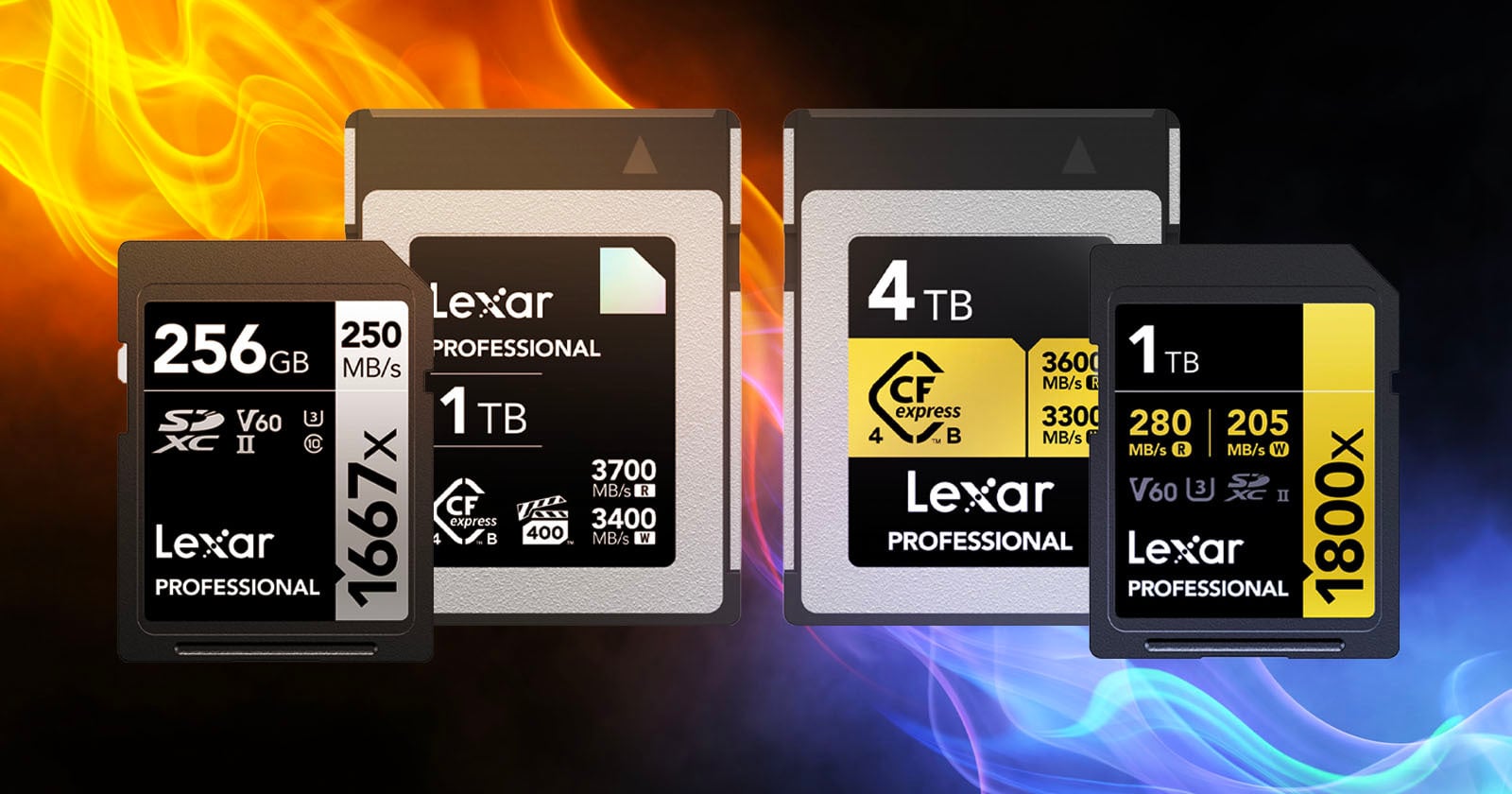
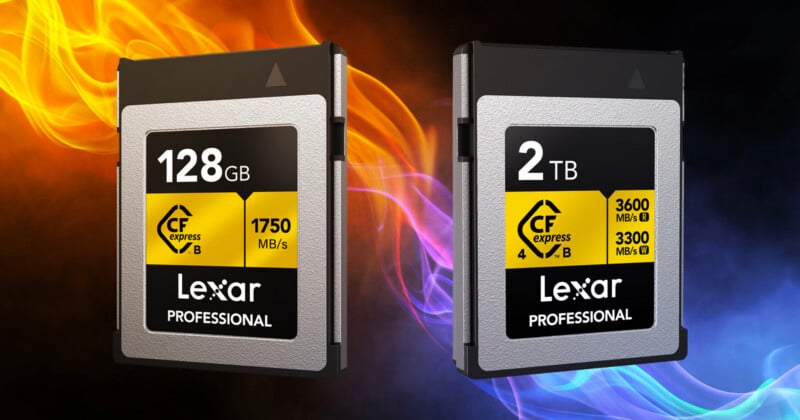
The most notable discount involves the Lexar 4TB Professional Gold CFexpress 4.0 Type B Memory Card. Originally positioned as a premium investment for high-end cinema workflows, the card carries a list price of $1,950. During this promotion, an automatic $950 coupon applied at checkout brings the final price down to $1,000. This represents a landmark moment for the industry, as it brings the cost-per-gigabyte for 4.0-spec flagship storage to just $0.25, a figure previously reserved for much slower, lower-tier media.
Industry analysts suggest that such aggressive pricing may be a response to a stabilization in the global supply chain for flash memory or a strategic move to clear inventory ahead of a new product cycle. Regardless of the internal motivation, the immediate impact is a rare window of opportunity for professionals to equip themselves with massive storage volumes that were financially out of reach only months ago.
Detailed Chronology of the Lexar Spring Promotion
The rollout of these discounts began in early May 2026, appearing first on major retail platforms such as B&H Photo and Amazon. Unlike traditional sales that feature a static "sale price," Lexar has utilized a dual-layered discount strategy. This involves a moderate reduction in the Manufacturer’s Suggested Retail Price (MSRP) combined with high-value digital coupons that must be "clipped" or are automatically applied during the final stages of the checkout process.
This tiered approach has created a dynamic pricing environment:
- Phase One: Initial price drops on legacy UHS-II SD cards and CFexpress Type B 2.0 cards.
- Phase Two: The introduction of massive coupons for the Diamond and Gold CFexpress 4.0 series.
- Phase Three: Expansion of the promotion to include CFexpress Type A cards, which are essential for the Sony Alpha and FX camera ecosystems.
CFexpress Type B: Flagship Performance for Less
The CFexpress Type B format has become the de facto standard for professional mirrorless and cinema cameras, including the Nikon Z9, Canon EOS R3, and various Blackmagic Design models. Lexar’s Gold and Diamond series represent the pinnacle of this format, utilizing the CFexpress 4.0 standard to achieve read speeds up to 3,600 MB/s and write speeds up to 3,300 MB/s.
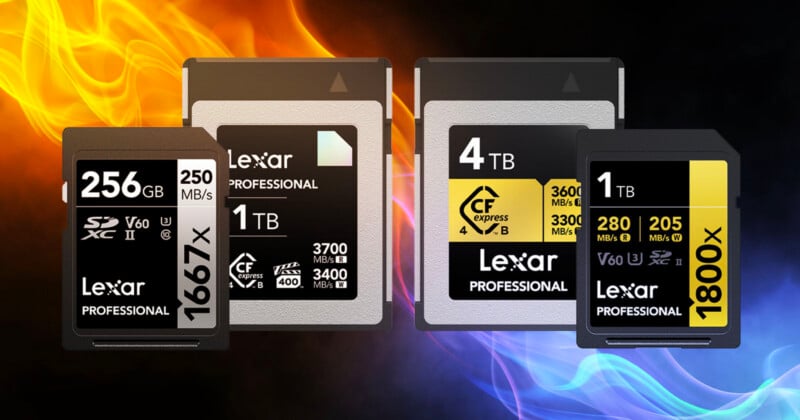
Beyond the flagship 4TB model, other significant discounts in the Type B category include:
- 2TB Professional Gold (Single and 2-Pack): The single 2TB card, listed at $1,150, now features a $550 coupon, bringing the cost to $600. The 2-pack offers similar bulk savings for production houses needing redundancy.
- 1TB Professional Gold: Currently priced at $1,050, a $750 coupon reduces the final price to $300, making 1TB of high-speed storage more accessible than ever before.
- Diamond Series: The Diamond series, known for its "VPG400" rating which guarantees sustained write speeds for raw video, has seen equally dramatic cuts. The 512GB Diamond CFexpress 4.0 card has dropped from $1,050 to just $300 after a $750 coupon.
These prices are particularly significant because they overlap with the pricing of older CFexpress 2.0 cards, effectively rendering the previous generation of technology obsolete from a value perspective.
The Type A Market: A Relief for Sony Users
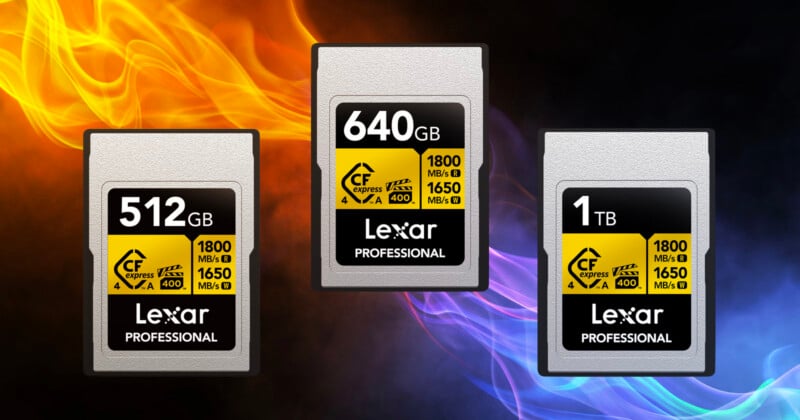
For years, users of Sony’s mirrorless systems have paid a "Type A premium." Because CFexpress Type A cards are smaller and produced in lower volumes than Type B, they have historically been more expensive and offered lower capacities. Lexar’s spring promotion addresses this disparity head-on.
The Lexar 2TB Professional Gold CFexpress 4.0 Type A card—one of the highest capacity Type A cards on the market—has seen its price drop from $1,450 to $600 following an $850 coupon. For Sony A1 or A7S III shooters working in 8K or high-bitrate 4K, this allows for hours of uninterrupted recording without the need for frequent card swaps. Furthermore, the 1TB Type A card is now available for $400 after a $450 coupon, providing a high-speed alternative to traditional SD cards at a competitive price point.
Legacy Formats: SD and microSD Discounts
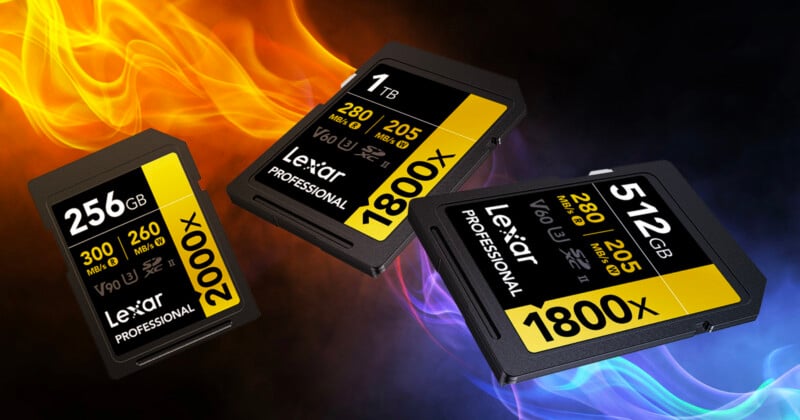
While CFexpress dominates the high-end market, the UHS-II SD format remains the workhorse for the majority of mid-range mirrorless cameras and enthusiast photographers. Lexar’s 2000x and 1800x Gold series SD cards are currently seeing discounts that make them highly attractive for backup and secondary storage.
The 512GB Professional 2000x UHS-II SDXC card, which supports the V90 video speed class, is currently priced at $400 after a $275 discount from its $675 starting price. For those who do not require V90 speeds, the 1TB 1800x Gold Series SD card has dropped to $300. Even the microSD market, often used for drones and action cameras like the DJI Mavic and GoPro Hero series, has seen the 1TB Play UHS-I card drop to $170, catering to the needs of aerial cinematographers who require vast storage for multi-day expeditions.
Analysis of the Broader Implications
The scale of these discounts suggests several possibilities for the state of the imaging industry in 2026. First, the rapid adoption of 8K video and high-resolution raw photography has forced a "capacity crisis." As file sizes balloon, the industry requires larger storage media to remain functional. By lowering the entry price for 2TB and 4TB cards, Lexar is positioning itself as the primary provider for this new era of data-heavy production.
Second, the use of coupons rather than permanent MSRP changes allows Lexar to maintain the "premium" status of its brand while still moving high volumes of product. This strategy also protects retail partners from massive devaluations of existing on-shelf inventory, as the coupon is often funded directly by the manufacturer.
Third, the timing of the sale may indicate a forthcoming hardware transition. With rumors of new camera bodies capable of even higher data throughputs, Lexar may be clearing current CFexpress 4.0 stock to make room for specialized media designed for the next generation of cinema processors.
Professional Reaction and Workflow Impact
Professional photographers and production houses have reacted with cautious optimism. In many online forums and industry circles, the consensus is that these prices represent a "buy" signal. For a production house, the ability to purchase 8TB of storage (via two 4TB cards) for $2,000 instead of $3,900 represents a significant capital expenditure saving that can be reallocated toward optics or lighting.
"Storage is the one part of the kit you never want to think about during a shoot," says an industry source. "When the price of 4TB cards drops this low, it changes the way we shoot. We move away from ‘managing’ storage and back to ‘capturing’ the moment. You can let the camera roll in 8K Raw without checking the remaining minutes every five minutes."
Conclusion: A Temporary Opportunity
As of mid-May 2026, Lexar has not provided an official statement regarding the duration of these coupons or the specific reason for the price collapse. However, history suggests that discounts of this magnitude—approaching 50% on flagship items—are rarely permanent. They often serve as a short-term catalyst to capture market share or to align with specific fiscal quarter goals.
For creators currently operating on the edge of their storage capacities, or for those still utilizing slower UHS-I or CFexpress 2.0 media, the current market conditions offer a rare chance to modernize their digital workflow. With the transition to CFexpress 4.0 now fully underway and prices temporarily bottoming out, the "Spring Reset" of 2026 may be remembered as the moment high-capacity professional storage finally became accessible to the mainstream creative market.

