


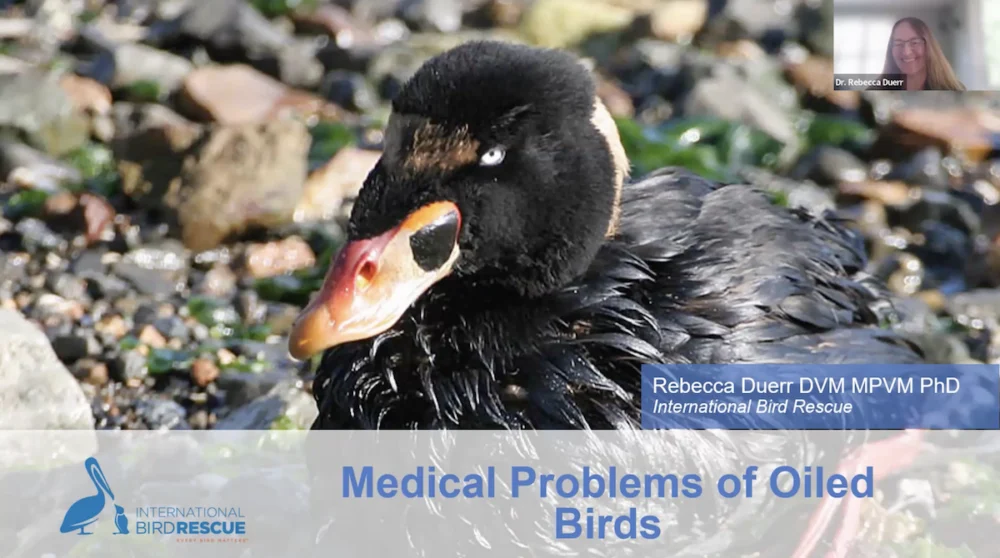
On April 21, 2026, the Kansas State University (KSU) College of Veterinary Medicine Exotics Club hosted a specialized virtual clinical presentation focused on the complex medical management of oiled wildlife. The session, led by Dr. Rebecca Duerr, DVM, MPVM, PhD, served as a cornerstone event for the Lafeber Company Student Program, an initiative designed to bridge the gap between traditional veterinary curricula and the highly specialized demands of wildlife and exotic medicine. Dr. Duerr, a renowned expert in avian medicine and the clinical director of specialized wildlife rehabilitation efforts, provided an exhaustive overview of the physiological, toxicological, and procedural challenges inherent in treating birds exposed to petroleum products.
The presentation arrived at a critical juncture in environmental medicine, as global maritime traffic and offshore extraction continue to pose significant risks to marine and aquatic avian populations. The event aimed to equip the next generation of veterinarians with the diagnostic and therapeutic frameworks necessary to respond to both localized spills and large-scale environmental disasters.
The Pathophysiology of Avian Petroleum Exposure
Dr. Duerr’s presentation began by dissecting the multi-faceted impact of oil on avian physiology. When a bird comes into contact with oil, the primary and most immediate threat is the loss of feather integrity. Avian feathers are complex structures held together by a microscopic system of barbs and barbules. In a healthy bird, these structures create a waterproof and airtight barrier that provides essential buoyancy and thermoregulation.
Petroleum products act as a solvent, destroying the feather’s alignment and allowing water to penetrate the downy insulating layer. This leads to rapid heat loss and, in many cases, hypothermia, even in relatively temperate environments. As birds lose buoyancy, they are forced to swim harder to stay afloat or must leave the water entirely to avoid drowning. Once on land, they are susceptible to predation, starvation, and dehydration.
Beyond the external mechanical failures, the presentation highlighted the severe internal toxicological effects. Birds instinctively attempt to clean their feathers through preening, leading to the ingestion of polycyclic aromatic hydrocarbons (PAHs) and other toxic components of crude or refined oil. Dr. Duerr detailed how these substances lead to gastrointestinal irritation, hemorrhagic enteritis, and severe organ dysfunction. Specifically, the ingestion of oil often results in hemolytic anemia—characterized by the formation of Heinz bodies—and significant damage to the liver and kidneys.
The Stabilization and Triage Timeline
A central theme of the KSU lecture was the critical importance of the "stabilization period." Dr. Duerr emphasized that attempting to wash an oiled bird immediately upon arrival is often a fatal mistake. A bird arriving at a rehabilitation center is typically in a state of decompensated shock, suffering from a combination of cold stress, malnutrition, and acute toxicity.
The established protocol presented involves a 48-to-72-hour stabilization window. During this time, clinical efforts are focused on:
- Thermoregulation: Placing the bird in a temperature-controlled environment to reverse hypothermia.
- Fluid Therapy: Administering oral or intravenous fluids to combat dehydration and flush toxins from the renal system.
- Nutritional Support: Providing high-calorie, easily digestible nutrition to replenish depleted energy reserves.
- Medical Diagnostics: Conducting blood work to assess packed cell volume (PCV), total protein (TP), and blood glucose levels.
Only once a bird has reached a baseline of metabolic stability is it considered a candidate for the highly stressful decontamination process.
Comparative Approaches to Decontamination: Manual Restraint vs. Sedation
One of the most significant portions of the presentation involved an analysis of modern decontamination techniques. Dr. Duerr referenced recent peer-reviewed research, specifically the 2024 study by Kelley et al., published in the Journal of Avian Medicine and Surgery. This research compared the outcomes of wild birds undergoing decontamination via manual restraint versus those assisted by pharmacological sedation.
Historically, the washing process—which involves repeated scrubbing in basins of warm, softened water mixed with specific surfactants—has been performed on conscious birds. This process can take anywhere from 30 to 60 minutes and is profoundly stressful, often causing spikes in cortisol and putting immense strain on the cardiovascular system.
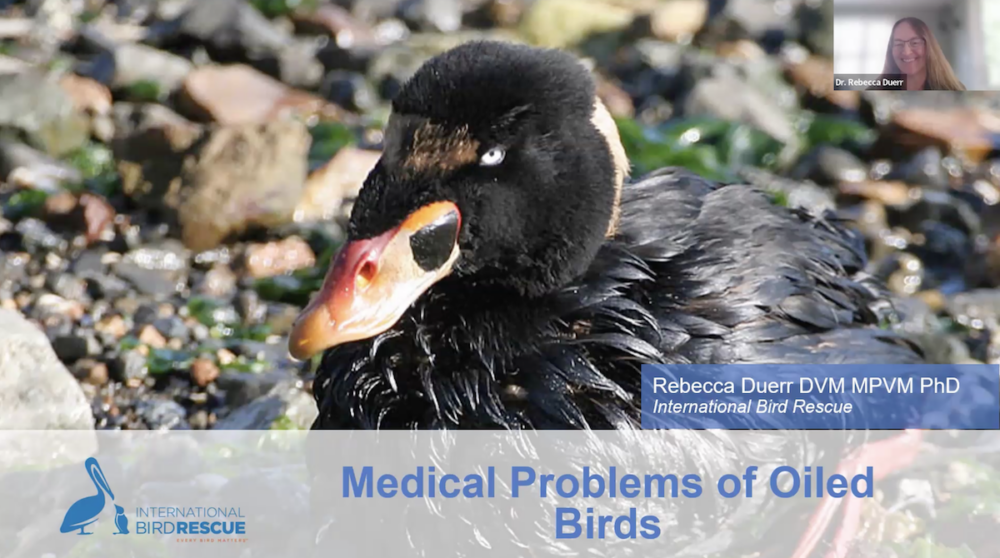
The data presented from the Kelley et al. study suggests that the use of sedation can mitigate these stressors. By using controlled sedative protocols, clinicians can reduce the bird’s struggle, thereby decreasing the risk of capture myopathy and physical injury to both the patient and the handler. Dr. Duerr noted that while sedation requires careful monitoring by trained veterinary staff, the preliminary data indicates improved post-wash recovery times and higher successful release rates for certain species.
The Decontamination and Conditioning Process
The actual washing procedure is a meticulously orchestrated event. Dr. Duerr described the "assembly line" approach used in professional wildlife centers. This involves several stages of soapy water basins followed by an intensive rinsing process. The goal is not just to remove the visible oil, but to ensure that every trace of surfactant (soap) is also removed. Even a microscopic amount of soap residue can prevent feathers from "zipping" back together, leaving the bird just as vulnerable as when it was oiled.
Following the wash, birds are moved to drying pens equipped with specialized pet dryers. The final stage of rehabilitation is the conditioning phase. Birds are placed in outdoor pools where they must demonstrate that they can remain afloat and waterproof for extended periods. During this phase, they regain the muscle mass lost during the initial trauma and ensure their plumage is fully functional.
Broader Implications for Wildlife Conservation and Veterinary Education
The presentation to the KSU Exotics Club underscores a broader shift in veterinary education toward disaster preparedness and conservation medicine. The Lafeber Company Student Program, by facilitating these lectures, recognizes that veterinarians are increasingly on the front lines of environmental crises.
The implications of Dr. Duerr’s work extend beyond the individual bird. Large-scale oil spills, such as the historic Deepwater Horizon or the Exxon Valdez disasters, have shown that the survival of entire local populations can depend on the efficiency of veterinary intervention. The protocols discussed—ranging from the biochemistry of PAH toxicity to the ergonomics of the wash station—are part of a global effort to standardize wildlife care.
Furthermore, the data-driven approach emphasized by Dr. Duerr highlights the evolution of the field. Wildlife rehabilitation is no longer viewed merely as an act of humanitarian aid but as a rigorous scientific discipline. The integration of pharmacokinetic studies and stress-hormone analysis into rehabilitation protocols represents the professionalization of a field that was once largely anecdotal.
Analysis of Environmental and Clinical Challenges
The lecture concluded with a fact-based analysis of the ongoing challenges in avian oil spill response. One of the primary hurdles remains the "unknown" variables of different petroleum products. For instance, light refined oils may be more acutely toxic and volatile, posing respiratory risks to both birds and humans, while heavy crude oils pose more significant mechanical and thermoregulatory threats.
Dr. Duerr also addressed the ethical and logistical complexities of release. A bird is only considered "rehabilitated" when it meets strict criteria: normal blood parameters, waterproof plumage, appropriate weight, and the ability to hunt or forage. The release must also be timed with migratory patterns and the availability of non-impacted habitats.
Conclusion and Future Outlook
The virtual session for the Kansas State University College of Veterinary Medicine provided a comprehensive roadmap for the medical management of one of the most challenging patient presentations in avian medicine. Through the expert lens of Dr. Rebecca Duerr, students were introduced to a world where clinical medicine intersects with environmental advocacy and disaster response.
As the veterinary community moves forward, the insights gained from this presentation and the supporting research by Kelley et al. will likely influence standard operating procedures in wildlife centers globally. The shift toward incorporating sedation into decontamination protocols and the emphasis on rigorous pre-wash stabilization are evidence of a maturing medical field dedicated to improving the welfare and survival of animals caught in the crosshairs of industrial accidents.
The Lafeber Company Student Program continues to play a vital role in this evolution, ensuring that when the next environmental emergency occurs, the veterinary community is not only ready to respond but is equipped with the most advanced, evidence-based protocols available. Dr. Duerr’s contribution serves as both a technical manual for current practitioners and an inspiration for the students who will lead the field in the decades to come.

