


Woodpeckers, with their astonishing ability to peck up to 20 times per second and achieve head speeds exceeding 15 miles per hour, are among nature’s most captivating aerial drummers. This unique characteristic sets them apart from most other avian species, making them frequent subjects of photography and videography. For enthusiasts in Minnesota, the state offers a rich tapestry of eight distinct woodpecker species, each with its own fascinating adaptations and ecological roles. Understanding where and how to observe these birds can unlock a deeper appreciation for their presence in woodlands, backyards, and beyond.
The Smallest and Most Common: The Downy Woodpecker
The Downy Woodpecker, Dryobates pubescens, holds the distinction of being the smallest woodpecker in North America and a ubiquitous presence across the United States, including Minnesota. These diminutive birds weigh less than an ounce, making them even smaller than many robins. This compact size is a significant advantage, allowing them to forage in tight crevices and on thinner branches inaccessible to larger woodpeckers. Their diet primarily consists of small insects, such as ants, which they diligently seek by meticulously probing tree bark.

Visually, Downy Woodpeckers are characterized by a striking black and white pattern on their wings and crowns. A distinctive red patch adorns the back of the male’s head, a feature absent in females. The rest of their plumage is predominantly white. In Minnesota, they are a common sight wherever trees are present, readily visiting backyards equipped with bird feeders. Their small stature often leads them to associate with mixed-species flocks, particularly with other small birds like chickadees, for enhanced protection against predators. Their vocalizations are a delightful series of quick chirps, often accompanied by light, rapid drumming. Due to their size, their pecking is not as forceful, making them a less noisy presence compared to their larger relatives.
The Larger Cousin: The Hairy Woodpecker
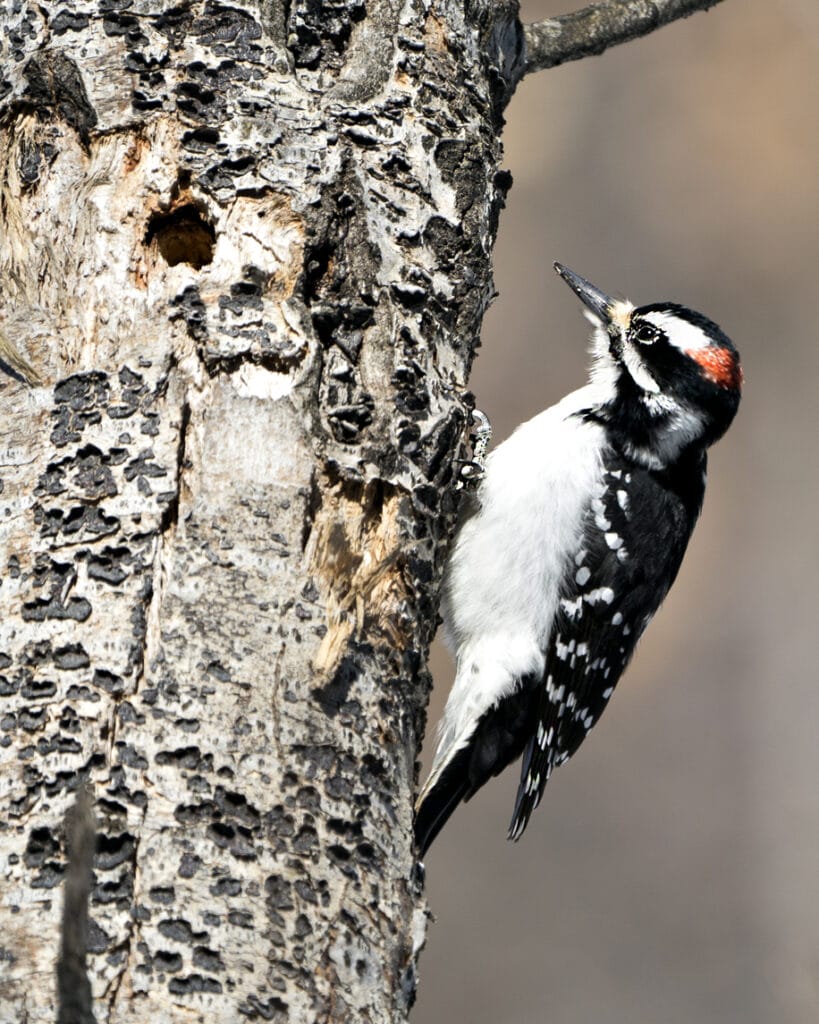
The Hairy Woodpecker, Dryobates villosus, can be aptly described as the Downy Woodpecker’s more robust counterpart. These birds are approximately 40% larger in body size and nearly triple the weight of their smaller cousins. Like the Downy Woodpecker, the Hairy Woodpecker is a year-round resident in Minnesota. However, their larger size and preference for mature forests mean they are encountered less frequently than Downy Woodpeckers, especially in urbanized areas. They tend to favor larger trees and are more often found in expansive woodlands.
The Hairy Woodpecker shares a remarkably similar color pattern with the Downy Woodpecker, including the characteristic red patch on the male’s head. Distinguishing between the two can be challenging at a distance, relying on more subtle clues. Beyond size, Hairy Woodpeckers possess noticeably longer and sharper bills. Their posture also differs; they tend to hold their backs straighter, giving them a more upright, soldier-like appearance. Their vocalizations and drumming patterns are also similar to the Downy Woodpecker but are significantly louder and more resonant due to their larger size. Mastering the differentiation between these two closely related species requires practice and keen observation.
A Denizen of the North Woods: The Black-backed Woodpecker
The Black-backed Woodpecker, Picoides arcticus, shares a similar size with the Hairy Woodpecker but is considerably less common across the United States, with its primary range extending into Canada. In Minnesota, these striking birds are year-round residents, predominantly found in the northern regions, closer to the Canadian border. Their plumage is overwhelmingly black, accented by white patches on their wings and belly. A distinctive black crown is marked by two white lines near the bill, resembling a mustache.
A key identifying feature, particularly for distinguishing sexes, is a yellow patch on the forehead of the male. Juvenile Black-backed Woodpeckers, of both sexes, also exhibit this yellow patch, which typically disappears in females upon reaching adulthood. These woodpeckers possess a remarkable camouflage ability, blending seamlessly with the dark, often charred bark of trees in burned forests. This preference for recently burned areas is linked to their primary food source: wood-boring beetles. They meticulously drill test holes to locate beetle larvae within the wood, then employ their long, specialized tongues to extract their prey. Their calls are notably quiet, consisting of infrequent, single chirps separated by pauses.
The Sap Drinker: The Yellow-bellied Sapsucker
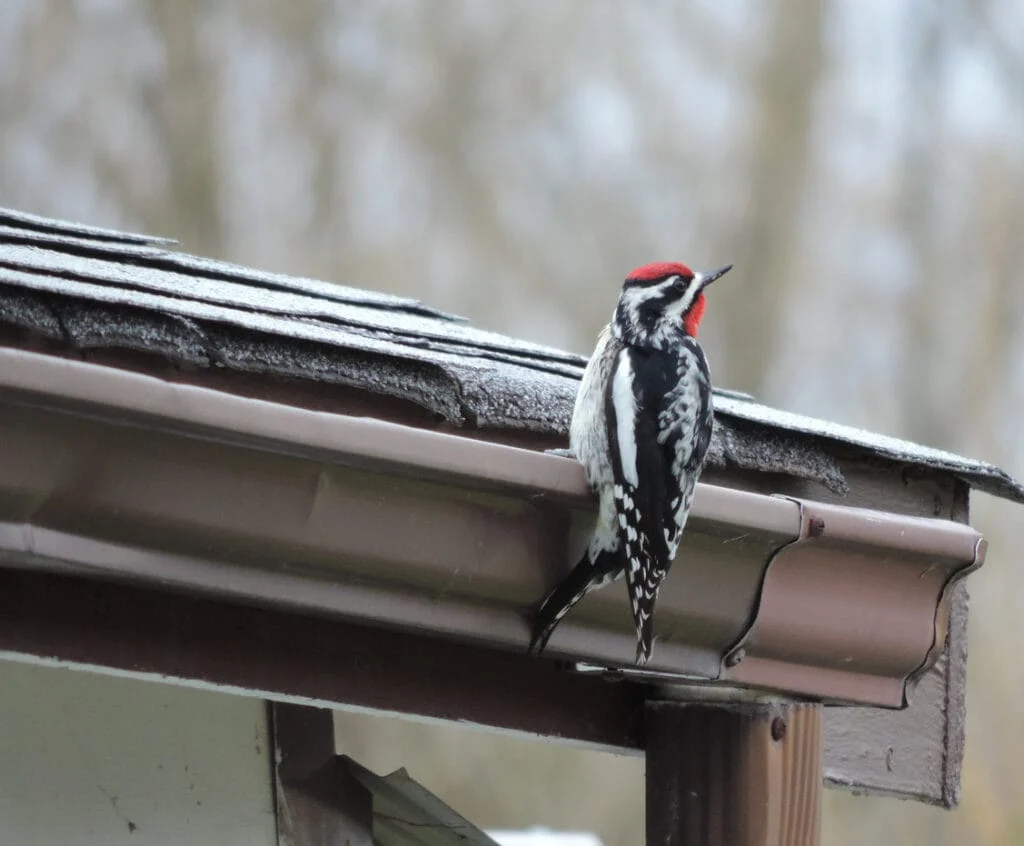
The Yellow-bellied Sapsucker, Sphyrapicus varius, is a beautiful, robin-sized woodpecker that breeds in the northern reaches of Minnesota. While they migrate south during the colder months, the southern parts of the state serve as a wintering ground, making them present for most of the year. Their plumage is a captivating blend of black and white, without a rigidly defined pattern. Both males and females sport a red forehead, but only the males display a vibrant red throat. The species earns its name from a subtle yellow wash on its chest, a characteristic visible upon close inspection.

The "sapsucker" part of their name comes from their unique feeding behavior. They meticulously drill rows of small holes, known as "sap wells," into tree bark to drink the nutrient-rich sap. While insects and fruits also supplement their diet, tree sap is their primary sustenance. This habit inadvertently benefits other species, such as Ruby-throated Hummingbirds, which often drink from the wells dug by sapsuckers, being unable to create them themselves. Their vocalizations are distinctive, often described as a repetitive "pew pew pew" sound, delivered without a specific pattern until the bird decides to cease.
The Ground Forager: The Northern Flicker
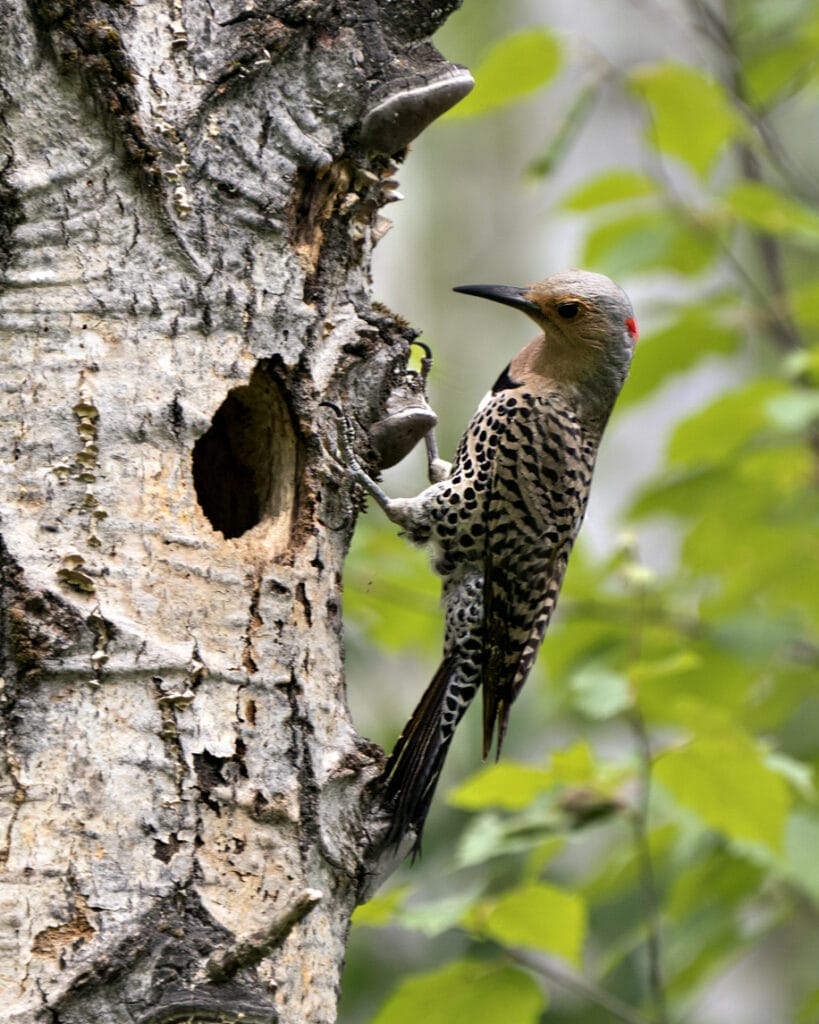
The Northern Flicker, Colaptes auratus, is a relatively large woodpecker, slightly smaller than a crow, and is a common sight in Minnesota throughout the year. They inhabit a variety of environments, including woodlands, backyards, and parks. Their plumage is a striking combination of gray, speckled with black dots, and adorned with a red patch on the nape and a prominent black crescent on the chest. Males are further distinguished by a red cheek patch, while females possess a black cheek patch.
A unique aspect of the Northern Flicker’s behavior is its ground foraging. They spend a significant portion of their time searching for food on the ground, primarily ants and beetle larvae, which sets them apart from many other woodpecker species. This habit has sometimes led to them being inadvertently startled by humans. Northern Flickers are also known for their rapid drumming, particularly during the mating season. To attract a mate, they often intensify their drumming, sometimes on resonant surfaces like metal, creating a sound described as "machine-gun drumming." This competitive drumming can be quite loud, especially in urban or suburban settings where they have adapted to coexist with human infrastructure.

The "Flying Checkerboard": The Red-headed Woodpecker
The Red-headed Woodpecker, Melanerpes erythrocephalus, is readily identifiable from a distance due to its striking crimson crown. This vibrant head plumage, combined with a boldly patterned blue and white body, has earned them the nickname "flying checkerboard." Their calls are equally distinctive, often starting with a loud, harsh sound that can be startling, followed by softer chirps.
In Minnesota, Red-headed Woodpeckers are typically observed during the breeding season, from spring through summer. However, in the southeastern part of the state, they can be found year-round. Juvenile Red-headed Woodpeckers initially display dark brown feathers on their heads and bodies, which gradually mature into the characteristic adult colors. Like many woodpeckers, they are bark foragers, but their omnivorous diet includes fruits, seeds, insects, and occasionally the eggs of other birds, making them a versatile feeder.
The Elusive Specialist: The American Three-toed Woodpecker
The American Three-toed Woodpecker, Picoides dorsalis, is one of the rarer woodpecker species to encounter in Minnesota and across the United States. They are primarily found in the northeastern regions of the state, a testament to their specialized habitat requirements. As their name suggests, these woodpeckers possess only three toes instead of the typical four found on most zygodactyl birds. This unique adaptation allows them to lean back slightly more while drumming, potentially imparting greater force to their pecking.

This increased pecking power is utilized to excavate into tree bark in search of their primary food source: beetles and ants. Their calls are typically a single, loud chirp, though juveniles are considerably more vocal, emitting a continuous stream of chirps until attended to. The rarity of this species underscores the importance of preserving its specific forest habitats.
The Largest of the Bunch: The Pileated Woodpecker
The Pileated Woodpecker, Dryocopus pileatus, reigns as the largest woodpecker species found in Minnesota, rivaling the size of crows. These impressive birds are present year-round, favoring woodlands, forests, and backyards that offer suitable foraging and nesting opportunities. Their plumage is predominantly black, marked by distinctive white stripes on the neck and crown. Their most striking feature is the prominent, erect crest atop their heads. Male Pileated Woodpeckers can be identified by a red patch on their cheeks.
While not exceptionally rare, their numbers have been impacted by historical forest removal. However, their presence is unmistakable due to their loud, resonant calls, often described as a series of "wak wak wak wak" sounds. The speed and intensity of these calls can indicate the bird’s level of alertness or defensiveness, with faster and louder vocalizations suggesting agitation.
Coexistence and Conservation
The woodpeckers of Minnesota demonstrate remarkable adaptability, coexisting with human populations while retaining their wild nature. While offering supplementary food and water can be beneficial, it is crucial to remember that these birds are not domesticated and should not be captured or kept. Their presence enriches the state’s biodiversity, and observing them in their natural habitat offers a window into the intricate ecological processes that sustain our natural world.
Frequently Asked Questions:
-
What is the most common woodpecker in Minnesota?
The Downy Woodpecker and the Northern Flicker are among the most frequently observed woodpecker species in Minnesota. Their widespread distribution and adaptability to various habitats contribute to their commonality.
-
Where can I find more information about local woodpeckers in Minnesota?
For up-to-date information on woodpecker sightings and distributions in Minnesota, resources like eBird are invaluable. This platform allows users to search for recent sightings, specific species, or bird activity within particular geographic areas, providing a dynamic snapshot of avian presence.

