


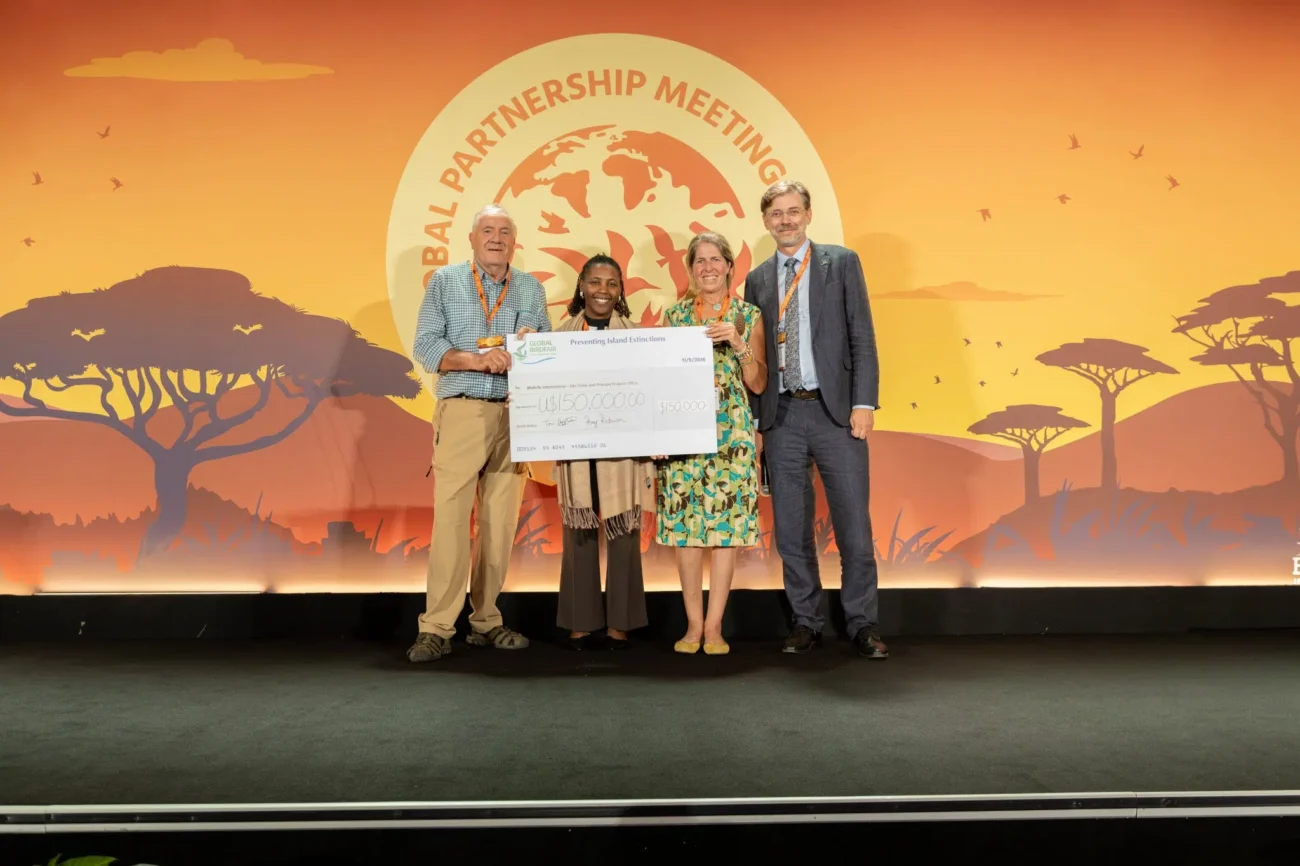
In a significant boost for global biodiversity efforts, the Global Birdfair has announced a donation of US$150,000 to support an urgent conservation initiative in the West African nation of Sao Tome and Principe. The funding is specifically earmarked for the protection of three bird species that are found nowhere else on Earth: the Dwarf Ibis, the Sao Tome Grosbeak, and Newton’s Fiscal. These species, all classified as Critically Endangered, occupy some of the most fragile and isolated forest habitats in the Gulf of Guinea. By bridging the gap between rigorous scientific research and traditional local knowledge, the BirdLife International-led program aims to implement sustainable interventions to reverse the decline of these rare birds before they face total extinction.
The Fragile Ecology of the Gulf of Guinea
The islands of Sao Tome and Principe represent a "living laboratory" of evolution. Due to their extreme geographic isolation, these islands have developed a unique biological identity, characterized by high levels of endemism. However, this same isolation makes the local fauna exceptionally susceptible to environmental shifts. The encroachment of agricultural expansion, coupled with the legacy of historical timber extraction and the introduction of invasive mammalian species, has placed these avian populations under immense, compounding pressure.
The species in focus are among the rarest on the planet. The Dwarf Ibis, a secretive, forest-dwelling bird, is estimated to have a population of fewer than 2,000 individuals. More precarious is the status of the Sao Tome Grosbeak, which was considered extinct for over a century until a remarkable rediscovery in 1991; current estimates suggest that fewer than 250 mature individuals remain. Similarly, Newton’s Fiscal, a distinctive black-and-white passerine, is confined to the island’s high-altitude forest ridges, with a population believed to be under 250 birds. For these species, the loss of even a few hectares of habitat or a localized hunting event can have catastrophic consequences for the long-term viability of the population.
A Chronology of Conservation Efforts
The current funding initiative builds upon a foundation of research and community engagement that has been developing for nearly a decade. Since 2018, BirdLife International has been working with national authorities and local community groups to map the distribution of these species and mitigate human-wildlife conflict.

The trajectory of this conservation work can be summarized through its key milestones:
- 1991: The scientific community confirms the existence of the Sao Tome Grosbeak, ending a 100-year period of uncertainty regarding its status.
- 2018: BirdLife International initiates a formal partnership with local stakeholders to identify threats to endemic birds.
- 2022–2024: The "Agents of Change" pilot program is launched, targeting the integration of local hunters into the conservation framework.
- 2026: Global Birdfair confirms a US$150,000 grant, providing the necessary capital to transition from observational research to direct, large-scale conservation action.
Empowering the "Agents of Change"
One of the most innovative aspects of the Sao Tome program is its pivot away from traditional top-down policing of protected areas. Recognizing that the individuals most capable of protecting the forest are those who inhabit it, the program has engaged 75 local hunters to become "Agents of Change."
This transition involved a comprehensive re-education and mentorship strategy. Rather than criminalizing local reliance on forest resources, the program provided training in sustainable forest management and biodiversity monitoring. The hunters were taught to identify rare bird calls and nesting sites, effectively becoming the "eyes and ears" of the forest. This local intelligence has been instrumental in the recent, more accurate census of the Dwarf Ibis.
Furthermore, the initiative addressed the economic realities of the participants. Twenty-five hunters underwent financial literacy and business development training, allowing them to pursue alternative livelihoods that do not depend on the exploitation of wildlife. By providing technical and financial support for five successful business ventures, the program demonstrated that community-based conservation can be economically viable, effectively turning former resource extractors into dedicated guardians of the island’s ecosystem.
Analysis: Why This Funding Matters
The US$150,000 contribution from Global Birdfair serves as more than just a financial lifeline; it represents a validation of the "community-first" approach to conservation. Conservation biologists have long argued that the survival of endemic species is inextricably linked to the prosperity and education of the local human population.

From an ecological standpoint, the funding will allow for:
- Enhanced Population Surveys: Utilizing acoustic monitoring and remote sensing to track the movement and nesting success of the Grosbeak and Newton’s Fiscal.
- Legislation Reform: Strengthening the partnership between local NGOs and the government of Sao Tome and Principe to update and enforce hunting regulations.
- Invasive Species Management: Implementing measures to control populations of invasive mammals that prey on bird eggs and chicks.
The implications for global conservation are significant. If this model succeeds in stabilizing the populations of the three targeted species, it could serve as a template for other island nations facing similar crises of biodiversity loss.
Perspectives from Stakeholders
Marquinha Martins, Head of the Projects Office for Sao Tome and Principe at BirdLife International, emphasized the urgency of the situation during a recent briefing. "The isolation of these islands is a double-edged sword," Martins stated. "While it allowed for the evolution of these magnificent species, it also makes them incredibly vulnerable. This funding is not merely for research; it is for the implementation of concrete, on-the-ground actions that we hope will prevent the permanent loss of these birds from the evolutionary record."
Tim Appleton, MBE, founder of Global Birdfair, noted the complexity of the selection process. "We are inundated with requests for support from across the globe, all of which are worthy. However, we prioritized this project because it provides a holistic solution—protecting not just the birds, but the environment and the people who live within it. We are confident that this investment will yield measurable results for the biodiversity of the Gulf of Guinea."
Looking Toward the Future
The success of this endeavor will be measured by the population growth of the Dwarf Ibis, the Sao Tome Grosbeak, and Newton’s Fiscal over the coming years. By moving away from the "fortress conservation" model—which often excludes local communities—and toward a model of active stewardship, the BirdLife team in Sao Tome is attempting to rewrite the narrative of extinction.

The donation from the Global Birdfair community highlights the growing role of private, citizen-led philanthropy in global environmental governance. Thousands of visitors, exhibitors, and volunteers at the annual Birdfair event have, through their participation, contributed to a fund that will span thousands of kilometers to support a project of immense ecological importance.
As the project enters its next phase, the focus will shift toward scaling up the "Agents of Change" program and ensuring that the legislative improvements discussed by stakeholders are codified into law. For the forests of Sao Tome and Principe, this funding represents a critical, perhaps final, opportunity to secure a future for species that have defined the island’s landscape for millennia. The international conservation community remains in a state of vigilant anticipation, waiting to see if these efforts can indeed pull three of the world’s most vulnerable birds back from the brink of oblivion.

