


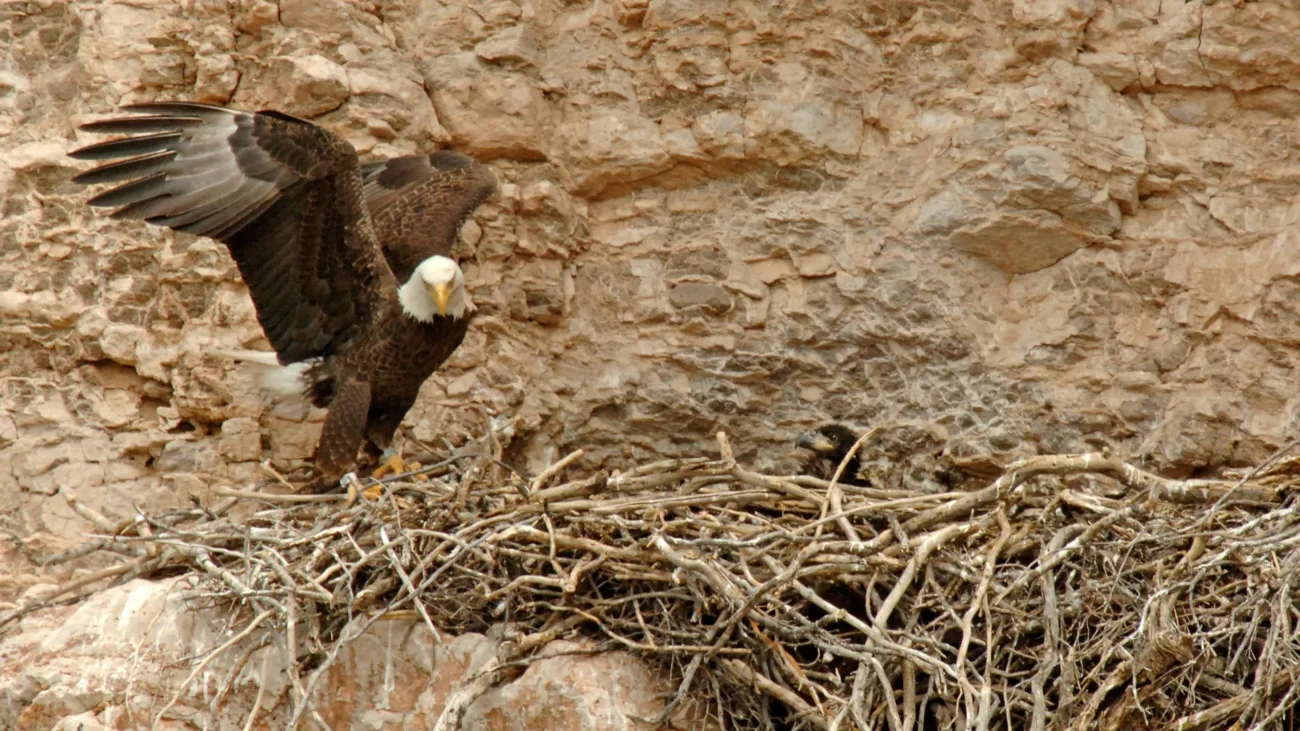
A groundbreaking study, published in the latest edition of the Journal of Raptor Research, is challenging long-held assumptions about bird migration patterns, particularly for the iconic Bald Eagle (Haliaeetus leucocephalus). Contrary to the prevailing adage that "birds of a feather flock together," and the common understanding of avian migratory behavior in temperate regions, new research reveals that Bald Eagles originating from Arizona are undertaking unexpected journeys, frequently flying north rather than south. This phenomenon, detailed in the paper titled "Northward Migrations of Nonbreeding Bald Eagles from Arizona, USA," also sheds light on the remarkable exploratory nature of these magnificent raptors, with one documented case of an eagle emigrating from Arizona to settle permanently in California, a decision that revises previous notions about the frequency of such long-distance dispersal from established populations. The findings suggest that southwestern Bald Eagles exhibit a highly exploratory disposition, a trait likely honed to efficiently locate ephemeral food resources in a dynamic environment. As climate change and landscape alterations continue to reshape ecosystems, understanding how wildlife adapts its movements becomes critically important for the development of effective conservation strategies and the safeguarding of vital travel corridors for species facing increasing vulnerability.
Challenging Migratory Norms: A New Perspective on Bald Eagle Movements
The research, conducted by an Arizona-based team between 2017 and 2023, employed advanced satellite telemetry to meticulously track the movements of 24 newly fledged Bald Eagles and two adult nonbreeding individuals. This technology allowed researchers to map their dispersal patterns both within and beyond the borders of Arizona. While breeding Bald Eagles in Arizona have generally been observed to maintain a relatively sedentary lifestyle, staying in close proximity to their established nesting territories for significant portions of the year, there has been a notable scarcity of information regarding the behavior of nonbreeding adults and juveniles. Given that survival rates can fluctuate considerably across different life stages, a comparative analysis of movement patterns and survival rates between nonbreeding and breeding eagles offers a more comprehensive understanding of the species’ overall health and the factors that shape population-level dynamics across its expansive range.
The study meticulously followed individual eagles for extended periods, with tracking devices remaining functional for up to four years within the seven-year research window. This extensive data collection has revealed a fascinating departure from the conventional understanding of avian migration. For many observers, including numerous scientists, the established narrative of North American migratory birds involves a southward journey during the nonbreeding season – typically coinciding with the northern hemisphere’s winter – in pursuit of milder climates and more reliable food sources. However, Bald Eagles in Arizona exhibit a reversed seasonal cycle; they begin their nesting activities during the winter months. Consequently, their nonbreeding season falls during the summer and autumn. Dr. Caroline D. Cappello, the lead author of the study, expressed her keen interest in this inverted timing of seasonal movement, noting that "northward migratory behavior raises interesting questions about the recent and historical pressures that shape these movement strategies." This temporal dissonance is a key factor driving the unexpected directional movements observed.
Enduring Habitats and Refined Pathways: A Glimpse into Eagle Ecology
A compelling aspect of the research is the confirmation that the tracked eagles frequented many of the same lakes and rivers that were identified as crucial stopover sites in a significant study conducted in the 1980s. This striking overlap provides robust evidence that these specific aquatic habitats have retained their importance as vital gathering points for multiple generations of Bald Eagles, underscoring their enduring ecological significance. The study not only validated the strong utilization of the Intermountain Flyway and a consistent reliance on lakes and rivers along their routes but also revealed that eagles of varying ages undertook migrations to the northern United States and southern Canada.
Dr. Javan M. Bauder, a USGS researcher and Assistant Unit Leader at the Arizona Cooperative Fish and Wildlife Research Unit and Assistant Professor at the University of Arizona, emphasized the profound implications of this observation. "Managing and conserving wildlife populations requires that we understand the movement of patterns of individuals of all age classes within those populations," he stated. This holistic approach is essential for effective conservation. Furthermore, the research team observed a discernible trend: as the eagles matured, their migratory pathways became increasingly precise and refined. A significant majority of the birds tracked for at least two years exhibited a pattern of returning to Arizona in the fall of their hatch year, following extensive summer roaming in more northerly regions. The researchers hypothesize that these young eagles may be capitalizing on seasonal abundance of food resources, such as the spawning runs of salmon, the nesting aggregations of waterfowl, or the carcasses left by large mammals. Further dedicated research will be necessary to conclusively validate these hypotheses.
Navigating Perils: The Risks Faced by Young Raptors
The life of a Bald Eagle, like that of many other raptors, is fraught with inherent dangers, particularly in landscapes increasingly shaped by human activity. One particularly poignant case within the study involved an eagle that traversed ten U.S. states and four Canadian provinces during its early life before seemingly establishing a territory in northern California, where it appeared poised to begin breeding. Tragically, at the age of four, this individual was killed by electrocution, a lamentably common cause of mortality for large birds of prey. This loss was particularly disheartening for Cappello, as it "underscored the ongoing risks these birds face," and highlighted the inherent difficulty in accurately quantifying emigration – a critical but often elusive aspect of population dynamics. The apparent decision of this eagle to emigrate and potentially breed in California represented a rare opportunity to glean insights into the frequency with which Bald Eagles hatched in Arizona disperse to distant regions.
Beyond electrocution, young raptors face a constellation of other significant threats. These include poisoning from lead and rodenticides, fatal collisions with wind turbines, the pervasive loss of critical habitat, and the pervasive uncertainty associated with a rapidly changing climate. By undertaking comprehensive studies of raptors at every stage of their lives, including the exploratory movements of young birds, scientists are better equipped to formulate evidence-based recommendations. These recommendations can identify the most crucial stopover sites requiring protection and guide the modification of infrastructure, such as electrical systems, to enhance the survival rates of eagles and other large raptors. The cumulative impact of these threats underscores the urgent need for proactive conservation measures informed by detailed ecological research.
Future Directions and Conservation Imperatives
The research team has articulated several key recommendations for future research endeavors. They emphasize the importance of investigating "route fidelity," as Cappello noted, "if consistent patterns exist it could help focus conservation efforts on specific, high-use areas along their migratory route." Understanding whether these migratory pathways are ingrained or fluid is crucial for targeted conservation interventions. Furthermore, the researchers highlight the imperative of comparing the migratory behaviors of these Arizona Bald Eagles with those of other wildlife populations that exhibit northward migration from the southern extents of their ranges. Such comparative studies will be instrumental in a more profound understanding of the trade-offs, costs, and benefits inherent in adopting a northward migration strategy, offering valuable insights into the adaptive plasticity of species in response to environmental pressures.
The implications of this study extend beyond the immediate understanding of Bald Eagle movements. It serves as a powerful reminder of the dynamic nature of wildlife behavior and the need for continuous research to inform conservation efforts. As climate change continues to alter habitats and food availability, species are likely to exhibit increasingly novel and adaptive strategies for survival. The exploratory nature of these Arizona Bald Eagles, their willingness to venture north in search of sustenance, and their ability to refine their migratory routes over time, are all testaments to their resilience and adaptability. However, the threats they face underscore the precariousness of their existence.
The data collected provides a vital baseline for future monitoring and conservation planning. By identifying key stopover sites and understanding the factors that influence migratory success, conservationists can prioritize resources and implement targeted interventions. For instance, advocating for bird-friendly electrical infrastructure, mitigating the use of harmful pesticides, and protecting critical foraging grounds are all actionable steps that can be informed by this research. The study’s findings on emigration also have significant implications for population modeling and genetic diversity studies. Understanding how individuals disperse and establish new territories is crucial for assessing the long-term viability of populations and the potential for recolonization of suitable habitats.
In conclusion, the "Northward Migrations of Nonbreeding Bald Eagles from Arizona, USA" study represents a significant advancement in our comprehension of Bald Eagle ecology and avian migration. It underscores the importance of challenging established paradigms and embracing new data that reveal the complex and often surprising ways in which wildlife adapts to a changing world. The continued exploration of these fascinating journeys, coupled with robust conservation strategies, will be essential in ensuring the continued presence of the Bald Eagle and other migratory species across our landscapes for generations to come. The need for ongoing investment in such research cannot be overstated, as it forms the bedrock upon which effective, science-based conservation efforts are built.

