


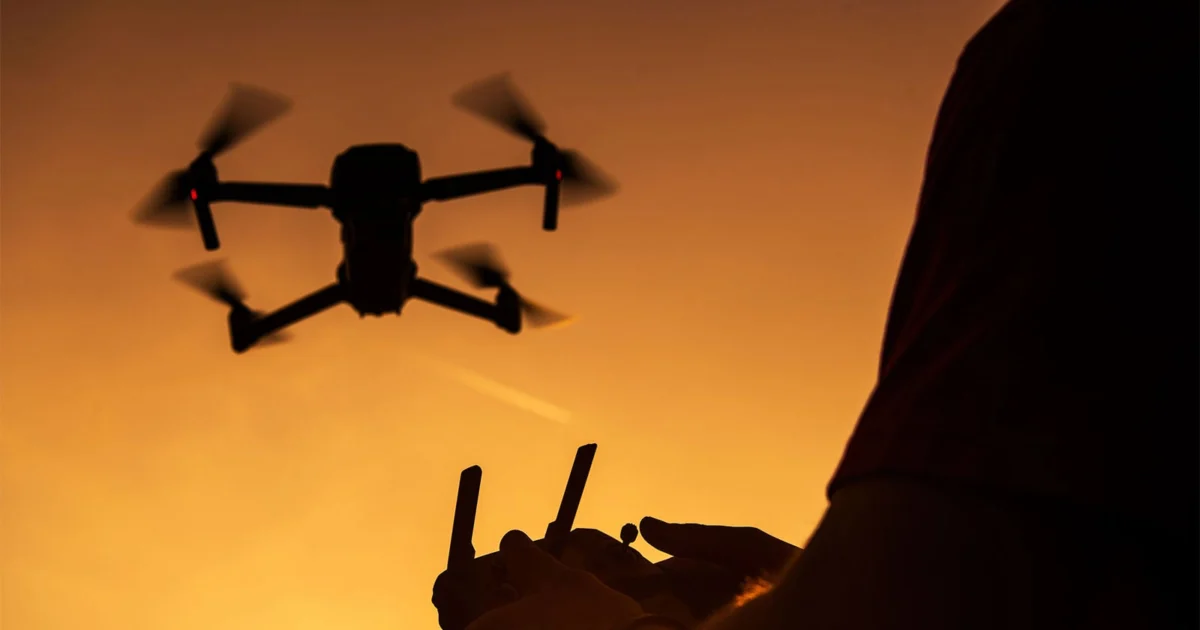
The United States Federal Aviation Administration (FAA) is currently facing significant pushback from the journalism community following its latest proposal to tighten restrictions on Uncrewed Aircraft Systems (UAS), commonly referred to as drones, over sites designated as critical infrastructure. While the FAA maintains that the proposed rule changes are essential for ensuring national security and public safety, the National Press Photographers Association (NPPA) has filed a comprehensive set of formal comments arguing that the broad nature of the restrictions could infringe upon First Amendment-protected newsgathering activities. The NPPA’s intervention highlights an escalating tension between the federal government’s desire to secure sensitive airspace and the media’s constitutional right to document events of public interest from the sky.
The FAA’s proposed rulemaking process aims to establish a formal system through which operators of critical infrastructure—ranging from energy plants and dams to large-scale manufacturing facilities—can petition the government for flight restrictions. According to the FAA, the goal is to prevent potential threats, such as surveillance or physical attacks, by unauthorized drone operators. However, the NPPA argues that the current language of the proposal is overly expansive, potentially allowing for the "darkening" of vast swaths of American airspace without sufficient transparency or oversight.
The Legal and Legislative Background of Section 2209
To understand the current conflict, it is necessary to examine the legislative origins of these proposed restrictions. The foundation for this rulemaking lies in Section 2209 of the FAA Extension, Safety, and Security Act of 2016. In that legislation, Congress directed the Secretary of Transportation to establish a process for applicants to request that the FAA prohibit or restrict the operation of drones in close proximity to critical infrastructure.
For nearly a decade, the implementation of Section 2209 has been delayed as the FAA worked through the complexities of balancing the needs of infrastructure owners with the rights of the general public and the burgeoning commercial drone industry. The current Notice of Proposed Rulemaking (NPRM) represents the FAA’s most significant step toward fulfilling that congressional mandate. The proposed rules would allow entities involved in sectors such as communications, chemical manufacturing, commercial facilities, dams, energy, food and agriculture, information technology, transportation systems, and water and wastewater systems to seek "no-fly" status for the airspace above their properties.
While the NPPA explicitly states in its comments that it "recognizes and supports the FAA’s responsibility to protect critical infrastructure," it challenges the lack of "narrowly tailored restrictions." The association argues that the FAA’s authority must be exercised with surgical precision to ensure that security measures do not inadvertently become tools for suppressing legitimate journalism.
The Role of Drones in Modern Journalism
Over the last decade, drones have transitioned from niche hobbyist tools to indispensable assets for modern newsrooms. The NPPA emphasizes that UAS technology allows journalists to capture perspectives that were previously impossible or prohibitively expensive. Drones are routinely deployed to document natural disasters, such as the aftermath of hurricanes or wildfires, where ground access may be blocked and traditional helicopters are too dangerous or costly to operate.
Beyond disasters, drones play a vital role in investigative journalism. They have been used to document environmental emergencies, such as industrial leaks or illegal dumping, and to monitor government-funded construction projects for transparency. The NPPA notes that drones are also essential for covering public demonstrations, transportation accidents, and search-and-rescue operations. By restricting access to "critical infrastructure," the FAA could effectively prevent journalists from reporting on failures or accidents occurring at those very sites—events that are, by definition, matters of significant public concern.
The NPPA further argues that drone journalism is inherently "safer, less costly, and less intrusive" than using crewed aircraft. A drone hovering at 200 feet is significantly quieter and safer than a full-sized news helicopter, which poses a greater risk of catastrophic failure over populated areas. By limiting drone access, the FAA may inadvertently force media outlets back toward more dangerous and expensive aerial reporting methods.
Concerns Over Transparency and Procedural Safeguards
One of the primary criticisms leveled by the NPPA involves the lack of transparency in the proposed designation process. As currently written, the rule would allow infrastructure operators to petition for restrictions, but the criteria for granting those petitions remain somewhat opaque. The NPPA is concerned that once a site is designated as restricted, there may be no public record explaining why the restriction was granted or how long it will last.
"NPPA is concerned that the proposed rule establishes a process by which potentially significant portions of the National Airspace System (NAS) may be subject to long-term or effectively permanent restrictions without sufficient transparency," the association wrote in its filing. The lack of a centralized, easily accessible database where journalists can check for active restrictions is a major point of contention. Without such a resource, drone pilots—even those operating legally—could find themselves in violation of federal law simply because they were unaware that a particular silo or factory had been granted restricted status.
The NPPA has called for the FAA to include several safeguards in the final rule:
- Periodic Reviews: Restrictions should not be permanent; they should be reviewed regularly to ensure the security threat remains valid.
- Expiration Requirements: Any restriction should have a clear "sunset" date unless a renewal is justified.
- Appeals Process: There should be a meaningful avenue for journalists and the public to challenge specific restrictions that are deemed overbroad.
- Public Participation: The process for designating a site as "critical" should involve public input, especially when the site is of high public interest.
A History of "Theoretical" vs. Real Threats
The NPPA maintains that its fears regarding the suppression of journalism are not merely theoretical. The association points to recent incidents where temporary flight restrictions (TFRs) were used in ways that appeared to target media activity.
In October 2025, the NPPA criticized the Department of Homeland Security (DHS) for enacting sweeping drone bans over Chicago. The NPPA argued that these restrictions, which were tied to the movement of "mobile assets," acted as a pretext for suppressing news coverage of public events. A similar situation occurred in Minneapolis, where the DHS created what the NPPA described as "constantly moving" flight restrictions around all DHS vehicles. Such measures make it functionally impossible for a photojournalist to comply with the law, as the restricted airspace moves through the city in real-time, often without warning.
Mickey H. Osterreicher, Esq., General Counsel for the NPPA, warned that history shows security-based restrictions have a tendency to expand. "We have seen that evolution through increasingly broad Temporary Flight Restrictions, restrictions affecting DHS operations, and now this proposed rule," Osterreicher told PetaPixel. He emphasized that while the government can address security, the Constitution requires that those restrictions be supported by evidence and narrowly tailored.
Economic and Public Interest Implications
The implications of the FAA’s proposed rules extend beyond the newsroom. If the definition of "critical infrastructure" is applied broadly, it could affect researchers, environmentalists, and local governments. For example, a local news station attempting to cover a chemical spill at a manufacturing plant might find itself unable to fly a drone if the plant owner has successfully petitioned the FAA for a restriction. This creates a potential conflict of interest where private corporations could use federal safety regulations to shield themselves from public scrutiny during an emergency.
Furthermore, the economic impact on the commercial drone industry could be substantial. As more infrastructure sites become "no-go zones," the utility of drones for inspection, mapping, and journalism decreases, potentially stifling innovation in a sector that the U.S. government has otherwise sought to promote.
Official Statements and the Path Forward
Alex Garcia, President of the NPPA, underscored the association’s commitment to finding a middle ground. "Security and transparency are not mutually exclusive," Garcia stated. "Our comments urge the FAA to adopt a rule that protects genuine security interests while preserving the public’s right to receive timely, independent information through lawful newsgathering."
The FAA has not yet issued a formal rebuttal to the NPPA’s comments, as the agency typically reviews all public input after the comment period closes before drafting a final rule. The public comment phase for the proposed changes is scheduled to end on August 5, 2026. Following this date, the FAA will enter a review period that could last several months or even years, depending on the volume of feedback and the complexity of the revisions required.
As it stands, there is no set date for when the proposed rules would go into effect. However, the outcome of this regulatory battle will likely set a major precedent for how the First Amendment is applied to the digital and aerial age. For journalists, the stakes are nothing less than the ability to continue providing an "eye in the sky" that holds both the government and private industry accountable.
Analysis: Balancing the National Airspace
The core of the debate rests on the interpretation of "public view." Traditionally, the legal standard has been that if something can be seen from a public vantage point, it can be photographed. The introduction of drones has complicated this, as they can "see" over fences and into private property from a public airspace. The FAA’s challenge is to define where security ends and censorship begins.
If the FAA adopts the NPPA’s suggestions, the final rule may include specific exemptions for credentialed journalists or more rigorous evidentiary standards for infrastructure owners. If the agency proceeds with its original broad language, it is highly likely that the rule will be challenged in federal court, potentially leading to a landmark Supreme Court case regarding the intersection of UAS technology and the First Amendment.
For now, the journalism community remains on high alert, watching the August 5 deadline as the next major milestone in the fight for aerial press freedom. The balance between a secure nation and a free press remains, as always, a delicate and evolving equilibrium.

