


A groundbreaking study spearheaded by a researcher from the University of Hawaiʻi at Mānoa has unearthed a critical factor driving the devastating impact of avian malaria across the Hawaiian Islands: nearly every native and introduced forest bird species possesses the capability to transmit the disease. This widespread susceptibility and transmission ability, the research reveals, directly explains why avian malaria has permeated almost every habitat where its mosquito vector, the southern house mosquito (Culex quinquefasciatus), thrives. The findings, published on February 10 in the esteemed journal Nature Communications, paint a stark picture of the challenges facing the preservation of Hawaii’s unique and imperiled avian populations.
Pervasive Detection of Avian Malaria Across the Archipelago
The comprehensive study meticulously surveyed avian malaria presence at an astonishing 63 out of 64 tested locations throughout Hawaii. These sites encompassed a diverse array of forest ecosystems, each characterized by distinct assemblages of bird species. The insidious disease, caused by the generalist parasite Plasmodium relictum, has been identified as a principal agent behind the precipitous declines and, in some tragic instances, the complete extinction of Hawaii’s endemic honeycreepers.
Christa M. Seidl, the mosquito research and control coordinator for the Maui Forest Bird Recovery Project, who conducted this pivotal research as the capstone of her doctoral studies at the University of California, Santa Cruz, emphasized the gravity of the findings. "Avian malaria has taken a devastating toll on Hawaiʻi’s native forest birds, and this study shows why the disease has been so difficult to contain," Seidl stated. "When so many bird species can quietly sustain transmission, it narrows the options for protecting native birds and makes mosquito control not just helpful, but essential."
The Devastating Impact of Avian Malaria on Native Hawaiian Birds
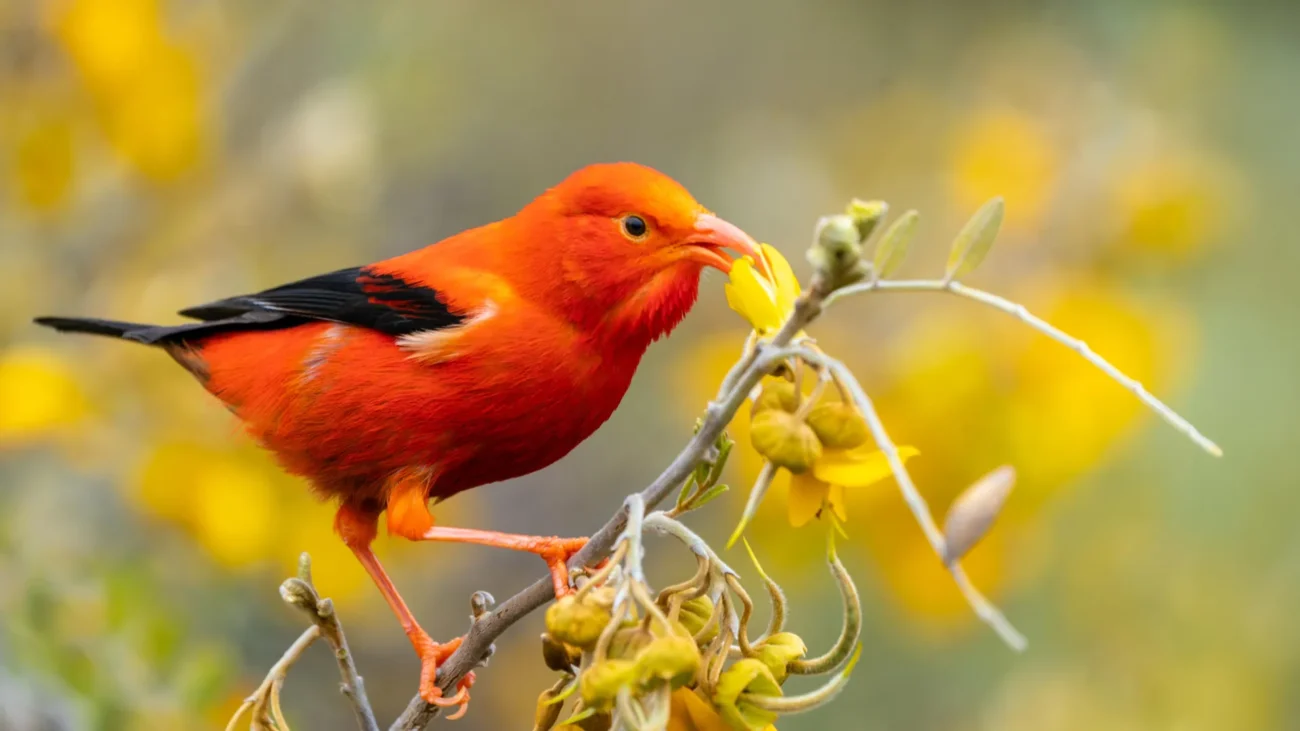
Avian malaria’s insidious attack targets the red blood cells of infected birds. This parasitic assault can trigger a cascade of severe health issues, including debilitating anemia, organ failure, significantly reduced survival rates, and, in many cases, a fatal outcome. The consequences for Hawaii’s iconic and evolutionarily unique birdlife have been nothing short of catastrophic. For instance, studies have documented that the ʻiʻiwi (Scarlet Honeycreeper), a once abundant and vibrant bird, faces a mortality rate approaching a staggering 90 percent if infected with the parasite. Even more dire is the fate of the ʻakikiki, a honeycreeper endemic to Kauaʻi, which is now tragically considered extinct in the wild, a fate largely attributed to the relentless pressure of avian malaria.
The study’s findings challenge conventional understanding of disease transmission dynamics. Typically, many infectious diseases rely on a limited number of host species to maintain their spread within an ecosystem. However, avian malaria in Hawaii operates on a far more expansive scale. The research demonstrates that a broad spectrum of forest birds, encompassing both native Hawaiian species and introduced avian populations, exhibits at least a moderate capacity to infect the southern house mosquito. Crucially, even birds harboring very small quantities of the Plasmodium relictum parasite were found to be capable of transmitting it to mosquitoes. This widespread infectivity across diverse bird communities creates a robust and persistent reservoir for ongoing transmission, making eradication efforts exceedingly complex.
"We often understandably think first of the birds when we think of avian malaria, but the parasite needs mosquitoes to reproduce and our work highlights just how good it has gotten at infecting them through many different birds," Seidl elaborated, underscoring the dual-host dependency of the disease.
Chronic Infections: The Silent Engine of Avian Malaria Transmission
The extensive research involved the meticulous examination of blood samples collected from over 4,000 birds across the islands of Kauaʻi, Oʻahu, Maui, and Hawaiʻi Island. These extensive field data were then meticulously paired with sophisticated laboratory experiments designed to quantify the ease with which mosquitoes acquired infection after feeding on these birds. The results unequivocally demonstrated that both native and introduced bird species exhibited comparable levels of infectiousness to mosquitoes, indicating that both groups play a significant role in perpetuating the parasite’s life cycle.
A particularly concerning revelation from the study is the finding that birds can harbor chronic infections for extended periods, often spanning months and potentially even years. During these prolonged phases, when birds may exhibit only subtle or mild signs of infection, they remain potent sources of the parasite, capable of infecting feeding mosquitoes. The researchers estimate that this protracted period of low to moderate infectiousness is the primary driver of avian malaria transmission across the Hawaiian Islands, creating a constant, low-level threat that is difficult to detect and manage.
Climate Change: Shrinking Sanctuaries and Expanding Threats
The pervasive ability of the Plasmodium relictum parasite to infect a wide array of avian hosts is the most probable explanation for the extensive geographical distribution of avian malaria throughout Hawaii. The study’s conclusions strongly suggest that very few mosquito-infested habitats remain entirely free from the risk of transmission. The situation is further exacerbated by the escalating impacts of climate change. As global temperatures continue to rise, the geographic range of both mosquitoes and avian malaria is expanding into higher elevation zones. These higher altitudes historically served as vital, cooler refuges for many vulnerable native bird species, offering a degree of protection from the heat-dependent mosquito vectors. However, with warming trends, these crucial sanctuaries are increasingly becoming accessible to the disease, diminishing the available safe havens for Hawaii’s most imperiled avifauna.
The implications of these findings are profound for conservation strategies. The traditional approach of focusing solely on controlling mosquito populations in specific high-risk areas may prove insufficient if a majority of the bird population can act as reservoirs for the parasite. This necessitates a more integrated and comprehensive approach that considers the complex interactions between host, parasite, and vector across the entire ecosystem.
A Collaborative Effort for Avian Conservation
Christa M. Seidl and her colleagues at the Maui Forest Bird Recovery Project are active participants in Birds, Not Mosquitoes. This collaborative initiative brings together a diverse coalition of academic institutions, state and federal agencies, non-profit organizations, and industry partners. The collective goal of this partnership is to advance innovative mosquito control strategies in direct support of Hawaiian bird conservation efforts. The work undertaken by Birds, Not Mosquitoes includes research into novel methods for mosquito population suppression, such as the potential release of genetically modified mosquitoes engineered to reduce their reproductive capacity or their ability to transmit disease.
The Maui Forest Bird Recovery Project itself operates under the umbrella of the Pacific Cooperative Studies Unit within the College of Natural Sciences at the University of Hawaiʻi. All avian sampling and handling procedures conducted during the study were performed by highly trained ornithologists adhering to strict state and federal permits, ensuring the ethical treatment and minimal stress to the wild bird populations involved.
Historical Context and Timeline of Avian Malaria’s Impact
The introduction of avian malaria to Hawaii is believed to have occurred in the early 20th century, likely through the introduction of non-native mosquitoes and infected birds. Prior to this, native Hawaiian birds had evolved in isolation and lacked immunity to many common pathogens found elsewhere in the world. This vulnerability made them exceptionally susceptible to diseases like avian malaria.
- Early 1900s: The likely period of introduction for Plasmodium relictum and its vector, the southern house mosquito, to the Hawaiian Islands.
- Mid-20th Century onwards: Widespread declines observed in many native Hawaiian forest bird populations, particularly honeycreepers. Avian malaria is increasingly identified as a significant contributing factor.
- Late 20th and Early 21st Century: Intensified research efforts begin to document the extent of avian malaria’s impact and to explore potential control measures. The development of genetic techniques allows for more precise identification and tracking of the parasite.
- Present Day (February 2024): Publication of the University of Hawaiʻi at Mānoa-led study in Nature Communications, providing unprecedented insight into the widespread transmission capabilities of avian malaria across nearly all Hawaiian forest bird species. This research underscores the urgency of integrated conservation strategies.
Supporting Data and Further Research Needs
The scale of the study – involving over 4,000 birds and 64 distinct locations – provides a robust statistical foundation for its conclusions. The consistent detection of avian malaria across such a wide geographical and ecological range highlights the pervasive nature of the threat. Further research is needed to:
- Quantify the infectiousness of individual species: While the study indicates broad capability, understanding the precise levels of infectiousness among different native and introduced species can help prioritize conservation efforts.
- Model future transmission scenarios: Incorporating climate change projections and current transmission data could help predict which areas are most vulnerable and inform the strategic deployment of limited resources.
- Investigate potential host resistance: Are there genetic factors within certain bird populations that confer partial resistance to avian malaria or its vector? Identifying such factors could offer avenues for assisted evolution or captive breeding programs.
- Evaluate the efficacy of novel control methods: Continued research and field trials of mosquito control techniques, including sterile insect techniques and gene drive technologies, are critical.
Broader Implications for Conservation Biology and Island Ecosystems
The findings from the University of Hawaiʻi study have significant implications beyond Hawaiian bird conservation. They serve as a critical case study for understanding the complex dynamics of disease spread in island ecosystems, which are often characterized by unique evolutionary histories and high levels of endemism. The susceptibility of naive island fauna to introduced pathogens is a recurring theme globally, and the mechanisms of transmission elucidated in this study offer valuable lessons for managing similar threats in other island archipelagos facing increasing human-induced pressures and climate change.
The study’s emphasis on chronic, low-level infections as a major driver of transmission also highlights the challenges of early detection and intervention. It suggests that even birds that appear healthy can be silently contributing to the spread of disease, underscoring the need for long-term monitoring and proactive management strategies rather than solely reactive responses to visible outbreaks. The interconnectedness of avian health, mosquito populations, and the broader ecosystem, further complicated by the accelerating effects of climate change, presents a formidable conservation challenge that demands innovative, collaborative, and scientifically informed solutions. The future of Hawaii’s unique feathered heritage hinges on our ability to adapt and implement these complex strategies effectively.

