


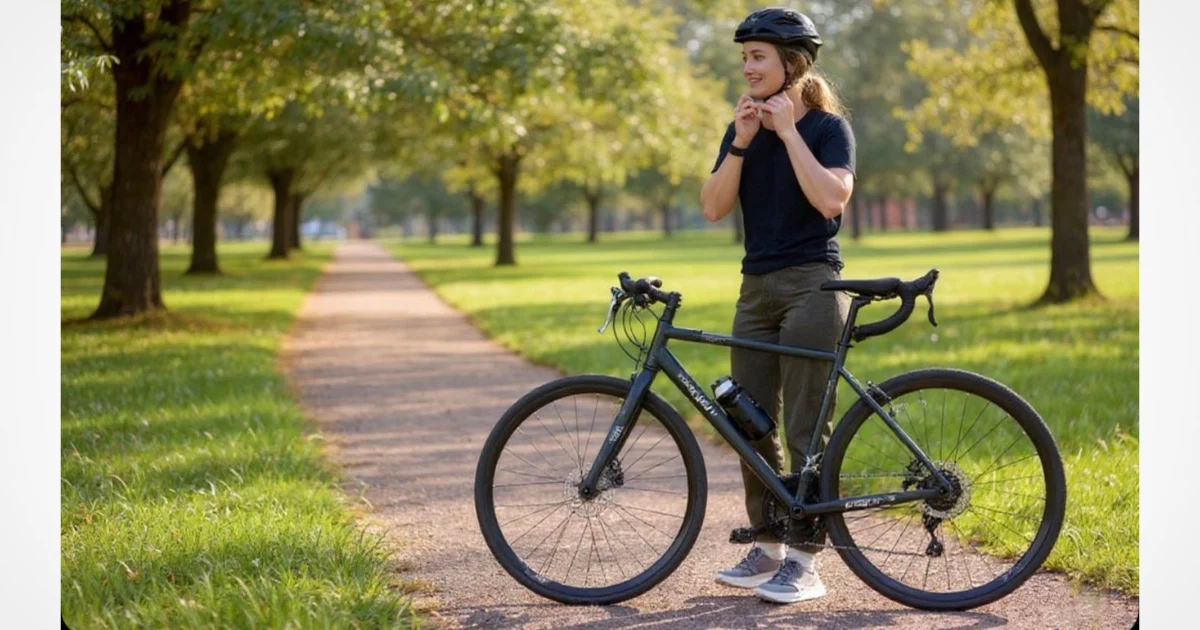
The outdoor retail giant REI, formally known as Recreational Equipment, Inc., has found itself at the center of a social media firestorm following the publication of a promotional advertisement that utilized a clearly distorted, artificial intelligence-generated image. The advertisement, which appeared on the company’s official Instagram account, was intended to showcase the Van Rysel EDR AF, a high-performance road bike. However, the promotional effort quickly devolved into a public relations embarrassment as observant consumers and cycling enthusiasts pointed out a litany of anatomical and mechanical impossibilities within the image, leading to accusations that the brand is abandoning its core values of authenticity and "opting outside."
The incident highlights a growing tension between corporate marketing departments seeking to leverage cost-cutting AI tools and a consumer base that is increasingly sensitive to the perceived lack of soul in "AI slop." For a company like REI, which has built its multi-decade reputation on the celebration of real-world experiences, the use of a hallucinated digital composite has sparked a debate about the future of brand integrity in the age of generative media.
The Anatomy of a Failed Advertisement
The controversial image featured what appeared to be a female cyclist standing on a picturesque, tree-lined path. At a cursory glance, the sun-drenched greenery and the peaceful outdoor setting aligned with REI’s traditional aesthetic. However, as social media users began to look closer, the technical failures of the generative AI model used to create the image became glaringly obvious.
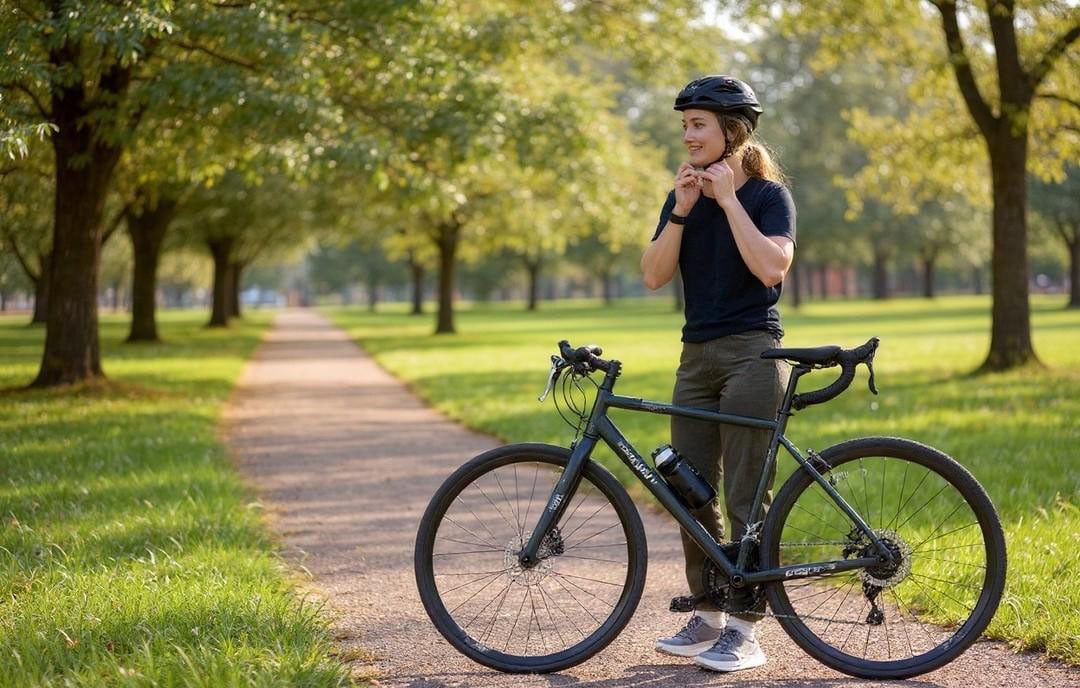
The most prominent error involved the bicycle itself. In a baffling display of mechanical "hallucination," the AI model placed a set of drop handlebars emerging directly from the back of the bicycle’s saddle. Furthermore, the bicycle appeared to be equipped with a redundant braking system, featuring both disc brakes and rim brakes simultaneously—a configuration that does not exist in professional cycling manufacturing.
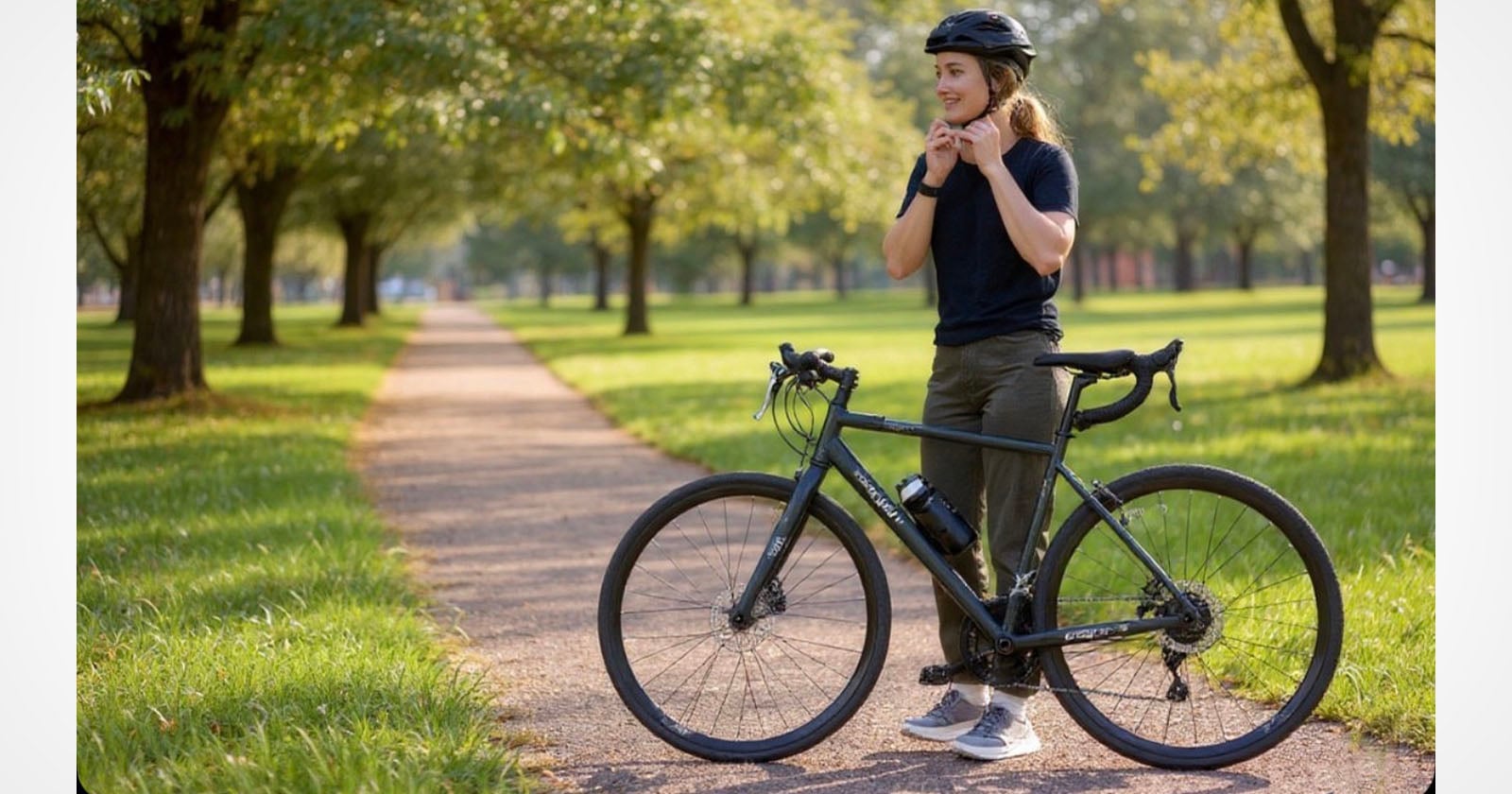
The human figure in the image fared no better under scrutiny. The subject’s right hand featured an unnaturally elongated pinky finger that wrapped awkwardly around a helmet strap, a common "tell" in early-to-mid-generation AI image synthesis. Additionally, commenters on platforms such as Reddit and Threads noted that the subject appeared to have a mismatched anatomical structure, with several users describing the figure as having a "man’s body with a woman’s head." These errors collectively created an "uncanny valley" effect that alienated the very audience the ad was meant to attract.
A Chronology of the Controversy
The advertisement was posted during the third week of June 2026. Within hours, the cycling community had identified the post and began sharing it across various specialized forums and social media platforms.
- Initial Launch: REI shared the Instagram post to promote the Van Rysel EDR AF, a bike brand primarily associated with the European sports giant Decathlon but sold through REI’s retail channels.
- Viral Ridicule: By the evening of the first day, the post had been shared to the "r/xbiking" subreddit and various cycling-centric Threads accounts. Users began a "spot the mistake" game, identifying dozens of minor glitches in the foliage, the bike frame’s geometry, and the cyclist’s clothing.
- The "Opt Outside" Backlash: As the post gained traction, the criticism shifted from technical mockery to a critique of REI’s brand philosophy. Long-time members of the co-op began quoting the company’s famous "Opt Outside" slogan, arguing that using AI to simulate the outdoors was a betrayal of the brand’s mission to encourage real-world exploration.
- Deletion and Silence: After several days of mounting criticism and a barrage of negative comments on unrelated posts, REI quietly deleted the advertisement. As of the time of reporting, the company has not issued a formal apology or a statement regarding the internal decision-making process that led to the use of the AI image.
Public Reaction and Community Sentiment
The reaction from the cycling community was swift and largely unforgiving. On Threads, professional cyclist Phil Gaimon remarked, "The good news is that bicycles continue to completely defeat AI. I have never seen AI make a believable bicycle." This sentiment was echoed across the technical community, where experts noted that the complex geometry of a bicycle—with its thin spokes, intersecting cables, and specific mechanical relationships—remains one of the most difficult objects for diffusion-based AI models to render accurately.
On Reddit, user u/DoILookUnsureToYou summarized the frustration of many consumers: "There’s using AI slop and then there’s not even looking at the slop before posting it. Not a single human put eyes on this image before sending it out."
The criticism also touched upon the economic implications for the creative industry. Photography enthusiasts and professional outdoor photographers expressed disappointment that a company with REI’s resources would choose to bypass human talent in favor of a flawed algorithm. For decades, REI has been a major patron of outdoor photography, often featuring breathtaking, high-resolution imagery of real athletes in real locations. The shift to AI-generated content is seen by many as a cost-cutting measure that undermines the livelihood of the very photographers who helped build the brand’s visual identity.
Technical Analysis: Why AI Struggles with Bicycles
The failure of the REI advertisement provides a case study in the limitations of current generative AI technology. Most image-generation models, such as Midjourney, DALL-E, or Stable Diffusion, work by predicting pixel patterns based on vast datasets of existing images. While these models are adept at creating "vibes" or general atmospheres, they frequently struggle with structural integrity and functional logic.
Bicycles are particularly challenging for AI for several reasons:
- Connectivity: A bicycle frame requires precise connection points. AI often fails to understand that a tube must lead from the headset to the bottom bracket, often resulting in "melting" frames.
- Symmetry and Parallelism: Wheels must be perfectly circular and parallel. AI often renders them as ovals or with warped spokes.
- Mechanical Logic: AI does not understand how a machine works. It sees "handlebars" and "seats" as distinct objects but doesn’t necessarily know where they belong in relation to the rider’s body or the bike’s drive train. This explains why the REI image featured handlebars behind the rider’s glutes.
The Broader Context: The Rise of "AI Slop" in Marketing
REI is not the first major entity to face backlash for utilizing low-quality AI imagery. Recently, a major international airport was forced to remove a billboard featuring "fake photographers" after the AI-generated hands and cameras were revealed to be grotesquely deformed. Similarly, various lifestyle brands have been caught using AI models to save on the costs of hiring human talent, location scouting, and equipment rentals.
The term "AI slop" has entered the cultural lexicon to describe low-effort, uncurated AI content that is flooded into digital spaces. For brands, the temptation to use AI is driven by the bottom line. A traditional photoshoot for a new bicycle line can cost tens of thousands of dollars, involving photographers, models, stylists, and travel. An AI image can be generated in seconds for a fraction of a cent. However, as the REI incident demonstrates, the "savings" are often offset by the significant damage to brand equity and consumer trust.
Implications for Brand Integrity
For a retail cooperative like REI, the stakes are higher than for a standard corporation. REI operates on a membership model and has long positioned itself as a "conscious" company. Its "Opt Outside" campaign, which began in 2015 when the company decided to close its doors on Black Friday to encourage staff and customers to spend time in nature, is considered one of the most successful brand-purpose campaigns in history.

By using AI imagery, REI risks being perceived as "fake" in an industry where "authenticity" is the primary currency. The outdoor industry relies on the promise of the tangible: the feel of the dirt, the wind in the face, and the physical reality of the gear. When the gear itself is rendered as a nonsensical digital hallucination, it breaks the "contract of reality" between the brand and the consumer.
Industry analysts suggest that this incident may serve as a turning point for marketing departments. While AI can be a powerful tool for brainstorming or background enhancement, the "final output" for consumer-facing advertisements still requires rigorous human oversight. The fact that an image with handlebars on a seat passed through REI’s approval process suggests a breakdown in the traditional quality-control pipeline.
Conclusion
The REI AI bicycle controversy serves as a cautionary tale for the digital age. As companies rush to adopt the latest technological efficiencies, they must remain vigilant about the message those technologies send. In its attempt to promote a new bicycle, REI inadvertently promoted a vision of a world where the details don’t matter and reality is optional.
For the outdoor community, the message remains clear: there is no substitute for the real thing. Whether it is the gear they ride or the photos they use to dream of their next adventure, consumers are demanding a return to human-centric storytelling. As Jon Sorensen aptly noted on REI’s Instagram page before the post was pulled: "Your members do not need AI-generated images to sell us more stuff. AI slop is a brand killer."
As of late June 2026, REI’s social media presence has returned to featuring real-world photography, but the comments sections of their posts remain a testament to the long memory of the internet. The "bicycle with the seat-handlebars" has already become a meme within the cycling world, a permanent reminder of what happens when a brand forgets to look before it leaps into the digital unknown.

