


A groundbreaking study, spearheaded by a researcher at the University of Hawaiʻi at Mānoa, has uncovered a disturbing reality for Hawaii’s endemic avifauna: almost every forest bird species in the archipelago possesses the capability to transmit avian malaria. This pervasive ability to spread the deadly disease helps explain its widespread presence across the islands, wherever mosquitoes, the disease’s primary vector, can survive. The findings, published on February 10 in the esteemed journal Nature Communications, paint a stark picture of the challenges facing the preservation of Hawaii’s unique and often imperiled bird populations.
The research detected avian malaria at an astonishing 63 out of 64 tested locations across the Hawaiian Islands. These sites encompassed diverse forest ecosystems, each characterized by distinct compositions of bird species. The illness, caused by the generalist parasite Plasmodium relictum, has been a significant driver behind the dramatic population declines and outright extinctions of Hawaii’s native honeycreepers, a group of birds renowned for their vibrant plumage and specialized adaptations.
Christa M. Seidl, the mosquito research and control coordinator for the Maui Forest Bird Recovery Project, who led this comprehensive research as a component of her doctoral studies at the University of California, Santa Cruz, emphasized the gravity of the findings. "Avian malaria has taken a devastating toll on Hawaiʻi’s native forest birds, and this study shows why the disease has been so difficult to contain," Seidl stated. "When so many bird species can quietly sustain transmission, it narrows the options for protecting native birds and makes mosquito control not just helpful, but essential." Her sentiment underscores the urgency of the situation and the need for multifaceted conservation strategies.
The Devastating Impact of Avian Malaria on Native Hawaiian Birds
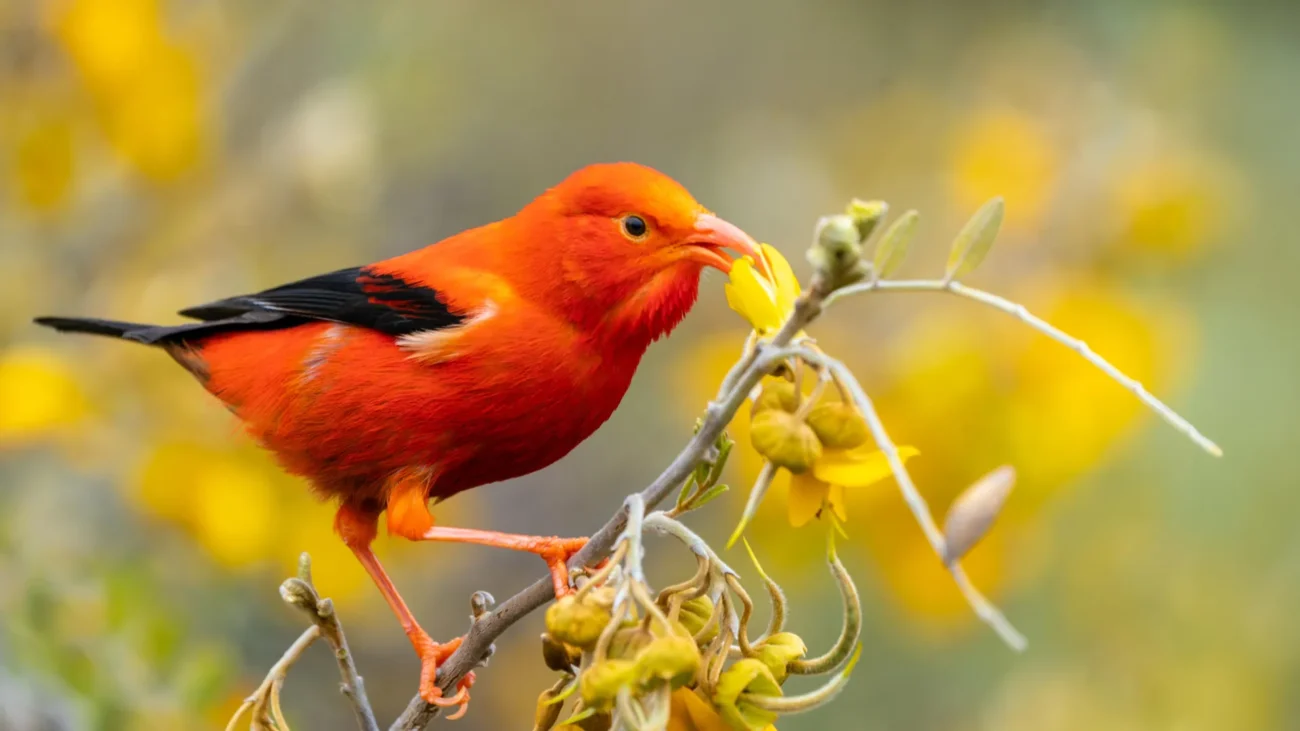
Avian malaria’s insidious nature lies in its direct assault on the red blood cells of infected birds. This parasitic invasion can trigger a cascade of debilitating health issues, including severe anemia, organ failure, and significantly reduced survival rates, often culminating in death. The consequences have been particularly catastrophic for Hawaii’s iconic and irreplaceable bird species. For instance, the ʻIʻiwi, or scarlet honeycreeper, a bird once abundant across the islands, now faces a staggering mortality rate of approximately 90 percent if infected with avian malaria. Even more tragically, the ʻAkikiki, a honeycreeper native to the island of Kauaʻi, is now presumed extinct in the wild, with avian malaria identified as the primary culprit behind its demise.
Typically, the spread of many infectious diseases relies on a limited number of key species to maintain their transmission cycles. However, this research demonstrates that avian malaria operates with a far broader host range within Hawaii’s ecosystems. The study revealed that a majority of forest birds, irrespective of whether they are native or introduced, exhibit at least a moderate capacity to infect the southern house mosquito (Culex quinquefasciatus), which serves as the principal vector for the parasite. Crucially, even birds carrying minuscule quantities of the Plasmodium relictum parasite were found to be capable of infecting mosquitoes. This finding is pivotal, as it suggests that a wide array of avian communities can collectively sustain ongoing transmission of the disease, creating a persistent threat across the archipelago.
Seidl elaborated on this critical aspect of the parasite’s life cycle and its impact on the Hawaiian ecosystem: "We often understandably think first of the birds when we think of avian malaria, but the parasite needs mosquitoes to reproduce and our work highlights just how good it has gotten at infecting them through many different birds." This highlights the intricate interdependencies within the disease’s transmission and the challenge of isolating vulnerable species when the threat is so pervasive.
Chronic Infections: The Silent Engine of Sustained Transmission
To reach its conclusions, the research team meticulously examined blood samples from over 4,000 birds. These samples were collected from across four major Hawaiian Islands: Kauaʻi, Oʻahu, Maui, and the Island of Hawaiʻi. The field data gathered from these extensive collections were then integrated with controlled laboratory experiments designed to quantify the efficiency with which mosquitoes became infected after feeding on birds with varying levels of parasitic load.
The results of these laboratory investigations were eye-opening. They indicated that both native and introduced bird species often displayed similar levels of infectiousness to mosquitoes. This parity means that both native and non-native bird populations contribute significantly to the ongoing spread of the avian malaria parasite throughout the islands.
Furthermore, the study uncovered a critical aspect of avian malaria’s persistence: birds can harbor chronic infections for extended periods, often spanning months or even years. During these prolonged phases, birds may exhibit only subtle or seemingly mild symptoms of infection. However, despite their outwardly healthy appearance, they remain capable of transmitting the parasite to feeding mosquitoes. The researchers estimate that this extended, low-to-moderate level of infectiousness is responsible for the majority of avian malaria transmission occurring across the state. This discovery shifts the understanding of disease dynamics, emphasizing that even asymptomatic carriers play a crucial role in perpetuating the epidemic.
Climate Change: Eroding the Last Bastions of Safety
The parasite’s remarkable ability to infect a broad spectrum of bird species is a key factor that likely accounts for the extensive distribution of avian malaria across Hawaiʻi. The study’s findings strongly suggest that very few mosquito-infested habitats remain entirely free from the risk of transmission. This bleak assessment is further exacerbated by the escalating impacts of climate change. As global temperatures continue to rise, mosquitoes and the avian malaria parasite are progressively expanding their range into higher elevation areas. These higher altitudes once served as vital, cool-weather refuges for native birds, shielding them from the debilitating effects of the disease. However, as these "safe havens" become increasingly hospitable to mosquitoes, the remaining vulnerable native populations are left with fewer places to escape the persistent threat.
This phenomenon is particularly concerning for species that have evolved in isolation in Hawaii and lack natural immunity to diseases like avian malaria. The genetic bottleneck and isolation that characterize Hawaiian endemic birds make them exceptionally susceptible to introduced pathogens. As their traditional habitats become compromised by climate change and the spread of invasive species like mosquitoes, their prospects for survival dwindle.
The collaborative efforts to combat this crisis are multifaceted. Seidl and the Maui Forest Bird Recovery Project are active members of "Birds, Not Mosquitoes," a broad coalition comprising academic institutions, state and federal government agencies, non-profit organizations, and industry partners. This collaborative initiative is dedicated to advancing mosquito control strategies in direct support of Hawaiian bird conservation goals. Such partnerships are crucial for pooling resources, expertise, and innovative solutions to address a problem of this magnitude.
The Maui Forest Bird Recovery Project itself operates under the umbrella of the Pacific Cooperative Studies Unit, situated within the College of Natural Sciences at the University of Hawaiʻi. This institutional backing provides essential infrastructure and support for critical research and conservation initiatives. It is important to note that all birds involved in the study were captured and handled with the utmost care by highly trained ornithologists, operating under strict state and federal permits, ensuring ethical and scientifically sound research practices.
Looking Ahead: A Call for Urgent and Comprehensive Action
The implications of this study are far-reaching and underscore the urgent need for intensified conservation efforts, particularly focused on vector control. Without effective strategies to manage mosquito populations, the future of many of Hawaii’s unique native bird species remains precariously uncertain. The expanding range of mosquitoes due to climate change presents a formidable challenge, demanding innovative and adaptive solutions.
Scientists are exploring various avenues for mosquito control, including the development and deployment of gene-drive technologies that could potentially reduce mosquito populations in targeted areas. However, these technologies also come with their own set of ecological considerations and require rigorous scientific assessment and public engagement.
Beyond direct vector control, habitat restoration and the creation of disease-free refuges are also critical components of a comprehensive conservation strategy. Understanding the specific microclimates and ecological conditions that favor native birds and hinder mosquito breeding can inform efforts to establish and protect these vital sanctuaries.
The widespread ability of Hawaiian forest birds to transmit avian malaria, as revealed by this study, fundamentally alters our understanding of the disease’s dynamics in the archipelago. It highlights that the threat is not confined to a few susceptible species but is a pervasive ecological challenge. The interconnectedness of the ecosystem, where numerous bird species and a primary insect vector conspire to perpetuate a deadly disease, demands a holistic approach to conservation. The ongoing work of researchers like Christa M. Seidl and organizations such as the Maui Forest Bird Recovery Project, in collaboration with the broader "Birds, Not Mosquitoes" initiative, represents a vital front in the battle to save Hawaii’s irreplaceable natural heritage from the devastating impact of avian malaria. The scientific community, conservationists, and policymakers must now translate these critical findings into decisive action to ensure the survival of these unique avian treasures for generations to come.

