


Starting June 3, 2026, The Coffee Bean & Tea Leaf will officially eliminate the additional surcharge for plant-based milk alternatives across its locations, marking a significant shift in the company’s pricing strategy and corporate social responsibility profile. The decision follows an intensive advocacy campaign led by People for the Ethical Treatment of Animals (PETA), supported by tens of thousands of consumers who argued that the "vegan tax"—the practice of charging extra for non-dairy alternatives—created a financial barrier to ethical and environmentally friendly consumption. The Los Angeles-based coffee icon, which has been a staple of the specialty coffee industry since its founding in 1963, joins a rapidly expanding list of major beverage retailers that have modernized their menus to reflect changing consumer values regarding animal welfare and climate change.
The Evolution of the Campaign and Corporate Engagement
The policy change was not an overnight development but rather the culmination of a multi-faceted advocacy effort that combined grassroots pressure with high-level corporate negotiation. According to organizational reports, the campaign mobilized more than 20,000 PETA supporters who engaged in an email initiative directed at the company’s executive leadership. This collective consumer voice was amplified by direct diplomatic efforts, including a formal appeal from PETA President Tracy Reiman to the decision-makers at The Coffee Bean & Tea Leaf.
A pivotal moment in the negotiations occurred during a meeting between Amit Dhuleshia, the founder of Activists for Animals and a prominent PETA ally, and the Vice President of Marketing for The Coffee Bean & Tea Leaf. These discussions centered on the accessibility of plant-based options and the message that surcharges sent to a growing demographic of "flexitarian" and vegan customers. In recognition of the company’s willingness to pivot, PETA announced it would send the coffee chain a delivery of cow-shaped vegan chocolates as a gesture of appreciation for the move toward a more inclusive and compassionate menu.
Chronology of the Plant-Based Shift in the Coffee Industry
To understand the significance of The Coffee Bean & Tea Leaf’s announcement, it is essential to view it within the broader timeline of the global coffee industry’s transition away from dairy-centric pricing models. For decades, dairy milk was the industry standard, and the introduction of soy, almond, and oat milks was often treated as a specialty "add-on" that incurred extra costs due to higher procurement prices and lower demand.
However, the early 2020s saw a massive surge in the popularity of oat milk and other alternatives, leading to economies of scale that reduced the price gap between dairy and plant-based liquids. In response, several of The Coffee Bean & Tea Leaf’s primary competitors began dropping their surcharges. Peet’s Coffee, Caribou Coffee, and Stumptown Coffee Roasters were among the early adopters of fee-free plant-based options. Starbucks, the world’s largest coffee chain, eliminated the upcharge in several international markets, including the United Kingdom, before eventually facing similar pressures in the United States.
By the time The Coffee Bean & Tea Leaf announced its June 2026 deadline, the "vegan tax" had become an outlier practice among major national chains. With this move, the industry focus shifts to the remaining holdouts, most notably BIGGBY Coffee, which PETA has identified as the last major U.S. chain to maintain a surcharge for non-dairy milk.
Environmental and Ethical Drivers of the Decision
The arguments presented by PETA and supported by climate scientists highlight two primary motivations for eliminating the surcharge: environmental sustainability and animal welfare. The coffee industry is a major driver of global milk consumption, and the environmental footprint of dairy production is significantly higher than that of its plant-based counterparts.
According to a landmark 2018 study from the University of Oxford, published in the journal Science, the production of a glass of dairy milk results in nearly three times the greenhouse gas emissions of any non-dairy milk. Furthermore, dairy production requires approximately nine times more land than the production of plant-based alternatives. For example, producing one liter of cow’s milk requires about 628 liters of water, whereas soy milk requires only 28 liters. By removing the financial penalty for choosing plant-based milks, The Coffee Bean & Tea Leaf is effectively incentivizing a lower-carbon consumer choice, aligning its operations with global ESG (Environmental, Social, and Governance) goals.
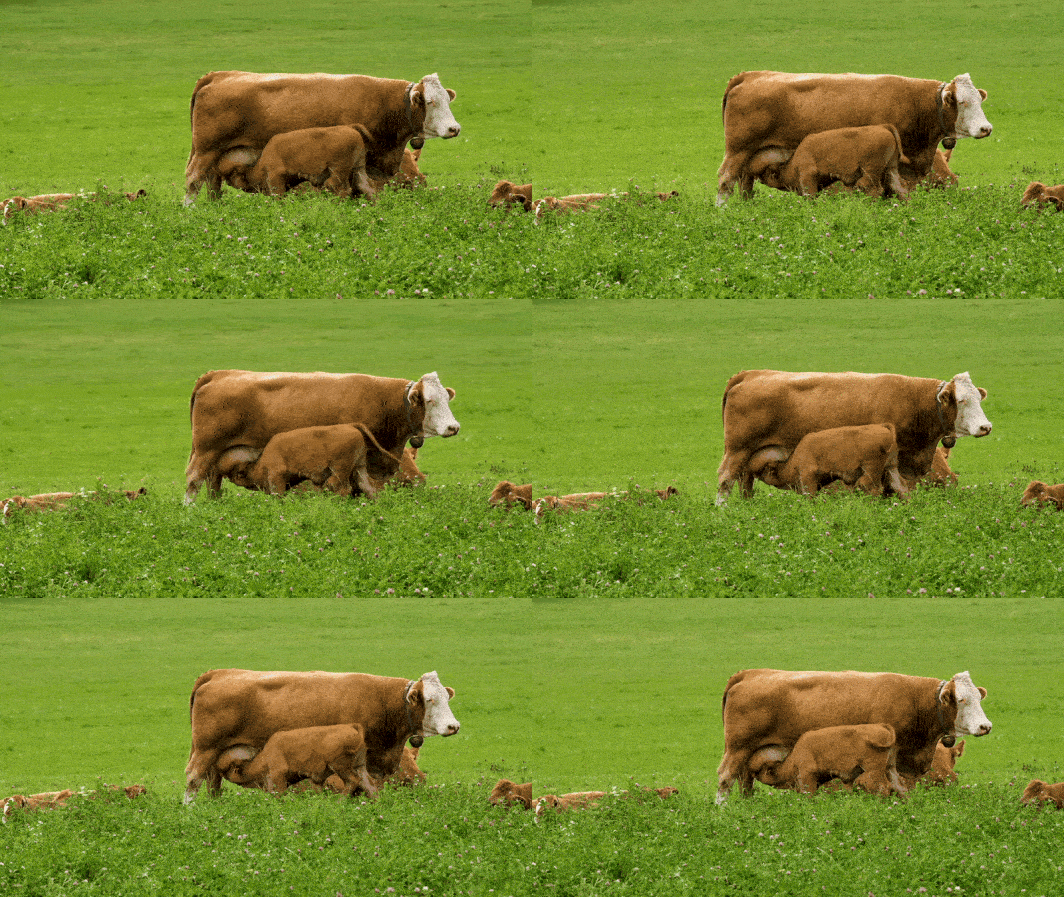
From an ethical perspective, PETA’s advocacy focused heavily on the biological realities of dairy farming. The organization emphasizes that cows are highly social and emotional animals capable of forming deep familial bonds. In the commercial dairy industry, cows must be repeatedly impregnated to maintain milk production, and their calves are typically removed shortly after birth to ensure the milk can be harvested for human consumption. PETA argues that the psychological distress experienced by mother cows and their offspring is a cost that is often hidden from the consumer, and that making vegan milk more accessible is a vital step in reducing the demand for these practices.
Market Analysis: The Rise of the Conscious Consumer
The decision by The Coffee Bean & Tea Leaf is also a savvy response to shifting market demographics. Data from market research firms indicate that Gen Z and Millennial consumers are significantly more likely to identify as vegan, vegetarian, or flexitarian than previous generations. A 2023 report suggested that nearly 50% of consumers under the age of 30 regularly consume plant-based milks, citing reasons ranging from lactose intolerance to ethical concerns.
By eliminating the surcharge, The Coffee Bean & Tea Leaf is positioning itself to capture a larger share of this "conscious consumer" market. The removal of the $0.50 to $0.90 fee per drink may seem minor on a single transaction, but for a daily coffee drinker, it represents a savings of over $200 per year. This price parity makes the ethical choice the default choice for many, removing the "punishment" for those who prefer oat, almond, or soy milk.
Furthermore, the specialty coffee market is increasingly defined by customization. As plant-based milks have improved in flavor and "frothability"—particularly with the advent of "Barista Edition" oat milks—they have become preferred by many consumers for their taste profile alone, independent of ethical considerations. The Coffee Bean & Tea Leaf’s move acknowledges that plant-based milk is no longer a niche dietary requirement but a mainstream preference.
Implications for the Global Coffee Supply Chain
The ripple effects of this policy change extend beyond the checkout counter. As major chains like The Coffee Bean & Tea Leaf increase their volume of plant-based milk purchases, they exert significant influence on the global supply chain. This increased demand encourages innovation in plant-based dairy technology, leading to even more sustainable and diverse options, such as milk made from peas, barley, or even fermented flora.
However, the transition also poses challenges for the traditional dairy industry, which has seen a steady decline in liquid milk consumption over the past decade. Industry analysts suggest that as coffee shops—the primary "third space" for many consumers—de-emphasize dairy, the cultural status of cow’s milk as a dietary staple continues to erode. This has led some dairy industry groups to lobby for stricter labeling laws, though these efforts have largely failed to stem the tide of plant-based adoption.
Looking Ahead: The Future of Ethical Retail
The Coffee Bean & Tea Leaf’s transition on June 3, 2026, will serve as a case study in how corporate entities can respond to organized advocacy. The success of the PETA campaign demonstrates that a combination of mass consumer engagement and direct executive dialogue can result in systemic changes that benefit both the brand and its patrons.

As the June deadline approaches, industry observers will be watching to see how the company manages the logistical transition and whether other regional chains follow suit. The elimination of the vegan upcharge is more than a pricing adjustment; it is a recognition of the interconnectedness of animal welfare, environmental health, and consumer economics. For The Coffee Bean & Tea Leaf, the move represents a commitment to staying relevant in a marketplace where "business as usual" is increasingly defined by transparency and ethical responsibility.
In the final analysis, the end of the vegan milk surcharge at one of the world’s most recognizable coffee brands signals a "new normal" in the hospitality sector. It suggests a future where the cost of a beverage is determined by its ingredients rather than its alignment with traditional agricultural norms, and where the most compassionate choice is also the most affordable one. For the thousands of activists who sent emails and the millions of customers who prefer plant-based options, June 3, 2026, will be remembered as the day the "grounds" for a more ethical coffee culture became significantly more level.

