


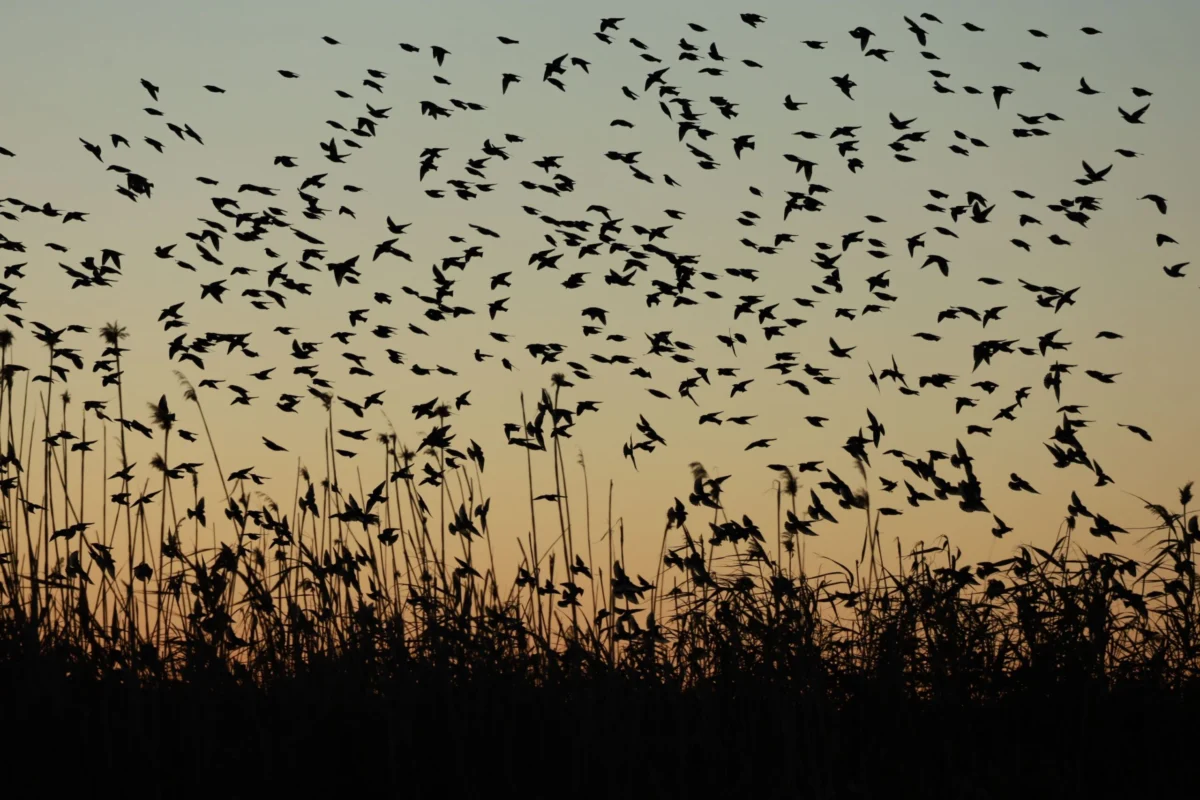
While the terrestrial world remains quiet under the cloak of darkness, a massive, silent spectacle unfolds miles above the North American landscape. As mid-August signals the onset of the fall season, millions of migratory birds are beginning their arduous, multi-generational journeys toward southern wintering grounds. This annual phenomenon, largely hidden from human eyes, represents one of the most complex and vital biological events in the natural world, dictated by the precise intersection of evolution, meteorology, and geography.
The Mechanics of Nocturnal Migration
Scientific data provided by the Cornell Lab of Ornithology and the BirdCast project indicates that more than 80% of migratory bird species in North America undertake their journeys under the cover of darkness. This behavioral adaptation is not merely a preference but an evolutionary survival strategy. By migrating at night, birds avoid the convective heat of the daytime sun, which can cause dehydration and metabolic stress. Furthermore, the cooler, more stable nocturnal atmosphere often provides more favorable wind conditions, allowing birds to conserve critical energy stores—fat reserves that are essential for completing flights that can span thousands of miles.
The migration period is expansive, typically stretching from mid-August through mid-November. During this window, the atmosphere above the United States becomes a crowded transit corridor. The scale of this movement is staggering; in September 2025, radar surveillance captured a record-breaking event in which more than 1.2 billion birds were detected migrating across the continent in a single night. This event, the largest ever recorded by the BirdCast initiative since its inception in 2018, serves as a stark reminder of the sheer volume of wildlife that navigates the skies while the human population sleeps.
Mapping the Flyways: A Continental Infrastructure
The movement of these birds is not random. They rely on four primary "flyways"—the Atlantic, Mississippi, Central, and Pacific routes. These corridors serve as the aerial highways of the Western Hemisphere, funneling avian populations from their northern breeding grounds in Canada and the United States toward warmer climates in the southern United States, Mexico, Central America, the Caribbean, and South America.
The Atlantic Flyway, hugging the eastern seaboard, is a vital channel for shorebirds and warblers. The Mississippi and Central Flyways, which span the vast interior of the continent and the Great Plains, accommodate massive movements of waterfowl and raptors. The Pacific Flyway, constrained by the Rocky Mountains and the Pacific Ocean, serves as a unique migratory funnel. The number of birds passing over any given location is inextricably linked to its position relative to these flyways. Researchers note that weather patterns act as the final arbiter of migration flow; favorable tailwinds can accelerate movement, while atmospheric disturbances, storm fronts, or strong headwinds can ground populations for days, leading to temporary "stopover" events where birds congregate in local habitats to refuel.

Technological Advancements in Ornithological Monitoring
For decades, the nocturnal nature of this migration kept its true scale obscured from scientists and the public alike. The integration of weather surveillance radar (WSR) has fundamentally altered our understanding of these movements. By analyzing radar returns, scientists can effectively distinguish between precipitation and biological targets. This data allows for real-time tracking of bird density, flight altitude, and directional heading.
However, a significant limitation remained: while radar could tell researchers that birds were present, it could not identify the specific species. This gap was bridged in 2026 through a collaborative effort between the Cornell Lab of Ornithology, the University of Massachusetts Amherst, and the University of Illinois. By synthesizing weather radar data with over 2 billion crowdsourced observations from the eBird platform, researchers developed the "BirdFlow" model.
This model represents a paradigm shift in ecology. It allows for species-specific estimates of migration traffic, providing weekly, localized predictions of where specific birds are moving. By cross-referencing radar-derived "Migration Traffic Rates" with citizen science data, the model can now infer, for example, the movement patterns of the Blackpoll Warbler or the Swainson’s Thrush with unprecedented accuracy.
Implications for Conservation and Policy
The ability to predict and monitor these massive aerial movements has profound implications for conservation. Light pollution, for instance, remains one of the greatest threats to migratory birds. Many species use celestial cues to navigate; artificial light at night (ALAN) from urban centers can disorient them, drawing birds into cities where they face increased risks of window collisions and predation.
Organizations like the Cornell Lab of Ornithology have leveraged this granular data to push for "Lights Out" initiatives. By notifying municipalities when high-density migration events are expected—often several days in advance—conservationists can encourage cities to dim non-essential lighting during peak transit periods. Data-driven insights have transformed these initiatives from general recommendations into precise, actionable interventions that directly mitigate avian mortality.
Furthermore, the impact of climate change on migration timing remains a major focus of ongoing study. As spring temperatures warm earlier and fall conditions shift, there is growing concern regarding "phenological mismatch"—a scenario where birds arrive at their breeding or wintering grounds when the specific food resources they rely on are not yet available or have already peaked. The longitudinal data now being collected by the BirdCast project provides a baseline that will be critical for assessing how these shifts affect population viability over the coming decades.

Analyzing the Data: What to Expect
The migration season is not a uniform event. It is characterized by pulses and waves. Ornithologists emphasize that while the general window is from August to November, the peak intensity varies significantly by latitude and longitude. For those interested in tracking this phenomenon, the BirdCast Migration Dashboard offers localized, county-level forecasts. These tools provide users with the estimated number of birds in flight, their projected speed, and their altitude.
The scientific community maintains that the public’s role in this monitoring is vital. The billions of data points provided by birdwatchers through citizen science platforms directly feed into the models that track these birds. Without this synergy between high-tech radar and low-tech backyard observation, the ability to map these movements would remain fundamentally incomplete.
The Broader Ecological Significance
The fall migration is a testament to the resilience and endurance of avian species. It is a biological imperative that has persisted for millennia, linking ecosystems across thousands of miles. The destruction of one stopover site in the Mississippi Flyway, for example, can have a ripple effect on the success of a breeding population in the Canadian Boreal forest. Consequently, the data provided by modern tracking technologies is not merely for academic interest; it is a vital tool for habitat management and land-use policy.
As we move through the 2026 season, the data suggests that the skies are as busy as they have ever been. The record-breaking night of 2025 serves as a benchmark for the potential of these migratory events. While the average person may see only a few silhouettes against the moon or hear the faint, high-pitched calls of nocturnal migrants passing overhead, the reality is a massive, continent-wide infrastructure of life.
For those seeking to engage with this phenomenon, the current state of bird science offers more access than ever before. Through the combination of live maps, species-specific modeling, and localized forecasts, the invisible journey is finally being brought into focus. Understanding this movement is the first step toward ensuring that these migratory paths remain open and safe for the billions of travelers that rely on them for their survival. The fall migration is more than just a seasonal shift—it is a global event that underscores the interconnected nature of the planet’s ecosystems and the ongoing necessity of scientific vigilance to protect them.

