



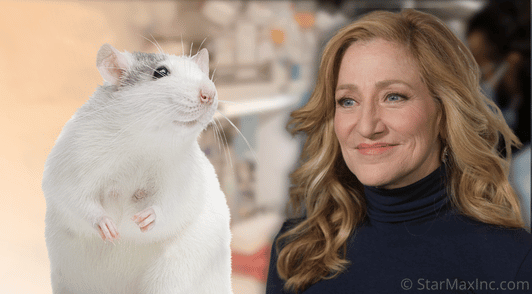
The landscape of biomedical research is undergoing a fundamental transformation as a new era of human-relevant science begins to displace century-old reliance on animal models. A feature-length documentary, The New Gold Standard: Cutting Edge Science That’s Replacing Animal Testing, explores this paradigm shift, documenting how advanced technologies are providing more accurate, predictive, and ethical alternatives to traditional laboratory experiments. Narrated and executive produced by award-winning actor Edie Falco and directed by Emmy-winning filmmaker Steven Latham, the film highlights a critical turning point in medical history where the interests of scientific progress and animal welfare are finally aligning.
For decades, the use of animals in laboratories has been the standard protocol for drug discovery and safety testing. However, the documentary reveals a growing consensus among scientists, regulators, and industry leaders that this "gold standard" is increasingly obsolete. According to data cited in the film and supported by various pharmaceutical industry reports, approximately 90% to 95% of new drugs that pass animal tests ultimately fail in human clinical trials, often because they are either ineffective or toxic to humans. This high failure rate, often referred to as the "valley of death" in pharmaceutical development, costs the global economy billions of dollars and delays the arrival of life-saving treatments for patients with cancer, Alzheimer’s, and other debilitating diseases.
The Scientific and Economic Impetus for Change
The documentary brings viewers inside prestigious institutions, including Harvard University and Stanford University, where researchers are developing and implementing technologies that do not require animal subjects. These methods, often referred to as "New Approach Methodologies" (NAMs), utilize human cells, tissues, and sophisticated computer modeling to simulate the human body’s response to various substances.
One of the most prominent technologies featured is "organs-on-chips." These are microfluidic devices lined with living human cells that mimic the physiological functions of entire organs, such as the liver, lungs, or heart. Unlike a living mouse or monkey, these chips can be engineered to represent specific human demographics, including different ages, ethnicities, or those with underlying health conditions. By testing drugs on human-based systems from the outset, researchers can gain insights that are directly applicable to human biology, bypassing the interspecies differences that frequently lead to misleading results in animal trials.
The economic argument for this transition is equally compelling. Developing a single new drug can take over a decade and cost upwards of $2.6 billion. A significant portion of this investment is lost when drugs fail late-stage clinical trials after years of animal testing. The film features interviews with pharmaceutical executives and industry experts who argue that transitioning to human-relevant models will streamline the development process, reduce costs, and increase the success rate of new therapies entering the market.
Legislative Milestones and the FDA Modernization Act
The New Gold Standard arrives at a time of significant legislative movement. The documentary features prominent political figures, including U.S. Senators Cory Booker and Rand Paul, who have been instrumental in pushing for regulatory reform. A central focus of the film is the impact of the FDA Modernization Act 2.0, which was signed into law in late 2022. This landmark legislation officially ended a 1938 federal mandate that required all new drugs to be tested on animals before they could proceed to human trials.
By removing this legal barrier, the FDA has opened the door for pharmaceutical companies to utilize human-relevant technologies for safety and efficacy data. Senator Rand Paul, a vocal supporter of the act, has frequently noted that animal testing is often a "check-the-box" exercise that does not always provide the best data for human safety. The film examines how this regulatory shift is empowering scientists at the National Institutes of Health (NIH) and other regulatory bodies to prioritize more effective, non-animal methods. Dr. Nicole Kleinstreuer, a scientist at the NIH featured in the documentary, discusses the ongoing efforts to validate these new technologies so they can become the new industry standard.
The Human and Animal Toll of the Laboratory System
While much of the film focuses on high-level science and policy, it also grounds the discussion in the lived experiences of those affected by the current system. The documentary features Melanie D. G. Kaplan, author of Lab Dog, who shares the story of her adopted beagle, a survivor of laboratory experimentation. Beagles are frequently used in toxicity testing due to their docile nature, and Kaplan’s narrative provides a window into the physical and psychological scars left on animals used in research.
The film also interviews a former veterinarian who worked within a primate research facility. This perspective highlights the "moral injury" often experienced by laboratory staff who are tasked with performing invasive procedures on sentient beings. The veterinarian describes the complex social structures and high intelligence of primates, contrasting their natural behaviors with the confinement and isolation of the laboratory environment.
To provide a comprehensive view of the issue, the production team visited sanctuaries in Wyoming and Oklahoma. these facilities serve as retirement homes for dogs, cats, pigs, and monkeys rescued or retired from laboratories. These segments emphasize the emotional complexity of these animals—noting that pigs dream, mice build intricate nests to bond with one another, and monkeys form deep, lifelong social connections. The film argues that acknowledging the sentience of these individuals is not just an ethical requirement but a scientific one, as the stress of laboratory life can significantly alter biological data, further contributing to the unreliability of animal models.
A Chronology of Progress in Research Ethics
The documentary provides a historical context for the current movement, tracing the evolution of research standards over the last century:
- 1938: The Federal Food, Drug, and Cosmetic Act is passed, mandating animal testing for drugs following a tragedy involving a toxic "Elixir Sulfanilamide" that killed over 100 people.
- 1966: The Animal Welfare Act (AWA) is signed into law in the U.S., setting minimal standards for the treatment of certain animals in research, though it excludes mice, rats, and birds—the most commonly used species.
- 2007: The National Research Council publishes "Toxicity Testing in the 21st Century: A Vision and a Strategy," calling for a shift away from animal testing toward human-cell-based assays.
- 2022: The FDA Modernization Act 2.0 is signed, allowing the use of non-animal methods for drug applications.
- 2026: The release of The New Gold Standard documents the practical implementation of these new laws and the scaling of human-relevant technologies in top-tier laboratories.
Broader Impact and the Future of Medicine
The implications of the "New Gold Standard" extend far beyond animal ethics. The film suggests that by embracing human-based research, the scientific community can address the "reproducibility crisis" that plagues modern medicine. Because animal models are often highly standardized and genetically homogenous, they fail to capture the vast genetic diversity of the human population. Human-relevant technologies, such as 3D bioprinting and AI-driven biological modeling, allow for "personalized medicine," where treatments can be tested on a model of an individual patient’s own cells before administration.
The documentary concludes with a forward-looking message of hope. It posits that the transition away from animal testing is not a loss for science, but a massive leap forward. By utilizing tools that are more accurate, faster, and more ethical, the medical community can restore public trust and accelerate the delivery of effective treatments.
The New Gold Standard: Cutting Edge Science That’s Replacing Animal Testing is scheduled for a limited theatrical release in the summer of 2026, followed by a wide release on major streaming platforms in the fall. As governments and private industries continue to invest in the Modernize Research NOW initiative and other similar programs, the film serves as both a report on the current state of science and a roadmap for a more compassionate and effective future in biomedical innovation.

