


The intricate world of avian coloration often sparks curiosity, leading ornithologists and enthusiasts alike on journeys to identify specific species. Today’s focus is on a particular segment of this vibrant spectrum: birds that exhibit a combination of brown plumage with a distinct orange chest. While a few familiar species might come to mind, particularly within North America, a comprehensive search reveals that achieving a list of ten such birds necessitates looking beyond continental borders, delving into diverse ecosystems across the globe. This exploration also provides an opportune moment to understand the fundamental biological reasons behind avian feather coloration and the fascinating pigments that create these striking displays.
The Evolutionary Canvas: Why Birds Sport Colored Feathers
The vibrant hues and subtle patterns adorning a bird’s plumage are not merely for aesthetic appeal; they are the product of sophisticated evolutionary pressures. Ornithologists generally identify two primary drivers for the development of colored feathers in birds:
Camouflage: A Lifeline for Survival
One of the most critical functions of feather coloration is camouflage. This is particularly vital for females of many species, whose often muted and earth-toned plumage allows them to blend seamlessly with their surroundings. This ability to remain inconspicuous is paramount for nest defense and the protection of vulnerable young. By minimizing their visibility to potential predators, females significantly increase the survival rates of their offspring.
Sexual Selection: The Art of Attraction
In stark contrast to the subtle hues of females, male birds frequently display a dazzling array of colors. This conspicuousness is a direct result of sexual selection, where vibrant plumage serves as a powerful signal to potential mates. The intensity, pattern, and brilliance of a male’s coloration can communicate his genetic fitness, health, and overall suitability as a partner. Females, through this process, select mates who can produce the most impressive displays, ensuring the continuation of strong genetic lineages.
The Chemistry of Color: Pigments and Light Play
The remarkable diversity of bird coloration is largely attributed to the presence of specific pigments within their feathers. Two main classes of pigments are responsible for the vast majority of colors observed:
Melanin: The Foundation of Earthy Tones
Melanin is a naturally occurring pigment found within a bird’s body. It is responsible for producing a range of colors from deep blacks and rich browns to muted grays and warm oranges. These pigments are synthesized endogenously, meaning the bird’s own biological processes create them.
Carotenoids: The Source of Vibrant Hues
Carotenoids, on the other hand, are not naturally produced by birds. Instead, they must be acquired through the bird’s diet. These pigments are responsible for the brilliant reds, yellows, and oranges seen in many species. The ability of a bird to acquire and effectively utilize carotenoids can also be an indicator of its foraging prowess and overall health.

The Illusion of Blue: Structural Coloration
Interestingly, there are no pigments that produce true blue coloration in feathers. Instead, the perception of blue is an optical phenomenon. It arises from the way light interacts with the microscopic structure of the feather barbules. When light strikes these structures, certain wavelengths are scattered, while others are absorbed. The scattered wavelengths, typically in the blue spectrum, are what our eyes perceive. This principle of structural coloration is also responsible for iridescent effects seen in some birds.
Given this understanding of coloration, the quest for brown birds with orange chests leads us to species where melanin plays a significant role, possibly augmented by dietary carotenoids, and where sexual dimorphism might mean that males are more vibrantly orange or females are more subtly colored, leaning towards the brown spectrum.
The Global Aviary: Ten Brown Birds with Orange Chests
Our expedition to identify ten brown birds with orange chests, while challenging, reveals a fascinating array of species from different continents.
1. American Robin ( Turdus migratorius )
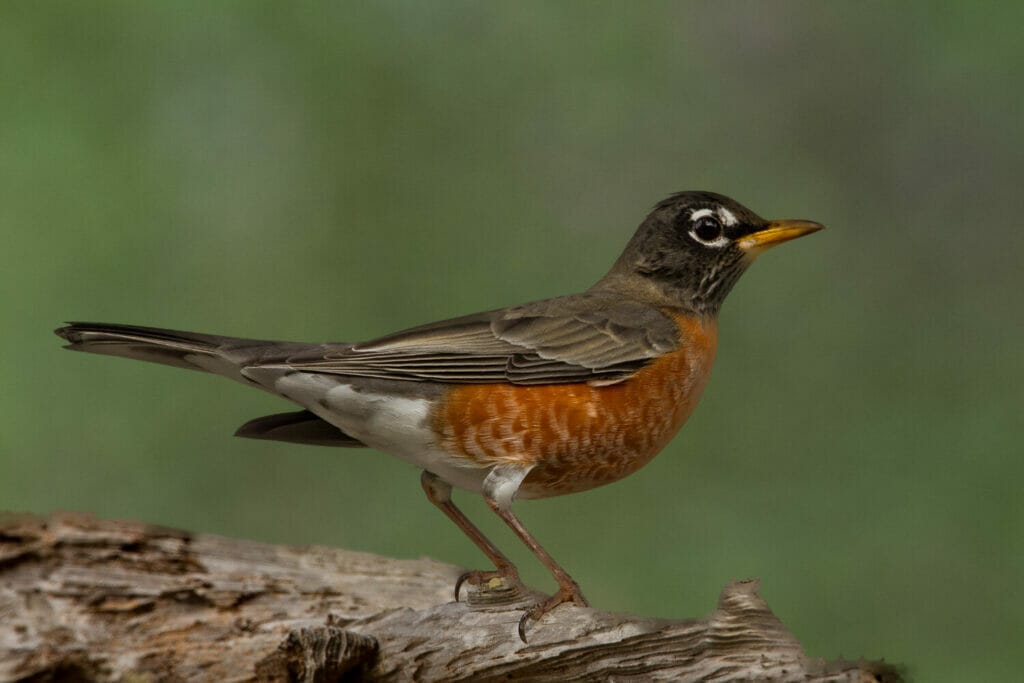
The American Robin is perhaps the most recognizable bird in North America fitting this description. While its back is a classic gray-brown, its breast is a striking reddish-orange. Females tend to have a more subdued orange hue compared to males. These thrushes are common in gardens, parks, and open woodlands across North America, foraging for earthworms and insects. Their presence is often seen as a harbinger of spring, though they are year-round residents in many areas, adapting their diet to winter berries when insects are scarce.
Identification and Size: Large songbirds, typically measuring 7.9 to 11.0 inches in length with a wingspan of 12.2 to 15.8 inches. Weight ranges from 2.7 to 3.0 ounces.
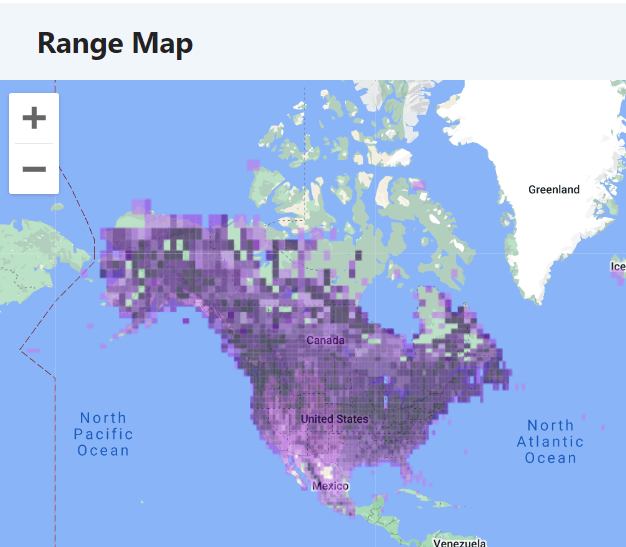
Distribution: Widespread across continental North America, including Canada, the United States, and Mexico.
Diet: Primarily earthworms, insects, and berries.
Interesting Fact: While associated with spring, Robins often remain in their wintering grounds, feeding on berries in less populated areas, which is why they are seen less frequently in gardens during colder months.
2. Zebra Waxbill ( Amandava subflava )
This small, yet striking, African bird offers a vivid example of an orange chest. The Zebra Waxbill, also known as the Orange-breasted Waxbill, boasts an olive-brown back and a brilliant orange breast that stands out against its more muted upperparts. The rump is a bright red, adding to its charm.
Identification and Size: Tiny birds, approximately 3.5 inches in length, weighing between 0.18 and 0.38 ounces.
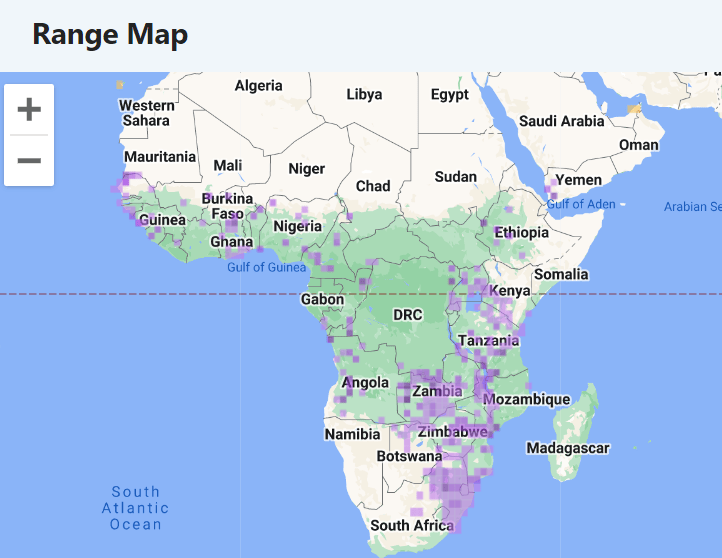
Distribution: Found in south-western and north-eastern Africa.
Diet: Primarily seeds, with insects consumed, especially during breeding seasons.
Interesting Fact: Courtship rituals for the Zebra Waxbill are elaborate, involving bowing and mutual preening.
3. European Robin ( Erithacus rubecula )
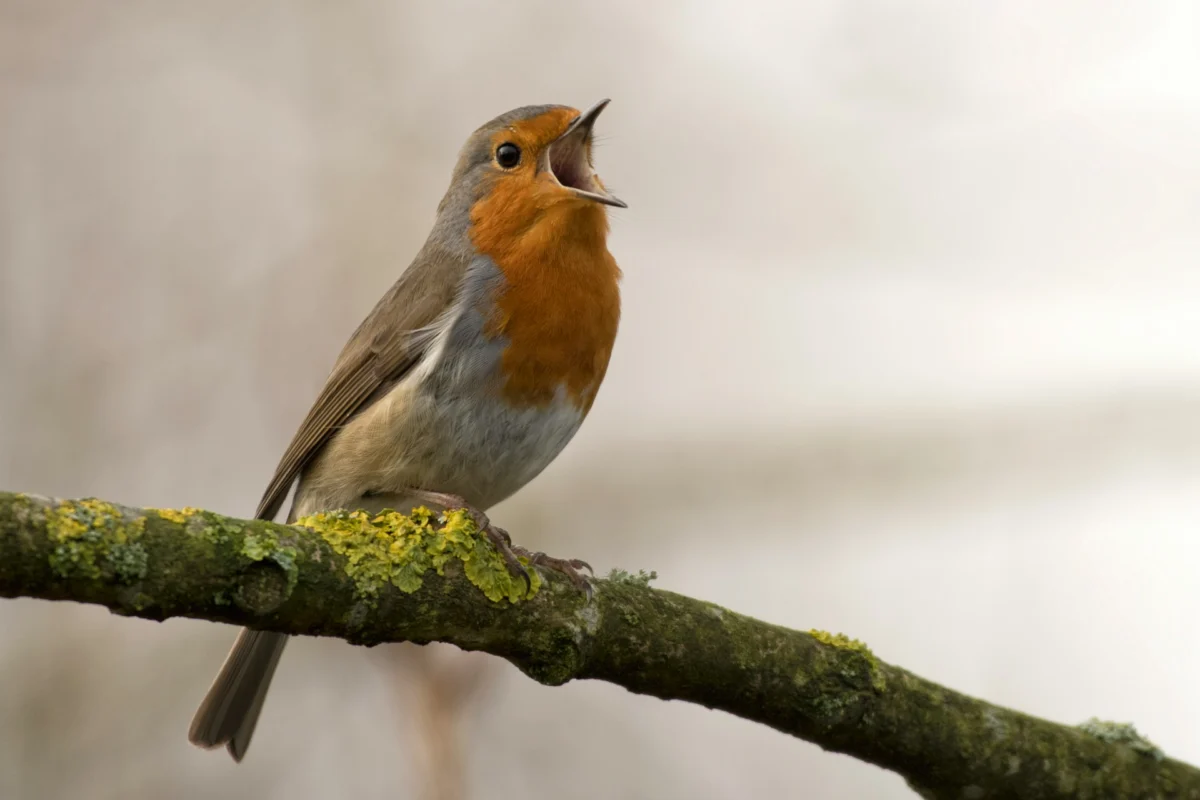
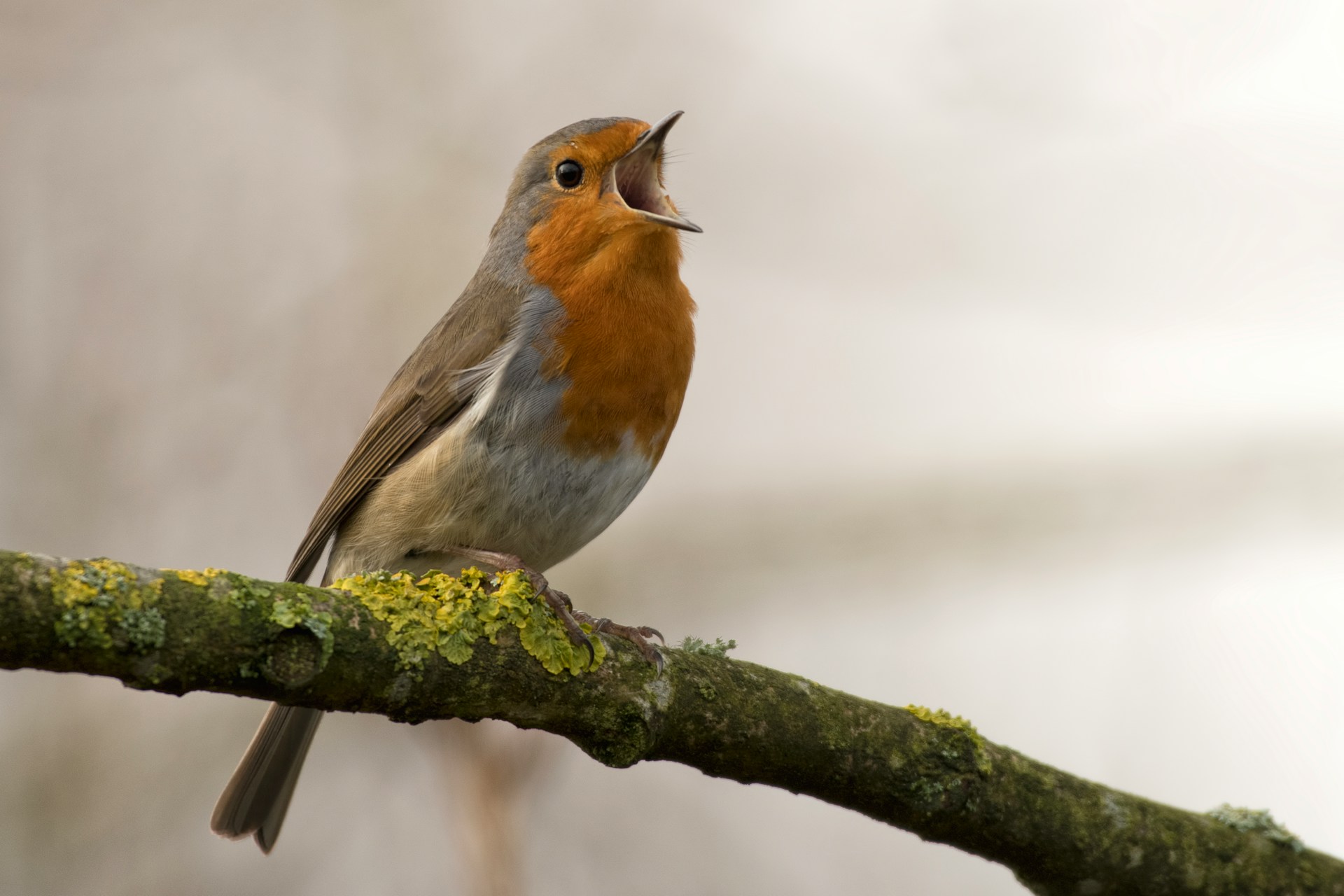
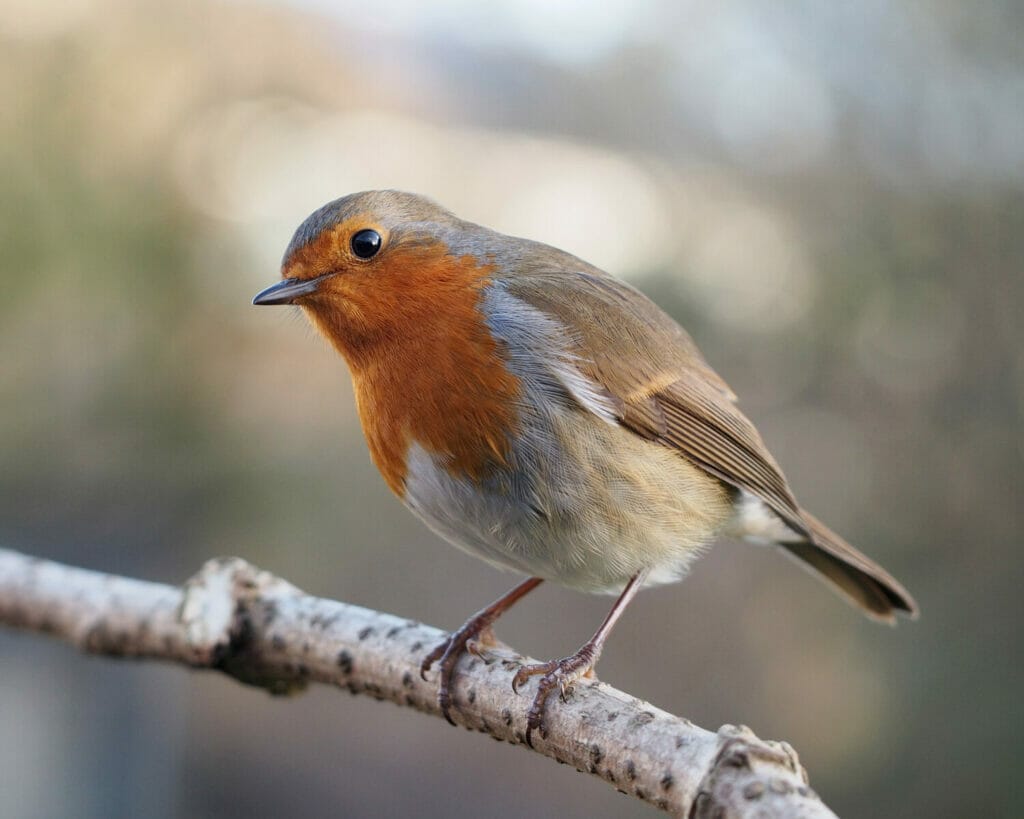
A beloved bird across Europe, the European Robin is instantly recognizable by its bright orange-red breast and face, which contrasts with its brown upperparts and paler underparts. This "robin red-breast" is a familiar sight in gardens and woodlands.

Identification and Size: Small, round birds, about 5.5 inches long, weighing 0.49 to 0.88 ounces.
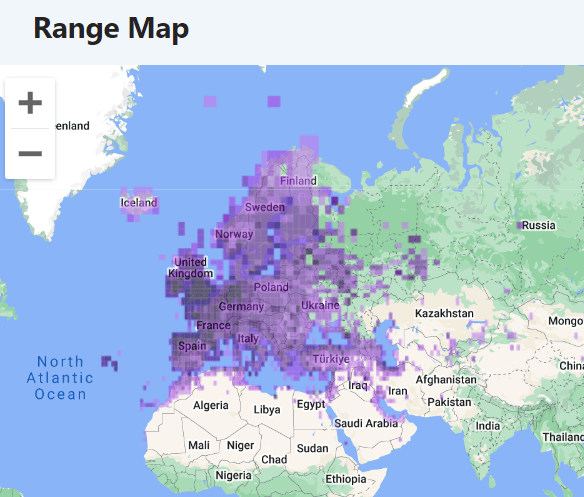
Distribution: Common throughout Europe, extending into northern Africa and the Middle East.
Diet: A varied diet including small vertebrates, invertebrates, fruits, and seeds.
Interesting Fact: European Robins possess a wide repertoire of calls and songs, which change throughout the year and can include mimicry.
4. Sharp-shinned Hawk ( Accipiter striatus )
Among raptors, the Sharp-shinned Hawk presents a brown plumage with a streaky orange or buff-colored breast, particularly noticeable in juveniles and females. Adult males can be darker. These agile hunters are adept at maneuvering through dense forests to catch their prey.

Identification and Size: Small hawks, ranging from 9.4 to 13.4 inches in length with a wingspan of 16.9 to 22.1 inches. Weight is between 3.1 and 7.7 ounces.
Distribution: Resident across the United States and Canada, extending into Central America and parts of South America.
Diet: Primarily small birds, often caught near backyard feeders.
Interesting Fact: The hawk’s name derives from its featherless legs, which extend all the way to the toes.
5. Orange-breasted Trogon ( Harpactes oreskios )
Found in the lush forests of Southeast Asia, the Orange-breasted Trogon exhibits a striking orange breast that is bordered by yellow. Both sexes share this characteristic, with cinnamon-brown backs and black and white wing bars. Their olive-yellow heads and necks provide a subtle contrast.
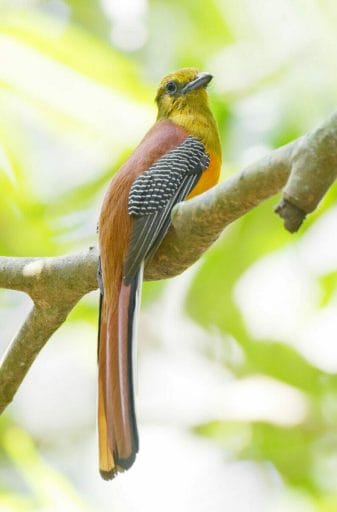
Identification and Size: Medium-sized birds, measuring 9.8 to 12.2 inches in length and weighing 1.7 to 2 ounces.
Distribution: Lowland forests of Southeast Asia.
Diet: A varied diet of insects and plant material, gathered from the ground and mid-canopy.
Interesting Fact: Trogons employ a "sally-stall" hunting technique, startling insects by briefly hovering in front of them before pouncing.
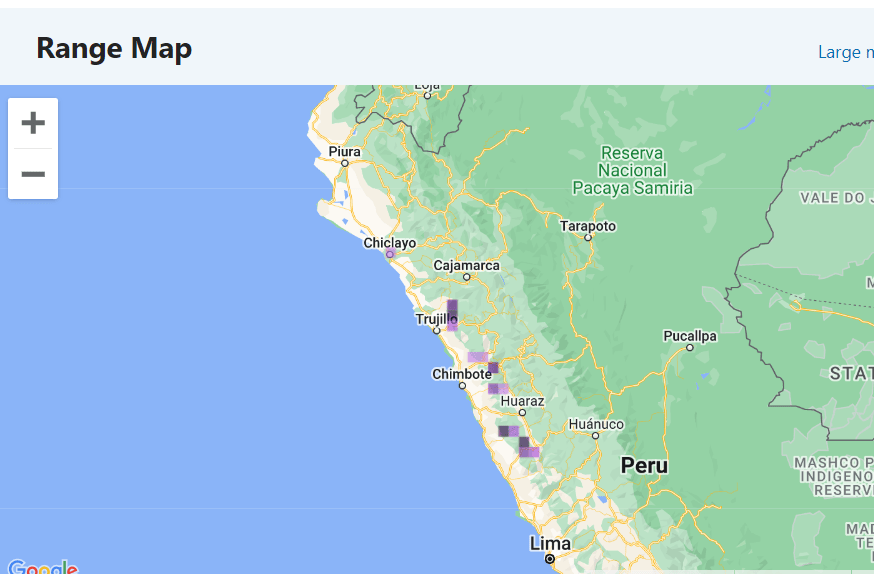
6. Russet-bellied Spinetail ( Synallaxis zimmeri )
This rare and endangered spinetail, endemic to Peru, features a distinctive russet-orange breast that extends down to its belly and tail, contrasting with its gray-brown upperparts. Its limited distribution and vulnerability make it a significant species for conservation efforts.

Identification and Size: Small birds, approximately 6.5 to 6.7 inches long, weighing 0.42 to 0.49 ounces.
Distribution: Western Peru, in the Andes.
Diet: Primarily flying insects and spiders.
Interesting Fact: Habitat loss and lack of suitable corridors for range expansion are the primary threats to the survival of this species.
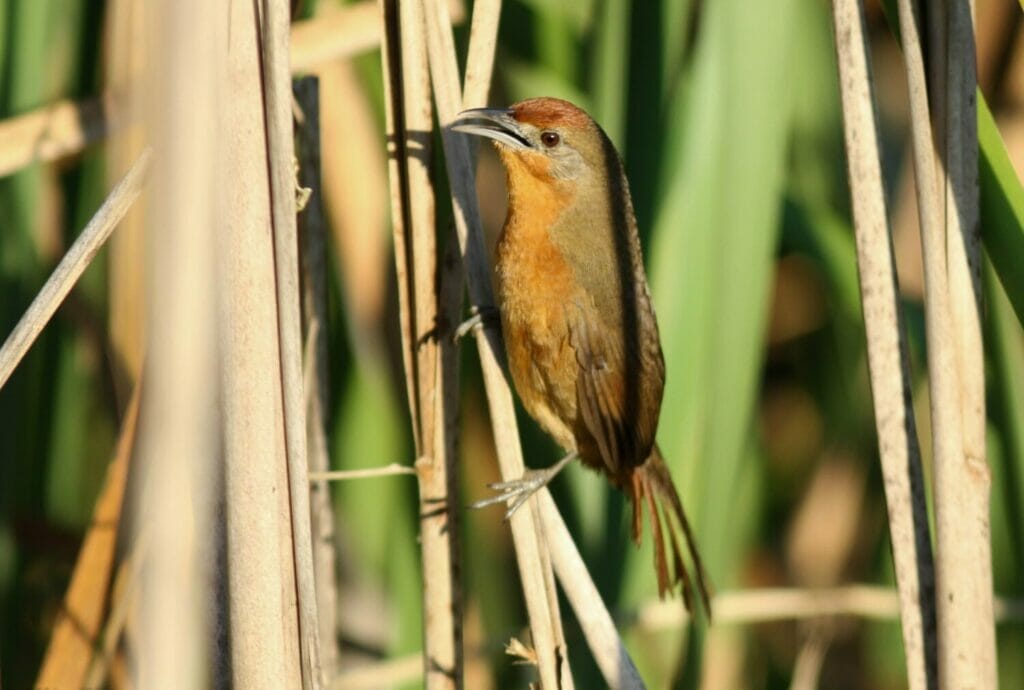
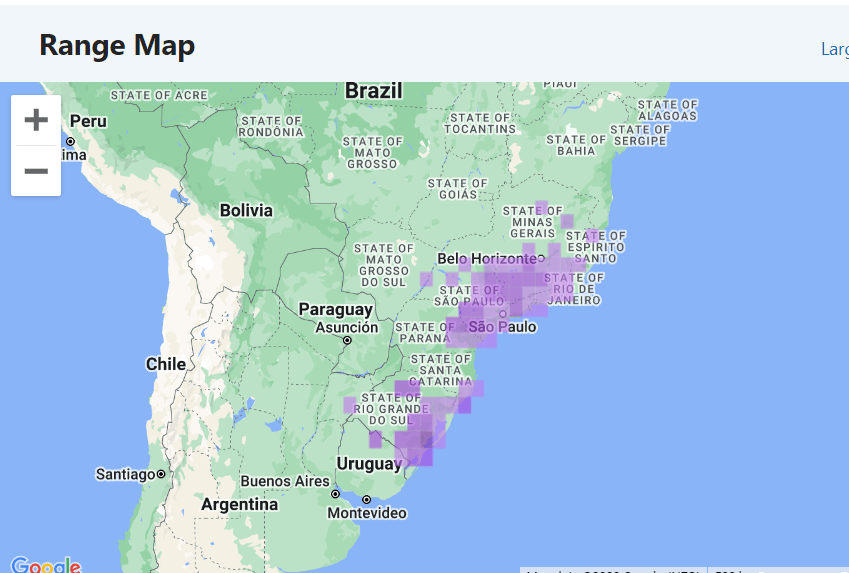
7. Orange-breasted Thornbird ( Phacellodomus ferrugineigula )
Despite its predominantly brown plumage, the Orange-breasted Thornbird is a stunning species. Its warm brown tones transition into a muted orange on its breast, creating an attractive display. These birds are found in wetland and marsh habitats in South America.

Identification and Size: Birds measuring 7 to 7.2 inches in length, weighing 0.84 to 0.88 ounces.
Distribution: Eastern South America, inhabiting wetland and marsh environments.
Diet: Believed to feed mainly on arthropods, though research is limited.
Interesting Fact: This elusive bird’s common name appears in numerous languages, highlighting its presence in diverse linguistic regions.
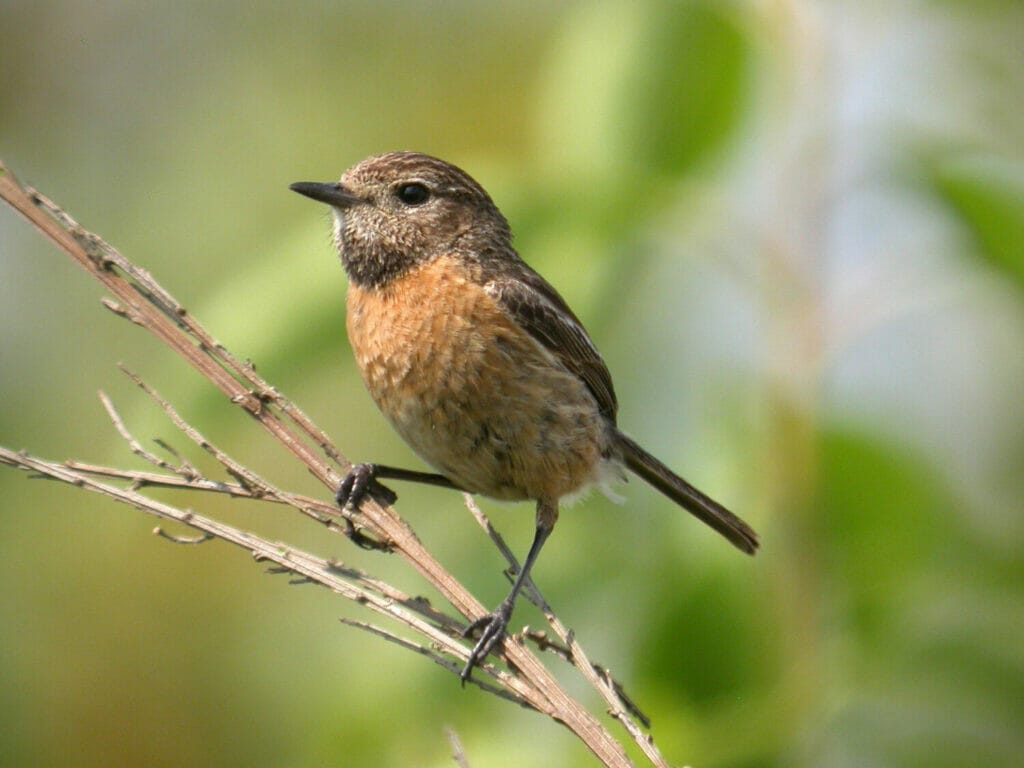
8. European Stonechat ( Saxicola rubicola )
The female European Stonechat fits our criteria perfectly. She is predominantly brown with a pale buff belly that transitions into an orange chest. These birds are common across Europe, North Africa, and the Middle East.
Identification and Size: Small birds, around 5 inches in length, weighing 0.5 to 0.6 ounces.
Distribution: Widespread throughout Europe, extending into North Africa and the Middle East.
Diet: Primarily insects and their larvae, with occasional consumption of seeds or fruit.
Interesting Fact: The Stonechat earns its name from its call, which resembles the sound of stones being clicked together.
9. Brambling ( Fringilla montifringilla )
During its non-breeding season, the Brambling, a type of finch, displays an attractive orange breast. This is complemented by a white rump and intricate patterns of brown, black, and white on its wings. These migratory birds are found across Europe and Asia.
Identification and Size: Small finches, 5.3 to 6.2 inches long, weighing 0.6 to 1 ounce.
Distribution: Widespread across Western Europe and Asia, reaching as far as Japan.
Diet: Primarily fruits and seeds, with opportunistic insect consumption.
Interesting Fact: Bramblings are known for their migratory behavior, sometimes forming massive flocks numbering in the millions across Europe.
10. Barn Swallow ( Hirundo rustica ) – A Near Miss
While not strictly brown, the Barn Swallow is a highly recognizable bird with a distinct rusty-orange or reddish-brown breast and a dark, iridescent blue-black back. It was considered for this list due to its prominent orange chest, but its primarily blue-black upperparts and migratory nature across continents, including North America, Europe, Asia, and Africa, make it a notable contender that almost fits the criteria. Its widespread presence and distinctive coloration make it a familiar sight for many.
Identification and Size: Medium-sized swallows, typically 6.5 to 7.5 inches in length with a wingspan of 12 to 14 inches.
Distribution: One of the most widespread birds in the world, breeding across the Northern Hemisphere and wintering in the Southern Hemisphere.
Diet: Primarily flying insects, caught in mid-air.
Interesting Fact: Barn Swallows are renowned for their acrobatic flight and their ability to navigate vast distances during migration.
Conclusion: A Palette of Brown and Orange
While the initial goal was to find precisely ten brown birds with orange chests, the exploration yielded nine definitive examples, with the Barn Swallow serving as a fascinating near-miss due to its upperpart coloration. This journey, however, underscores the incredible diversity within the avian world and the intricate ways in which evolution has shaped bird plumage for survival and reproduction. From the well-known American Robin to the endangered Russet-bellied Spinetail, each species highlights the beauty and complexity of nature’s color palette. The Orange-breasted Thornbird, with its unexpectedly vibrant chest against a generally brown form, stands out as a particularly captivating example, reminding us that even seemingly muted birds can possess extraordinary beauty. This avian survey serves as a testament to the importance of global conservation efforts and the continued fascination that birds inspire.
Frequently Asked Questions
Q: What is the most common bird with an orange belly in the United States?
A: In the United States, the American Robin is the most commonly encountered bird with a distinctly orange belly. Its widespread distribution and presence in urban and suburban environments make it highly visible.
Q: Are there any swallow species with orange chests?
A: Yes, the Barn Swallow possesses a prominent rusty-orange or reddish-brown breast. While its upperparts are blue-black, its chest coloration is a defining feature.

Q: Which birds are black with orange bellies?
A: Numerous species of orioles, such as the Baltimore Oriole and the Orchard Oriole, are characterized by black backs and vibrant orange or yellow bellies.
Q: Can you name a bird that is predominantly reddish-brown?
A: The Brown Thrasher is a notable example of a bird that is a rich reddish-brown. However, its breast is buff-colored rather than distinctly orange, which prevented its inclusion in the primary list.

