


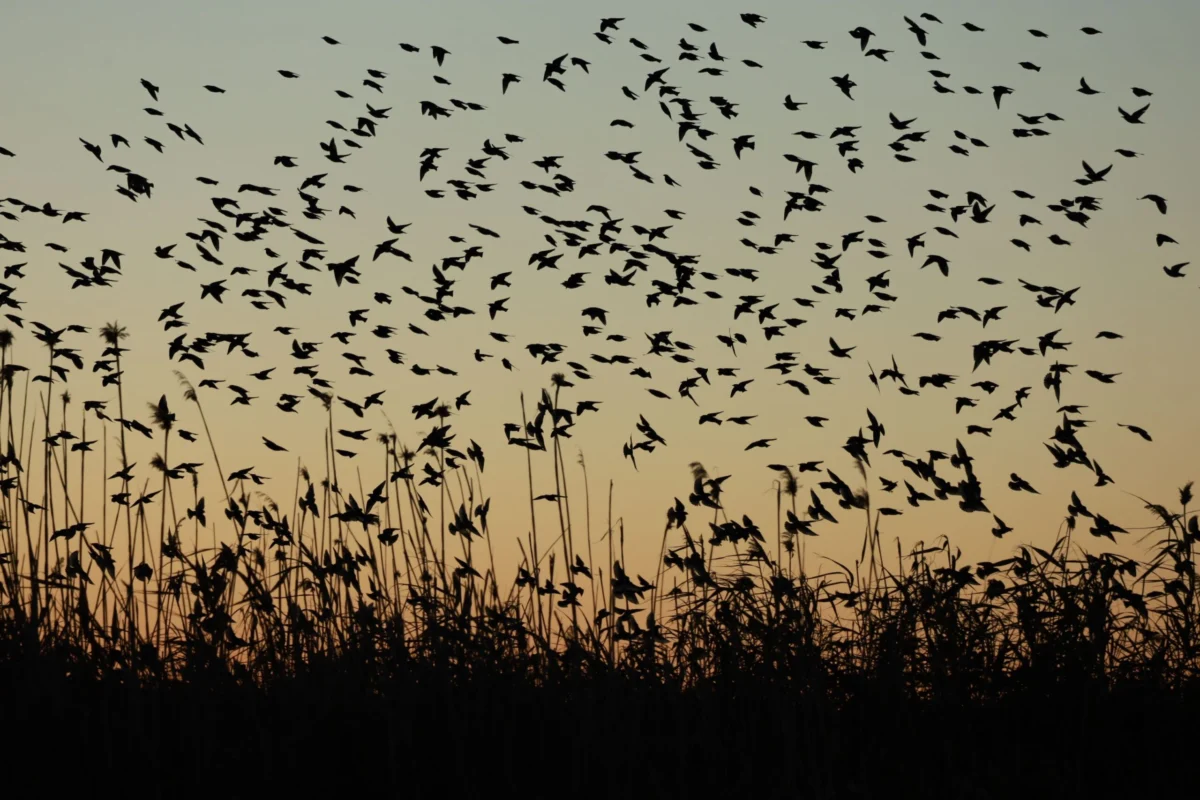
If you step outside tonight and look up at the dark expanse of the sky, you will likely see only the distant flicker of stars or the silhouette of passing clouds. Yet, unbeknownst to the vast majority of the human population, a biological phenomenon of staggering proportions is unfolding hundreds of feet above our heads. Across the North American continent, millions of birds are currently engaged in one of the most perilous and impressive journeys in the natural world: the annual fall migration. This massive movement of wildlife, which typically spans from mid-August through mid-November, represents a fundamental shift in global biodiversity, yet it occurs almost entirely under the cloak of darkness.
The Invisible Migration: A Nocturnal Phenomenon
While birdwatchers often focus on the vibrant arrivals of spring, the autumn migration is a sophisticated, high-stakes logistical operation. According to data provided by BirdCast, an innovative project led by the Cornell Lab of Ornithology and its partners, more than 80% of migratory bird species in North America prefer to travel at night. This nocturnal preference is not merely a quirk of behavior; it is an evolutionary adaptation designed to ensure survival.
By traveling after sunset, birds gain several distinct biological advantages. The primary benefit is thermal regulation. The intense physical exertion of long-distance flight produces significant internal body heat; by flying in the cooler temperatures of the night, birds avoid the risk of overheating and reduce their need for water, which is a precious commodity during grueling multi-day journeys. Furthermore, the nocturnal atmosphere is often more stable, with less turbulence, allowing for more efficient wing-beats and energy conservation. Perhaps most importantly, the night sky provides a temporary sanctuary from the visual predators that haunt the daylight hours, such as hawks and falcons.
Technology Meets Ornithology: Tracking the Unseen
For decades, the sheer scale of this migration remained a mystery, quantified only by anecdotal observations or sporadic sightings of "waves" of birds passing the moon. Today, however, the integration of weather surveillance radar—the same technology used to track thunderstorms and hurricanes—has revolutionized our understanding.
The US weather surveillance radar network consists of over 140 stations, each capable of detecting biological targets in the atmosphere. By filtering out rain and wind, scientists can identify the distinct "echoes" of migrating bird flocks. These radar returns allow researchers at BirdCast to estimate the total number of birds in flight, their flight speed, the altitude of their movement, and their heading. The resulting real-time migration maps have transformed a once-hidden event into a transparent, observable data set that is accessible to the public.

The Geography of Flight: Navigating the Flyways
The migration is not a chaotic dispersal but a structured movement along well-defined corridors known as flyways. These routes serve as the "highways of the sky," funneling birds toward specific wintering grounds in the southern United States, Mexico, the Caribbean, and as far south as Central and South America.
The four major flyways—the Atlantic, Mississippi, Central, and Pacific—are dictated by topography, prevailing wind patterns, and the availability of stopover habitats. For instance, the Atlantic Flyway runs along the eastern seaboard, where birds often utilize coastal barrier islands to rest and refuel. The Mississippi Flyway acts as a funnel for the interior of the continent, following the river systems that provide essential water and foraging resources.
The intensity of migration across these routes is highly dynamic. On any given night, weather patterns act as a regulator for the flow of traffic. A strong tailwind can encourage a massive "pulse" of migration, while a severe cold front or a storm system can act as a barricade, forcing millions of birds to remain grounded in stopover habitats until conditions improve.
A Historic Record of Movement
The sensitivity of the radar monitoring systems has enabled researchers to quantify the magnitude of these migrations with unprecedented accuracy. A watershed moment occurred in September 2025, when the BirdCast network recorded the passage of more than 1.2 billion birds in a single night. This event, which dwarfed previous estimates, set a record for the largest nocturnal migration event captured since the project began formal tracking in 2018.
Such record-breaking nights highlight the immense reliance of North American ecosystems on this movement. These birds are not just travelers; they are essential ecosystem engineers, providing pest control, seed dispersal, and pollination services as they move across the continent. When these billions of birds disappear from the sky, they are arriving in new environments where they play a critical role in maintaining ecological balance.
The Next Frontier: Identifying Species from the Air
While radar has long been able to tell us that birds are moving, it has traditionally struggled to tell us which birds are moving. This limitation was a significant hurdle for conservationists attempting to track the status of specific, vulnerable populations. However, a major technological breakthrough in 2026 has bridged this gap.

Researchers from the Cornell Lab of Ornithology, in collaboration with the University of Massachusetts Amherst and the University of Illinois, have developed the "BirdFlow Migration Traffic Rate" model. This sophisticated algorithm synthesizes two distinct data streams: weather-radar observations and more than 2 billion individual bird sightings submitted by citizen scientists via the eBird platform.
By matching the timing and location of radar-detected movements with the known migration timing of specific species, the model can now generate species-specific migration estimates. This means that, for the first time, scientists can predict the movement of individual species on a weekly basis across the continent. This shift from "general bird movement" to "species-specific tracking" provides a powerful tool for conservation. It allows local governments and urban planners to identify when vulnerable species are passing over their cities, enabling them to implement "Lights Out" programs—dimming non-essential building lights to prevent fatal collisions, which remain a leading cause of avian mortality during migration.
Broader Implications and Conservation Challenges
The ability to map migration with such precision comes at a critical time. North American bird populations have faced significant declines over the last several decades due to habitat loss, climate change, and increased light pollution. The data provided by projects like BirdCast are now being used to inform public policy, such as the timing of wind energy turbine operation to minimize collision risks and the protection of "stopover" sites—the crucial refueling stations that allow birds to complete their multi-thousand-mile journeys.
Experts at the Cornell Lab of Ornithology have noted that the success of these initiatives depends heavily on the public. By checking the BirdCast dashboard, homeowners and businesses can learn when the peak migration nights are occurring in their local counties. Armed with this information, they can take simple, science-backed steps, such as turning off decorative lighting during migration peaks, which can significantly improve the survival rates of the millions of creatures passing through the night sky.
Conclusion: A Shared Responsibility
The migration of birds is a testament to the resilience and complexity of the natural world. While we remain largely separated from this process by our own biological limitations and the nature of nocturnal flight, we are no longer oblivious to it. Through the convergence of weather surveillance, machine learning, and citizen science, we have gained a "window" into the night sky.
As we progress through the peak of the fall migration, the data serves as a reminder that we share our environment with a vast, invisible, and vulnerable population. Whether you are an avid birdwatcher or a casual observer, the knowledge that billions of birds are currently navigating by the stars and the wind provides a deeper connection to the planet. Understanding this silent, record-breaking journey is not just an academic exercise; it is an essential step toward ensuring that these remarkable travelers continue to grace our skies for generations to come. The next time you walk outside on a cool, clear evening, remember that you are standing beneath a global highway, witnessing the most significant wildlife migration event on the planet, hidden only by the dark.

