


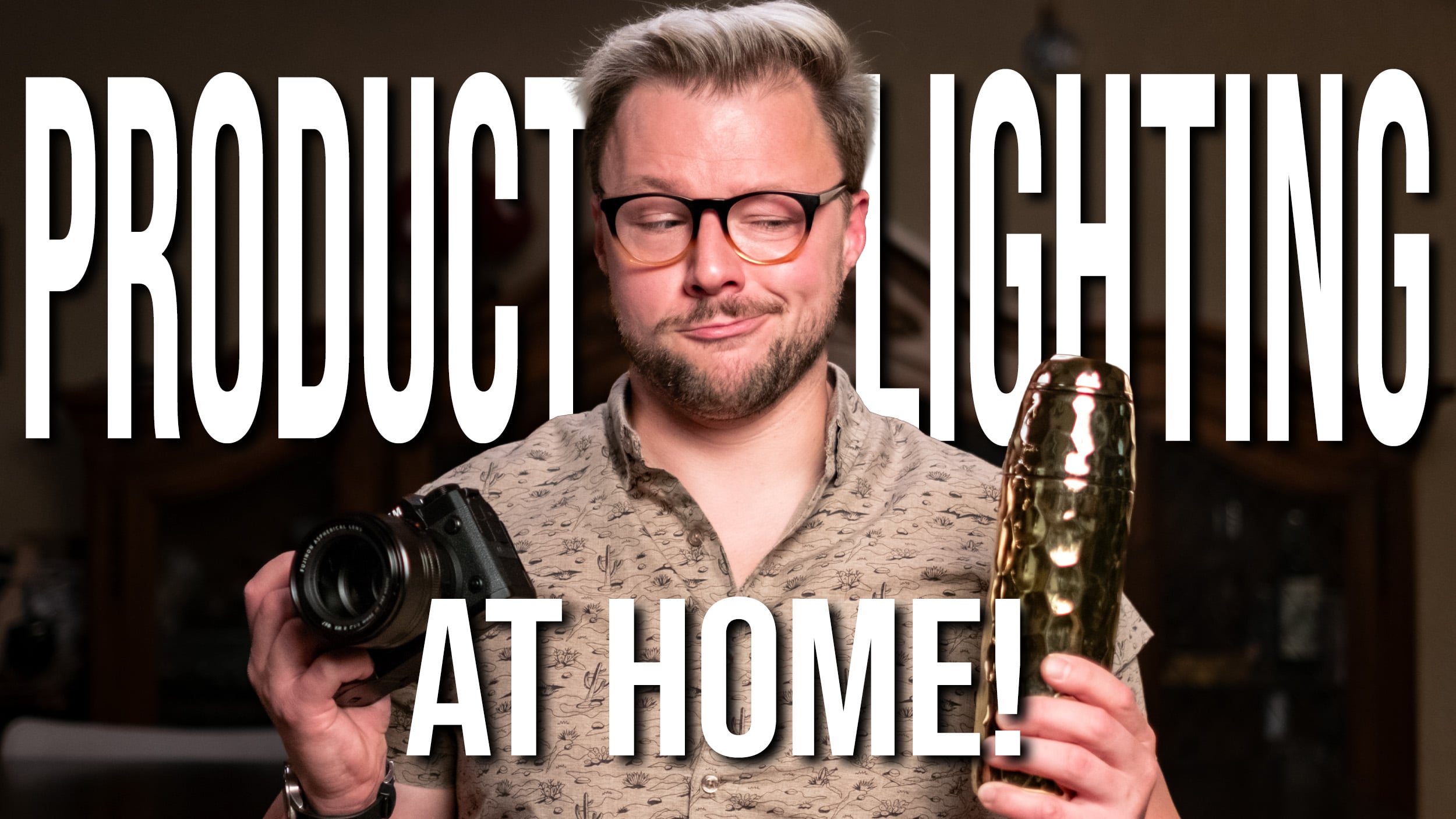
The intersection of professional product marketing and home-based content creation has reached a new level of sophistication as creators prove that high-fidelity commercial work no longer requires a traditional studio environment. In a recent project involving an unreleased cocktail shaker from a prominent culinary brand, the production process highlighted how technical expertise in lighting and motion can overcome the spatial limitations of a domestic dining room. The project, which transitioned from a simple consumer feedback request into a full-scale promotional video production, serves as a benchmark for the "prosumer" movement in digital marketing.
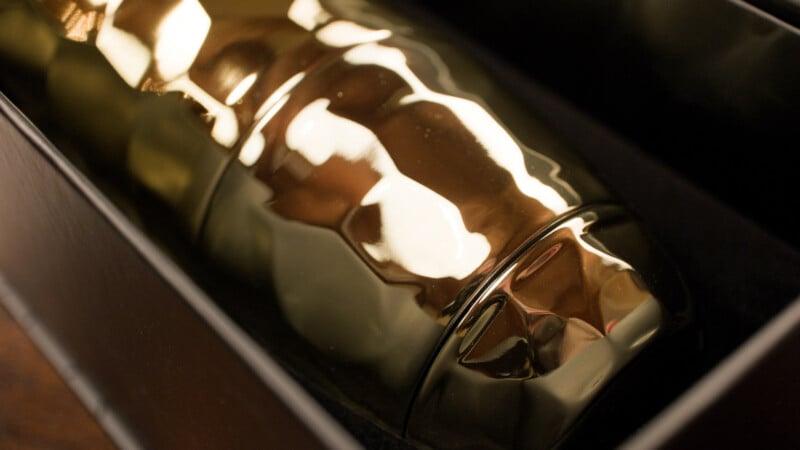
The subject of the shoot—a high-polish, gold-faceted cocktail shaker—presented a classic challenge in product videography: extreme reflectivity. Such objects act as mirrors, capturing every unwanted element of a room, from windows to furniture. To achieve a professional aesthetic, the production required a rigorous approach to light shaping, the implementation of controlled motion, and a strategic use of high-frame-rate cinematography. This case study explores the technical methodologies employed to transform a residential space into a controlled production environment, reflecting broader trends in the $135 billion global digital advertising and video production industry.
Technical Framework: Lighting Control in Non-Traditional Spaces
The primary obstacle in residential videography is the presence of uncontrolled ambient light. In professional studio environments, "blackout" conditions are the standard, allowing the director of photography to build a lighting scheme from total darkness. In a dining room setting, this requires significant "light tighting" efforts. For this specific project, the production team utilized a "Plan B" strategy when shooting during daylight hours was unavoidable. This involved the use of blackout materials on primary light sources, such as large windows, and heavy drapes on secondary apertures.
The objective of light control in product photography is not merely to illuminate the subject but to "carve" its shape. Because the cocktail shaker featured multiple gold facets, the lighting needed to be directional yet soft enough to avoid "hot spots"—areas of overexposure where the metallic surface reflects the light source directly into the lens.
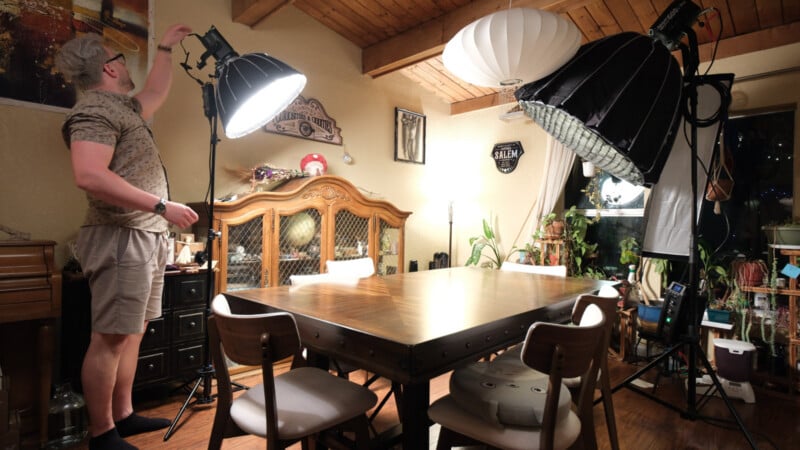
The lighting kit for this production included:
- Key Light: An Aputure 600 Bicolor LED equipped with a medium dome softbox. This served as the primary source, providing a broad, soft illumination over the "hero" area.
- Modifiers: The use of a grid on the softbox was critical. Grids narrow the beam of light, preventing "spill" from hitting the background or the camera lens, which maintains contrast and prevents lens flare.
- Edge/Rim Lighting: Two Nanlite 150 units were positioned to provide separation. One utilized a small circular dome softbox, while the other used a narrow Godox softbox, ideal for tight residential corners. These lights create a thin "rim" of light around the product, ensuring it does not blend into the background.
Color temperature management played a vital role in the visual narrative. By setting the lights between 2,700 and 2,900 Kelvin, the production matched the "warm" tones of a high-end lounge or home bar environment. This decision highlights a shift in modern product marketing toward "lifestyle-accurate" lighting, which feels more organic to the consumer than the clinical 5,600K daylight balance often used in traditional catalogs.
The Dynamics of Motion: Elevating Product Engagement
While static photography remains a staple of e-commerce, video marketing data suggests that motion significantly increases consumer engagement. According to recent industry metrics, product videos can increase conversion rates by up to 80%. In the context of this culinary project, motion was used to highlight the reflective geometry of the shaker.
The production utilized two primary forms of camera movement:
- Linear Motion: A motorized 30-inch slider was used for "push-ins" and "pull-outs." These movements create a sense of depth and scale, drawing the viewer’s eye toward the product’s finer details.
- Rotational Motion: To capture the way light dances across the gold facets, a motorized turntable was employed. By rotating the product rather than the camera, the production team could maintain a perfect focal plane while allowing the reflections to shift dynamically across the surface.
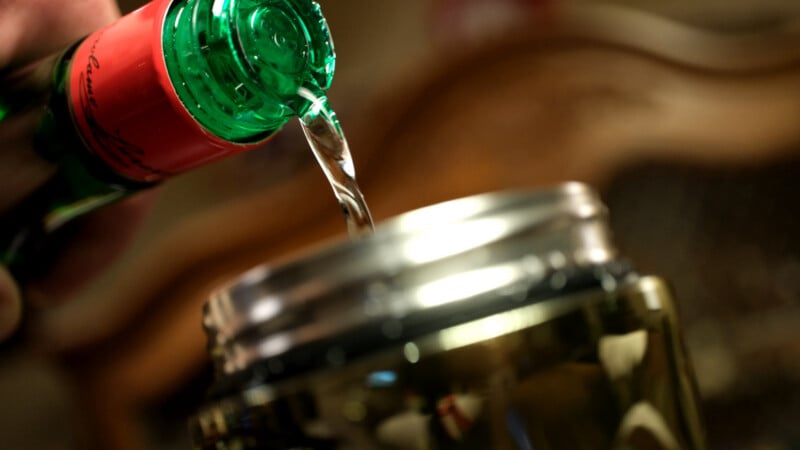
To further enhance the "premium" feel, many of these shots were captured at 120 frames per second (fps). When played back at a standard 24 fps, the resulting slow-motion footage provides a "dreamlike" quality that emphasizes the viscosity of liquids and the precision of the shaker’s construction. This technique is a standard in high-end beverage commercials, where the "pour" and the "shake" are the emotional anchors of the advertisement.
Chronology of Production: From Unboxing to Final Edit
The production followed a disciplined timeline to ensure all necessary "coverage" was obtained within the constraints of a single day.
- Phase 1: Environment Preparation (08:00 – 10:00): The dining room was cleared of non-essential items. Windows were blacked out using temporary mounting solutions, and the primary "stage"—a dark table—was polished to remove dust and fingerprints, which are magnified in macro videography.
- Phase 2: Lighting Rigging (10:00 – 12:00): The Aputure and Nanlite units were positioned. Test shots were taken to identify "specular highlights" on the shaker. Adjustments were made to the grids to ensure the light was hitting only the intended surfaces.
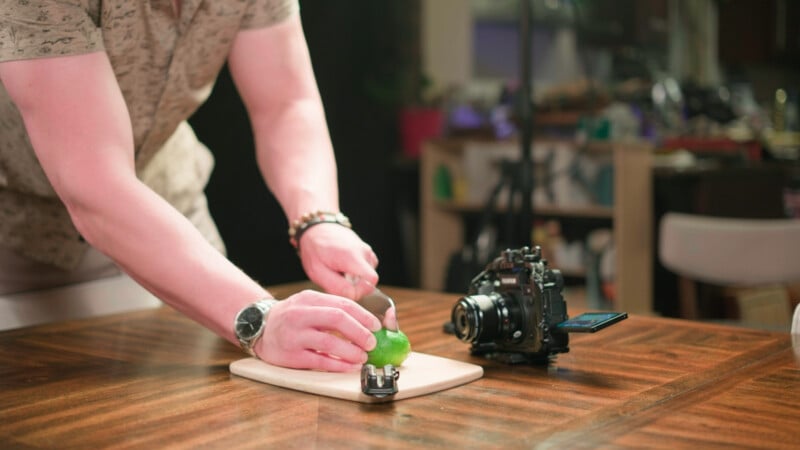
- Phase 3: Static and Macro Capture (12:00 – 14:00): The team focused on the "prep" shots. This included high-detail captures of citrus being sliced and lemons being squeezed. These shots utilized a tripod and manual focus to ensure the "action" stayed within a razor-thin depth of field.
- Phase 4: Kinetic Capture (14:00 – 16:00): The motorized slider and turntable were integrated. This phase focused on the "hero" shots of the shaker and the final cocktail.
- Phase 5: Creative Problem Solving (16:00 – 17:00): The "reverse tracking" shot was executed. To simulate a camera gliding over the product packaging, the camera remained stationary while the packaging was moved via the motorized slider. This creative inversion allowed for a level of stability that would be difficult to achieve with a handheld or even a traditional slider move in a cramped space.
Industry Context and the Democratization of Production
The success of this residential shoot reflects a broader transition in the media landscape. Traditionally, a brand seeking a promotional video for a new product would contract a creative agency, which would in turn hire a production house, involving crews of 10 to 20 people and daily overhead costs exceeding $10,000.
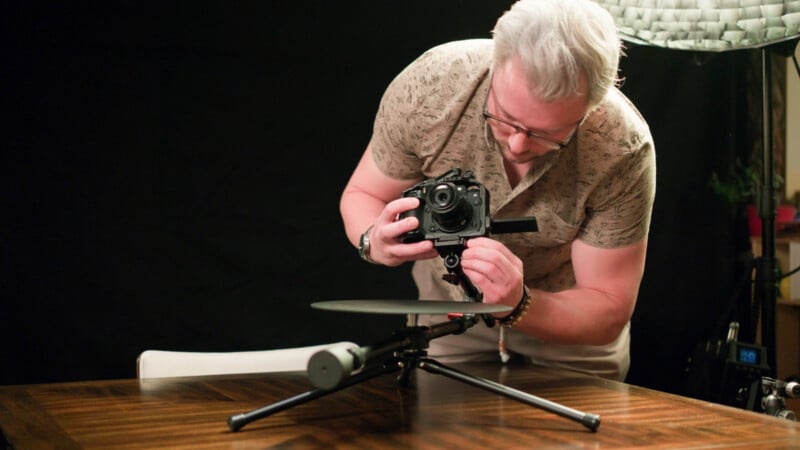
However, the rise of "prosumer" gear—equipment that offers professional-grade features at a consumer-accessible price point—has empowered solo creators to deliver similar results. Brands are increasingly recognizing the value of these "agile" creators. The ability to produce high-end visuals in a dining room reduces the "time-to-market" for social media campaigns and allows for more frequent content updates.
Industry analysts note that the "authenticity" of home-based or lifestyle-based content often resonates more deeply with modern consumers than overly polished studio work. By utilizing real environments but applying professional lighting principles, creators bridge the gap between "relatable" and "aspirational."
Analysis of Implications for Brands and Creators
The implications of this shift are twofold. For brands, the barrier to entry for high-quality video content has been significantly lowered. Small to mid-sized culinary brands can now compete with industry giants by partnering with skilled solo videographers who understand how to manipulate light and motion in any setting.
For creators, the project underscores that technical knowledge is more valuable than expensive real estate. The "moral of the story," as evidenced by this cocktail shaker shoot, is that the limitations of a space are often artificial. The ability to "black out" a room and "dial in" color temperature allows any 10×10 area to function as a studio.
Furthermore, the project highlights the importance of "manual" skills. In an era of increasing automation and AI-generated imagery, the physical orchestration of a "pour" shot or the manual focus-pulling of a citrus slice remains a high-value skill set. These "tactile" elements of production provide a level of sensory detail that consumers associate with quality and craftsmanship.
Conclusion: The Future of Residential Commercial Production
The successful creation of a professional promo video for a gold-faceted cocktail shaker in a residential dining room serves as a definitive proof of concept. It demonstrates that with a fundamental understanding of light shaping (using tools like Aputure and Nanlite), a strategic approach to motion (using sliders and turntables), and a willingness to solve problems creatively (such as reverse tracking), high-end commercial results are achievable outside the studio.
As the demand for video content continues to grow—with video projected to account for 82% of all internet traffic—the ability to turn a home into a production hub will become an essential skill for the modern marketer. The project confirms that the most important tools in a videographer’s kit are not just the lights and cameras, but the ability to control the environment and the commitment to challenging the perceived limitations of a space. The culinary brand’s unreleased shaker, now captured in a series of dynamic, high-polish shots, stands as a testament to the power of decentralized, high-quality production.

