


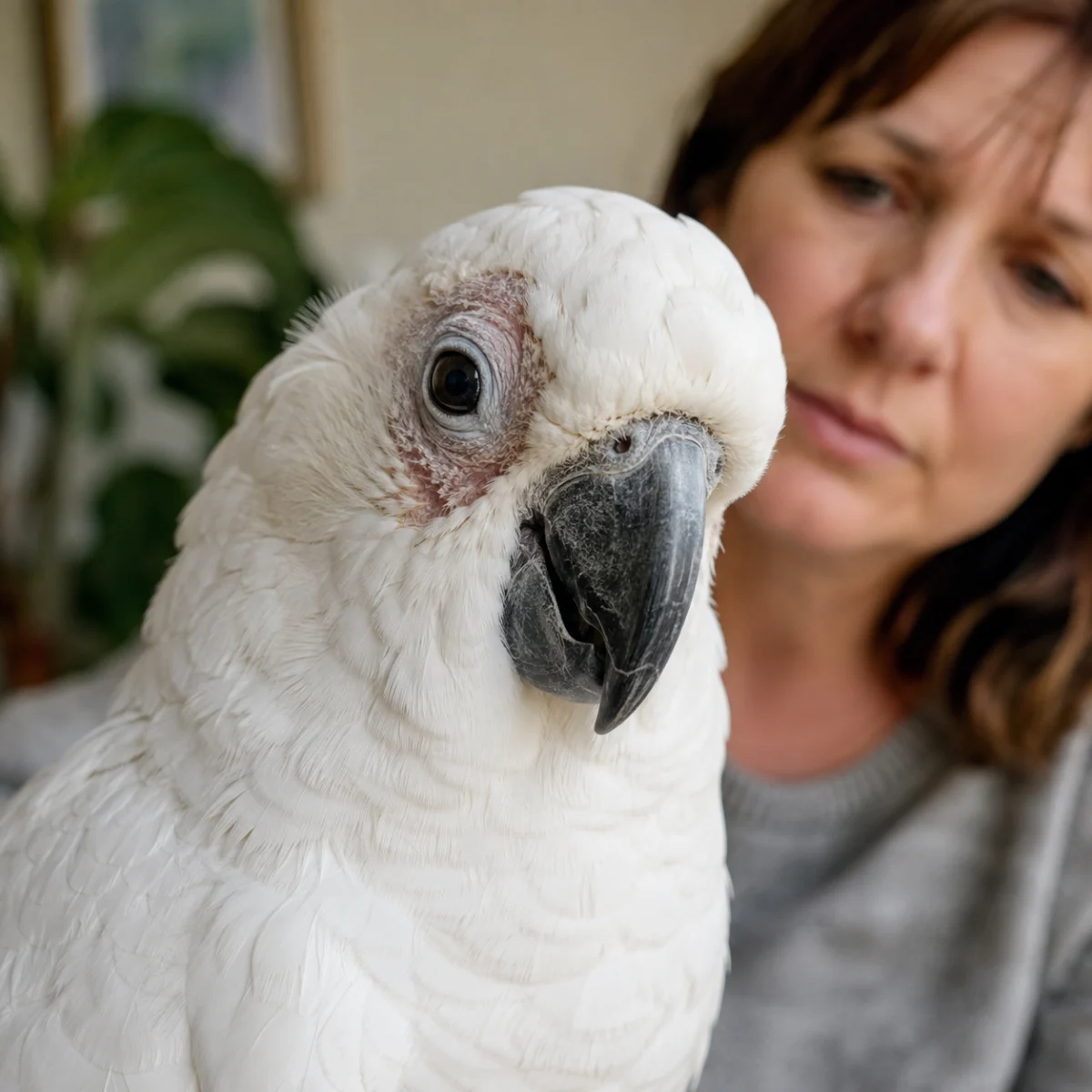
If you have noticed thinning feathers or a small bald area around your bird’s eye, this guide provides a systematic approach to evaluating the condition and determining when veterinary intervention is required. Detecting localized feather loss around the periorbital region—the area surrounding the eye—often creates significant anxiety for avian owners. While some degree of feather thinning can be a benign byproduct of the natural molting process, persistent or worsening baldness frequently signals underlying physiological, behavioral, or environmental stressors. Distinguishing between normal physiological replacement and pathological feather loss requires a careful assessment of the skin, the eye, the bird’s behavioral patterns, and the presence of any concurrent respiratory or systemic symptoms.
The Physiology of Molting vs. Pathological Feather Loss
In a healthy avian specimen, molting is a highly regulated, cyclical process wherein old feathers are shed and replaced by new growth. Because the feathers surrounding the face are diminutive, the loss of even a few quills can create the appearance of a thinning patch. In a standard molt, this process is symmetric, gradual, and accompanied by the emergence of "pin feathers"—new, keratin-sheathed feathers that emerge from the follicles. These pin feathers, or blood feathers, are the definitive sign of a healthy, ongoing replacement cycle.
Conversely, pathological feather loss is characterized by a failure of regrowth or an accelerating, asymmetrical bald patch. When a bird exhibits a distinct, expanding area of bare skin, it often indicates that the feathers are not simply falling out but are being removed or damaged by external forces. A primary diagnostic marker is the state of the surrounding skin; healthy skin should remain smooth and pigment-appropriate, whereas inflammation, crusting, or exudate suggests an active infection or dermatological ailment.
Diagnostic Checklist and Clinical Indicators
To accurately assess the bird’s condition, owners should observe the bird over a 48-to-72-hour period, maintaining a record of behavioral changes. A clinical evaluation should focus on four distinct quadrants: skin integrity, ocular health, feather growth patterns, and overall systemic behavior.
| Observation Indicator | Consistent with Normal Molt | Concerning for Pathology |
|---|---|---|
| Skin Condition | Smooth, non-pigmented, clean | Red, swollen, crusty, or moist |
| Ocular Status | Bright, clear, wide-open | Squinting, discharge, or closed |
| Regrowth | Visible pin feathers | Smooth, bare, or irritated skin |
| Bird Behavior | Active, normal appetite | Lethargic, rubbing face on perches |
| Area Evolution | Filling in gradually | Expanding or stationary baldness |
If the bird exhibits significant eye swelling, visible discharge, or persistent squinting, the situation has moved beyond a simple feather issue. These signs are often linked to ocular or sinus infections, which in avian species are anatomically interconnected with the nasal cavity and respiratory system.
Potential Causes of Periorbital Feather Loss
Once the possibility of a normal molt is ruled out, clinicians and avian specialists typically investigate three primary categories of causality: physical trauma (rubbing), secondary complications from illness, and behavioral overpreening.
The Mechanics of Friction and Rubbing
Parrots are generally unable to reach their own eyes with their beaks, making self-plucking in the periorbital region less common than in other areas of the body. However, birds experiencing pruritus (itching) or discomfort—often due to allergies, dust, or localized infections—may attempt to alleviate the sensation by rubbing their faces against cage bars, toys, or perches. This repeated mechanical friction is sufficient to break the delicate shafts of facial feathers, leading to a localized "bald spot" that is actually a result of self-inflicted trauma.
Sinus and Ocular Involvement
The avian sinus system is closely linked to the eyes. An infection in the infraorbital sinus can cause swelling that pushes against the orbit, causing the bird to experience pain or irritation. This leads to the classic clinical presentation of a wet, matted, or bald eye region. If the feather loss is accompanied by sneezing, nasal discharge, or changes in vocalization, the issue is likely systemic rather than dermatological. In these instances, the feather loss is a secondary symptom of an underlying respiratory infection.
Behavioral Interactions and Social Grooming
In multi-bird households, "allopreening"—the mutual grooming of feathers—is a vital social behavior. However, this interaction can occasionally become aggressive or compulsive. If one bird consistently focuses on the periorbital region of its companion, the resulting damage can resemble a skin disease. Monitoring the social dynamics of a flock is essential to determine if one individual is causing the feather loss in another.
Dermatological Factors and the Myth of Mites
A common misconception among pet owners is that localized baldness is caused by mites. While external parasites can affect birds, they are statistically less common in indoor pet parrots than in poultry or outdoor-housed birds. Furthermore, mites rarely present as a single, clean bald spot. They are more likely to cause significant scaling, thickening of the skin (hyperkeratosis), or roughened, crusty lesions on the beak and cere.
The application of over-the-counter mite sprays or oils is strongly discouraged. These products can be toxic if inhaled or ingested, and they may severely irritate the sensitive tissue around the eye. Any diagnosis regarding skin health must be confirmed via a professional physical examination by an avian veterinarian, who may perform skin scrapings or cytological analysis to identify the presence of bacteria, fungi, or parasites.
Nutritional Considerations in Avian Health
Nutrition serves as the foundation for integumentary health, including the maintenance of skin, feathers, and mucous membranes. Vitamin A deficiency is a significant concern for birds on a strictly seed-based diet, as it is critical for the health of the epithelial tissues in the eyes, sinuses, and respiratory tract.
While a dietary deficiency is rarely the sole cause of a singular, isolated bald spot, it can contribute to a systemic vulnerability that makes a bird more prone to secondary infections. A transition to a high-quality formulated diet supplemented with dark, leafy greens and beta-carotene-rich vegetables, such as carrots or sweet potatoes, can support long-term feather regeneration. However, nutrition is a preventative and supportive measure; it should not be viewed as a standalone treatment for active skin or eye lesions.
Chronology of Observation and Veterinary Intervention
If an owner identifies a bald patch, they should initiate a timeline of observation. The following protocol is recommended for most non-emergency cases:
- Document: Take high-resolution photographs of the area.
- Monitor: Observe the bird for 72 hours for signs of expansion or increased irritation.
- Isolate: If the bird lives with a companion, monitor for overpreening behaviors.
- Evaluate: Assess the bird’s appetite, energy levels, and respiratory rhythm.
If the area remains stable and the bird is otherwise acting normally, it may be monitored through the next molting cycle. However, immediate veterinary attention is required if the bird exhibits "red flag" symptoms:
- Ocular discharge: Any fluid, pus, or crusting around the eye.
- Behavioral lethargy: A reduction in food intake or activity levels.
- Respiratory distress: Tail-bobbing while breathing, open-mouthed breathing, or audible clicking sounds.
- Rapid progression: A bald patch that grows noticeably in size over 24 to 48 hours.
Conclusion and Clinical Implications
Feather loss around the eye is a multifactorial issue that requires a nuanced assessment. While the process of molting is a natural event that necessitates patience and observation, the emergence of an expanding bald patch or associated clinical signs—such as ocular inflammation or behavioral distress—requires the expertise of an avian veterinarian.
Owners should avoid the temptation to self-diagnose or apply topical treatments without professional guidance. The goal of veterinary intervention is to distinguish between benign structural changes and symptomatic evidence of deeper health issues. By prioritizing a holistic view of the bird—evaluating the environment, diet, social interactions, and physical health—owners can ensure that their birds receive the necessary care to maintain healthy plumage and overall vitality. Understanding the difference between a natural cycle and a medical alert is the first step in providing high-quality, long-term care for companion birds.

