


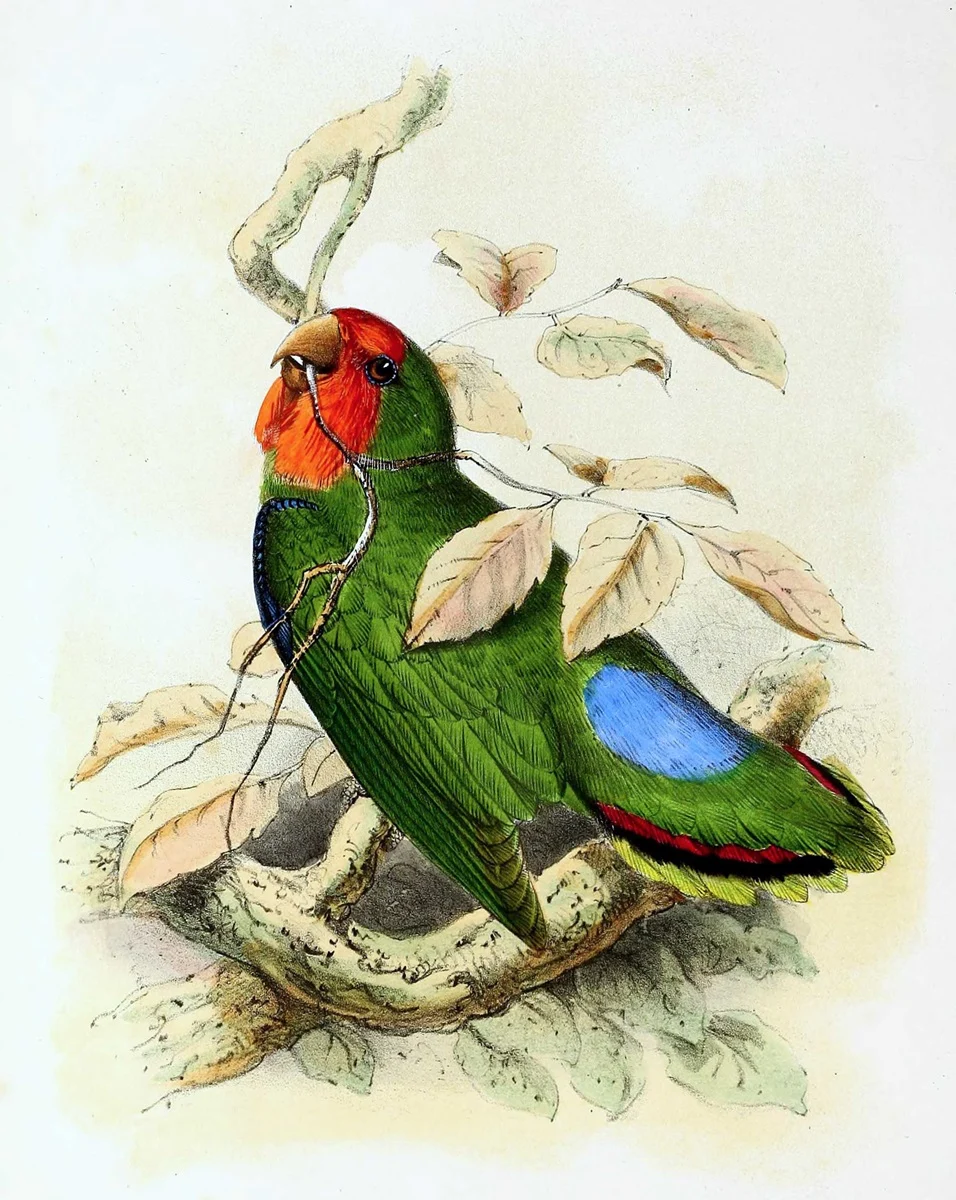
While the popular image of a pet parrot often involves the gregarious peach-faced or Fischer’s lovebirds perched comfortably on a shoulder, the wider avicultural community harbors lesser-known species that defy typical domestic expectations. Among these is Agapornis pullarius, commonly known as the red-headed or red-faced lovebird. Indigenous to the tropical savannahs of West and Central Africa, this vibrant psittacine remains a rarity in captivity. Unlike its more resilient, highly domesticated cousins, the red-headed lovebird is notoriously sensitive, easily stressed, and rarely kept outside of specialized aviaries managed by dedicated ornithologists and advanced breeders.
Understanding the ecological footprint, behavioral complexities, and conservation status of Agapornis pullarius provides critical insight into the broader challenges facing African avifauna. As human expansion encroaches upon traditional habitats and the global pet trade continues to exert pressure on wild populations, examining the realities of this elusive species has become increasingly urgent for conservationists and avian researchers alike.
Geographical Range and Natural Habitat Dynamics
The natural distribution of the red-headed lovebird spans a distinct, albeit patchy, horizontal band across the African continent. Stretching from the West African nation of Guinea eastward through Central Africa to the borders of Ethiopia, the species is primarily localized within sub-Saharan tropical lowland savannahs. Unlike migratory birds that undertake extensive seasonal journeys, Agapornis pullarius is predominantly sedentary.
Ecological surveys indicate that these birds exhibit a strong preference for savannah landscapes interspersed with sparse tree cover. They deliberately avoid dense primary rainforests, favoring open or semi-open terrain where they can forage and locate nesting sites. Typically observed traveling in pairs or small, tight-knit flocks numbering up to a few dozen individuals, the red-headed lovebird occupies elevations ranging from sea level up to approximately 2,000 meters (roughly 6,550 feet), though sightings are statistically more frequent at lower altitudes.
Morphology and Taxonomic Distinctions
Biologically, the red-headed lovebird is a striking psittacine characterized by a brilliant emerald-green body contrasted sharply by a vivid scarlet face and beak. Subtle secondary features include a flash of iridescent blue on the mantle and a narrow red band accenting the tail feathers.
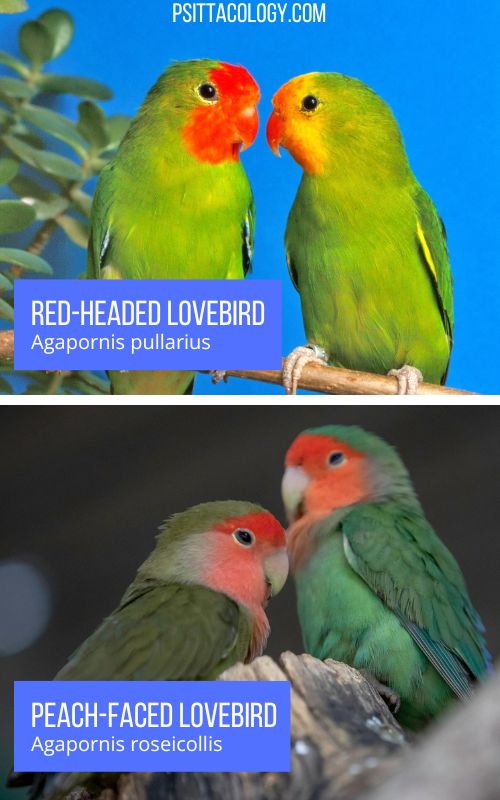
Avian enthusiasts frequently confuse Agapornis pullarius with the peach-faced lovebird (Agapornis roseicollis), a species vastly more common in mainstream aviculture. However, morphological differentiation is straightforward when examining the bill: the red-headed lovebird features a distinctively bright red beak, whereas the peach-faced lovebird sports a pale, horn-colored or beige bill. Furthermore, sexual dimorphism is present within the species. Male specimens exhibit intense scarlet facial coloration, while females display a more subdued, orange-tinted plumage gradient on both the face and the beak.

Dietary Ecology and Agricultural Impact
In the wild, the nutritional strategy of the red-headed lovebird is heavily specialized. Functioning primarily as a granivore, the species relies heavily on a diet of grass seeds. Because these birds frequently target agricultural crops—most notably commercial millet plantations—local farming communities often categorize them as agricultural pests.
Beyond seeds, Agapornis pullarius supplements its nutritional intake with wild-sourced fruits, including figs and guava, depending on seasonal availability. This reliance on seasonal flora dictates their local movements and breeding cycles, which are intrinsically tied to regional precipitation patterns.
Conservation Status and Historical Trade Pressures
The International Union for Conservation of Nature (IUCN) currently classifies Agapornis pullarius as a species of Least Concern on its Red List. Nevertheless, conservation biologists emphasize that this global categorization masks localized declines. Across much of its historical range, the red-headed lovebird has become increasingly uncommon.
Population pressures stem from a combination of anthropogenic factors. Habitat degradation resulting from agricultural expansion and deforestation remains a primary driver of population reduction. Additionally, localized culling by farmers seeking to protect grain harvests contributes to mortality rates. Compounding these environmental stressors is historical and ongoing collection for the international live bird trade.
Ornithological literature highlights the scale of this commercial pressure. Prominent avian researchers Nigel Collar, Tony Juniper, and colleagues have documented significant historical trade volumes. Records indicate that nearly 40,000 red-headed lovebirds were legally exported from their native habitats between 1975 and the late 2010s. In their authoritative text Parrots: A Guide to Parrots of the World, Parr and Juniper note that while local abundance fluctuates due to the species’ semi-nomadic movements, a genuine overall demographic contraction has occurred across multiple regions over the past century, driven heavily by capture for the global exotic pet market.
Avicultural Challenges: The Reality of Captive Maintenance
Attempting to integrate Agapornis pullarius into captive environments presents a formidable challenge even for seasoned aviculturists. Unlike other lovebird species that adapt readily to human-dominated environments and captive breeding programs, the red-headed lovebird is exceptionally delicate.

Wild-caught specimens, in particular, exhibit extreme xenophobia and a low threshold for physiological stress. Avian veterinarians and specialized breeders have documented instances where wild-caught birds suffered fatal shock from sudden acoustic disturbances, such as sharp, loud noises, or experienced systemic physiological decline simply due to the presence of more assertive bird species in neighboring enclosures. Consequently, professional avicultural guidelines strongly advocate against treating the red-headed lovebird as a tactile, domestic pet. The guiding philosophy among specialized keepers remains strictly observational: "look, but do not touch."
Housing and Environmental Requirements
For advanced hobbyists who successfully acquire captive-bred specimens, providing appropriate housing is paramount to mitigating stress. Ideally, red-headed lovebirds thrive best when maintained as isolated pairs within dedicated, heated outdoor or indoor aviaries, free from the auditory and visual disruptions of mixed-species collections.
When housed indoors, these birds require substantial spatial provisions. Standard recommendations dictate a minimum cage width of 30 inches (approximately 80 centimeters), featuring a bar spacing not exceeding 0.5 inches (roughly 1.25 centimeters) to prevent accidental escapes or physical injury. Enclosures must be outfitted with natural wood perches of varying diameters to promote foot health.
Nutritional Protocols in Captivity
Replicating the complex dietary needs of Agapornis pullarius in a controlled environment requires a balanced approach. While historical avicultural practices relied almost exclusively on dry or sprouted seed regimens, modern avian veterinary medicine emphasizes the integration of high-quality commercial pelleted diets to ensure comprehensive micronutrient intake.
Captive diets are typically supplemented with specialized seed mixtures, fresh leafy greens, assorted vegetables, seasonal fruits, cooked whole grains, and safe foraged botanicals. Furthermore, during reproductive phases, responsible breeders introduce controlled amounts of supplemental animal protein—such as hard-boiled egg or mealworms—to support the rigorous physiological demands of egg production and rearing.
Behavioral Enrichment and Acoustics
Maintaining psychological well-being in a species prone to chronic stress necessitates carefully calibrated environmental enrichment. Because red-headed lovebirds bore easily, cognitive stimulation is essential; however, novel items must be introduced gradually to prevent startle responses. Rotating foraging toys, natural wood branches for chewing, and puzzle feeders help alleviate captive monotony without triggering panic.
Acoustically, Agapornis pullarius is regarded as relatively quiet compared to larger parrot species, though vocalizations can still reach high decibel levels when the birds are startled or communicative. Their natural contact calls are distinctively shrill, a characteristic documented extensively in bioacoustic databases such as Xeno-Canto.
Reproductive Biology and Breeding Complexities
In their natural ecosystem, reproduction coincides with the seasonal rains, which guarantee an abundant food supply. Nesting behavior in Agapornis pullarius is remarkably specialized. Rather than utilizing standard arboreal tree hollows exclusively, these lovebirds frequently construct their nests by excavating chambers within active arboreal termite or ant nests (termitaria), and occasionally in subterranean cavity systems or woodpecker abandonments.
The female bears the primary responsibility for nest construction, burrowing into the dense structure of the termite nest and reinforcing the interior lining with masticated grass leaves and plant fibers. Once preparation is complete, the clutch typically ranges up to six eggs.
In captivity, replicating this complex subterranean or termitarium nesting behavior presents a major barrier to successful breeding. Because the birds are easily alarmed and depend heavily on specialized microhabitats, conventional wooden nest boxes often fail to elicit reproductive behavior. Specialized European and North American breeders have achieved limited success by substituting traditional boxes with custom-engineered enclosures crafted from cork, which mimic the tactile and insulative properties of natural nesting substrates.
Broader Implications for Avian Conservation
The trajectory of Agapornis pullarius underscores a broader narrative within modern zoology: the delicate balance between satisfying the human demand for exotic wildlife and preserving fragile ecological populations. While international conservation frameworks currently maintain a baseline classification of Least Concern, the compounding pressures of agricultural conflict, habitat fragmentation, and historical over-collection for the pet trade serve as cautionary indicators.
As regulatory bodies and conservation organizations continue to monitor avian biodiversity across sub-Saharan Africa, the red-headed lovebird remains a poignant reminder of the hidden vulnerabilities existing within the natural world—species that, despite their striking beauty and ecological resilience in the wild, demand specialized protection, rigorous scientific study, and restraint from unchecked commercial exploitation.

