


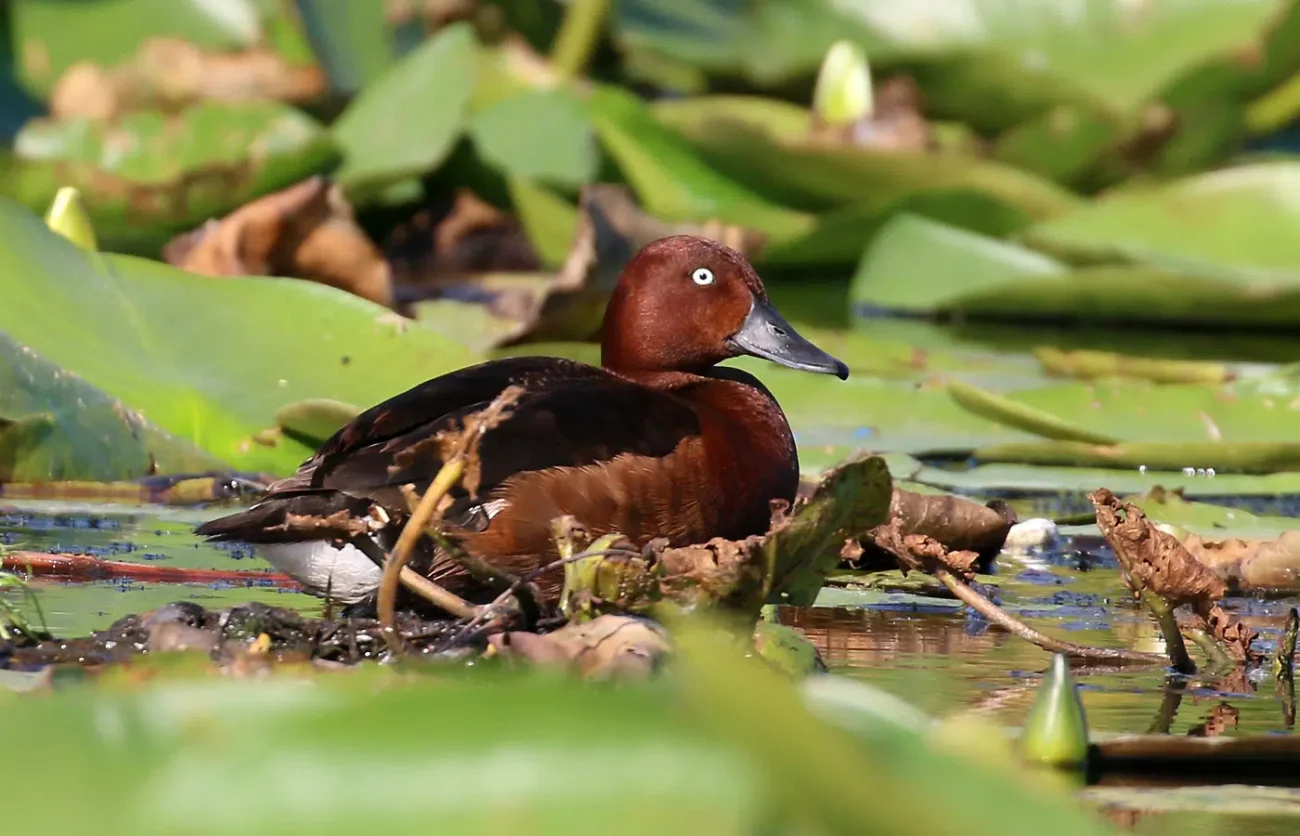
The African-Eurasian Flyway stands as one of the most critical biological corridors on the planet, a sprawling aerial highway that facilitates the seasonal migration of over 2 billion birds. Spanning the vast distance between the frigid Arctic tundra and the sun-drenched southern reaches of Africa, this route serves as a connective tissue for the ecosystems, cultures, and economies of three continents. Among the 465 species that rely on this complex network is the Ferruginous Duck (Aythya nyroca), a medium-sized diving duck that has become a poignant symbol of the fragility of transcontinental migration. Currently classified as Near Threatened by the International Union for Conservation of Nature (IUCN), the species’ survival hinges on the maintenance of a chain of "Key Biodiversity Areas" (KBAs)—wetlands that act as essential refueling stations, breeding grounds, and wintering sites.
A Species in Flux: The Biological Context
The Ferruginous Duck is a specialist of freshwater wetlands, favoring shallow, vegetated lakes and marshes. Its life cycle is inextricably linked to the availability of healthy, undisturbed water systems. However, the species faces a precarious existence. Population estimates remain difficult to pinpoint due to their nomadic nature, but data from the last decade indicate a consistent downward trend. The threats are multifaceted: the intensification of agriculture has led to the drainage of wetlands, while the encroachment of aquaculture often introduces pollutants and alters the natural chemistry of these water bodies.

Beyond habitat loss, the Ferruginous Duck contends with the direct impacts of human activity, including the illegal taking of birds for sport or food and the catastrophic potential of avian influenza, which can decimate localized populations during their crowded stopovers. Current data suggests that approximately 44% of the species utilizing this specific flyway are in decline, with 8% categorized as globally threatened with extinction.
The Geography of Survival: Pokuplje Basin and Lake Nasser
The migration of the Ferruginous Duck is not a continuous flight but a calculated series of stops at high-value habitats. Two specific locations illustrate the extremes of this journey: the Pokuplje Basin in Croatia and Lake Nasser in Egypt.
In the northern reaches of the flyway, the Pokuplje Basin functions as a European stronghold. Covering approximately 350 square kilometers, this wet lowland mosaic of oak forests and expansive meadows provides the critical structural diversity necessary for successful breeding. The region’s managed carp fishponds, such as Crna Mlaka and Draganic, act as vital reservoirs for biodiversity, supporting not only the Ferruginous Duck but also charismatic predators like the White-tailed Sea-eagle. The site’s ability to sustain over 20,000 waterbirds during peak migration periods highlights the disproportionate importance of these managed landscapes in an era of rapid habitat loss.

Conversely, as the birds migrate south, they reach the arid, dramatic landscape of Lake Nasser in Egypt. As one of the world’s largest man-made reservoirs, Lake Nasser is a testament to the intersection of human engineering and natural necessity. While the Aswan High Dam transformed the region into an economic engine for Egypt—supporting fisheries, hydroelectric power, and agriculture—it simultaneously created a life-saving sanctuary for migratory birds. During the winter months, the lake hosts more than 200,000 waterbirds, including significant flocks of Ferruginous Duck, Black-necked Grebe, and Great White Pelican. The ecological value of this site extends beyond birds; it remains one of the final strongholds for the Nile Crocodile, the African Softshell Turtle, and the Dorcas Gazelle, making it a critical nexus for both migratory survival and regional biodiversity conservation.
Chronology of Conservation Efforts
The systematic protection of these areas has not occurred in a vacuum. Over the past several decades, environmental organizations have transitioned from site-specific preservation to a landscape-level "flyway approach."
- 1990s–2000s: Initial recognition of the Ferruginous Duck’s decline, prompting the identification of major stopover sites.
- 2010s: Increased focus on the legal status of wetlands. Regional partnerships began monitoring the impacts of agricultural run-off on these avian corridors.
- 2024–2025: Emergence of data-driven advocacy, specifically in Egypt, where local organizations pushed for stricter enforcement of hunting bans.
- 2026 (June): BirdLife International received a £7.5 million grant from the Ecological Restoration Fund (ERF). This funding marked a significant turning point, shifting the focus toward a three-year, large-scale restoration project to ensure the ecological integrity of the flyway.
Official Responses and Strategic Initiatives
The recent injection of £7.5 million in funding is widely regarded by the scientific community as a necessary escalation in conservation efforts. The initiative, led by BirdLife International, is not merely about protecting patches of land but about ensuring the "ecological coherence" of the entire route. By connecting these KBAs, conservationists aim to provide a safe passage that accounts for climate-driven shifts in vegetation and water availability.

At the national level, the work of organizations such as Nature Conservation Egypt (NCE) serves as a blueprint for success. By conducting consistent waterbird surveys, NCE has provided the empirical evidence required to justify policy changes, most notably the successful advocacy for a total hunting ban at Lake Nasser. The tangible results of this policy are already manifesting, with species like the Long-tailed Cormorant returning to the lake—a clear signal that when human pressure is removed, ecosystems possess a remarkable capacity for recovery.
The Broader Impact: Why the Flyway Matters
The implications of the Ferruginous Duck’s plight extend far beyond the species itself. As an "indicator species," the duck’s health reflects the condition of the entire wetland ecosystem upon which humans also depend. Wetlands are essential for water filtration, flood control, and carbon sequestration. When these habitats are degraded to the point where they can no longer support migratory birds, they are simultaneously losing their ability to provide the ecosystem services that sustain local human populations.
The conflict between human development—such as intensive aquaculture—and wildlife preservation is the central challenge of the 21st century. However, the success stories of the Pokuplje Basin and Lake Nasser prove that development and conservation are not mutually exclusive. When agriculture and fisheries are managed with the biodiversity of the flyway in mind, they can provide stable livelihoods while maintaining the structural health of the landscape.

Analysis of Future Challenges
Despite the influx of funding and the successes of local NGOs, the long-term outlook for the African-Eurasian Flyway remains complex. The intensification of global climate change threatens to alter the timing of migration, potentially causing a "phenological mismatch" where birds arrive at their breeding or wintering sites before or after the peak availability of food resources. Furthermore, the spread of pathogens, such as the West Nile virus and various strains of avian influenza, presents an unpredictable variable that can strike even the most protected sites.
To mitigate these risks, the conservation community must move toward a more integrated, transboundary management system. This requires harmonizing environmental legislation across European, African, and Central Asian jurisdictions. It also demands the continued support of local communities, who are the primary stewards of the land. As the three-year ERF-funded project commences, the goal is to create a model that can be replicated across other threatened flyways globally.
Ultimately, the journey of the Ferruginous Duck is a narrative of resilience. It is a story of a bird that crosses borders, deserts, and seas, linking diverse cultures through the shared necessity of survival. Preserving this flyway is not only a biological imperative to prevent the extinction of a species but a social responsibility to protect the natural heritage that binds three continents together. The success of this effort will be measured not just by the count of ducks in the sky, but by our ability to manage the delicate balance between the demands of human progress and the requirements of the natural world. Ensuring that these feathered travelers can continue their journey for generations to come remains one of the most significant conservation challenges of our time.

