


The perception of exercise has evolved significantly from its 1980s emphasis on aesthetics to a modern understanding of its crucial role in both physical and mental health. This understanding extends beyond human populations and is equally vital for our domesticated rat companions. Ensuring adequate physical activity for pet rats is not merely about preventing obesity; it is a cornerstone of their overall well-being, contributing to a longer, healthier, and happier life. This article delves into the multifaceted benefits of exercise for rats, explores various methods to encourage activity, and addresses potential challenges faced by rat owners.
The Multifaceted Benefits of Regular Exercise for Rats
Regular physical activity is fundamental to a rat’s physiological and psychological health. From a physical standpoint, exercise helps their bodies function optimally, bolstering their immune systems and improving their ability to fight off diseases. One of the most significant physical benefits is the prevention or mitigation of obesity. Excess weight in rats places undue stress on their joints and muscles, predisposing them to a range of serious health issues. These can include degenerative joint diseases, cardiovascular problems, diabetes, and the development of lipomas (benign fatty tumors).
The implications of excess weight are substantial. A study published in the Journal of Exotic Pet Medicine highlighted that overweight rats exhibit reduced mobility and an increased susceptibility to metabolic disorders. For instance, hind leg degeneration, a common ailment in older rats, can be exacerbated by excess body weight, leading to pain and further immobility. Similarly, cardiac strain is a well-documented consequence of obesity in many mammalian species, including rats, potentially shortening their lifespan. Therefore, monitoring a rat’s weight and implementing appropriate dietary and exercise strategies is paramount.

Beyond the physical realm, exercise plays a critical role in a rat’s mental health. Domesticated rats, often housed in confined environments, are susceptible to boredom, stress, and the development of behavioral issues when their need for stimulation is unmet. A lack of physical and mental engagement can lead to depression, destructive behaviors, and increased anxiety. This is particularly pertinent given that rats are naturally intelligent and inquisitive creatures with a strong drive to explore and interact with their environment. When confined without adequate outlets for their energy and curiosity, their mental well-being can suffer significantly.
It is important to note that this discussion primarily pertains to healthy rats without pre-existing mobility issues stemming from age-related conditions like hind leg degeneration, illness, or injury. For rats facing such challenges, owners must consult with a veterinarian to tailor appropriate exercise plans that accommodate their specific needs and limitations.
Facilitating Activity: Beyond the Gym for Rats
Unlike their wild counterparts, domesticated rats often exhibit a more sedentary lifestyle, necessitating proactive intervention from their owners to encourage activity. The good news is that facilitating exercise for rats does not require elaborate gym equipment or specialized facilities. The notion of a rat in a leotard and leg warmers, while amusing, is far removed from their actual needs. Rats do not require weightlifting or aerobics; in fact, they do not even sweat. Their exercise regimen should focus on engaging their natural behaviors and instincts.
The primary objective is to provide daily opportunities and motivation for rats to move their bodies, breaking away from prolonged periods of rest in hammocks or bedding. This can be achieved through a variety of engaging activities that stimulate their minds and bodies.
Enhancing Cage Activity for Enriched Environments
Within the confines of their living space, several strategies can be employed to promote consistent movement and engagement. As rats age, they naturally tend to become less active, making it crucial to establish good habits early on. While multi-level cages offer a vertical dimension for exploration, they are insufficient on their own to maintain an active lifestyle. Additional elements that encourage movement are essential.
Exercise Wheels: A Tool for Exploration and Energy Expenditure
Exercise wheels can be a valuable addition to a rat’s environment, though their success can vary. Some rats readily embrace running on a wheel, viewing it as a primary form of locomotion. Others, however, may opt to use it as a resting place. Given its potential as a rat’s equivalent of a treadmill, introducing a safe and appropriately sized wheel is worthwhile. When selecting a wheel, prioritize models made from solid materials, devoid of bars or gaps that could trap a tail or foot. The Wodent Wheel and Silent Spinner are frequently recommended options, known for their safety features.
Crucially, the wheel must be large enough to accommodate adult rats comfortably, typically an extra-large size. It needs to be securely fastened to the cage or possess a stable stand, ensuring there is no space between the wheel and the cage bars where a rat’s head or other body parts could become entrapped. Introducing a wheel to young rats is often more effective, as older rats, particularly males, may develop a preference for sedentary behavior and repurpose the wheel as a bed.
Interactive and Stimulating Cage Decor
A wealth of creative options exists for enriching a rat’s cage with items that promote activity. This often involves a combination of commercially available pet products and everyday household objects repurposed for play. For instance, a wooden bird perch can be ingeniously adapted as a toilet paper holder, allowing rats to engage in their natural instinct to shred and redecorate their surroundings. Ramps can be removed or replaced with more challenging climbing structures to encourage greater physical exertion.

Encouraging Movement Outside the Cage
Providing opportunities for exploration beyond the cage is a powerful motivator for rats to engage in physical activity. Their innate curiosity drives them to investigate new environments and interact with novel objects.
The Benefits of Free-Ranging
The opportunity for rats to run freely outside their cage is highly beneficial, even for those that may appear less energetic. This does not necessitate granting them unfettered access to the entire home. Instead, designating specific times for supervised free-ranging in a rat-proofed room offers a controlled yet stimulating experience. During these sessions, providing a variety of items that encourage continuous activity is key.
Historically, bathrooms have served as effective free-ranging spaces, equipped with igloos, tunnels, cardboard boxes, and other structures for climbing and exploration. Owners can also act as a "human jungle gym," allowing their rats to climb and interact. A particularly engaging activity, affectionately termed "TPing the bathroom," involves providing toilet paper. Rats have been observed to ascend toilet paper holders and descend with rolls, leading to extended periods of activity as they shred and stash the paper. This not only promotes physical exercise but also fosters problem-solving skills and collaborative behavior. The importance of ensuring a safe and rat-proofed environment during free-ranging cannot be overstated, and owners are encouraged to consult resources on best practices for this activity.
Safe and Engaging Play Areas
Dedicated playpens or play areas serve as the equivalent of a schoolyard recess for rats, offering a safe, contained space to expend energy. These can be either commercially acquired or homemade. While store-bought options exist, rats can be adept escape artists, making sturdy construction essential.

The effectiveness of a play area in promoting exercise is directly proportional to the variety and type of enrichment it contains. To combat lethargy, providing items such as puzzle toys or dig boxes is highly recommended. These not only encourage physical movement but also offer crucial mental stimulation. Items that facilitate climbing or provide opportunities for ingress and egress, such as igloos, tubes, or freestanding wheels, are also beneficial. Creative use of everyday items, like a small trash can filled with paper and cardboard, can provide hours of entertainment and physical activity as rats empty and relocate the contents.
To maintain interest, it is advisable to rotate the available items regularly, perhaps on a weekly or bi-weekly basis, rather than presenting all at once. This keeps the environment novel and engaging. For those considering building a custom play area, incorporating elements that double as a "rat gym" can maximize the exercise benefits. For instance, shallow storage containers connected by plastic piping can create tunnels, with thinner pipes serving as balance beams.
Interactive Toys and Agility Courses
Engaging with rats using safe pet toys, such as rolling cat toys that can be chased or feather wands, can provide enjoyable physical activity. The dynamic interaction encourages chasing, pouncing, and other energetic movements.
For owners seeking a more ambitious challenge, setting up an agility course can offer a highly stimulating and physically demanding experience for their rats. Online resources provide numerous examples of such courses, demonstrating how rats can navigate obstacles, tunnels, and ramps. This type of activity not only promotes significant physical exertion but also serves as an excellent method for teaching tricks and reinforcing training.

Harnessing Motivation Through Food
As rats, particularly males, age, they tend to become less active. This natural inclination towards a more sedentary lifestyle can be countered by cleverly utilizing their motivation for food.
Making Them Work for Their Meals
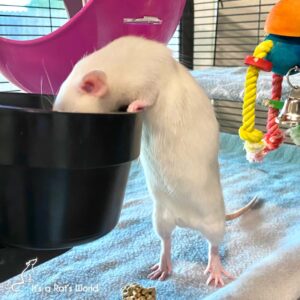
The way food is presented can significantly influence a rat’s activity levels. Instead of simply placing food in a standard bowl on the cage floor, owners can implement strategies that require more effort. Using food crocks attached to the side of the cage at an elevated position encourages rats to stand and stretch to eat. Foraging wheels or treat dispensers demand even greater effort and time to extract food, transforming mealtime into an extended activity session.
The Fun of "Pea Fishing"
A simple yet highly effective method for encouraging activity is "pea fishing." This involves placing frozen peas in a heavy food container filled with water. Rats find immense enjoyment in reaching into the water to retrieve the peas. This activity not only requires dexterity and effort but can also become a competitive endeavor if multiple rats are vying for the peas, leading to increased physical exertion. The minimal caloric content of peas makes this a safe and rewarding way to burn calories.
Addressing Individual Differences and Genetic Factors
It is a common misconception that a fat rat is necessarily one that receives little to no exercise. Personal experience indicates that this is not always the case. Some rats may maintain a higher body weight despite extensive free-ranging and careful dietary management. This can often be attributed to genetic predisposition.
If a rat exhibits significant weight issues, it is imperative to consult a veterinarian. A professional can help determine the underlying cause, whether it be a health condition, a dietary imbalance, or a need for a more structured exercise regimen. While busy schedules can make it challenging to consistently meet a rat’s daily exercise needs, incorporating a variety of activities throughout the day can lead to substantial benefits for their overall health and well-being. By understanding and implementing these strategies, owners can ensure their pet rats lead active, healthy, and fulfilling lives.

