


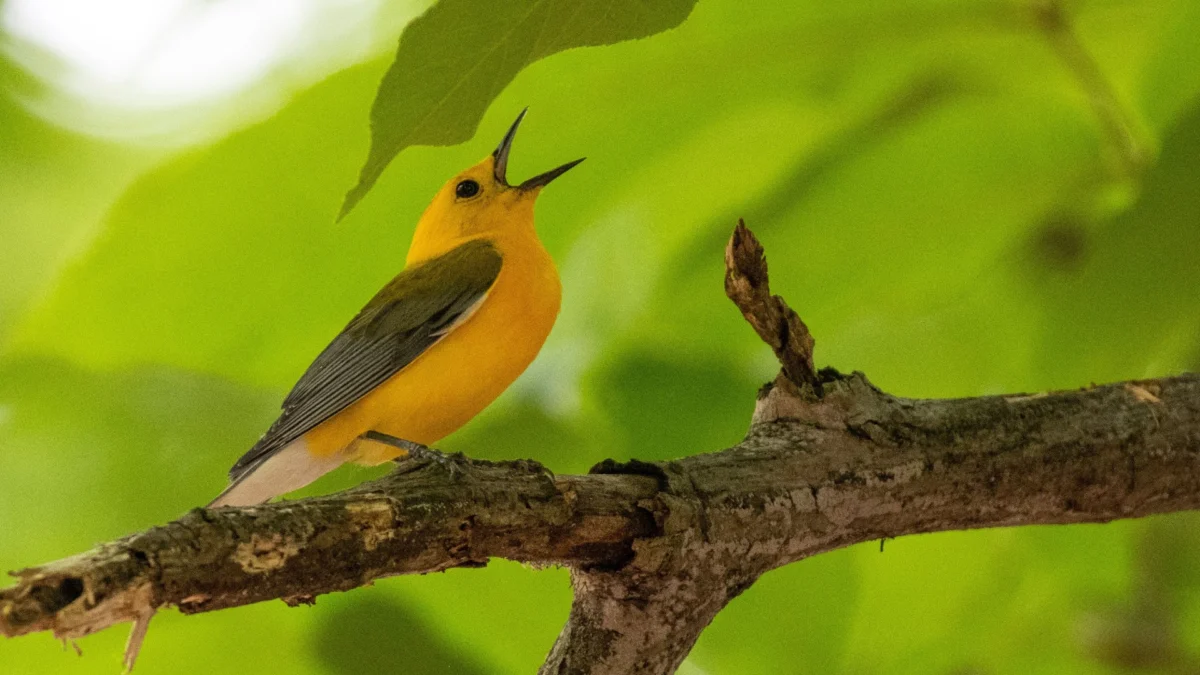
While the Prothonotary Warbler—often affectionately abbreviated by ornithologists as the "PROW"—is typically associated with the swampy, bottomland forests of the deep South and the Atlantic coastal plain, its recent colonization of Kansas is drawing intense scientific scrutiny. Researchers are now deploying state-of-the-art tracking technology to monitor these birds, attempting to understand how habitat restoration and environmental changes are facilitating this westward expansion.
The Emergence of a New Breeding Range
The historical range of the Prothonotary Warbler has long been confined to the eastern United States, where they favor flooded forests and forested wetlands. In Kansas, however, the birds have surprised experts by moving into areas that have undergone significant landscape reclamation. According to local reports, the turning point in understanding this population shift occurred in 2023, when resident Kathy Fox of Pittsburg, Kansas, observed the birds utilizing bluebird boxes for nesting.
Initial assumptions suggested that these sightings were merely the result of post-breeding dispersal or rare migratory stopovers. However, the discovery of active nests confirmed that the birds were successfully raising their young in the region. This development is particularly significant because it places the Kansas population at the extreme western edge of the species’ known breeding territory. Ornithologists suggest that the proliferation of artificial nesting structures—such as the boxes used by bluebirds—has provided a critical resource that may be compensating for the lack of natural cavities in the region’s recovering woodlands.
Tracking a 5,000-Mile Odyssey
The presence of these birds in Kansas has provided a unique laboratory for researchers seeking to map the migratory pathways of small songbirds. In June 2025, a research team led by graduate student Gabe McClain from Pittsburg State University initiated a comprehensive study using high-precision geolocators. These miniature devices, which represent a significant advancement in avian telemetry, are designed to be lightweight enough to avoid hindering the birds’ flight capabilities.

The process of data collection is a meticulous one. Because these geolocators do not transmit data via satellite due to size and battery constraints, the researchers must recapture the specific individuals to download the logged coordinates. This requirement has turned the research into a high-stakes game of patience and precision. One particular male warbler, nicknamed "Hydrogen," provided the team with their first major breakthrough. After being tagged in the Kansas City area in 2025, the bird completed a round-trip journey exceeding 5,000 miles, successfully returning to the same nest box in Kansas after overwintering in the tropical climates of Colombia.
The success of the 2025 pilot study led to a significant scaling up of operations. In the most recent season, researchers expanded the project from six tracked individuals to 36, a six-fold increase that provides a much more robust data set. By comparing the routes taken by these birds, scientists hope to determine whether the Kansas population follows the same migratory corridors as their eastern counterparts or if they have developed a unique, western-biased flight path to reach South America.
Environmental Context and Habitat Restoration
The question remains: why now? The answer likely lies in the transformation of the southeast Kansas landscape. Large swaths of this region were historically utilized for surface mining, which drastically altered the topography and forest cover. Over the past several decades, environmental remediation and natural succession have led to the growth of new forests and the development of riparian corridors.
These reclaimed wetlands and wooded areas appear to offer the specific environmental conditions the Prothonotary Warbler requires: proximity to water and a consistent supply of insects. As these ecosystems mature, they are providing a "stepping stone" for the species to move westward. Researchers are currently analyzing soil samples, vegetation density, and insect biomass to correlate the success of the bird population with the specific quality of these restored habitats. If these birds continue to thrive, it could serve as a model for how land management practices can encourage biodiversity in regions previously degraded by industrial activity.
The Mechanics of Migration
As the calendar turns toward late summer, the focus for researchers and amateur birdwatchers alike shifts to the impending fall migration. The Prothonotary Warbler is a long-distance migrant, and its departure from Kansas is a time-sensitive event. As temperatures begin to fluctuate and the availability of insect prey decreases, these birds prepare to traverse thousands of miles of varied terrain.

The migratory period is a precarious time for any songbird. The data collected from the Kansas population will help conservationists understand the stopover sites that are most critical for the birds’ survival. By identifying these "refueling" points, researchers can advocate for targeted conservation efforts along the entire migratory flyway, from the plains of Kansas to the rainforests of Colombia.
Scientific Implications and Future Outlook
The expansion of the Prothonotary Warbler into Kansas is more than a local curiosity; it is a manifestation of the dynamic nature of avian populations in a changing world. When species shift their ranges, it often signals broader environmental trends, such as climate-driven shifts in vegetation or the success of local conservation initiatives.
For the scientific community, the Kansas study is providing a masterclass in how to conduct field research on elusive, small-bodied species. The integration of community science—relying on observations from residents like Kathy Fox—with formal academic study has created a comprehensive network of data that would be impossible to achieve through institutional efforts alone.
The implications of this research extend to policy and land-use management. If the data confirms that reclaimed mining lands are essential for the survival of this species in the West, it could lead to stricter protections for these areas. Furthermore, the success of the nest box project suggests that simple, low-cost interventions can have a measurable impact on the population stability of cavity-nesting birds.
Engaging the Public: A Call for Observation
As the migration season peaks, birdwatchers in Kansas are being encouraged to keep a close eye on their woodlands, particularly those near water. The Prothonotary Warbler is easily identified by its vibrant, unstreaked golden-yellow head and breast, which contrast sharply with its blue-gray wings. Unlike many other warblers that prefer the high canopy, the Prothonotary is often found at lower levels, frequently near or over water, making it a rewarding species for observers.

Birding experts note that the next few weeks are the "golden window." Once the warblers begin their southern trek, they will effectively vanish from the state, not to return until the following spring. The increased tracking efforts mean that there is a higher probability than ever that a bird spotted at a local park or private woodlot could be a subject of the ongoing study, contributing to a vital piece of the puzzle regarding migratory behavior.
In conclusion, the story of the Prothonotary Warbler in Kansas is a testament to the resilience of nature and the power of scientific inquiry. From the humble beginnings of a backyard bird box to the sophisticated tracking of 5,000-mile voyages, this small songbird is teaching us that our landscapes are never static. As we observe these bright yellow visitors preparing for their long journey south, we are reminded of the interconnectedness of our local environments with the global ecosystem. The data gathered today will undoubtedly inform the conservation strategies of tomorrow, ensuring that the song of the Prothonotary Warbler remains a permanent fixture in the Kansas landscape for generations to come. The synthesis of public interest and rigorous academic investigation provides a roadmap for future wildlife research, proving that even in the most unexpected places, nature has a way of revealing its most remarkable secrets.

